

THE BIG 50
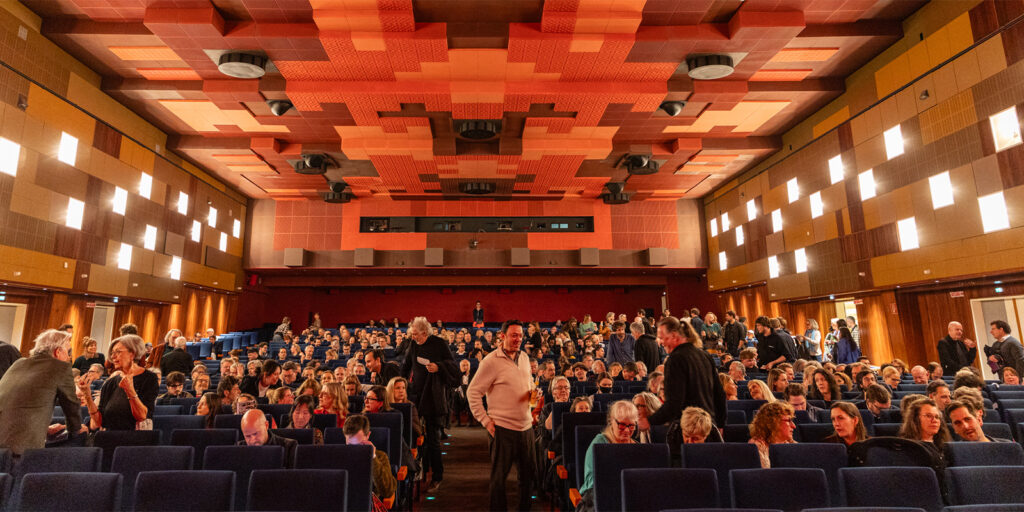
Held Thursday 12 March at Vienna’s biggest cinema, the magnificent Gartenbau Kino, the 50th anniversary celebrations of the Society of Austrian Cinematographers, the AAC, gathered anywhere between 500 and 550 guests from not only the Austrian film industry, but in fact all corners of the world.
The reason behind the significant international presence in Vienna is that this year, the AAC is hosting the annual summit of IMAGO, the international federation of cinematographers, and so the AAC decided to also share this anniversary with their international friends.
Since the day’s official IMAGO work was carried out in the vicinity of the Burghtheather, all international guests could conveniently be transported through a 30-minute ride on the local tram to the Gartenbau Kino.
We had a word with four important members of the AAC: current president Astrid Heubrandtner, former president Kurt Brazda, board member Thea Adlung and Academy Award-nominated distinguished cinematographer Christian Berger, known for his work with director Michael Haneke.
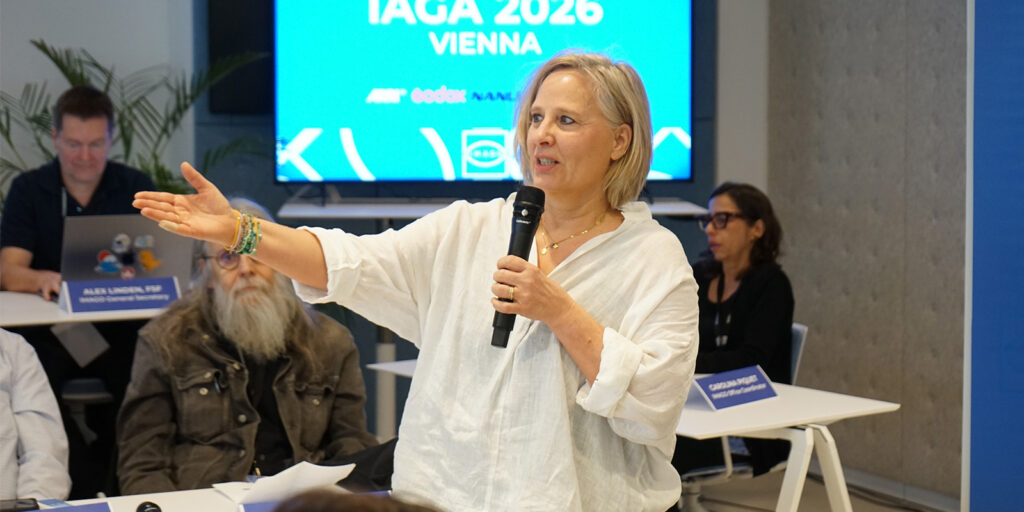
Noting the enormous ambitions of the celebration, we asked Astrid Heubrandtner what organising this anniversary had been like. “Yes, it’s been an enormous amount of work,” Astrid admits, “but 50 years, that’s quite something, and it was a convincing argument to everyone where I knocked on their door. We’ve enjoyed a lot of support from all the film institutions, from the Vienna Film Fund, and from production companies and rental houses. And due to the challenging situation we all are facing, everyone gave a bigger or a smaller amount, they all tried to contribute and to help us set up our anniversary celebration.
“We’re also proud we got a special message from the Austrian federal president. He sent us a special message, as did also the mayor of Vienna. So, we are very happy for this appreciation by politicians, which is not normal. I’m very happy to learn that they respect us and our profession, and are aware of the importance of the creators of images.”
Back to the beginning
Myself, I’m very curious how the AAC started out. Fortunately, we have one of the founding fathers here, Kurt Brazda, who is no stranger to giving speeches.
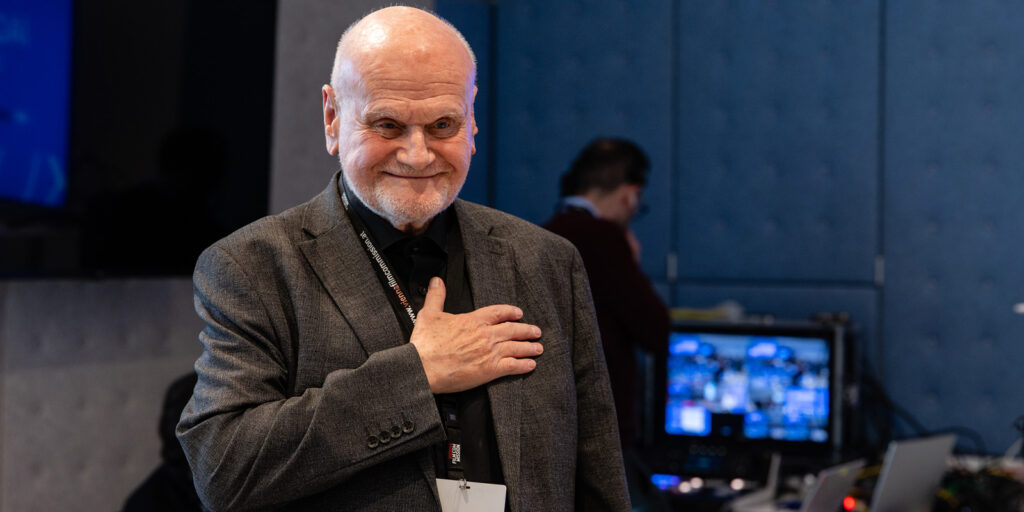
“Well, it started 50 years ago when us five directors of photography met in a coffee house and decided to found this association,” Kurt remembers. “Three of us have since passed away. I myself and my former assistant, who is now the director of a Jewish film festival, are the only ones still alive. The first one of the other three was Hanuš Polak from Czechoslovakia, who was educated at the Prague film school, and who was a master of light. The second one was a very good documentary cinematographer who did a lot of work for television. And the third one was a cinematographer who did a lot of work in Africa, and he also opened a rental house, which became our first centre where we held all of our meetings and conferences. So us five people had one idea in common. We didn’t know each other personally, and professionally we could be played out against each other by employers. We had only seen each other’s names in the end credits of movies. And on 6 April 1976 we founded the AAC in Vienna.
“The first president of the AAC was Elio Carniel. He has since passed away. He was at this time maybe Austria’s most prominent director of photography. He shot this really important Austrian film Die letzte Brücke, which was a 1954 war drama film directed by Helmut Käutner and starring Maria Schell and Bernhard Wicki. And then the second president was Kurt Junek, who was a director and also a very good cinematographer. And the third was I myself, I was president for 25 years.”
“Wow, that’s amazing,” I allow myself a little joke at Kurt Brazda’s expense, “that’s like some North African dictators.”
“Maybe I have been,” Kurt reflects, “I don’t know. You have to ask Astrid because she followed me, and I’m so happy that she did because she does a wonderful job and I’m very happy that she’s my successor.”
But first things first. The second most venerable AAC member in front of me is Christian Berger. I’m curious of his story, and it turns out that the by now world-renowned DP started out as a young cameraman in Tyrol – when he became an AAC member, he was the only one in Tyrol! So he had to “organise himself”!
“I did news gathering for the ORF in Tyrol, not in Vienna,” Christian explains. “And the only AAC member in Tyrol was me. But then to get more work opportunity, I needed to get in touch with Kurt. And when I did, I met a person who was very engaged in social questions. And we were all very concerned with working conditions and all those kind of things. So the AAC became a kind of solidarity, because otherwise you were completely alone. And as part of the AAC, you were not that alone anymore.”
I then turn to Astrid, “What year did you become a member?”
“I got in contact with the AAC in 1991,” Astrid remembers, “when the AAC organised a sort of educational thing for camera assistants. At that time, I was still in film school, and Christian was my professor. And the AAC organised a very ambitious educational course, where you just got trained as a real assistant. And you got an opportunity to learn things which you couldn’t learn at film school, and I started already to work when I was still in school, so it was a good combination. So the AAC welcomed us with open arms, they opened the door and let all of us young people in, so we could join and we could slowly grow into the whole system and into the AAC.
“A female member of the AAC back then was a rare thing, I was certainly not the first, but there weren’t many of us. You have to keep in mind there were five men who started the AAC, and in the whole industry, there weren’t many women working as DPs.
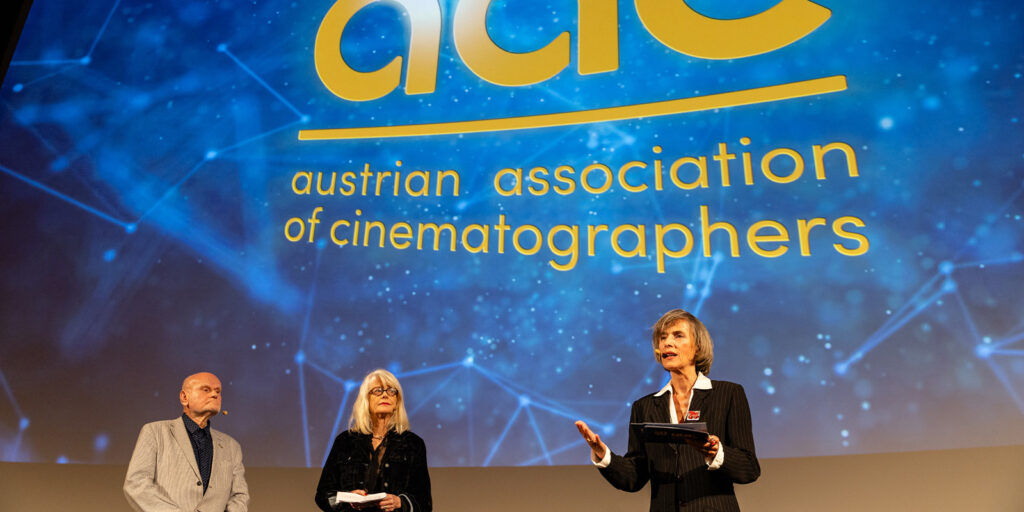
“But now the DP members of the AAC, 20 percent of them are women. And in fact we have more women in the society, since we include also assistants, colour graders etc, and I’m very proud of that because when I joined, there were very few of us. So I’ve been president since 2009. I’m the next dictator,” Astrid smiles, clearly getting the joke.
Hard work pays off
Curious how these ‘dictators’ have been treating their members, I then turn to Thea Adlung.
“I think, great,” she smiles, ”I feel very lucky to be a part of this team, and I very much appreciate having Kurt and Astrid in my life and having met them because I think I’ve learned a lot and I’m happy to grow with them. I became a member about 10 years ago, I think, and I became a board member two years after I joined the AAC.”
Pointing at Astrid and Thea, Kurt chimes in: “I want to say these two ladies are also very important members of the IMAGO Working Conditions Committee! They have shown great commitment in this issue, and we in the Committee are very grateful. Because with their help, we’ve been able to take the biggest step for all of us, when we were allowed to present our case to the European Parliament. These two ladies put in very hard work together with me, and without them, it wouldn’t have been possible.”
The AAC has also been instrumental in creating important legal and funding conditions in Austria. Before the AAC, there was no such thing as state subsidised film funding in Austria. The AAC was the first association in the German-speaking area – before the German society BVK and all the others.
“So without the AAC there would be no film fund,” Astrid clarifies, “no umbrella organisation, no royalties for cinematographers, neither for art directors because they all joined in after a while. We made the first collective agreement for all filmmakers. Before the AAC was founded, there was no collective agreement. We are the official dialogue partner of the Austrian government – this is very important, I should say, because it’s about the future of our income. And we are always striving to keep the highest level of artistic expression in our work.”
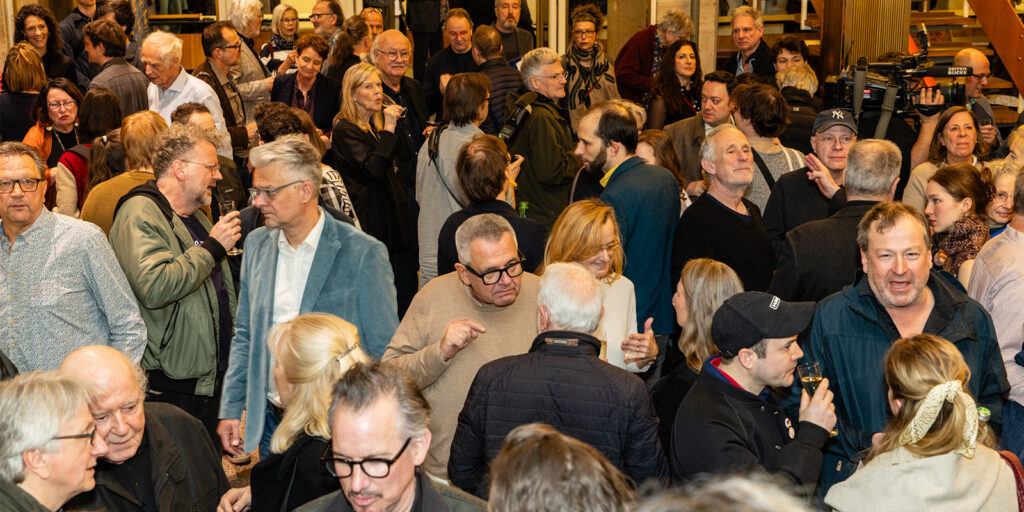
But Astrid, Kurt, Christian and Thea must now be allowed to enjoy themselves at the party they have worked so hard to make possible, so I thank them for sharing their thoughts and memories with our readers, and watch them disappear into the throng of people. In mingling at the party here there’s of course wonderful opportunity for those at the other end of the spectrum, those who are just starting out, to converse with the seasoned pros who are generous with their time and knowledge in this respect.
But as tomorrow means another important day of the IMAGO conference, towards midnight at least the international guests find it prudent “to call it a party” and figure out a way back to the luxurious Hotel Josefshof, where all IMAGO participants are booked.