
RECLAIMING THE NARRATIVE
Cinematographer Mo Azmi explains how he helped to shape the look of some of A Good Girl’s Guide to Murder series two’s most tense moments.
On the surface, the A Good Girl’s Guide to Murder trilogy presents itself as a small-town murder mystery that spirals out of control. But the more that the director Asim Abbasi and I spoke about the material, the more we felt like the engine beneath it was actually about rebellion – specifically a young woman pushing back against patriarchal structures that constantly attempt to define truth on her behalf. Especially this second season. It’s about Pip trying to take control of a narrative that always seems to be a step ahead of her. It’s why we feel for her so deeply.
In retrospect, this idea was the foundation of the visual language. Is Pip observing or is she being observed? Does she have control over the situation or does she feel boxed in? Does she feel like she’s on to something or does she feel like she’s being kept in the dark?
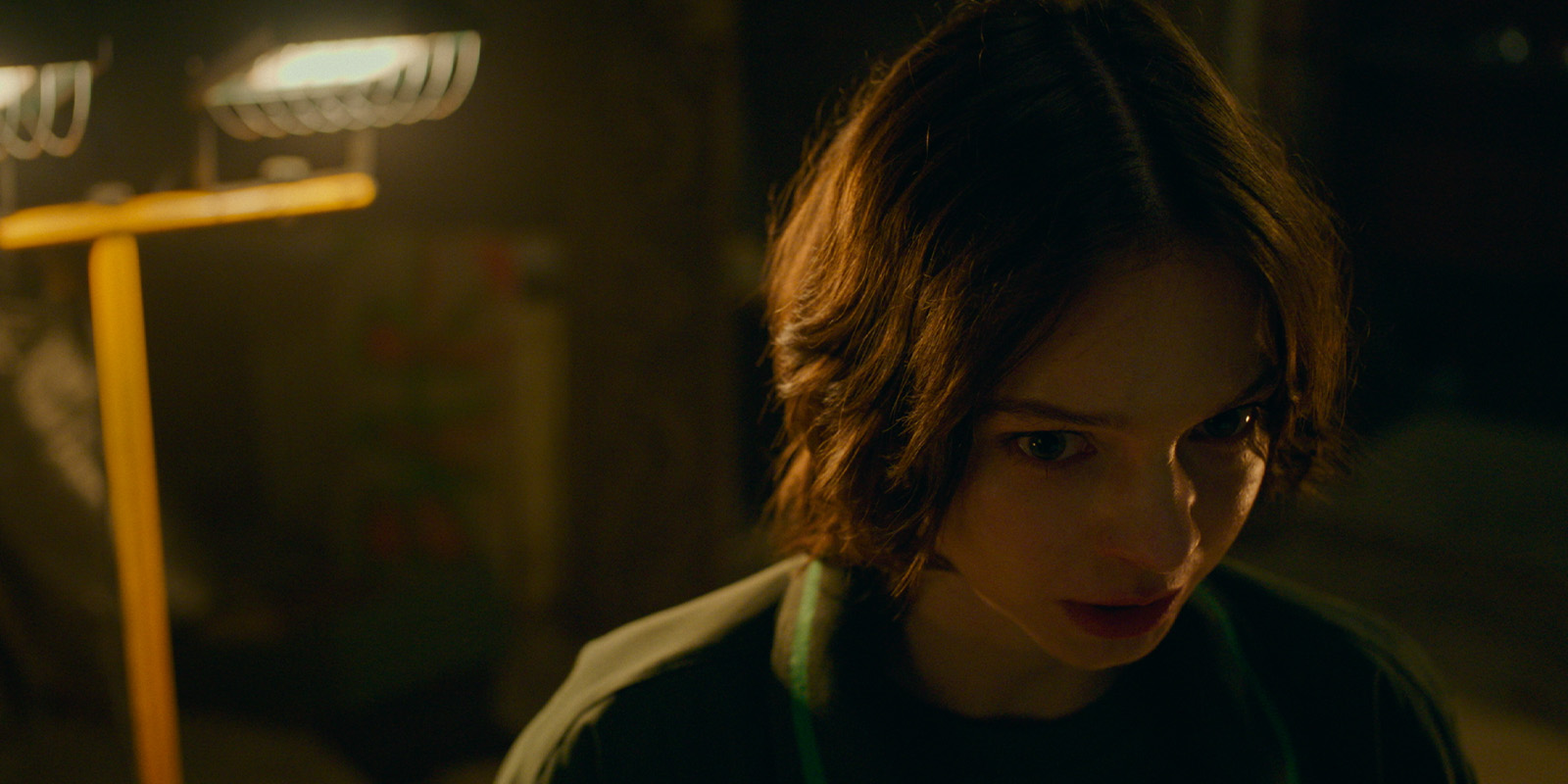
Our approach emerged from this core tension. As Pip is thrown deeper into emotionally volatile territory, the new visual language needed to reflect this. The new locations being introduced needed to be grittier. The compositions more claustrophobic. And, most importantly for me, the lighting needed to be as sophisticated as these bolder themes.
The facade of Little Kilton
One of the biggest conversations we had early on was how to evolve the visual identity of this seemingly idyllic small town.
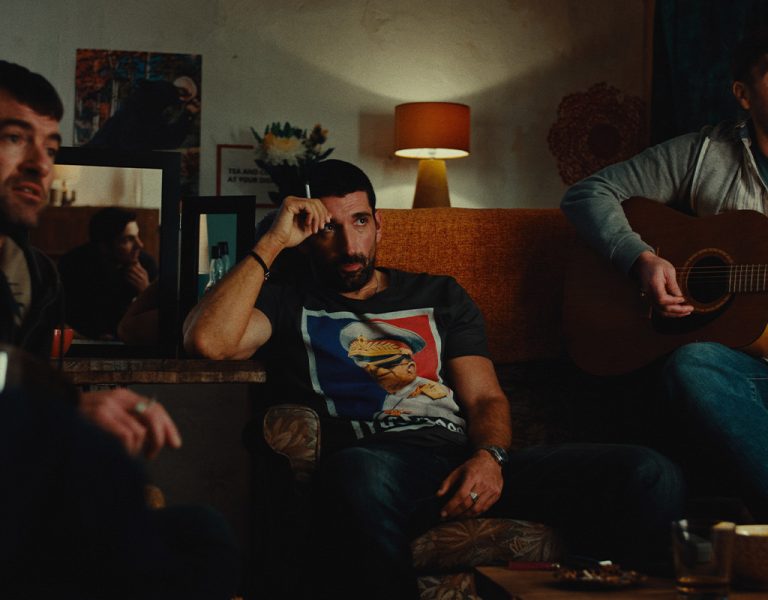
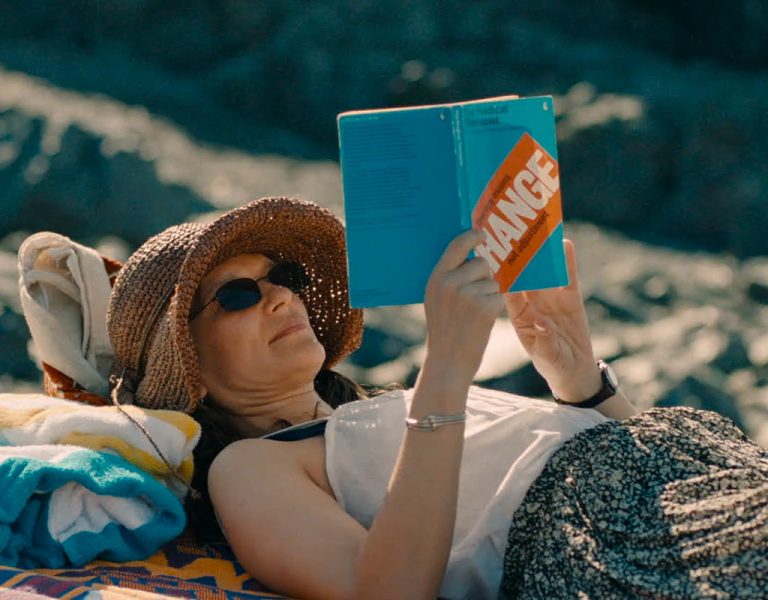
I wanted the world in daytime to feel colourful and alive. Rich greens. Pops of colour. Warm sunlight. A sense of youthfulness and possibility. In the first episode, this is most evident when Pip and Ravi are chatting in her car outside of Cara’s in daytime. Then I wanted to introduce much colder tones in all the early evening scenes. Which we see in the next scene when the gang arrives at Conor’s, and Max jogs past them. The darkness unearthing itself. And by nightfall, we’re living in a high contrast world with dirty tungsten tones and tinge of deep green in the shadows. The town’s true colors. Such as when they’re all indoors for the murder-mystery scene and later during the memorial.
We were very lucky to have our colourist Paul Staples immediately understand what we were going for and really help make all these ideas come alive.
Style and substance
Pip is constantly investigating other people while being under scrutiny herself. That duality became pretty important to us. The more pressure Pip experiences, the more the compositions begin to tighten around her and the lighting starts to become selective. The audience may not consciously register these choices, but ideally they begin to feel what Pip feels. Uncertain and paranoid.
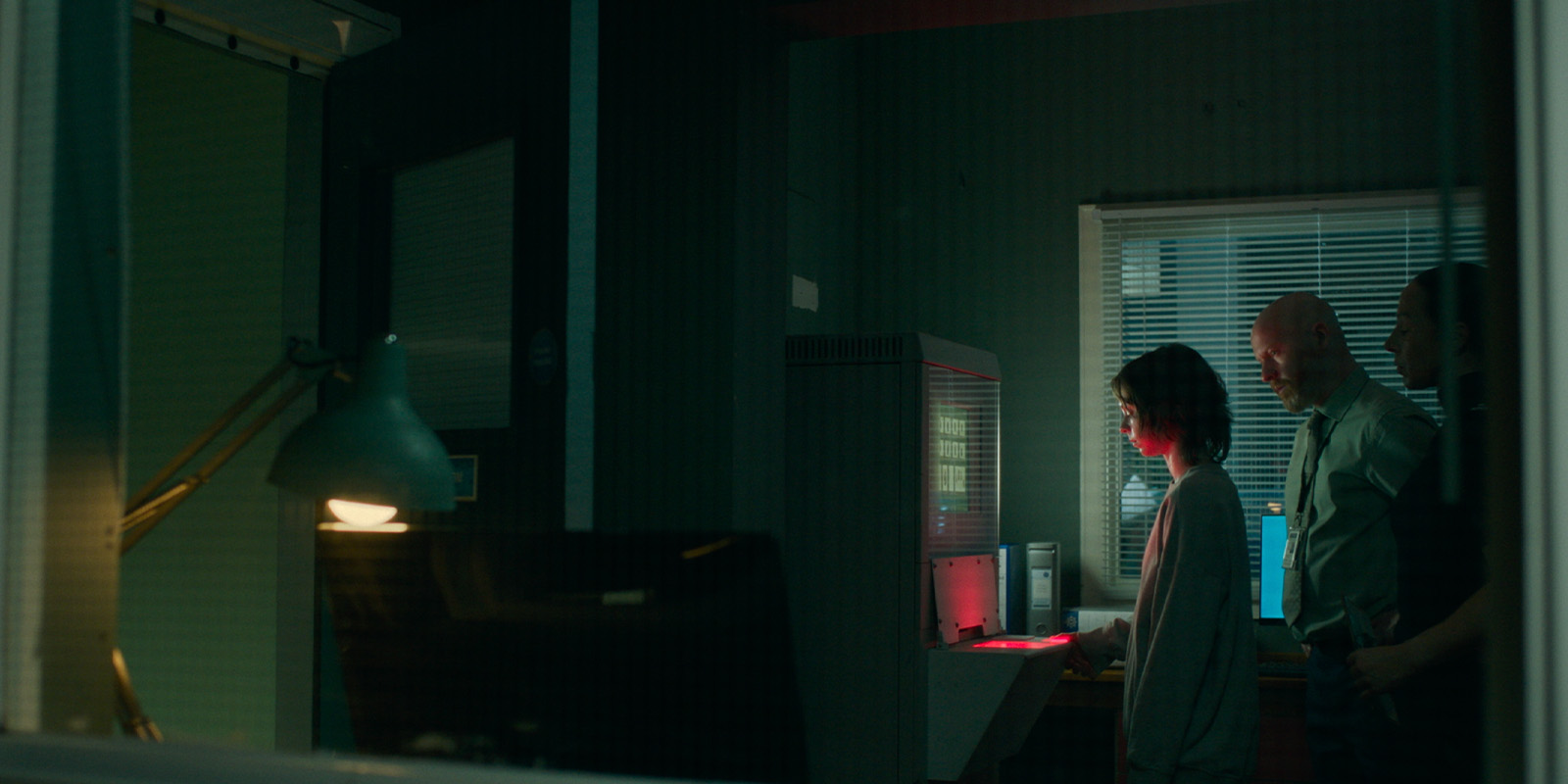
We found ourselves using reflections, obstructions, and frames-within-frames to help convey this. It’s always fun to incorporate those elements, but they feel so much stronger when they’re built into the subjective experience of the characters. Most of the time though, Emma and the actors were so good that I was careful not to get in their way. Sometimes, all you need for an engaging scene is a clean shot of an actor who’s performing with absolute conviction. And we were privileged to witness that daily.
Burning down the house
The most fun part of the entire shoot for me were the cross-cutting scenes in the final episode. The boys are breaking into a house and the girls are on a stakeout by this decrepit mansion – and, of course, both situations escalate rapidly and violently.
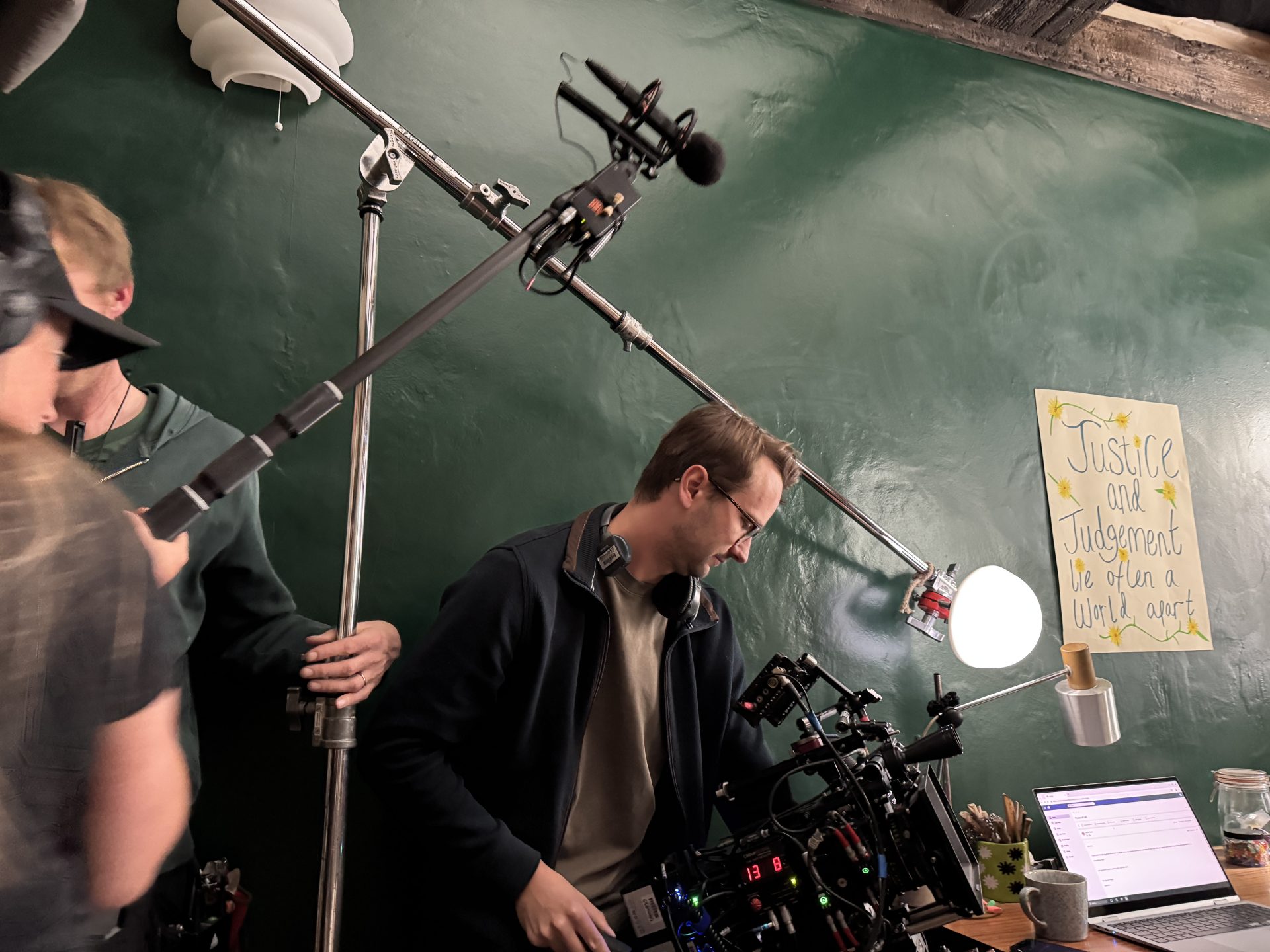
For the break-in, I kept thinking about Fincher. Specifically the home invasion scenes in Panic Room. The paranoia in the air. Not a wasted inch in the camera movements. It lives in that sweet spot of high contrast and incredibly soft lighting that I always associate with Darius Khondji ASC AFC’s work. It’s so eerily elegant for a suspense thriller. I wanted to bring in an ounce of that here. Our lovely camera operator Yannick Hausler did a great job of making sure we stuck to this feeling.
The girls, meanwhile, have this wonderful scene where they finally hash things out while on the stakeout. Asim and I always attempt to avoid the standard shots in dialogue scenes, so we had a blast coming up with some fun language for this. My favourite shot was one that Asim suggested; a super-low angle in the passenger seat that we shot in the studio on a pick-up day. I love the challenge of matching the light on stuff like that. Really forces you to consider how ambient light behaves.
The climax culminates inside the mansion. The actual location is an abandoned and popular Bristol staple called Ashton Manor that had partially burned down. Our fantastic production designer James North suggested it. He knew we’d have a ball shooting it and he was spot on.
The challenge in lighting an “abandoned” space is that there aren’t supposed to be any active house lights. So Asim and James came up with the idea that it could’ve been used for parties, which the art team did a bang up job of dressing. For filling the space with ambience, we used these inflatable tube lights from Pheon Lux. And for when the lights turn on, I thought it’d be cool to request the art team to do something simple like a string of bulbs on the wall. James also sourced some construction work lights for us that I thought looked great in camera and served as little kicks.
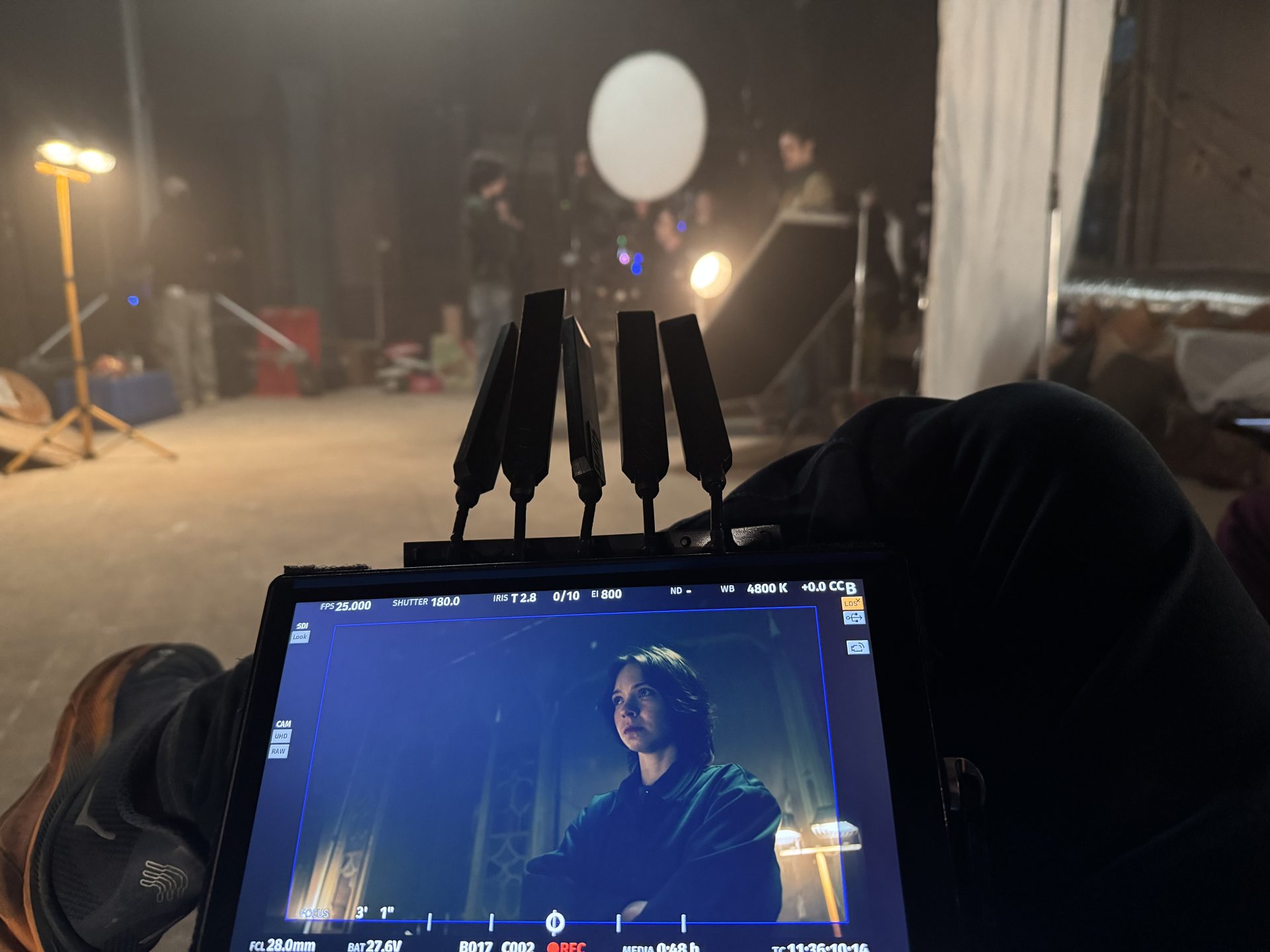
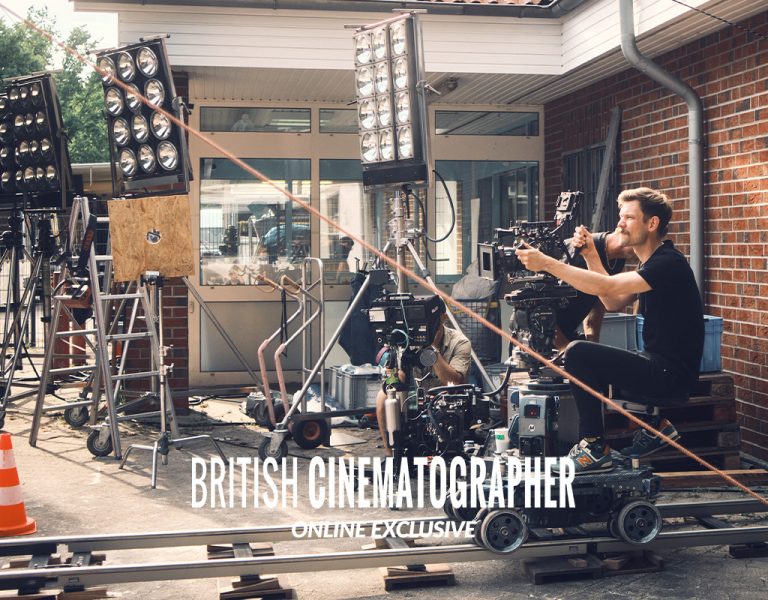
Off screen, we had a couple of Vortexes as keys and the MVP light of the entire shoot: the Roscoe Dash lights with the soft dome. Our gaffer Joe realized early on that I loved these pocket lights and would always have them handy. They make for an ultra soft kick on actors, a quick solution for under-lighting a wall in the background, and a flattering eye light in close-ups.
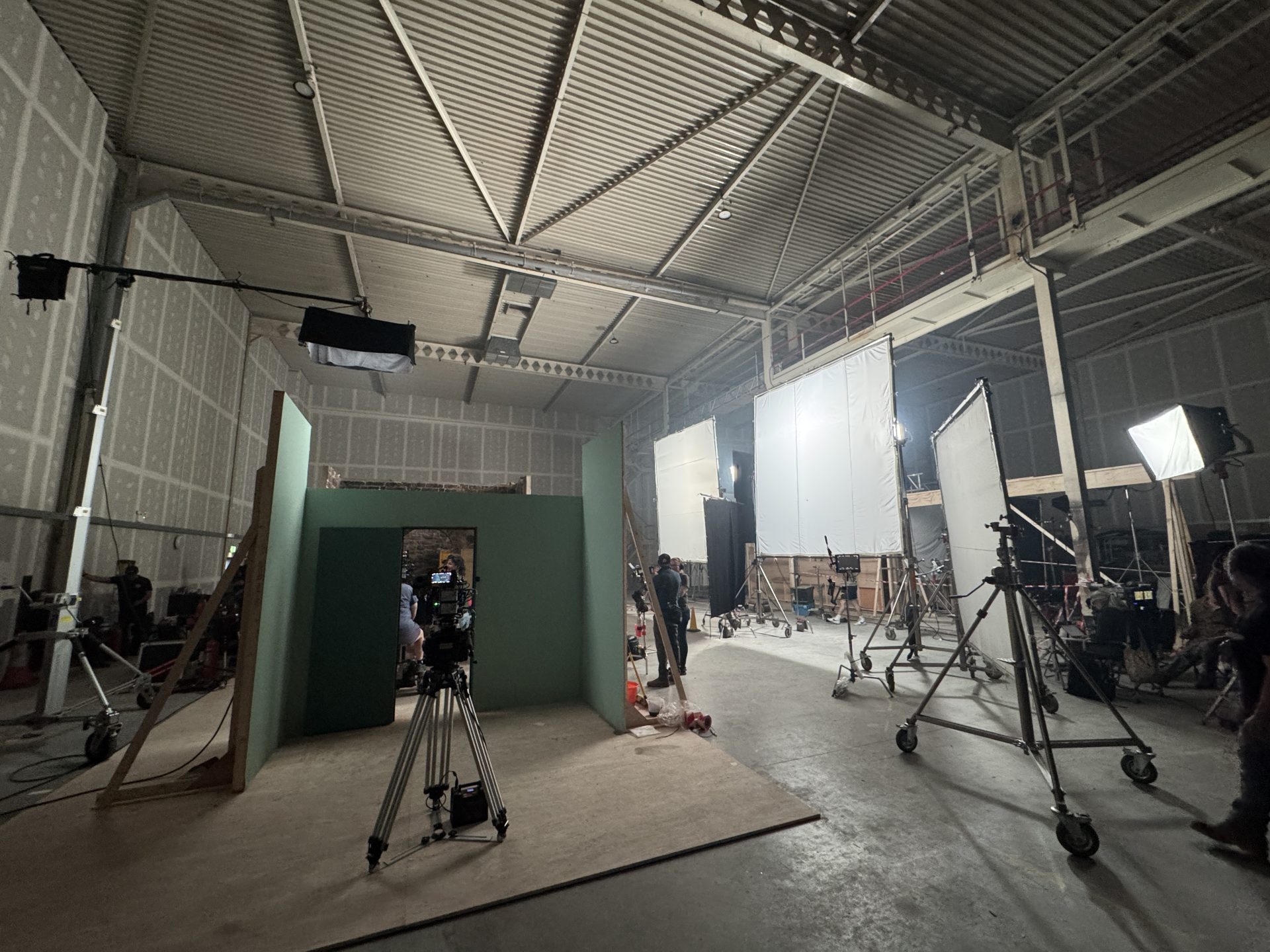
It all ends up in this big scene where Pip and Cara confront the antagonist and everything goes up in flames. On account of it being a heritage site, we could only do some basic flame bars on the floor (mostly for foreground), but the crux of the entire space catching fire had to be done on a set. Once again, I quite enjoyed the challenge of recreating the conditions of a real space in a spare studio.
The stories we carry
Growing up as the youngest boy among four older sisters, I spent much of my life watching brilliant and powerful women navigate judgemental social circles and patriarchal systems. As an outsider in many ways – culturally, geographically, and professionally – those ideas of voice, agency, and ownership have always felt deeply familiar to me. In many ways, the cinematography became a perspective willing to trust Pip’s instincts when nobody else would.