STAYING GROUNDED
Surviving Earth DP Olan Collardy explains why he prioritised observational visuals for this touching true-life feature, which follows an Eastern European migrant in Bristol.
My journey to shooting Surviving Earth didn’t start with a script. It was one that started with a friendship, and I think that matters more than anything else I could tell you about how the film was made.
I met Thea Gajic the way a lot of creative people find each other, at some low-key film night, the kind where nobody is really networking but everybody kind of is. She introduced herself as an actor looking to collaborate. I was a cinematographer still working out what my voice was, still figuring out the difference between shooting something well and shooting something truthfully. We were both, in our own ways, looking for something we couldn’t quite name yet.
Months later, we met for coffee. We talked about film, about what we each believed storytelling was actually for, about the kinds of images that had stayed with us and why. By the end of it, it was clear we were going to become each other’s creative mirrors.
Our first short together was Run. We made it in a South London park in a few hours, with almost nothing in the way of resources. No elaborate setup, no extensive crew. Just the two of us, a soundperson, a handful of actor friends and a story we believed in. That film found its way to Sundance Film Festival. I’m not saying that to brag but because I think it proves something about what happens when trust is the foundation of a creative relationship. We didn’t have the conditions that people think you need to make something worth watching. We had each other, and we had a shared understanding of what we were trying to do. That was enough.
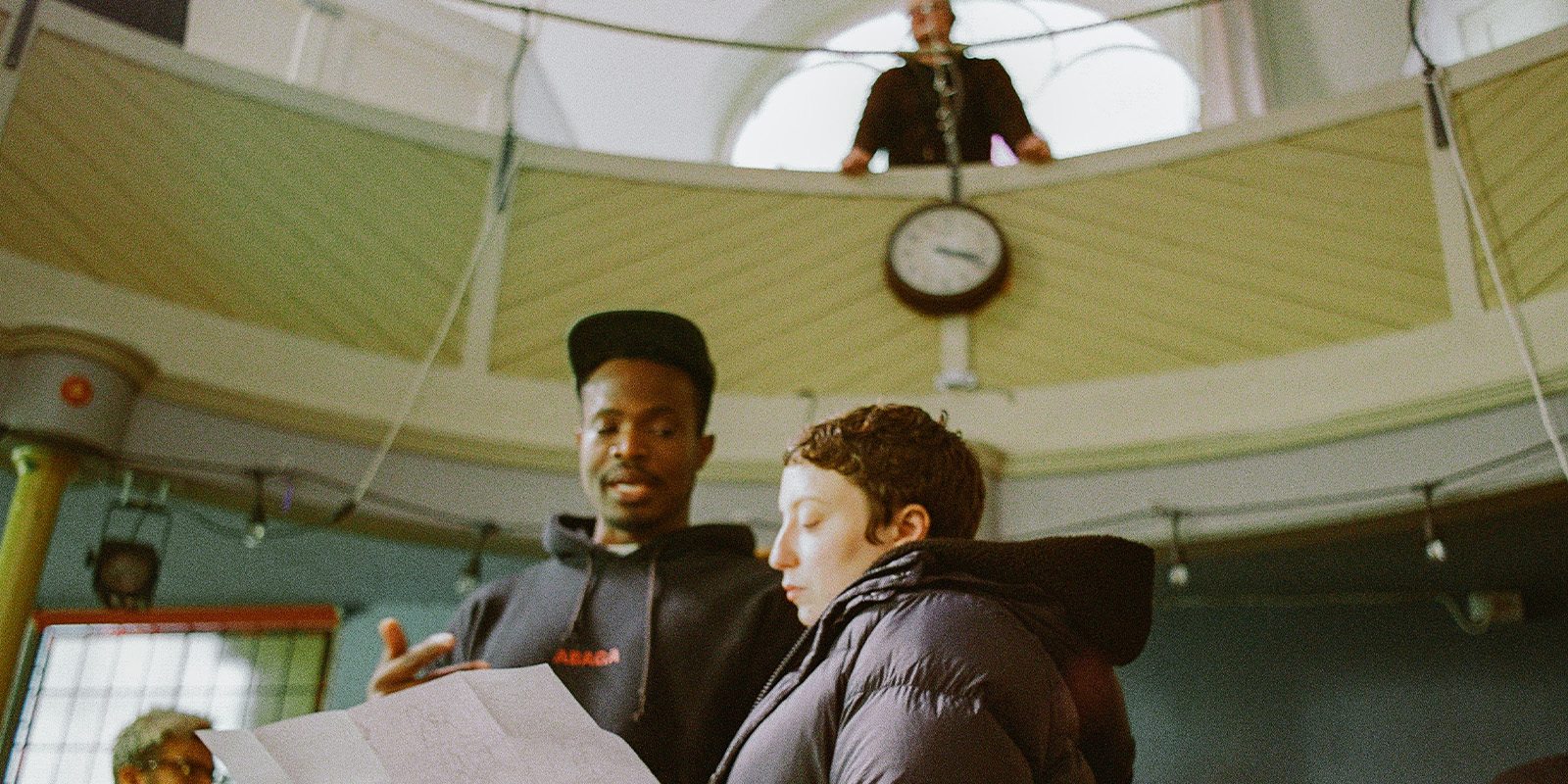
By the time Surviving Earth came along, I wasn’t just a collaborator on the project – my voice was part of its DNA, of its visual identity. And that changed everything about how I approached the work.
Focus on family
The film is rooted in Thea’s own family history. Her father moved from Serbia to the UK, and the weight of that experience, the dislocation, the resilience, the quiet grief that comes with leaving everything familiar behind, runs through every scene. It’s a deeply personal story, and she approached it with the kind of care you only bring to something that genuinely costs you something to make.
The decision to shoot in Bristol wasn’t only logistical, it was also emotional. Bristol wasn’t just a backdrop we chose because it looked right on camera. It remained true to the story of her father. There’s something in the texture of that city, in its people, and its particular rhythms that held the story in a way nowhere else could have. Thea knew that before I did and my job was to learn it alongside her.
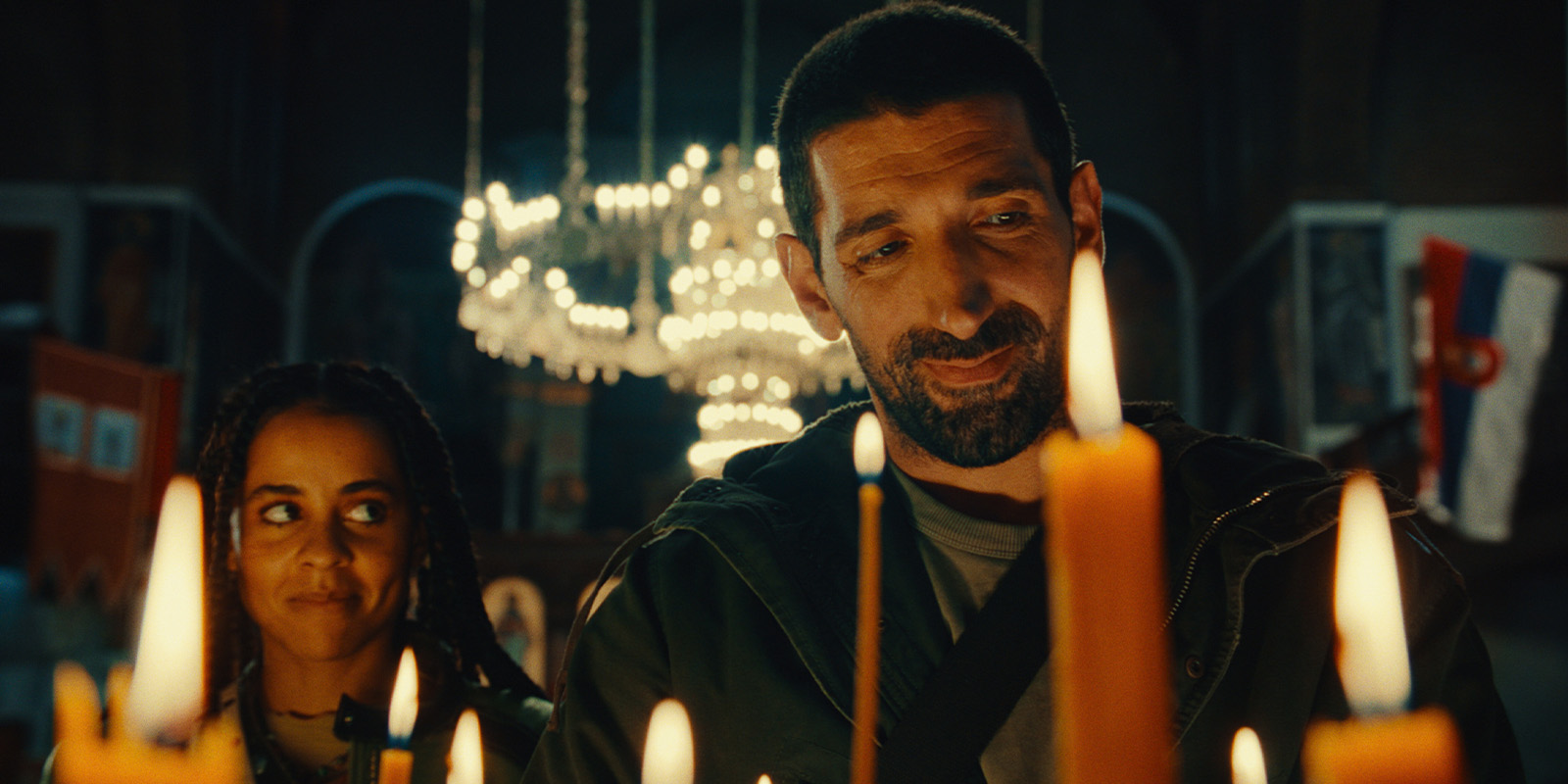
That’s something cinematographers don’t talk about enough. So much of the conversation around our craft focuses on the technical side, on equipment choices and lighting ratios and the mechanics of how you build an image. And those things matter. Of course they do. But the most important work I did on Surviving Earth happened before I touched a camera. It happened in the months I spent listening to Thea talk about her father, his friends, the music and what life felt like around him. Because here’s the thing about cinematography that nobody tells you when you’re starting out: your job is not to make things look beautiful. Your job is to make things feel true; to be authentic. Beauty, when it works, is a byproduct of that.
A principled approach
Before we shot a single frame of Surviving Earth, Thea and I sat down and worked out exactly what kind of film we were making, not just in terms of story, but in terms of how the camera would exist within it. The result was a set of principles we kept returning to throughout the entire shoot. Simple on the surface. Harder to execute than they sound.
The central idea was this: the camera should not judge. It should witness. The audience shouldn’t feel like they’re being guided through Vlad’s story. They should feel like they’ve stumbled into it. Like they’re present in the room, watching something real unfold, with all the discomfort and intimacy that comes with that.
To make that work, we had to think very carefully about how we covered Vlad specifically. He’s the heart of the film, and every camera decision had to serve the audience’s relationship with him. We wanted people to feel like they were observing him, close enough to understand what he was feeling, but never so embedded in his skin that the film became claustrophobic or manipulative. When he interacted with other characters, we stuck primarily to clean singles, mostly on the 40mm or 50mm lens. Those focal lengths sit right at the edge of what feels natural to the human eye. There’s no flattery in them, no compression or stretch. They just show you what’s there. That was exactly what we needed.
One of the more deliberate decisions we made was to avoid over-the-shoulder shots from Vlad’s side entirely. It might sound like a small thing, but it changes the feeling of a scene completely. The moment you put the camera over someone’s shoulder, you’re asking the audience to inhabit their body. You’re collapsing the distance between viewer and character. For a film built around observation, that felt wrong. We wanted the audience just outside Vlad, not inside him. Present with him, but not merged with him.
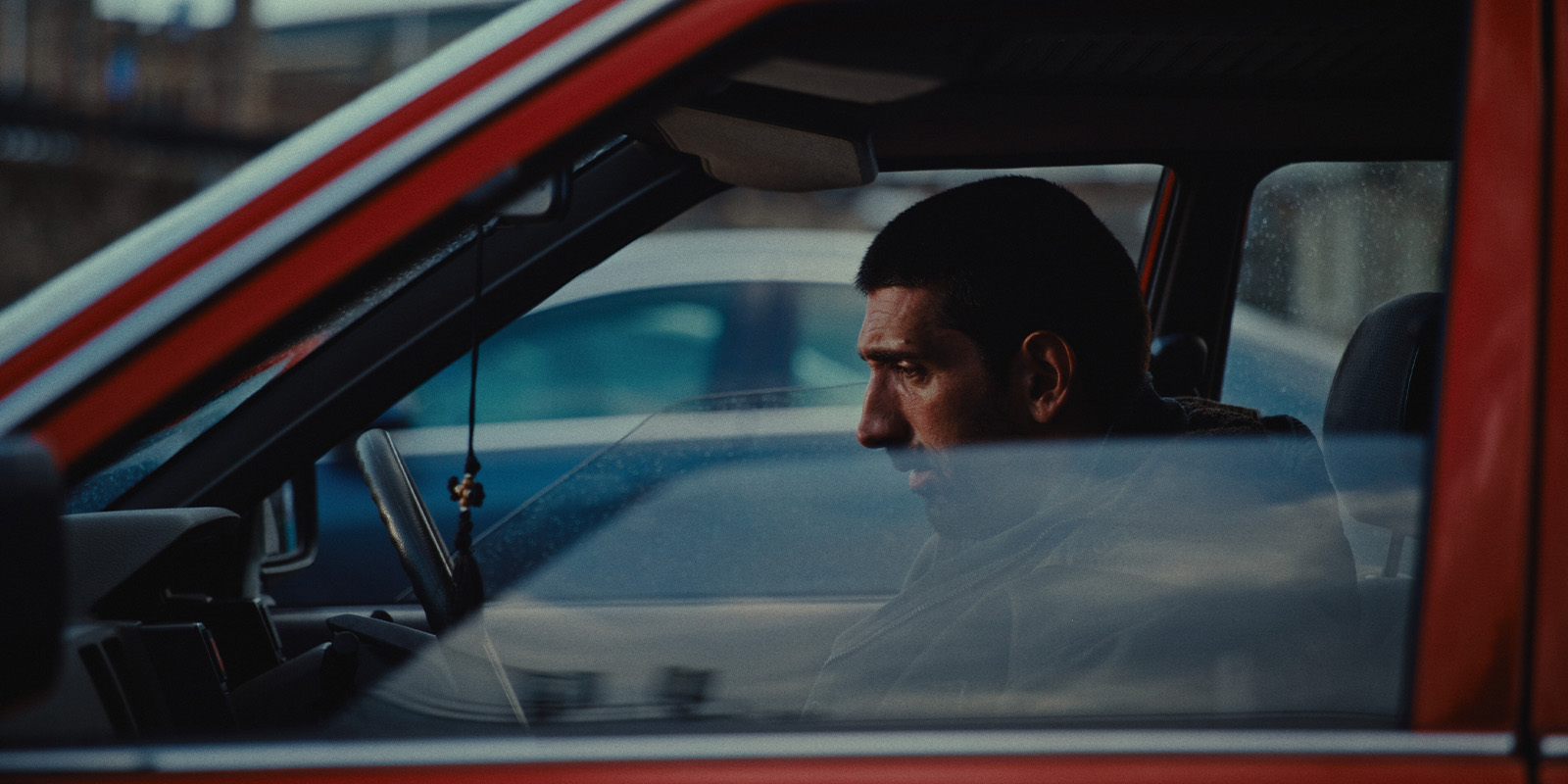
The way we thought about it was that the audience themselves were a character in the film. They had a position in every scene, a specific place they were standing, a particular angle from which they were watching things happen. When we needed to cut, we were disciplined about what we cut to. We’d shift to Vlad’s own point of view, to let you see what he was seeing. Or we’d move to the perspective of whoever he was talking to, so you could read the dynamic from both sides. If we wanted to get closer, we stayed on the same line as the original observational angle rather than jumping around. That continuity kept the audience anchored. It meant the cuts felt like choices rather than interruptions.
The same thinking carried through to how we approached establishing shots. We made a firm decision early on to stay away from wide-angle lenses for those moments. Wide angles do something that works against what we were trying to build. They make spaces feel larger and more dramatic than they actually are. They create a kind of spectacle. And spectacle, however impressive, puts distance between the audience and the world they’re being shown. It turns a real place into a stage. We wanted the opposite. By using longer focal lengths for our establishing work and framing with enough context to ground the viewer, the locations felt inhabited rather than staged. You arrived in them rather than being presented with them.
Taken together, these weren’t restrictions. They were a language. A grammar that Thea and I had agreed on before we ever called action. That shared language is what made the shoot feel coherent even on its most difficult days.
Letting the light in
We worked with natural light wherever we could, and when the schedule didn’t permit, it was important to let how light naturally fell in the space guide how best to light it with truth – this stems from my belief that light which already exists in a space carries information about that space. It tells you something about the mood of the environment.
For the interior night scenes (which had to be shot in the daytime), rather than building artificial moonlight from scratch, we leaned into what was already coming through the windows. We’d put ND on the glass to control the exposure and add CTB gel to push the colour temperature cooler, letting the natural light outside do the work of suggesting moonlight. It felt honest in a way that a hard source pointed at a wall never quite does.
For interiors, I augmented the spaces with LED sources, mostly LiteMat 2Ls on autopoles, keeping them high and out of the way. One of my priorities throughout the shoot was keeping the floor as clear as possible. I was operating a roaming (panning) camera most of the time, which meant I needed to move fast, and I needed the actors to be able to land anywhere within the travel of our sources without us having to stop and reset. If the floor is full of stands and cable runs, that freedom disappears.
For larger spaces, particularly office buildings where we could push light through windows from outside, we brought in HMIs. And for the concert scenes, tungsten sources, parcans mostly, gave us something with heat and intensity that felt right for those environments. There’s a quality to tungsten in a live music setting that LEDs still don’t quite replicate. The guiding principle throughout all of it was the same. The spaces should feel naturally lit. The audience shouldn’t be aware of the lighting at all.
For the camera, we chose the ARRI Alexa Mini LF. The large format sensor gives you a quality of image that feels genuinely different from what smaller formats produce. There’s a presence to it, a depth-of-field characteristic that, when you use it right, draws the eye in a way that feels natural rather than forced. The low-light performance was important for us too, given how much we were relying on available light. And the size of the camera meant we could get into spaces, both physical and emotional, that a larger rig wouldn’t have allowed.
The lenses are where things get interesting. We used a combination of Panavision zooms and Tribe7 Blackwing X-tuned lenses, and each brought something distinct to the visual language of the film. The Panavision zooms gave us flexibility and a certain clarity. The Blackwings are something else entirely. They have a character to them, an imperfection in the best possible sense, that adds texture and warmth to an image. They feel lived-in. For a film about memory and belonging, that quality mattered to us.
Yet what I keep coming back to, when I think about everything that went into making Surviving Earth, is how much of it was invisible. The months of conversation before we shot anything. The years of friendship and creative exchange that meant Thea and I could communicate in shorthand on set, that meant I could trust her instincts and she could trust mine, that meant we could disagree about something and work through it without the disagreement becoming a problem. None of that shows up on screen directly. But all of it is there.