

OH, VIENNA
Every year IMAGO, the international federation of cinematographers, holds its annual meeting known as the IAGA, and usually in a neat surrounding like Rome, London or São Paulo. In 2026, the dates were 11 through 13 March and the setting that incontestable crown jewel of European cultural strongholds… Vienna!
All participants were booked in the luxurious Hotel Josefshof and the IAGA was held at Löwelstrasse 14, just behind the immense Burgtheather, a building designed to dwarf most anything short of Egyptian pyramids…
Wednesday morning, the auditorium was well-filled, as “Maestro” Luciano Tovoli AIC ASC, whose visionary concept of camaraderie helped make IMAGO a reality more than 30 years ago, opened the proceedings with heartfelt words emphasising friendship and curiosity, pointing out the invaluable contributions by Andreas Fischer Hansen DFF and Nigel Walters BSC to the success of IMAGO – both of whom have sadly fairly recently passed away.
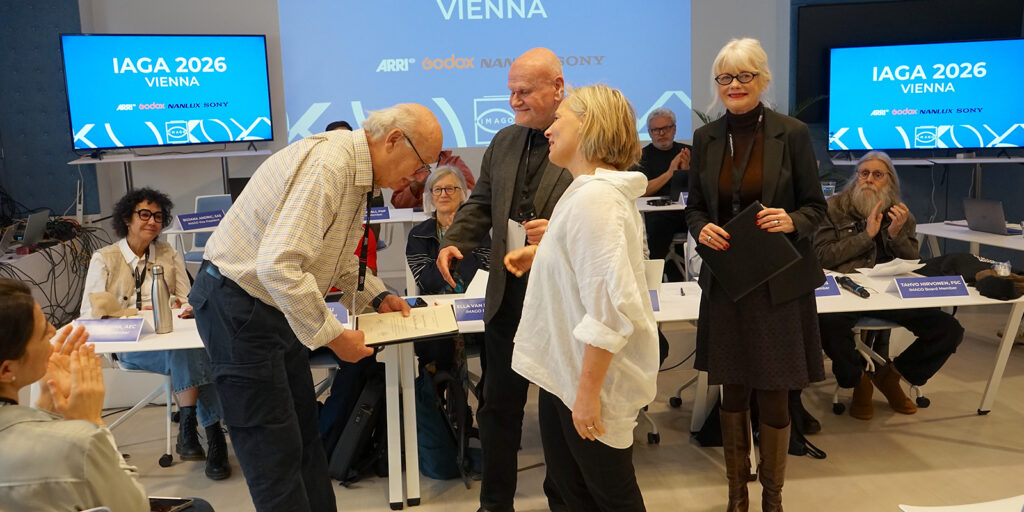
AAC president Astrid Heubrandtner then officially welcomed everyone, and summoning Paul René Roestad FNF and Dr Cristina Buschto to stand up and approach the podium, they were met with thundering applause as they were awarded honorary membership in the AAC.
Overcoming challenges
IMAGO president Mustapha Barat ABC then opened the formal proceedings of the IAGA noting that, along with the rest of the industry, IMAGO faces challenges and disruptions, but he also stated his conviction that IMAGO is on the right path. Barat, who has been given praise during his presidency for his diplomatic leadership, then continued by noting that IMAGO started out European, but today it is a global organisation, and at this IAGA we’re delighted to welcome the Ivory Coast, Netherlands and the Czech Republic as new members.
AEC vice-president Lara Vilanova then presented the IMAGO mentorship programme, through which mentees presented by every society are paired with a member of another cinematographers’ society to help the younger generation of new filmmakers on their journey onwards.
IMAGO’s stalwart sponsors, without whose generous support the event would not have been possible, showcased their latest products in a hall adjacent to the auditorium. Among them, Sony demonstrated the RIALTO Mini unit and Nanlux the Evoke 150C and 600C spotlights featuring the new Nebula C8 colour engine.
Rounding off the Wednesday programme was “The Quiet Power of the Lens – Weapon or Witness?” – a Masterclass in which Wolfgang Thaler AAC showed fascinating clips from his documentaries chronicling life at the bottom of the societal structure in Mexico City, Moscow and New York City. In another film, Thaler had documented the hardship of Ukrainian coal mine workers, hacking their way with handheld picks in narrow crevices in almost medieval fashion. It was difficult to not be affected by the clips shown.
As the Wednesday part of the IAGA wrapped up, it was time for a delightful guided Vienna sightseeing bus tour arranged by the Vienna Film Commission and winding up in a traditional Viennese Heuriger restaurant, rounding off the evening with a gastronomic marathon eliminating all threats of dehydration or hunger.
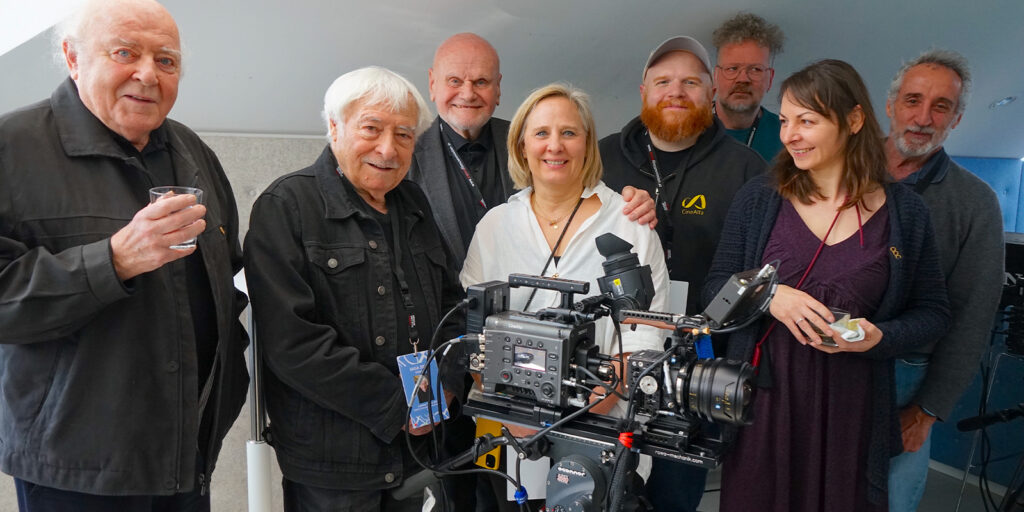
Thursday began with the presentation “Behind The Lens – Working and Living Conditions of European Cinematographers”. Distinguished lawyer Dr. Cristina Busch explained the conclusions drawn from this long-overdue study from the IMAGO Working Conditions Committee, and Kurt Brazda AAC, chair of this committee, outlined its genesis: following an invitation from the European Parliament, the study had been presented there to representatives of the European Commission, making IMAGO an official dialogue partner for European institutions. But this study is also meant to improve working conditions in our industry worldwide.
A light dinner is then served, and then everyone’s given a chance to briefly visit their hotel rooms to dress up for the AAC’s 50th anniversary Celebration, held at the magnificent Gartenbau Kino, which is conveniently reached through a short ride on the local tram. The AAC Celebrations lasted until well after midnight. For further information about the AAC’s 50th anniversary, there’s a separate article on our website.
Strengthening connections
Networking and informal discussions are, of course, one of the most important aspects of an IAGA, and some participants I talked to feel that as IMAGO has become a bigger organisation, difficulties have arisen – because so many countries and diverse cultures and opinions are now gathered under one umbrella, reaching agreements sometimes becomes challenging. But these challenges are ultimately also part of a learning process, the successful handling of which can only strengthen the federation.
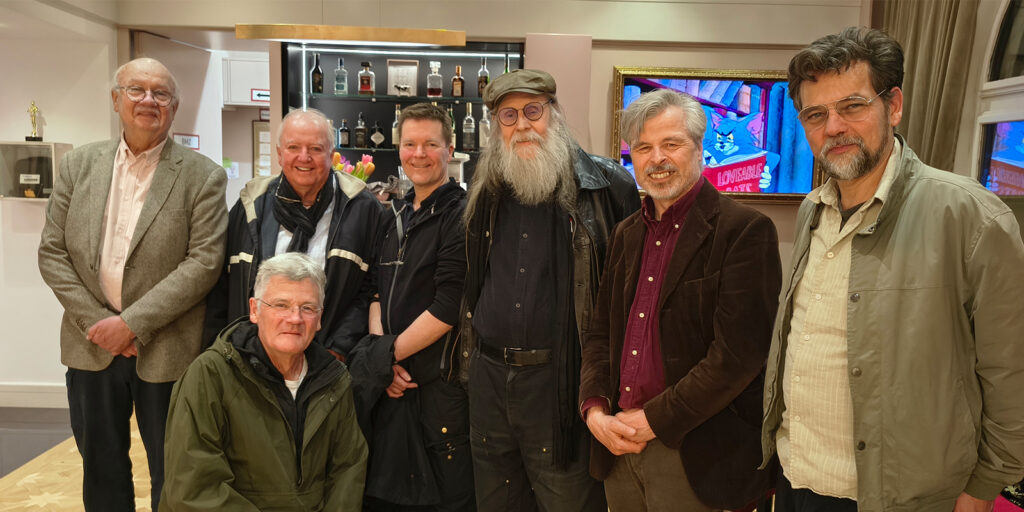
Given the wonderful party the night before, perhaps it’s not surprising the audience is somewhat quiet and reflective when, on Friday morning, Dr. Cristina Busch and Dr. Harald Karl present “Who Owns Vision? – ‘Human vs. Machine’ – Authorship under fire by AI”, stressing the importance of identification of authors of intellectual and audiovisual material. Because if not, the imagery of cinematographers is reduced to mere collection of raw data.
Four strategic commitments are very important for cinematographers. Human creative control must remain central at every stage of production. No undisclosed training on protected creative works must be allowed. No use of creative works without fair remuneration. And, finally, clear responsibility whenever AI systems are used. But fear not, collective resistance is already underway regarding music, press and publishing. Authorship remains tied to human creative contribution.
After this, everyone needed a short break to stretch their legs and have a cup of coffee, getting ready for the last item on the programme – which was Committee Discussions or Presentations.
Astrid Heubrandtner and her team then received well-deserved applause for a most memorable and skillfully executed conference.
(Header image credit: Bettina Frenzel)