
During this brief awards off-season, Mark London Williams chats to those winning in other ways, as he catches up with DP Jeremy Cox about his work on box office champion Backrooms and Boris Mojsovski ASC CSC ASBH about Netflix chart-topper I Will Find You.
“The summer box office is incredibly important […] vitally important in terms of what the overall health of the industry looks like and what that portends for the entire year.” While truly knowing what anything might portend for the rest of the year remains an enviable trick in a world that remains metaphorically, and often literally, aflame, that quote, from one of the head “trend trackers” at Rentrak – a firm specialising in, well, entertainment biz market trends – does signal some bona fide good news for the movies, and the box office that once upon a time sustained them.
It comes from a CNBC article which notes that Hollywood may be on track for its first $4 billion-plus summer, and perhaps first $10 billion year, since the pandemic. One is tempted to spin a recording of Long Hard Climb on the turntable.
Much of this surprising audience beneficence, though, doesn’t come merely as a result of studio executives having greenlit the usual superhero / sequel-ish / established IP summer fare – Toy Story 5 notwithstanding – but instead, with the considerable help of out-of-left arrivals of indie films, horror in particular, as sudden smash hits.
Jumping from stream to screen
As you’ve doubtless read, two of the “smashiest” come from YouTube creators who’ve been spotted, scouted, and made the jump from stream to screen – Obsession’s writer/director/editor Curry Barker, and the director and co-writer of Backrooms, Kane Parsons.
The latter, like the show Severance, could be ascribed to a seemingly growing niche of “office horror” – i.e., the literal places and spaces of stultifying “work” also being the arenas of skin-bumping and scream-inducing terror and calamity, though we’ll leave whether Backrooms’ box office success is coincident with the uptick of RTO orders (speaking of post-pandemic shifts) for a future film studies thesis.
What is certain is that Parsons can also be termed the “creator” of Backrooms, in that his long-running YouTube series was made – by him – using free versions of Blender 3D rendering software. Of course, the idea for infinite creepy spaces awash in psychologically-smothering yellow carpeting and wallpaper has its own storied history as memetic internet lore, which you may also be conversant with.
Such background is important though, because much of the work of the crafts departments, particularly production design and cinematography, was, in a sense, predetermined, as far as how a world would be visualised and moved around in – by both characters and cameras – when translated into a feature film.
“Because of Kane’s YouTube experience, he was so accustomed to moving a camera through these spaces, it was super camera friendly already,” Backrooms’ cinematographer, Jeremy Cox, told us during an early morning interview we grabbed while he took a break from his current production.
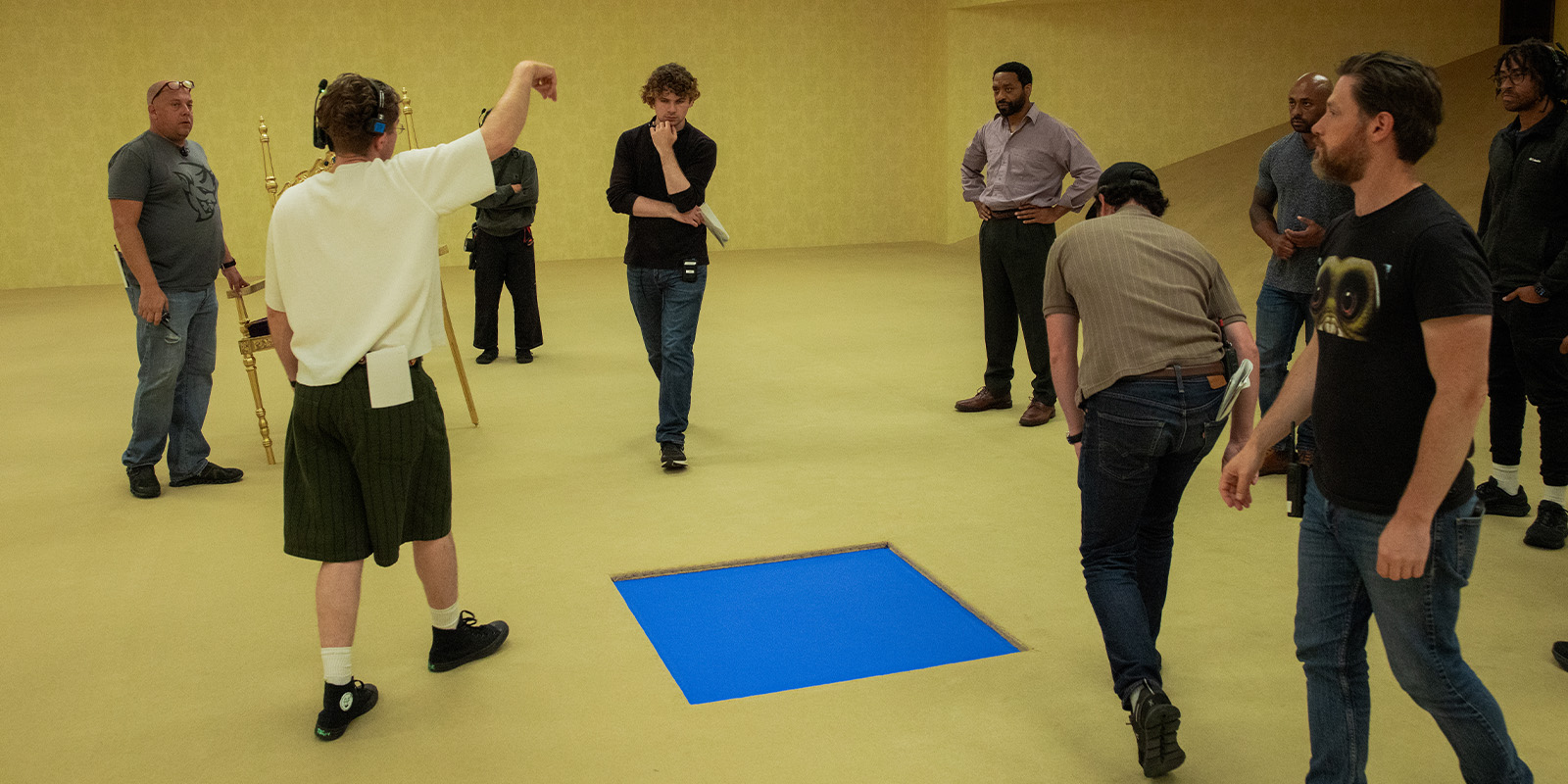
“It was pretty fun to work backwards from what’s already there,” he said of the process he undertook with both Parsons and production designer Danny Vermette, with whom he’d already collaborated as part of co-producer Osgood Perkins and Chris Ferguson’s Oddfellows Entertainment, with both Perkins and Ferguson among the producing team here.
“The original image of the Backrooms is actually a colour-shifted [Nikon] Coolpix image,” Cox recounted, of the original posted-to-4Chan photo that started it all. That’s what Parsons used for his web series, and Cox and his crew tried to capture that “warm green-yellow” – though it would also be fair to call it that “horrifying green-yellow” – with “iterations with a white balance shift.”
The iterations “didn’t look good on skin tones”, Cox noted, since there were actually no “skin tones” in the YouTube videos, because as Parsons himself has mentioned in previous interviews, it was easier to render faceless hazmat suits to more quickly get characters moving around than spending time creating skin, hair, eyes and other biological complications.
There was also the issue, of course, of making “real” Backrooms – maze-like, full of dead-ends, madness-inducing – so that actors Chiwetel Ejiofor and Renate Reinsve could move around in them.
“The studio we had was four stages,” Cox says – over 30,000 square feet worth, quickly built up by Vermette and his crew to resemble not only that original Coolpix image, but to draw from other sources, ranging from films like One Hour Photo to the also Severance-inspiring office photography of the late Lars Tunbjörk.
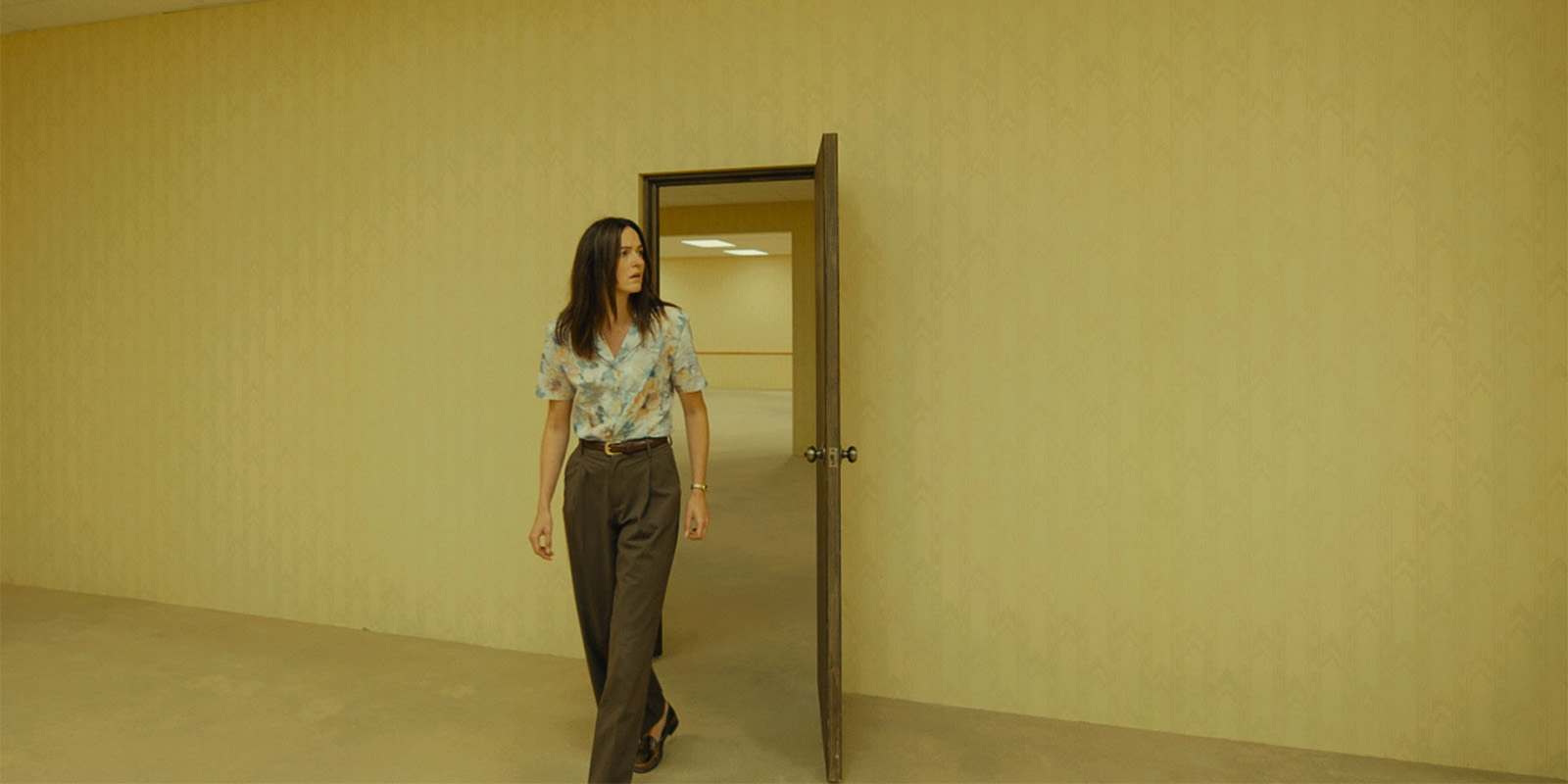
As for Ejiofor, playing the repressed furniture store manager Clark, who discovers the dimensional portal into the Backrooms down – in finest Jungian fashion – “below” the main floor, “we would just let [him] walk through the whole space and follow him – we didn’t want to overblock it. It was clear pretty quick, you couldn’t really miss in that room – it was a 360-degree space.”
They would do passes – careful to emulate the “found footage” feeling of the series – “at different proximities. Leo [Harim], the Steadicam operator, would do one in close up, one in wide. We’d call them ‘catch and releases’.”
As disorientating as the overall effect is – exactly as intended – perhaps even more alarming is the fact that the furniture store that the quickly unravelling Clark manages is an actual locale.
Not, to be sure, one stuffed with an array of ‘90s-era particleboard furniture, as in the film, but a commercial space in a Vancouver-area mini mall (which doubles for the film’s San Jose-area setting), whose own built-in fluorescent ceiling grid helped abet the increasingly unpredictable flickering signaling the Backrooms’ encroachment, and Clark’s own unravelling.
“We had that whole store hooked up to the dimmer box,” Cox says. “I didn’t get into the weeds of how it was done,” which came after generator operator Tom Waldman oversaw two days of wiring resulting in around nine large cables running along the roof culminating in a “big dimmer stack thing”, leaving them “super pleased” with the result, and with an ability to fine-tune their Astera Tubes used in the location’s already overbearing lighting design.
That result also signalled a shift for Cox, who “was at the monitor with Kane – my first time doing a shoot solely behind the monitor,” making him even more appreciative of crew collaborations, such as with his dolly grip Lowell Richardson.
Although Cox wasn’t operating, he was still quite deliberate in the camera choices, such as using a RED Komodo, since they “wanted a small sensor – cropped to Super 16mm” to help replicate the VHS look of the found and POV footage.
They did a lot of shooting on VHS tape to help find that look, and for the film, then had to “de-grain [and] de-VHS” their own footage, “(then) do VHS and put it back on.” They used the process “as a kiln [to] bake or cure” the images, which, in turn, “blurs your perception of it [and] makes it seem in fact real.”
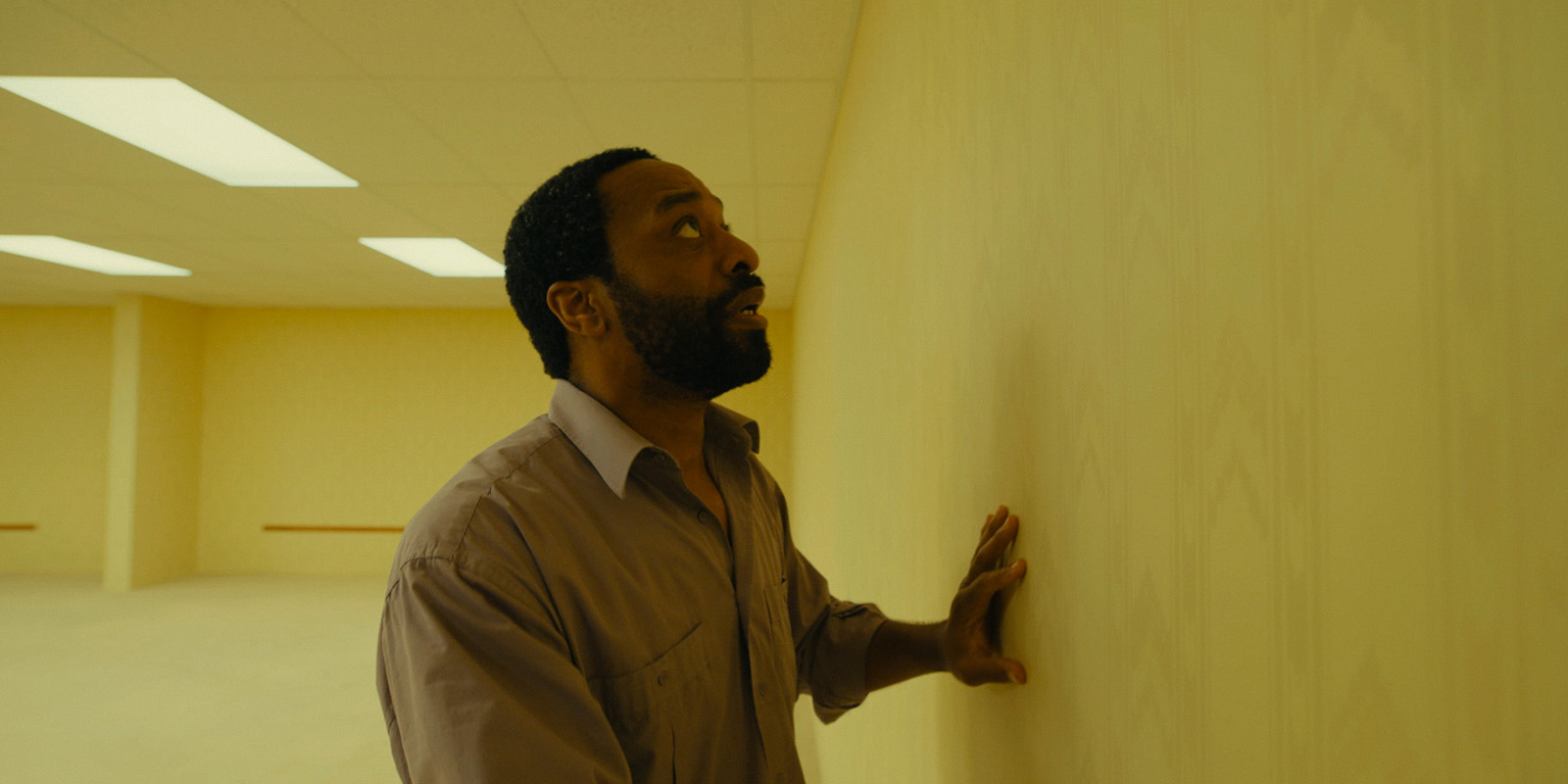
The “reality” playing out around what the Komodo was capturing via faux VHS, was in turn captured by a Sony Venice 2, with Supreme Prime lenses, “because they were really clean,” Cox said, and “didn’t impose themselves on the environment,” leaving that environment to speak for itself.
And, given a box office reception far exceeding any initial best-case assumption about how the modestly budgeted film might do, it’s clearly an environment that’s also speaking to audiences in droves.
Finding the right visuals
But if Backrooms doesn’t fulfill your anxiety quotient this summer as a viewer, you might turn toward the small(er) screen – if you’re not busy watching found footage there – for I Will Find You, Netflix’s latest visual page-turner from the literal page-turners of thriller writer Harlan Coben.
Here, we have a Fugitive-esque premise, wherein David Burroughs, played by Sam Worthington, stands as a father falsely accused of his son’s grisly murder, and is serving time – endlessly – in a men’s prison in Maine (the story runs from New York to Boston through New England, with Toronto and other Canadian locales doubling for most of those – establishing shots aside).
The one extended relative who believes Burroughs might be innocent, sorta, maybe, is his former sister-in-law Rachel (our second appearance for Severance in the column, as she’s played by Britt Lower), an inadvertently disgraced journalist who visits him in prison with possible exonerating evidence. If it can be proved. And if they can survive the improbable chain of events that ensue after that evidence appears, from a prison break to underworld conspiracy, law enforcement corruption, and more. All while they become Bonnie and Clyde-like media sensations.
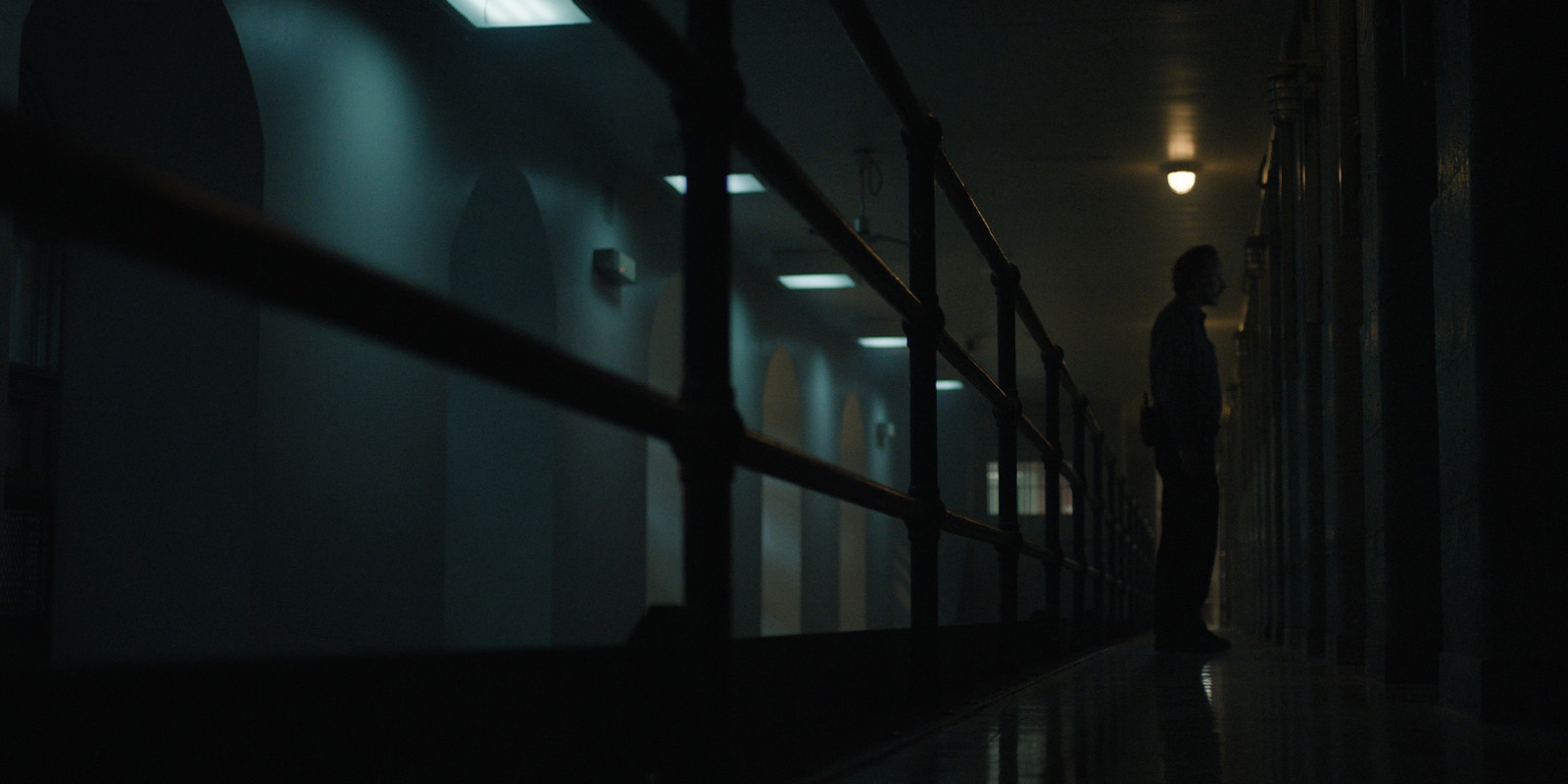
Cinematographer Boris Mojsovski ASC CSC ASBH says that when he started talking with director Brad Anderson (who would establish the look and feel of the series in its first two episodes), he was “almost available”, shortening what he likes to call “the proper process” for prep, which involves “having dinner, going for drinks” and, especially in the case of Anderson, talking film “theory and history”.
They’d collaborated earlier on the DC superhero series Titans, and managed to have a few conversations where they could identify that “it was important for the series to be focused on what I call [being] ‘seemingly real’,” which may evoke the late playwright Sam Shepard’s phrase “exaggerated realism” and which Mojsovski describes as “more crafted” than actual realism: “everything is very modelled,” and yet what “was important to us [was] the idea the story could happen to anybody… [so] it has to belong to the real world,” thus also helping audiences “identify with Sam’s character – he’s just an everyday guy that happens to be involved in a web that was unlikely to happen.”
Except, perhaps, in a Harlan Coben story.
Approaching each new project, Mojsovski creates, if not a book, a document of his own, which he likes to call his “‘visual manifesto’ – a blueprint for what the series is going to look like.” It’s a result of “all those nights of having bourbon and dinners” and early collaborations with both director and production designer (in this instance, Mark Steel, a previous Emmy nominee for his work on The Umbrella Academy).
After all those gatherings and conversations, “we ‘melange’ them into a document”, which then becomes a kind of philosophical treatise to help further guide the visuals. Notes from Find You’s Manifesto included “our look does not rely on a heavy ‘wash’ or a visible LUT” and “environments dictate the look”.
This was especially true with Kingston Penitentiary – located outside of Toronto in Kingston, Ontario – where many key sequences in those first two episodes take place. It was an example of needing “to marry all these locations to all the studio work”. All those yards, cellblock halls and more were at Kingston, but the jail cells were on soundstages in Toronto – a type of melange that would continue throughout production. “Because of that,” he says, “we decided to go with the ARRI Alexa 35” for its versatility in both settings.
Married to the ARRI was a mix of “spherical and anamorphic lenses – I choose [one] based on a scene – whatever a scene feels, I choose those lenses. I never mix within a scene,” Mojsovski emphasises. “But scene to scene we do mix. We kind of make a map of where I think it goes.”
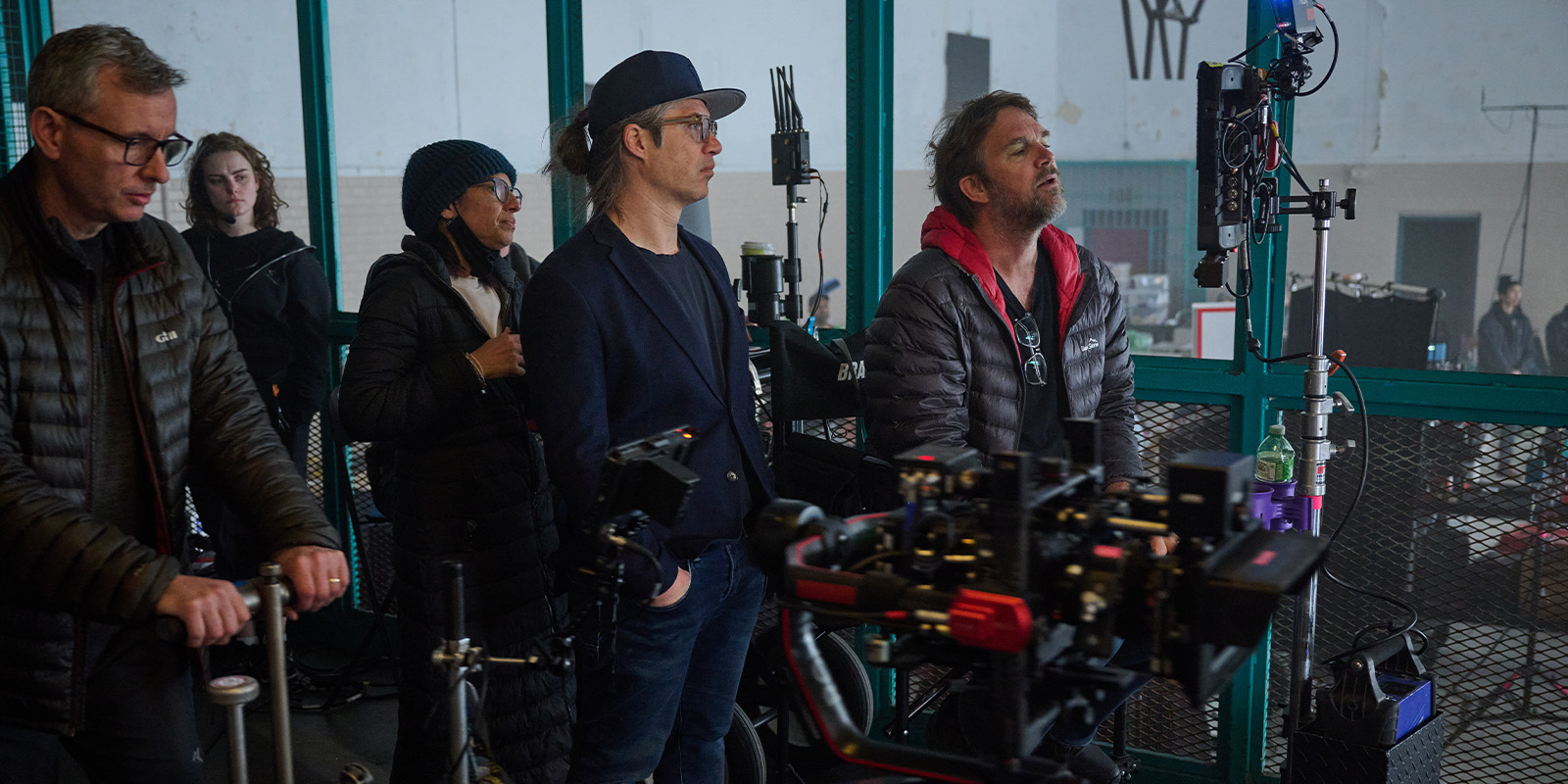
The ingredients include Atlas anamorphics. “The image we get has that vintage feel,” he says of the glass, yet he finds them “a more modern lens – I’m super fond of them.” Another consideration on a fast-moving TV shoot is that “six or seven[Atlas] lenses are cheaper than one anamorphic from somebody else.”
His “go-to spherical lenses”, meanwhile, are Leica Summicrons. “They feel like a film lens,” he says, “but [more] easily manipulated.”
Along with the lens-switching, as dictated by the feel of scenes, they also “explored the tension between objective and subjective experience through lighting and framing”, as he wrote in some followup comments.
And framing was key. He noted earlier that “the more time I spend in this industry, the more I understand what [Sir Roger] Deakins CBE ASC BSC meant by ‘the frame is king’. For years I pretended to understand that,” but now, working within those parameters becomes more and more of an intuitive process – this after already amassing accolades like an ASC award for how he filled frames in 12 Monkeys with another nomination for work on Titans.
“Once a script becomes alive,” he also wrote, “it exists within a real space beyond the imagination of the reader. Actors become characters within the mise-en-scène, real people begin relating to each other and their environment and everything is re-examined through that reality,” though he allows, “because of that, there is always an element of improvisation.
“We had a wonderful cast and writing team who, together with the directors and crew, explored possibilities during blocking and continually distilled the purest version of the story. Sam led much of that process. He was always focused on ensuring that the emotional logic and narrative logic aligned. That commitment created moments of genuine magic on set more times than I can count.”
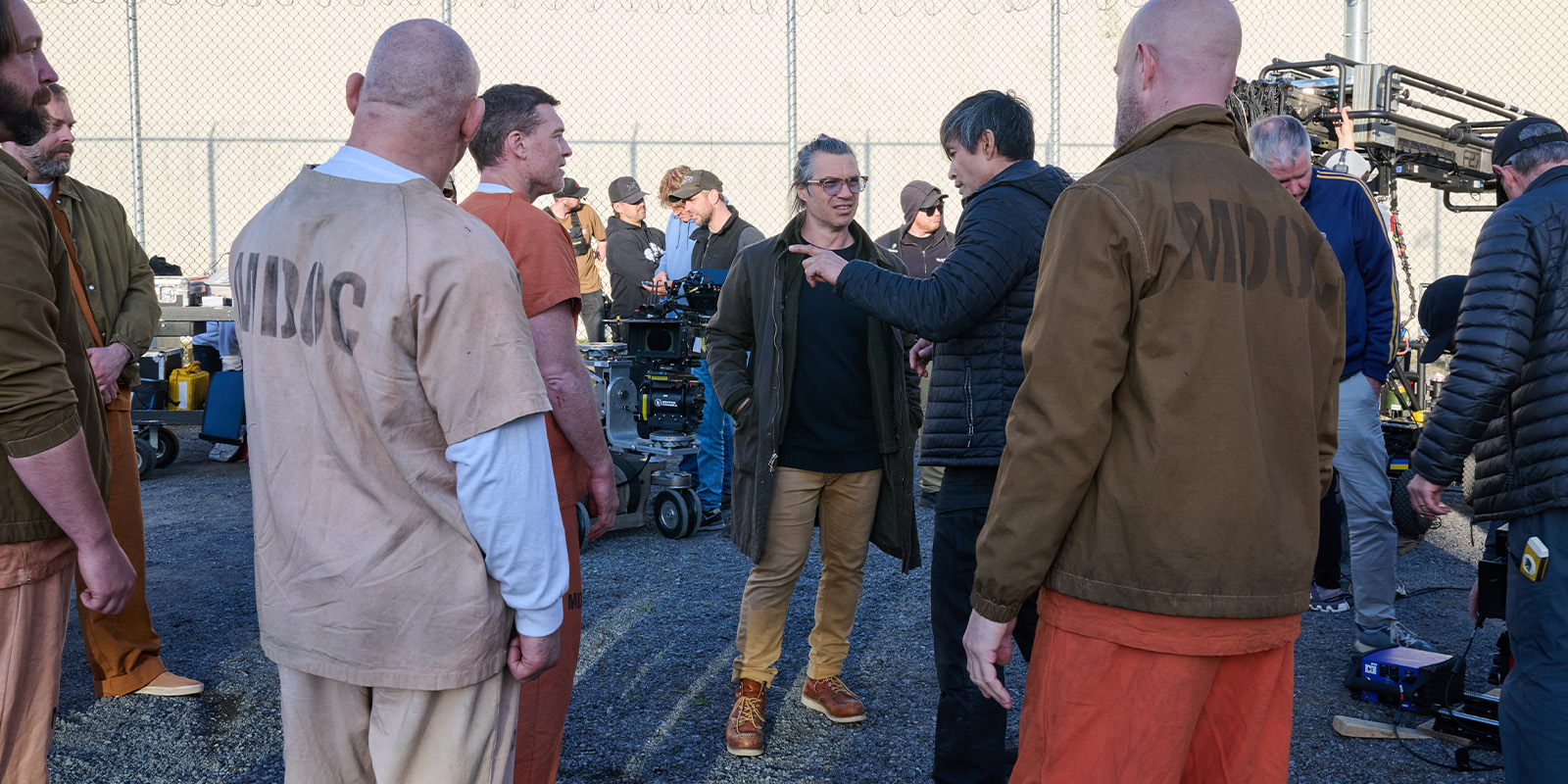
He’s also effusive about who he shares that magic with – quick to praise the artistry his crew brings to the shoots, and singling out contributions from his gaffer, Chris Harmsworth, who’s “up on the technology a lot and introduced to some newer fixtures” which wound up emitting less heat, and helped “reduce the overall strain” of energy demands on production.
He also notes his process with “my DIT colourist, Joshua Jinchereau… He has a big truck – everything a post facility would have,” and with that “cooks the whole day. We get to about 98% of what it looks like, on set. I think that’s what filmmaking is – I like to execute intentions.”
Of course, he shares those intentions with the series’ other DP, Fraser Brown CSC, who he calls “my fourth child – I’ve been his mentor my whole career. We work often together– his style is like mine; he’s slowly, surely becoming much better than me. In this case, it’s very seamless.”
That seamlessness will continue when Majsovski finds himself taking the director’s chair for an upcoming feature, with Brown as his DP.
And as compressed as Majsovski’s own prep time with Anderson might have been, there was still time for them to suss out mutually admired work for references – ranging from ‘70s-era “paranoid cinema” in general, David Fincher’s Netflix series Mindhunter in particular, and the avant-garde B&W films of early 20th century artist Maya Deren, especially as the memories of Worthington’s character “become more lyrical, more connected to family […] but in vivid colour. Meanwhile, his present-day reality became less saturated and more cynical.”
Which, of course, describes a lot of reality these days, here outside the Backrooms. However, may your life’s colours actually become more fully vivid before we meet here again in August – at which time, we’ll be in the Emmys home stretch, and we’ll chat with some nominees.
Though, hey! While we await those nominations at this writing, we’ve just had some inductees – to the Academy of Motion Picture Arts and Scientists. Many in the cinematography branch are friends of the column, who we hope to catch up with, and we even heard back from one right before deadline – though he was invited to the Production and Technology group.
That’d be Jeff Barnes, who helped found the late, great CafeFX, where he worked on Pan’s Labyrinth (and amassed a slew of other VFX credits there, and afterwards). Also a Visual Effects Society fellow, Jeff wrote in to say, “I’ve always enjoyed working at the intersection of creativity and technology, so acceptance into the Academy’s Production and Technology Branch is especially meaningful. I’m excited to connect with fellow members, contribute where I can, and continue learning from some of the best minds in our industry.”
Which is also the fun of getting to interview some of those same minds here, whose work runs the gamut of vivid colours – even if, once in a while, it’s mostly mortifying yellow.
[email protected] / @TricksterInk