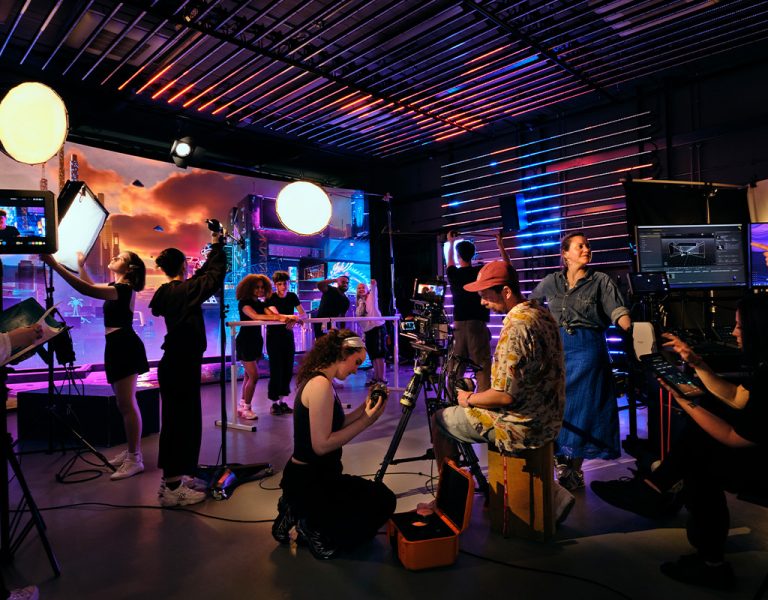


Brompton Technology’s Tessera LED processing platform is at the core of a state-of-the-art virtual production studio at the London Academy of Music & Dramatic Art, it has been revealed.
Supplied and integrated by Universal Pixels, the installation forms part of a “significant strategic investment” by LAMDA in emerging screen technologies, and is “already reshaping how the school trains the next generation of creative professionals”.
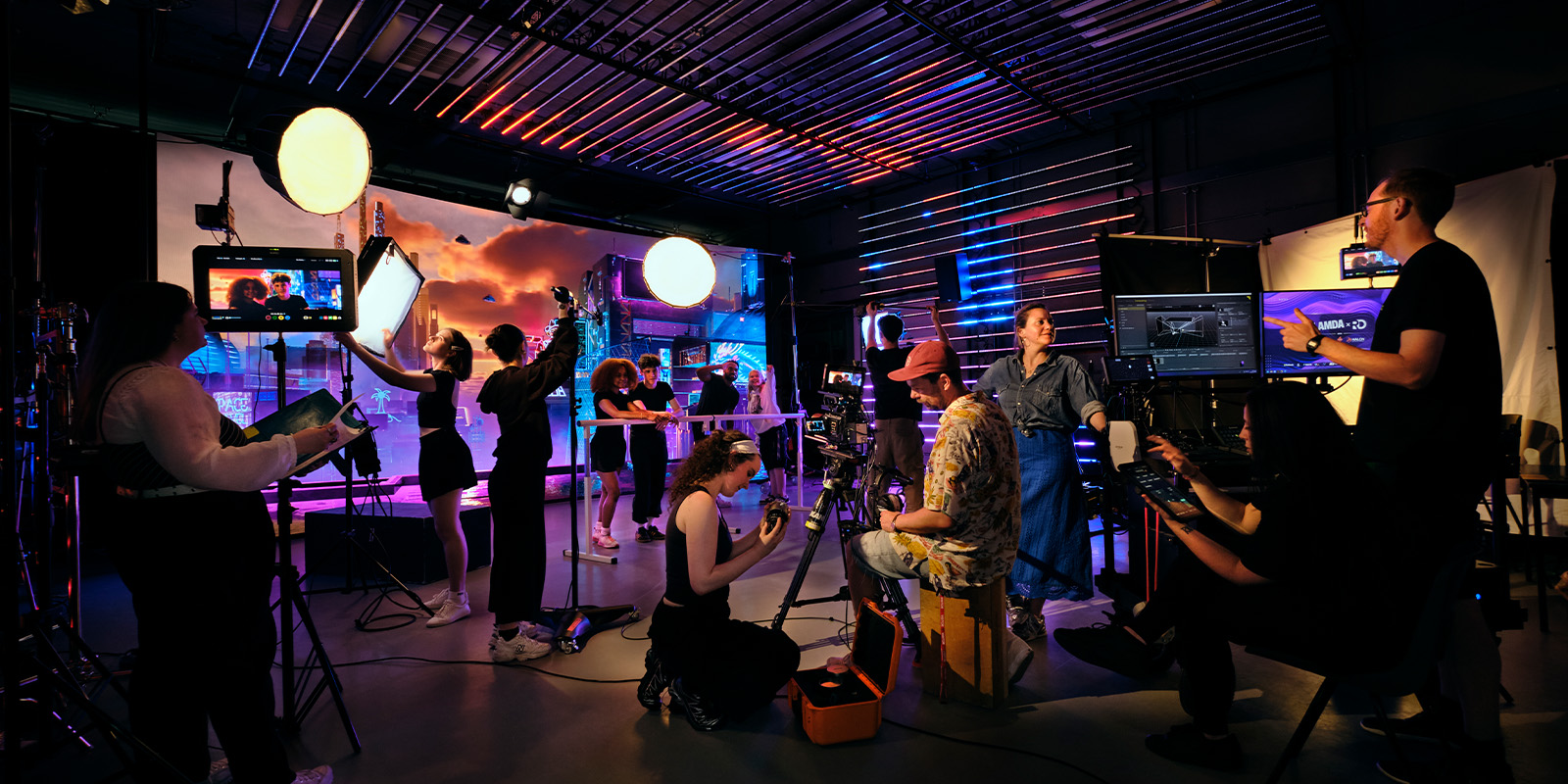
The studio is centred around a 7m wide by 3.5m high LED volume of AOTO RM 2.3 panels on a gently curved structure using 2.5° panel increments, and is driven by a Brompton 4K Tessera SX40 LED processor alongside two Tessera XD 10G data distribution units.
Running in conjunction with Unreal Engine, the volume renders real-time environments ranging from photorealistic exteriors to fully abstract sci-fi worlds.
It sits alongside a dedicated 30-camera Vicon motion capture volume with a sprung floor, a combination that places LAMDA’s facility “among the most technically advanced of any drama school in the UK”, a press release said.
“Rather than treating the technology as an add-on, LAMDA has made the LED volume a genuine academic priority,” said Brompton.
“It features across the school’s full range of programmes, from its Foundation in Stage and Screen (CertHE) and BA Professional Acting through to MA/MFA courses in Classical Acting, Musical Theatre, and Professional Acting.
“The new studio serves as a shared space where acting, directing, and production & technical arts students work together, mirroring real-world virtual production practice.”
“LAMDA’s graduates are the future of the creative industries,” said LAMDA’s head of innovation Bethany McShepherd.
“Investing in their careers with the very best technology and the very best training is what matters most to our institution.”
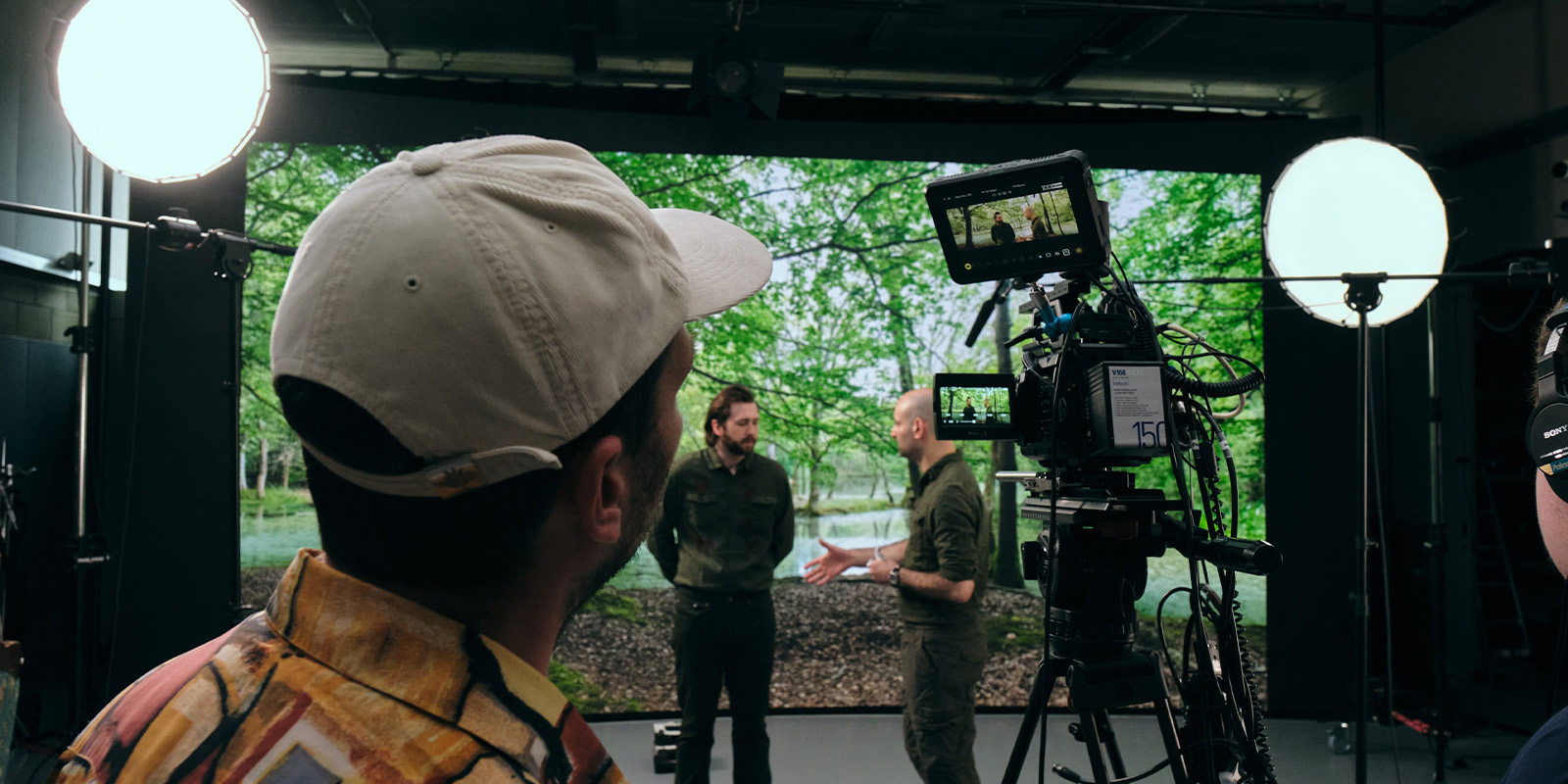
With LED volumes now standard on high-end film and TV productions, from prestige streaming drama to commercials, students working inside LAMDA’s volume engage with the same workflows, technical language, and environmental demands they will meet on professional sets, long before they graduate.
Charles Douglas, assistant professor of acting and directing with emerging technologies and head of screen & audio training, sees the potential as “transformative”.
“This technology opens the door to XR or mixed reality, to new ways of making films, and to extending the physical stage and the spaces in which we work,” he said.
“Using it in practice is one thing, but it’s also an invitation to reimagine the frame of what we do. That’s an important departmental mandate for us, to catalyse a new chapter of performance and storytelling.”
Brompton’s API has also become an integral part of how students are taught to work on set. Through an integration with BitFocus Companion, test patterns can be triggered via a Steam Deck, enabling students to quickly identify hardware or cabling issues and move efficiently through the troubleshooting process.
The reliability and colour consistency of the Tessera platform, meanwhile, is said to give LAMDA the confidence to use the volume not just for student projects, but for professional-grade output: the system supports graduate films, commercial digital assets, and collaborative research productions with equal consistency.
That professional reach is “already evident in the work produced”. A short film made in partnership with Media Trust, funded by The Crucible Foundation and based on stories from Prison Reading Groups, was shot entirely within the volume and features actor Ralph Ineson.
The space has also played a central role in the LAMDA x Lyric Future Technicians Programme, a widening participation initiative delivered with the Lyric Hammersmith Theatre, through which a cohort of young people from West London recently got hands-on experience with professional filmmaking infrastructure.
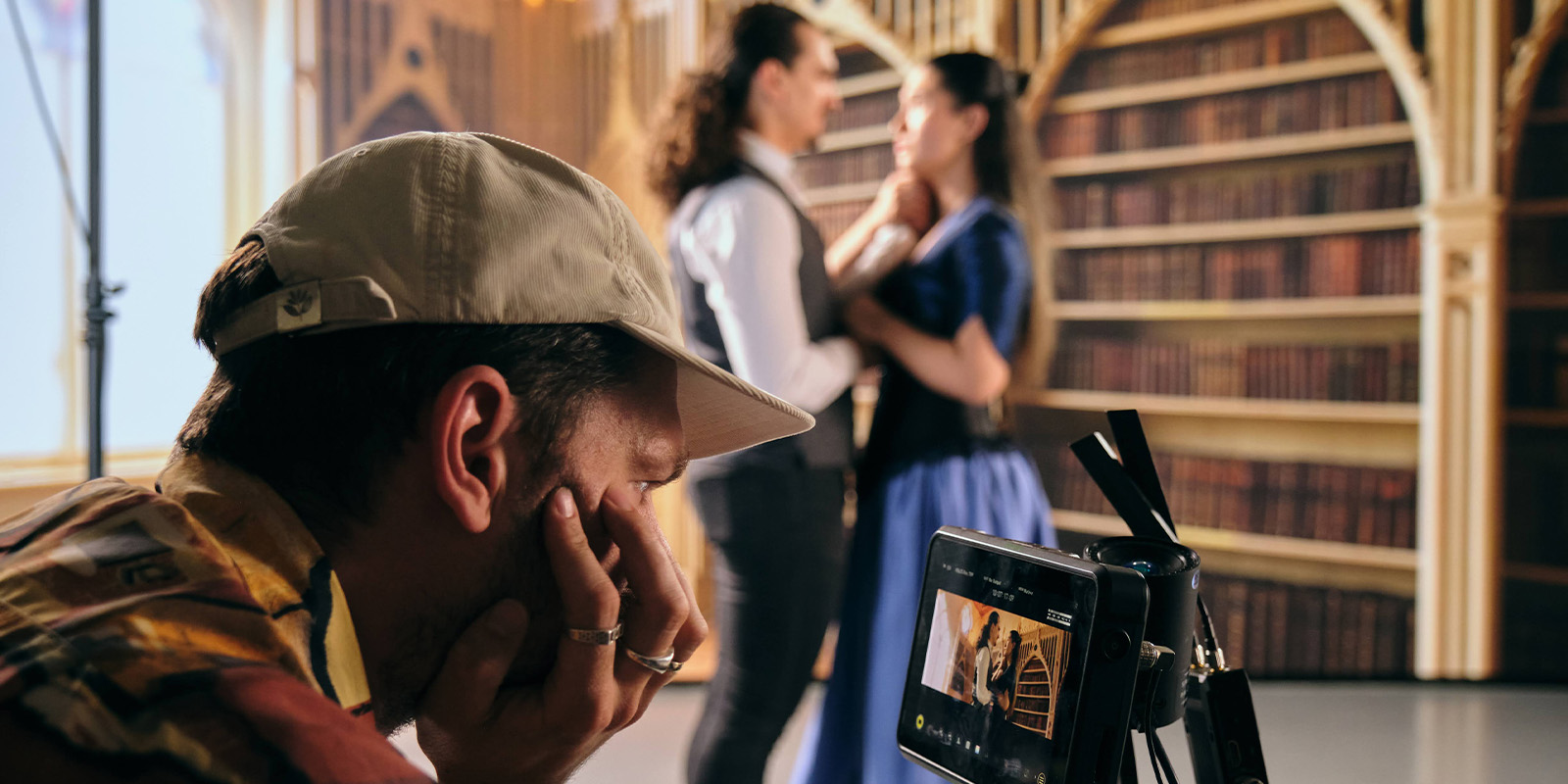
For many, this was their first encounter with this level of technology.
For assistant professor of screen acting Gary Pillai, the purpose of all of it is straightforward: “Our remit now is to understand that and make sure our graduates are really able to walk into the profession, and the screen acting element of the industry, straight away.”
“We were proud to work with LAMDA on this project, supplying the technology that gives students hands-on access to professional production workflows used throughout the film and TV industry,” added Dan Edmonds, Film & TV at Universal Pixels.