

A LIGHT FOOTPRINT
The transition to LED fixtures is a done deal, but there is much more to be done to make lighting truly sustainable.
“I think the next step in making lighting more sustainable is continuing to push the development of powerful hard-light LED sources – especially those that can truly compete with sunlight,” says Helena Gonzalez.
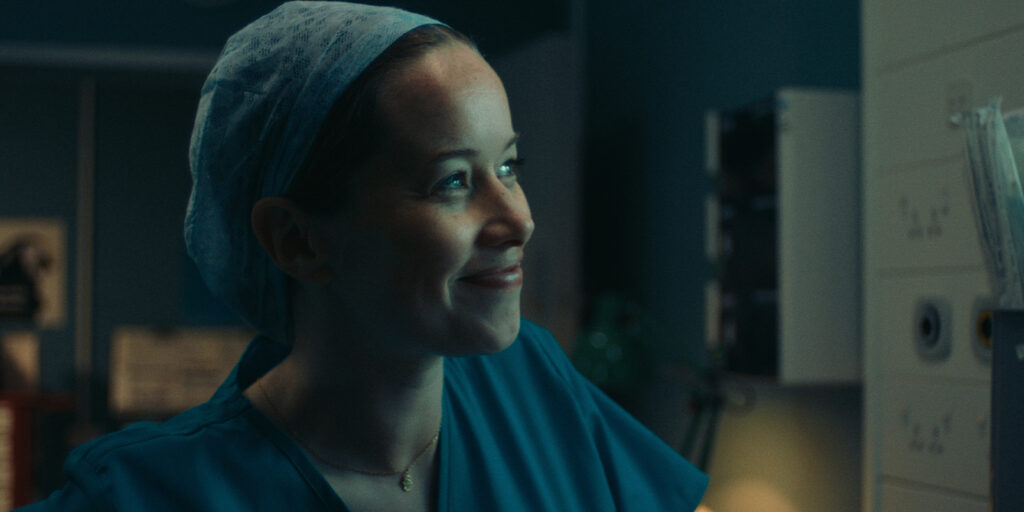
The DP cites her work on the 2024 horror short Plastic Surgery, where she enjoyed the flexibility, speed and sustainability of LED fixtures for almost every scene. “The only time we used tungsten was for a sunset scene. I haven’t yet found an LED that replicates that warmth and tactile quality convincingly on skin.”
Gonzalez adds, “I also think advancements in electric generators could change the game, especially for location work where power is a major factor.”
Advances in this field were readily visible at BSC Expo earlier this year, where companies including Instagrid, Green Voltage, NXTGENbps and On Bio exhibited various greener alternatives to traditional diesel generators. Many of these are hybrid solutions, allowing gaffers to switch easily between battery power, mains and/or diesel, and data is provided so that a production can analyse the savings in both fuel costs and carbon footprint.
“Beyond the gear itself,” Gonzalez continues, “productions need to actively support sustainable practices – choosing rental houses that prioritise sustainability (like Greenkit, for example), and making a conscious decision to hire LED fixtures as much as possible. It’s not just about the tech – it’s about the choices people and productions make in how they work.”
“I do think about sustainability both in terms of energy consumption,” says DP Ed Wild BSC, “but counter to that the environmental footprint that desire for new technology makes… The creation of new LED lights has a huge environmental footprint, particularly the use of precious metals in the circuits, over tungsten with their long life and simple components.”
Wild believes we must consider the “total environmental footprint. i.e how many hours an LED must run at lower power consumption for its bigger environmental impact [from its construction] to be mitigated against tungsten, including all the details – particularly the rare earth metals for circuits, their extraction from delicate environments and the extraction from raw materials. No environmental equation is as simple as straight user power consumption per lumen.”
“A typical LED engine has a lifespan of about 50,000 hours,” says chief lighting technician Cullum Ross ICLS, “so if you’re on a set doing night scenes all the time, the chances are you’re going to go through that pretty quickly.
“Some manufacturers are experimenting with making interchangeable light engines,” he adds, highlighting Rosco’s DMG Lion, which can be fitted with either a brighter bi-colour engine or a six-chip “Mix” engine for a wider range of colours. The two engines can be swapped quickly by the user, and the same housing will be able to accept new LED engines as they become available.
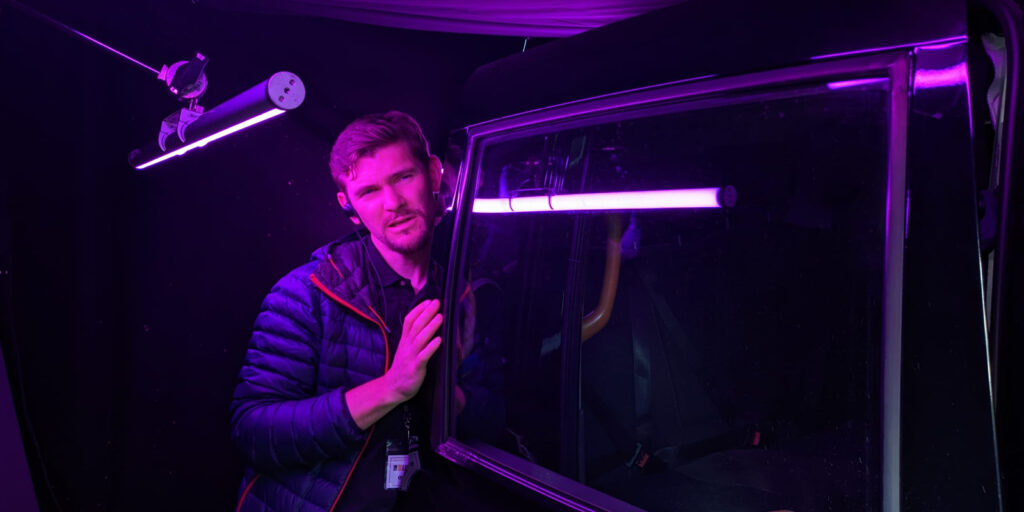
“A lot of manufacturers now are saying, well, if you’ve got a problem with your fixture… send it back and we’ll replace the engine, we won’t replace the entire fixture,” Ross continues, “so I think the emphasis and the pressure is on those manufacturers to reduce the amount of parts, reduce the labour required to service a fixture.”
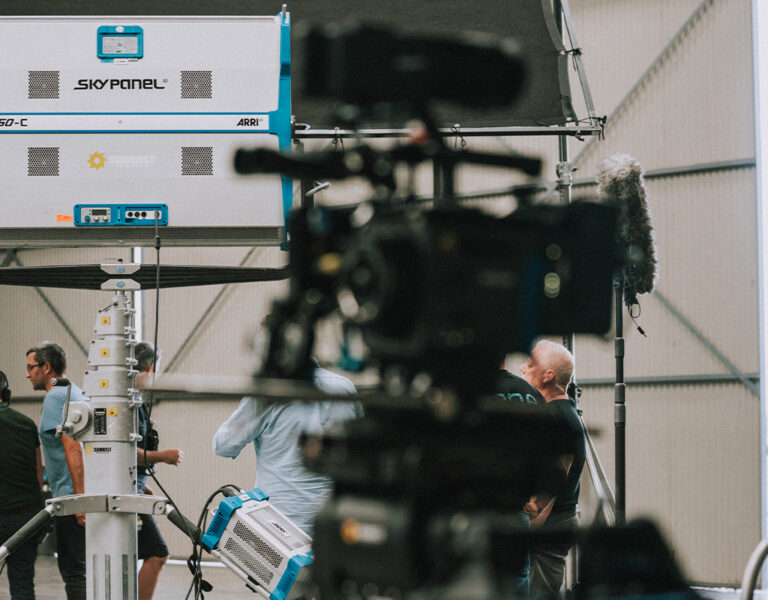
Using kit for longer is important too. “So as an example,” Ross says, “we used first generation SkyPanels on Ludwig. We had about 50 of them. They weren’t our key lights, I’ll be honest. We did use them as our cyclorama-type lights, very soft mixed, but they were on the whole very accurate.”
For Ross, a long-time sustainability advocate, the next big step is education: “It’s bringing the rest of the industry along with us.”
Words: Neil Oseman