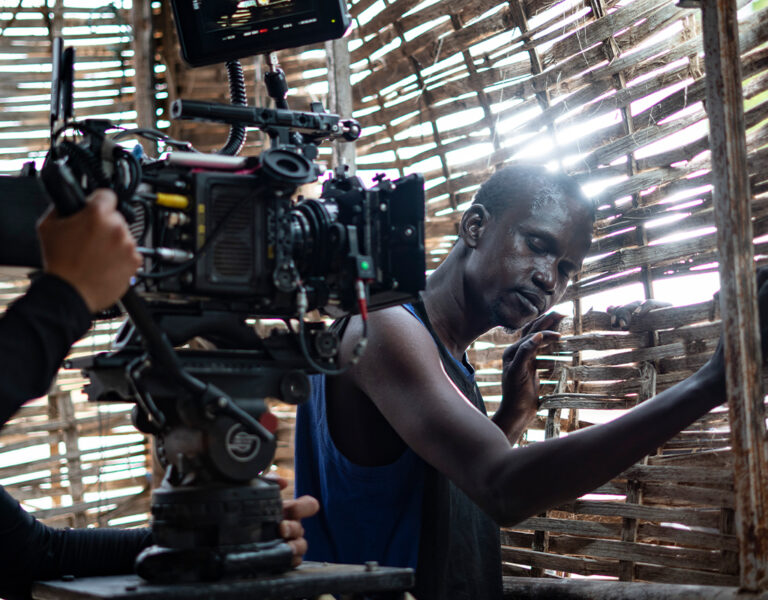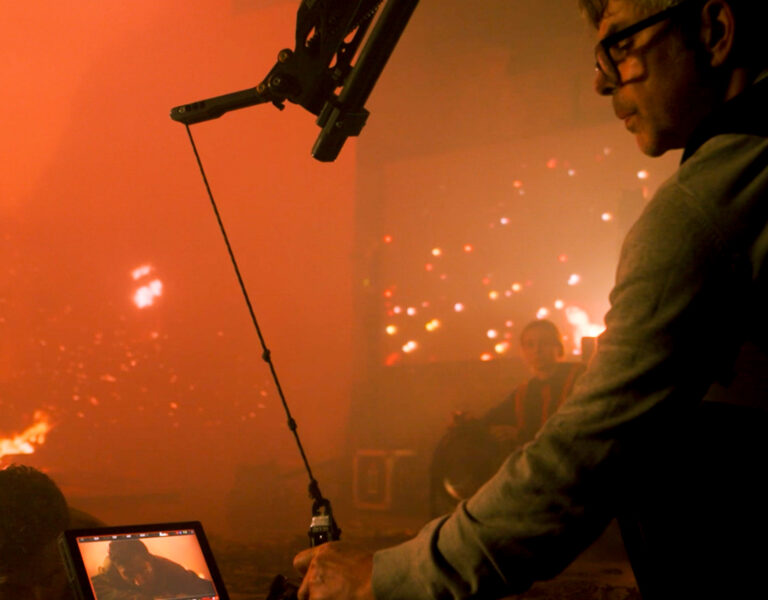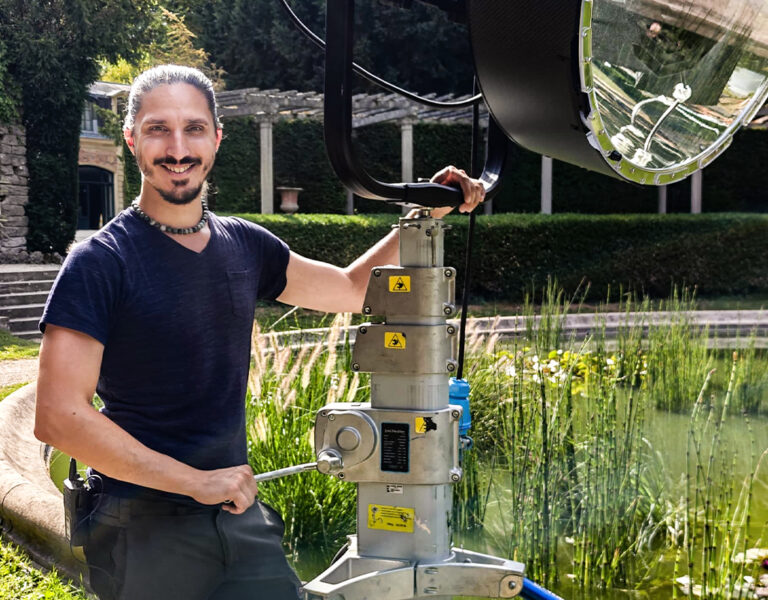


Cinematographer Alasdair Walker and gaffers Scott Napier and Ross Grainger reflect on the evolution of lighting technology across eight seasons of Outlander and now its prequel spinoff, Outlander: Blood of My Blood.
As prequel series Outlander: Blood of My Blood premieres on MGM+ in the UK, its richly atmospheric look illuminates both a new chapter and a decade-long continuity. Behind the familiar glow of the Outlander franchise’s signature candlelit interiors and mist-bathed moors lies a transformation in lighting technology — one that cinematographer Alasdair Walker and gaffers Scott Napier and Ross Grainger have helped navigate with steady support from lighting and power rental provider Panalux.
Walker and Napier have each worked on Outlander since its beginning, and together they tackled the first three episodes of Blood of My Blood’s first season before passing the baton to cinematographers Søren Bay DFF, Peter Robertson ISC and Neville Kidd ASC BSC for the remaining blocks, with gaffer Garry Thomson working with Robertson and Kidd, and Martin Taylor teaming with Bay. Grainger, meanwhile, focused on Outlander season eight during Blood’s first run but is now on board for season two of the prequel. With their fellow cinematographers, gaffers and crew across both shows — including rigging gaffer Grant McLean and console operator Jon Towler — Walker, Napier and Grainger have helped steer the franchise’s near-total transition to LED lighting.
“At the heart of it, what we’re doing hasn’t really changed,” Walker shares. “For our actors, we’re trying to get a really soft light that wraps around and looks into the eyes and has a certain colour temperature. But being able to have four lighting states available within minutes on a board has transformed the way we work.”
Lighting progress
Blood’s first episode returns viewers to Castle Leoch, a storied location in franchise lore and a set that traces back to Outlander’s very first episode. “When we lit [the set] in 2014, it was using a megawatt of tungsten light,” Napier recalls. “Now it’s completely LED, and we’re working with 100 to 150 kilowatts. That’s how much of a swing there’s been in 10 years.”
Supporting Walker on Blood’s opening episodes, Napier drew on years of collaboration with Panalux to cull from the company’s extensive inventory a versatile lighting and power package that could handle the show’s shifting moods, environments and time periods. “I started my career with Panalux,” Napier shares. “They’re one of the few quality lighting companies in Scotland, and it’s always better to use a local company. They have provided a lot of kit to Outlander over the years.”
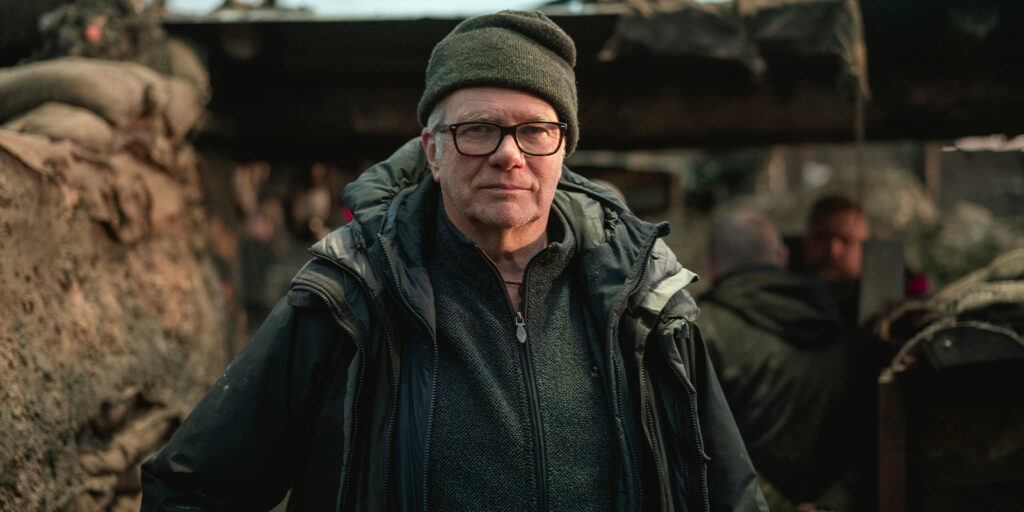
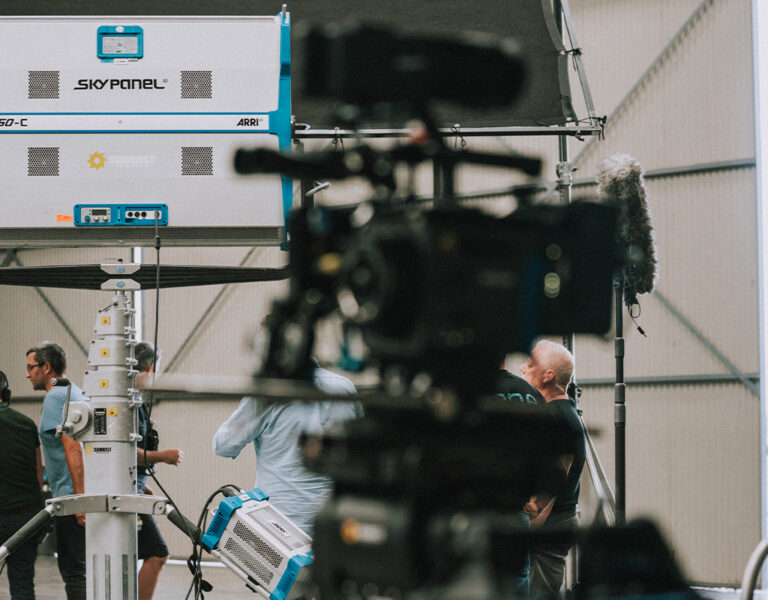
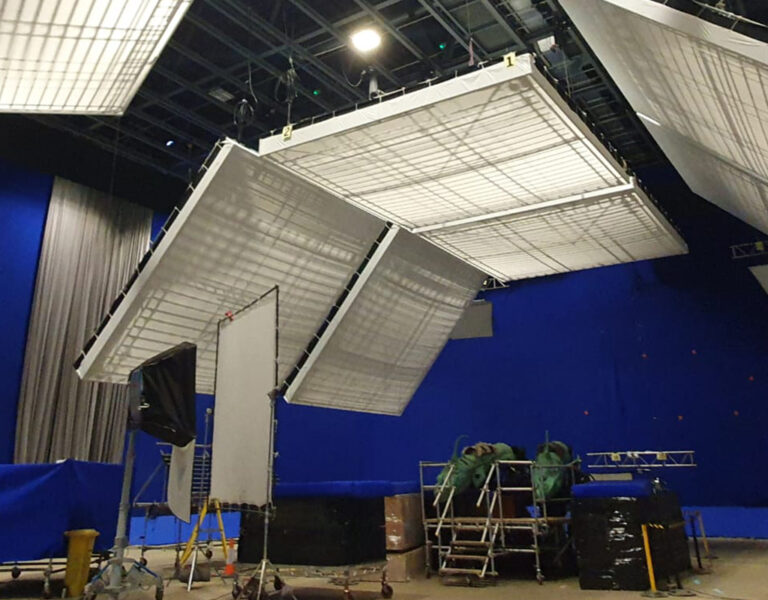
Napier and Grainger have made extensive use of Panalux’s proprietary Sonara 4:4 and 4:1 LED fixtures for their soft, even output of variable white light. The gaffers note that they’re now carrying more than 200 Sonara 4:1s, using them in place of traditional fluorescent fixtures, often to light backdrops and greenscreens. Of the larger Sonara 4:4s, Grainger adds, “We primarily use them as our big source through windows, usually suspended on chains with motors. On top of that, we generally try to go with a steeper, harder source as well, so we can flick between them depending on the mood of the scene.”
Two of their preferred harder sources have been the Nanlux Evoke 2400B and 5000B LED heads. Walker notes, “We use them in the studio a lot for big beams of light, and we take them on location. We also use them for bounces in shadow areas.”
Additionally, the adoption of water-resistant Creamsource Vortex8s has been a “game changer,” Napier says. The fixtures are often employed for fire effects and clustered to create large soft boxes, and because of their IP65 construction, they’ve become a mainstay whenever the crew goes outdoors.
The shift in technology has also allowed the filmmakers to embrace xy colour control across their sets. “We try to run all our lamps xy so that the colour matches the scheme, no matter the manufacturer,” Napier explains. This change has enabled a seamless ability to match lighting setups even across stages and locations.
Although both Outlander and Blood of My Blood whisk viewers into the past, the evolution in lighting technology has the filmmakers thinking about the future. With the low power draw of their LED-based lighting schemes, Walker says, “there’s not five huge generators belching diesel fumes into the atmosphere. And that will help more and more going into the future, being sustainable.”