

PUSHING IT
Every film stock has a developing time recommended by the manufacturer, but by altering that time you can change the effective speed of the film with various interesting side effects.
Central to the film processing lab is the developing bath. There the exposed silver halide crystals of the latent image transform into black metallic silver, and the colour couplers into colour dyes, to form the negative. If the lab slows down or speeds up the normal transport of the film through this bath, it’s known as pushing or pulling the film.
Pushing increases the density of the negative, resulting in a brighter final image. Side effects can include milky shadows, higher contrast and more noticeable grain – not dissimilar to raising a digital camera’s ISO above its native.
Sheldon Chau pushed his 500T and 250D stocks by a stop each when making the 16mm short Two Old Women. “I sent references of late 1800s photography to the lab – FotoKem in Burbank, CA – and wanted to mimic the graininess of the image,” he says. “Although our film was set in the 1400s, I really wanted the grain to bring viewers back in time and have it feel like a vintage story that has been passed down. Pushing one stop was to get closer to this grainer look. I loved the result, but I am very tempted to be bolder and push two stops for the feature version.”
“When we shot The Favourite, we shot a lot of push photography,” says Robbie Ryan BSC ISC, “because we were shooting with candlelight, so we would have been filming 500 ASA, and to get a bit more image we would push it one stop sometimes. And then if the scene was even darker, we’d push it two stops. I think film stock’s so versatile. You can push a film stock three or four stops either way, and it still retains an interesting image.”
Forgiving film
Shooting a 35mm commercial for Axa in France, Antonio Paladino did not plan to use push processing. “My focus puller came to me after we wrapped, looking very concerned,” the DP recounts. “He had just realised that our clapper loader had mistakenly loaded a roll of 50 ASA stock into a magazine and labelled it as 500 ASA. I had already shot an entire scene exposing 500 ASA, when in fact I was about three-and-a-half stops underexposed. A bit of a disaster — especially since we had already wrapped that location and there was no chance to go back.”
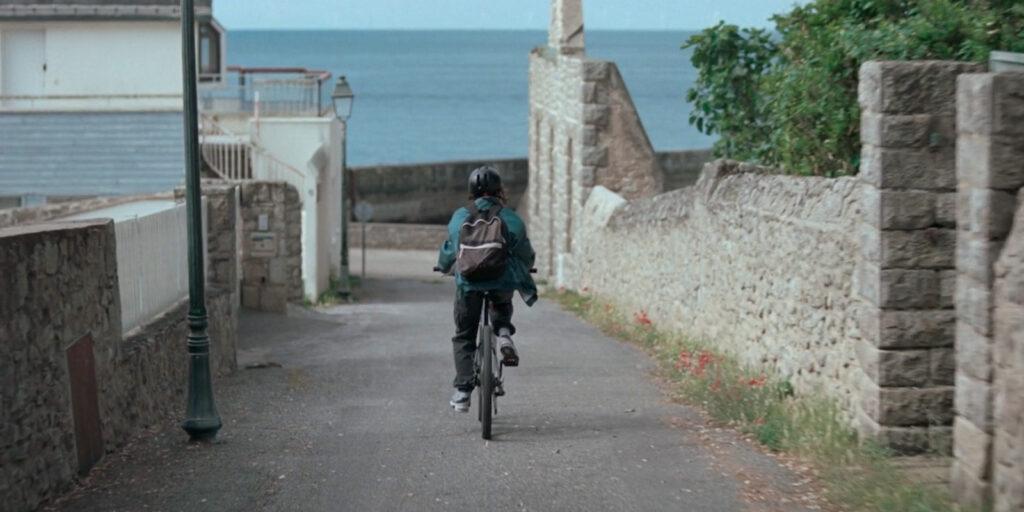
First thing in the morning, Paladino contacted the lab. “My idea was to try saving the negative by pushing it one-and-a-half stops in development and then recovering another stop and a half in the grade,” he explains. “And when we got the rushes back the next day, I honestly couldn’t tell the difference between that underexposed roll and the correctly exposed one from the same scene. It was a reminder of just how forgiving film can be.”
Pull processing is less common but results in a darker image with lower contrast and less grain. Shabier Kirchner used the technique for certain scenes in Past Lives, but many cinematographers today prefer to process even overexposed footage normally, to retain a dense negative for scanning and then darken it digitally.
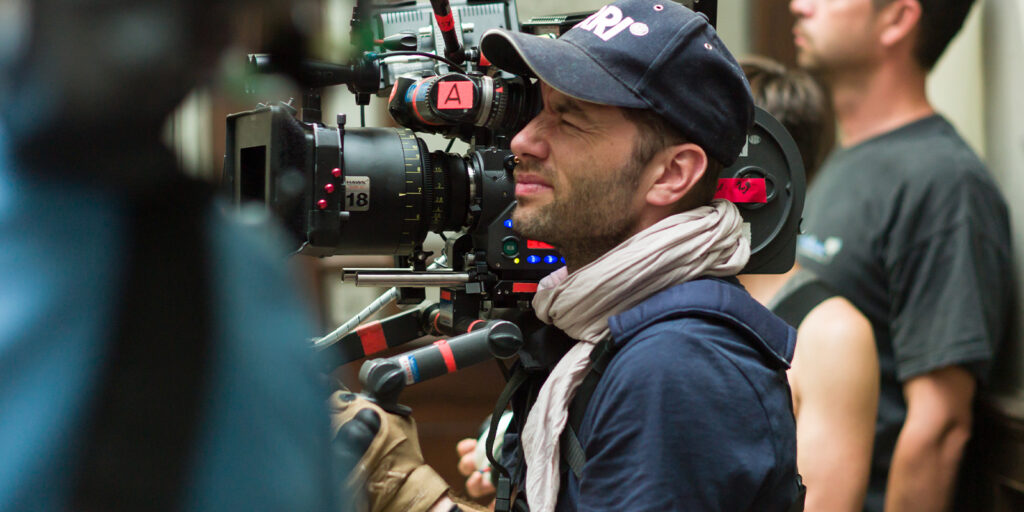
Sean Ellis BSC points out that if you overexpose 16mm by a stop and then bring it down in the grade, “it makes the grain disappear a bit more, so if I feel that the grain on 500T is going to be too much, or even if the grain on 200T is going to be too much, I overexpose each one by a stop, and it just helps bring the grain down and control it a little bit better in the final image.”
Words: Neil Oseman