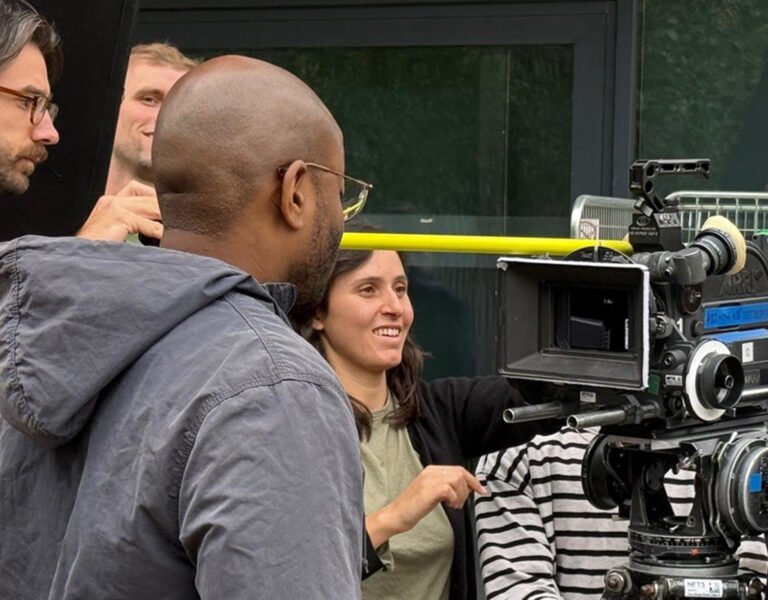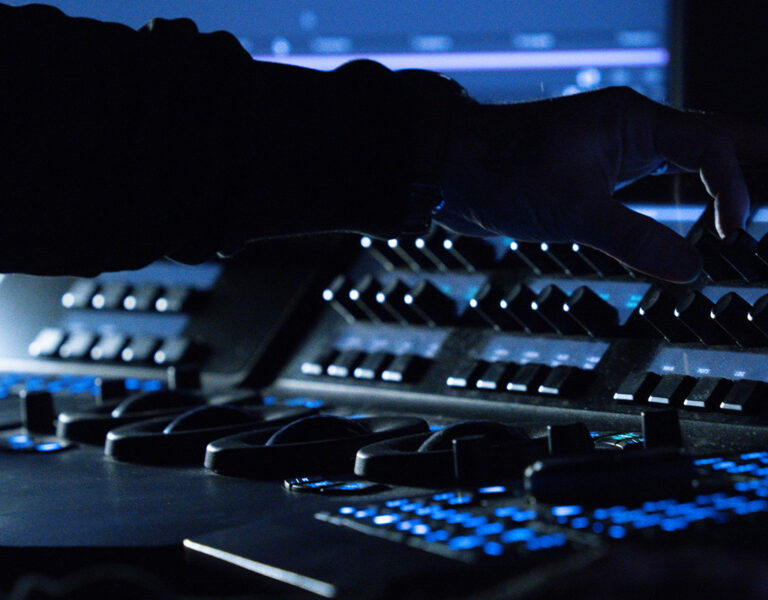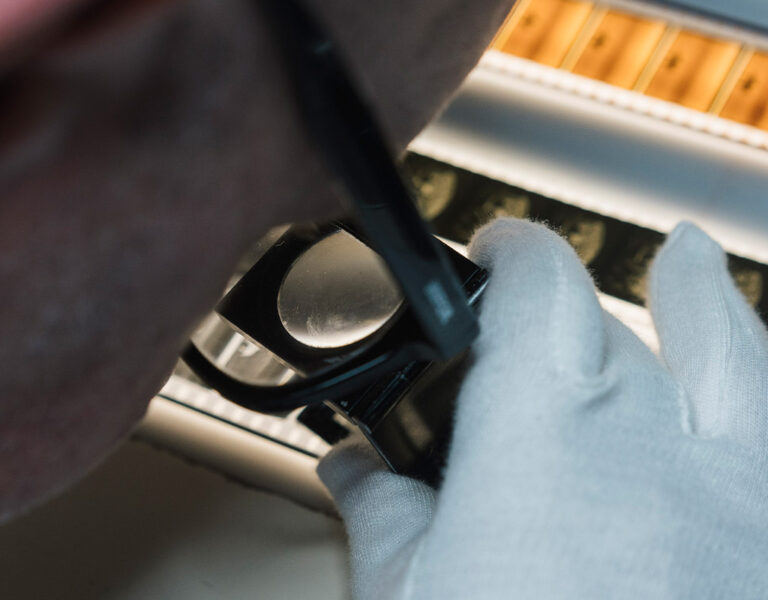

Film capture is thriving. Whether it’s the visceral handheld of The Smashing Machine, the shallow-focus portraiture of Bugonia, the lonely suburbs of Dragonfly, or the intimate vignettes of Rituals: Union Black, filmmakers are embracing the unique aesthetics of analogue.
“There’s a lot of hyperbole about the different magics of celluloid, but I generally think the chemical process of film losing silver off a negative is a wonderful invention,” says Robbie Ryan BSC ISC, whose many film projects include Bugonia, Poor Things and The Favourite. “I still find that when you shoot digitally, you’re always trying to make it look filmic or cinematic. To me, when you shoot on celluloid, it comes out straight away cinematic.”
“Recording images on a living, tangible material, being able to touch and smell it” – for cinematographer Meryem Yavuz GYD, this is the medium’s special appeal. “[Film capture], which requires more precise calculations and greater concentration, and carries significant risks throughout the process, represents a unique relationship between film and filmmakers.”
“I see how my generation was raised with some sort of digital camera constantly in its hands, and I wonder if that’s a blessing or a curse,” muses DP Lorene Desportes. “It’sprobably both, but the problem I’ve found with being so trigger-happy is that some people struggle to take the time to ask the right questions. Some of the best TV shows, in my opinion, were shot before that era — when people didn’t have the choice but to think carefully about the most suitable visual narrative. I believe that’s one of the things that made shows like The Sopranos and Breaking Bad so unique.”
Choosing celluloid
“I noticed that it’s not as outrageous an idea to shoot on film as it was even up to three years ago,” says Ryan. “People were really down on it, but now it’s not such a big issue.”
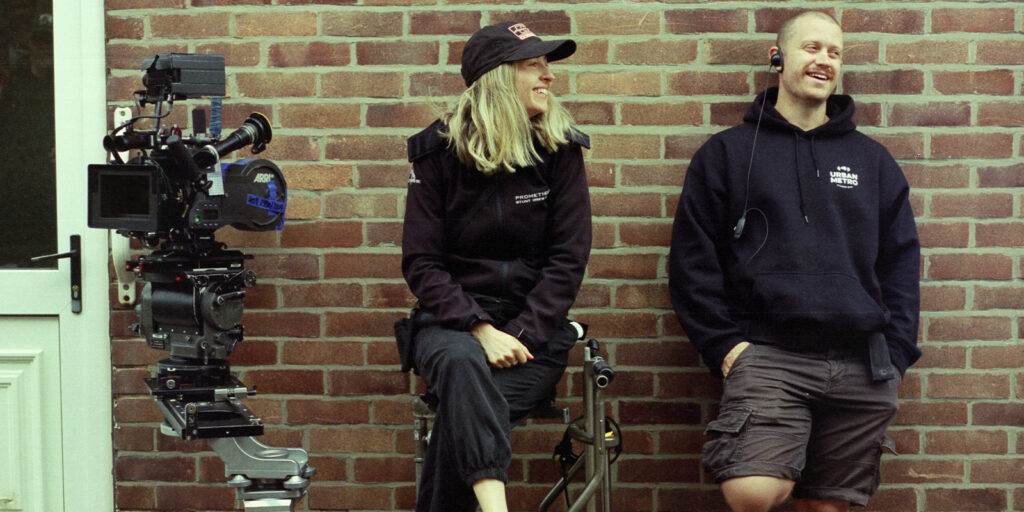
Vanessa Whyte BSC didn’t think film would be an option for her low-budget feature Dragonfly, “but the director was really keen on it, which meant that I pursued it in terms of testing and to see if we could afford it.” The DP tested 16mm against the Alexa 35 and watched the results at a screening room in 4K. “For myself and the two producers and the director, it was just, hands down, a completely organic, different feel that we wanted for the film, and there was nothing on the Alexa that was close to that.” Whyte feels that film capture brought “a weight and a gravitas” to the story.
“Aesthetically, the most attractive quality of film is its forgiving nature,” says Desportes. “I’ve seen it respond incredibly well in the trickiest situations. I’ve shot some 16mm film in direct, harsh sunlight through windows, with no possibility of additional lighting indoors — and it was very successful. The amount of information that such a thin piece of celluloid can hold is astounding.”
Yavuz benefitted from film’s forgiving nature when she was shooting a documentary about the first Turkish female gymnast to qualify for the Olympics. “The footage consisted solely of the athlete’s body, her skin, a white floor surface, and black backgrounds,” Yavuz explains. “I knew this challenging, high-contrast image would be easier to balance on film. I used a single, powerful light source. There were no fill lights or backlights. The result was good. If we had shot digitally, I think I would have had to work on each element individually.”
DP Antonio Paladino believes film has unique aesthetic qualities that can’t be replicated digitally. “At the same time,” he says, “I’m aware of the headache it can give the production team, and of course I am aware of the environmental impact of producing and processing film stock, which makes it a bit of a dilemma. I love working with film, but I also think we need to be honest about its footprint and use it deliberately, when it truly serves the story.”
The process
“Every foot of stock costs money,” Paladino continues, “so there’s a heightened sense of focus on set. Performances become sharper because everyone knows the camera is rolling film. With digital, you can shoot endlessly, which can be liberating but also risks diluting intention. Film slows you down in a good way — it forces you to make decisions.”
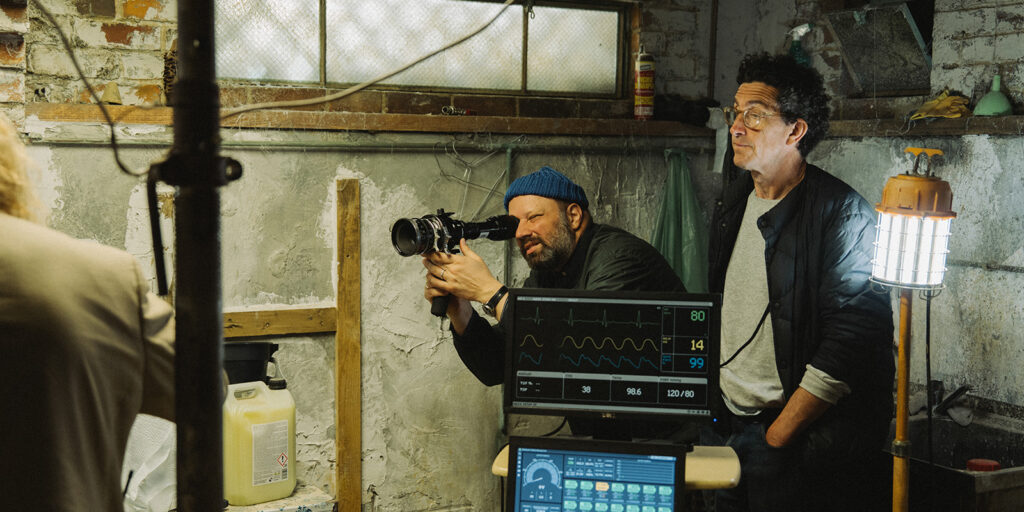
Ryan believes that shooting film is actually faster than digital: “It cuts through a huge amount of procrastination and debate over a 17” monitor… If you were shooting on film, you wouldn’t have that debate, because you’d be going, ‘Okay, don’t worry, it’s going to look great down the line.’”
“I think there is a reason that there’s such a disproportionate amount of recognition and awards given to productions that are shot on film,” says Vanessa Bendetti, Kodak’s VPand head of motion picture. “I think the analogue process drives a different type of craftsmanship. For people who are honing their skillset to be a filmmaker, I think it’s really important.”
Bendetti highlights the link between camera films – those stocks used to actually capture productions – and the company’s other film products. “The entire motion picture portfolio relies on our capture films,” she says, “and without them all of the archival, restoration and exhibition products would be at risk, not to mention the labs and facilities that support. So, each time a filmmaker makes the decision to shoot film, they’re supporting the entire ecosystem for preserving cinematic history, and for exhibiting on film.”
A small gauge that’s growing
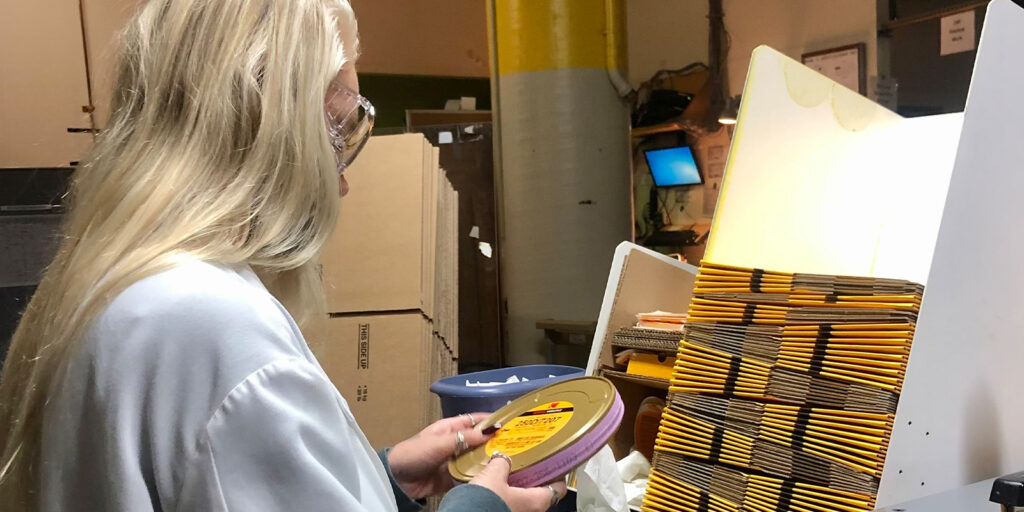
Kodak has registered a huge growth of 16mm since Covid. “We could barely keep up with the demand for it, coming out of the pandemic,” says Bendetti. “16 still has its independent community hold, that’s where it’s being used the most, but we’re also seeing lots of Academy Award-nominated films that have been captured on 16mm.”
“The scanning now has gotten very good,” observes Ryan, “so you’ve got a lot more detail in the negative than you used to.” He notes that wide shots on 16mm can feel a little softer but speaks of the “imprint” the format has. “35mm nowadays, when you scan it really well, sometimes it’s hard to know if that’s a digital job or a film job, but with 16mm, I think it retains the characteristics of what would feel like film. That’s why I like it, and obviously, it’s a heck of a lot cheaper to shoot than other film stocks… The bang for your buck when you shoot on 16 is very high.”
For cinematographer Jermaine Edwards, the choice to go with 16mm for the immersive audio-visual project Rituals: Union Black was about intimacy. “We shot loads of vignettes across England about Black culture,” says Edwards, “and the first one that we did was a lady giving birth to her sixth child… It was dark, and that was really amazing, because the darkness elevated the baby coming into the world, because the colour shift became really red… There was a really intimate texture to the image.”
Yavuz chose 16mm for a short film about “a place transforming over time, and its imaginary residents transforming along with it. The place was somewhere between life and death, in limbo. Everything was surreal. We wanted the film’s images to have a distinct texture, like the pages of a book that hadn’t been opened in years. The best option for this was wide-grain, black-and-white 16mm.”
Thinking big
At the other end of the scale, large formats are going strong as well. 35mm is normally run vertically through a motion picture camera’s gate, producing an image up to four perforations in height; a VistaVision camera transports the film horizontally (as in still photography) for an image that’s eight perforations wide.
Ryan shot his recent feature Bugonia in VistaVision. “I think because Bugonia‘s set in a basement, [director Yorgos Lanthimos] felt he’d like a format that could really give a great quality to the faces, the portraiture, and in a way, VistaVision is the equivalent of a 35mm still, an SLR still, so you do have a bit more of a quality to the image that suits portrait photography.”
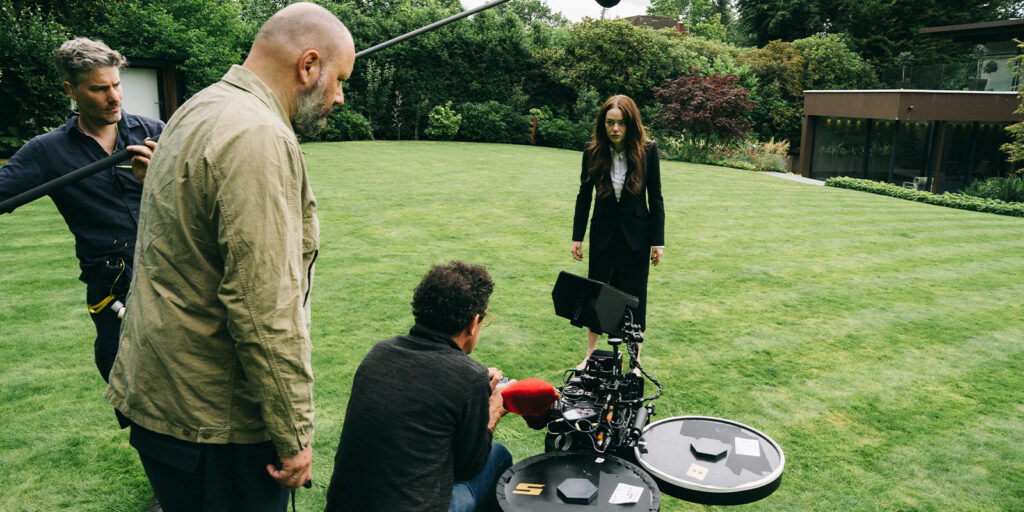
For those seeking an even larger negative, there’s 65mm film (printed on 70mm for exhibition to allow room for the soundtrack). The ultimate analogue format runs 65mmhorizontally through the camera: IMAX, with a mighty 15 perforations per frame.
“I think IMAX is the best film format that was ever invented,” director Christopher Nolan once said in a DGA interview. “It’s the gold standard and what any other technology has to match up to, but none have, in my opinion.”
Maceo Bishop shot the end sequence of The Smashing Machine in IMAX, “which was a really beautiful and unique experience, a real collaboration with IMAX, who were extremely supportive of us. And we wanted to shoot in the way that we had shot the rest of the film, so it was two cameras, handheld.”
“It’s exciting to see smaller productions start to incorporate [65mm],” says Bendetti. “We’ve seen it used in commercials; we’ve seen a documentary recently that was able to shoot some IMAX. There’s also a young visual artist, Tyler Shields, who did a movie shot on every format, and he was able to engage with 65 and IMAX, 15-perf. I think it’s going to continue to be attractive to more early-career filmmakers… We’ll sell more 65mm this year than Kodak has ever sold in a given year.”
Keeping the faith
Asked what they would say to someone shooting film for the first time, the DPs we spoke to all give similar advice: your light meter is important, building a relationship with the lab is valuable, and testing is absolutely critical. But at the same time, words like instinct, trust and faith crop up again and again.
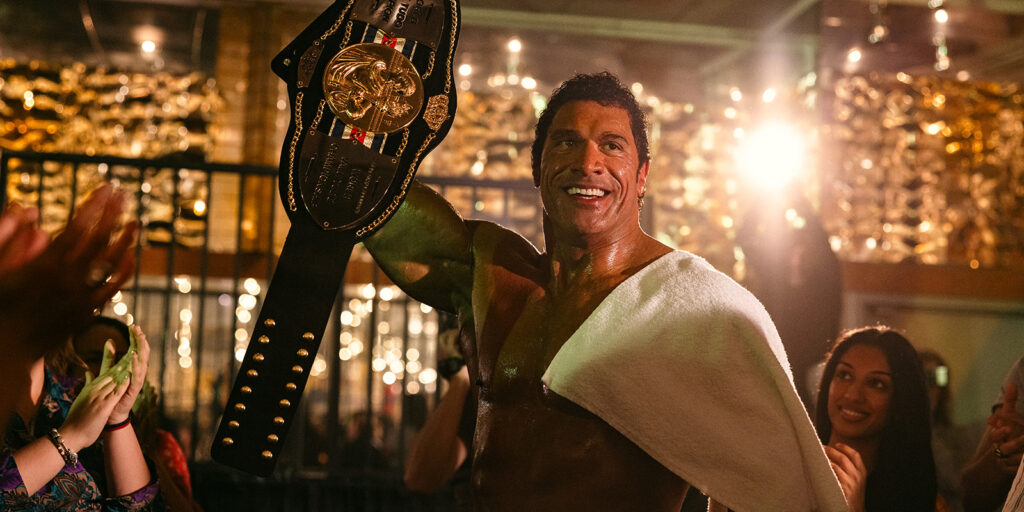
“Trust your eye,” Bishop suggests. “Get comfortable just looking at a scene and saying, ‘Does this feel good to my eye?’ And that’s usually a good sign. Everything doesn’t have to be within a quarter of a stop of some magic number, you know?
“There’s a certain amount of preparation. There’s a certain amount of faith that what you saw in the moment felt right. And there’s this conversation with feeling, and acceptance – maybe – of imperfection, that I think is one of the things that makes film so strong.”
“I was very nervous the first time I worked with film,” admits Yavuz. “An experienced colleague told me that working with film was much easier than getting good results digitally. I thought he was trying to calm me down. After experiencing the process, I understood why. Despite my inexperience, the results weren’t bad at all. Of course, you need to get the technical calculations right, be focused, and have patience to see results. You need to appreciate responsibility. But I can say that none of this is difficult; it’s very enjoyable.”
“Have the faith,” Ryan encourages, “because even if you get something wrong with film, I find it’s still got some beauty to it, and character to it, that gives it an identity… There’sa positive future in it, I hope – positive future in negative!”
Words: Neil Oseman