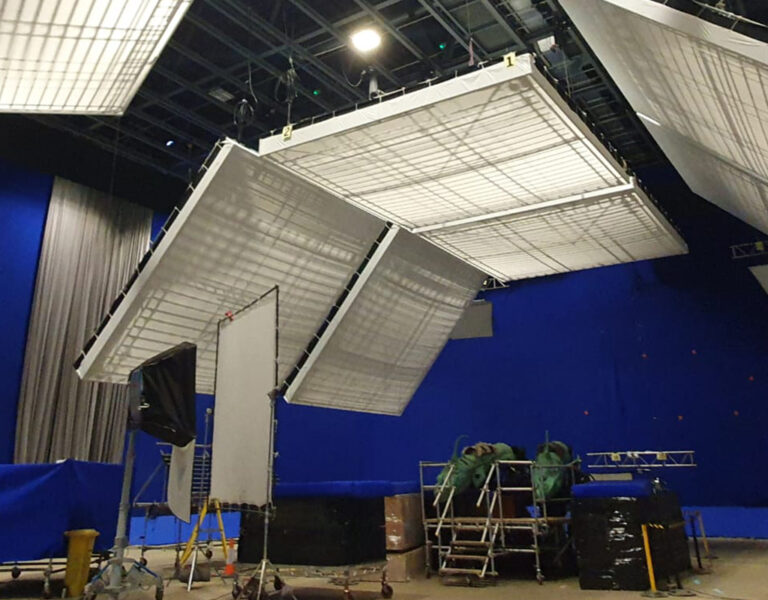


Lighting technology continues to evolve at a rapid pace. More output, higher efficiency, better colour science and easier control are just some of the benefits.
“Lights have got brighter, more efficient, which I think is quite important,” says DP Robert Hollingworth Assoc. BSC, “and the colour science behind the lights – we’re talking about LEDs – is just getting better and better… I think the slightly less bright lights that have better colour science are more exciting to work with.”
Hollingworth points out that controlling lights has got quicker and easier “with various iPad apps and consoles… I’m not in favour of getting rid of crew. I don’t want to get rid of a gaffer or a spark, but to put into their hands or anyone’s hands the ability to do more effects makes you shoot quicker. And it makes you more creative.”
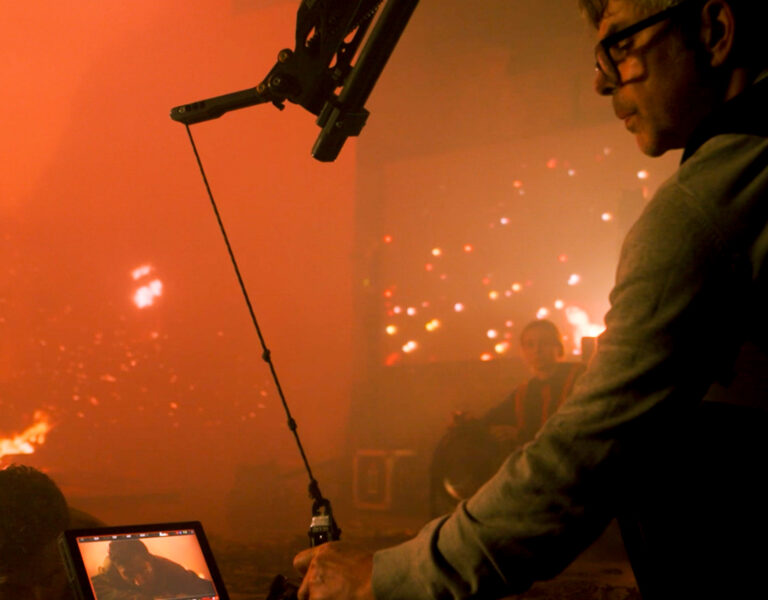
He gives an example: a Netflix horror production where the lighting budget was very limited. “The gaffer was off rigging with his assistants for the next thing – a big exterior thing – so I was basically on my own,” the DP explains. “While we’re having a coffee and resetting, I’m going to grab the iPad and see what I can knock out in the app, and in about five minutes I got this chase programme so the lights could flicker and slowly fade up over about 10 seconds as the camera pushed in.”
“With schedules becoming increasingly tight, LEDs have completely transformed what we can do on set,” confirms Birgit Bebe Dierken BSC, “especially when balancing budget, time, crew size, and creative ambition. Going from day to night in a studio is a matter of seconds if you were able to set it up before.”
With so many fixtures available, how do Dierken and her gaffer John Kevin Gibb choose what to include in their package? “Something about that light needs to excite me,” she says, “but they need to have – to be considered at all – a very good colour accuracy, high output and dims nicely, IP rated, easily fits into the LED family and can work on tablets on set, and low energy consumption.”
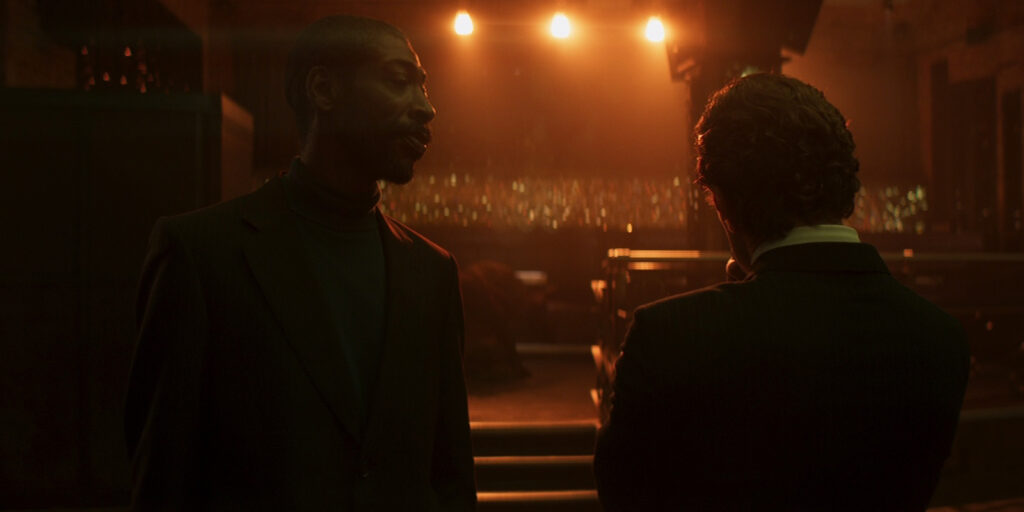
Dierken has been impressed by the 2,400W Nanlux Evoke. She explains that the light’s many accessories make it versatile, and believes it can replace a 6K HMI. “It has a lower energy consumption, can be easily integrated into a dimmer board or iPad app, and most importantly it creates good skin tones,” Dierken remarks.
“I’m impressed by some of the new LED variations,” says cinematographer Jana Laemmerer, “especially because if you have a battery-based setup it helps a lot in being quick, especially for light shoots… Getting rid of some cables, especially for the background, exteriors and stuff is super helpful.”
“You can run more lights off less,” Hollingworth continues. “You can definitely start using really big fixtures outside on a tiny generator like a Honda 2KW.
“The other thing we’ve been using a lot of is the smaller lights… the Aputure Infinibars, the MC Pros… they’re absolutely brilliant in terms of how you can quickly just dot them around the set.”
Dierken is keen to use MBS’s Pixel Brutes, describing them as “hard and soft LEDs combined” and mentioning that you can “create one big source by adding them easily together.”
“With this rise in LEDs and their efficiency being their colour, I’ve definitely found myself be more subtle with the lighting,” Hollingworth observes. “There are drawbacks – like flicker is an absolute nightmare that no lighting company wants to talk about.”
Lighting the way
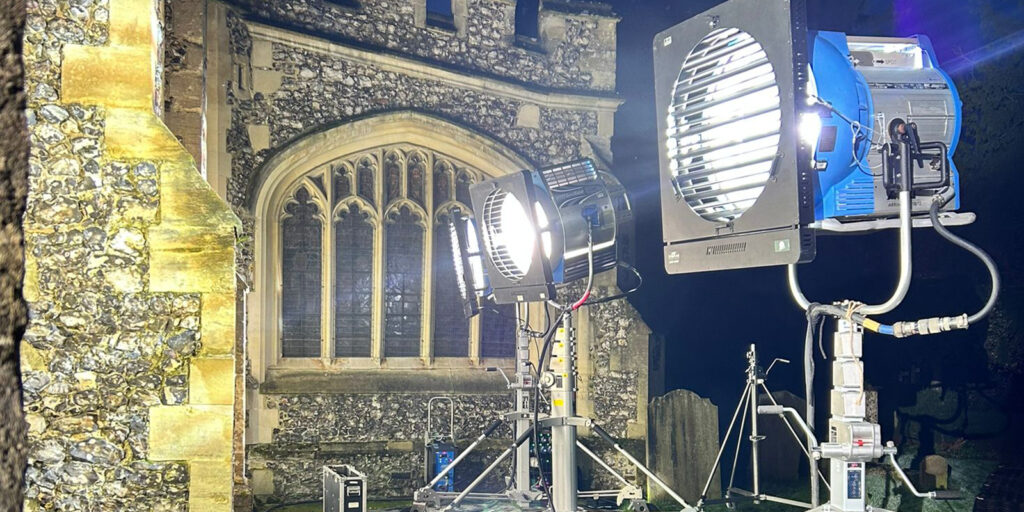
Where do these latest developments leave traditional tungsten and HMI lighting? “There’s something absolutely gorgeous about tungsten,” Hollingworth remarks, “so aesthetically, there’s still very much a place for tungsten in the field, but not as your main lighting rig, probably as your effect light, or for other specific reasons.”
Laemmerer gives an example of LED winning out over HMI when shooting driving scenes on stage for a Dolby commercial. “We were thinking about using real HMIs for the quality of the light, but it’s just so much easier with LEDs,” she says. “They are quicker to change the setup between daytime and nighttime scenes, which was important.”
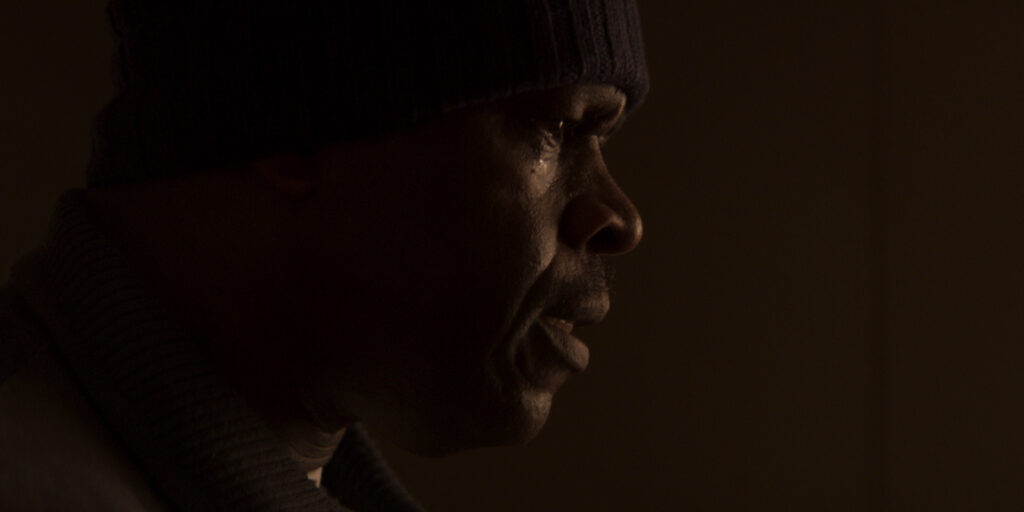
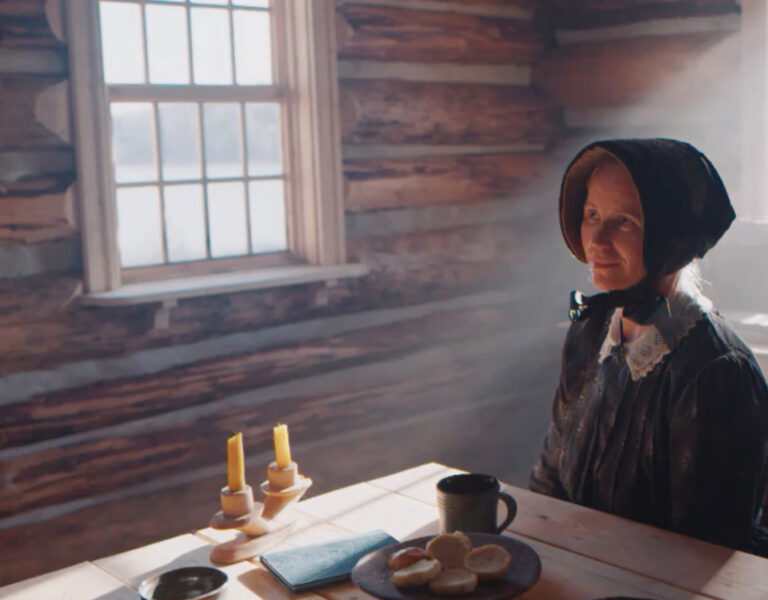
IP rated (Credit: Sexy Beast Production Ltd/Paramount +)
Hollingworth would be happy to leave HMIs behind, noting how their colour changes as the bulb ages. But Dierken points out that “HMI still out-punches many LEDs. [It] creates beautiful hard shadows and has a crisp edge.”
How much longer will HMIs “out-punch” LEDs? For gaffer Cullum Ross ICLS, comparable output is the biggest technological development in lighting today – “LEDs that are reaching the approximation of, say, the output of an HMI or a tungsten equivalent fixture.”
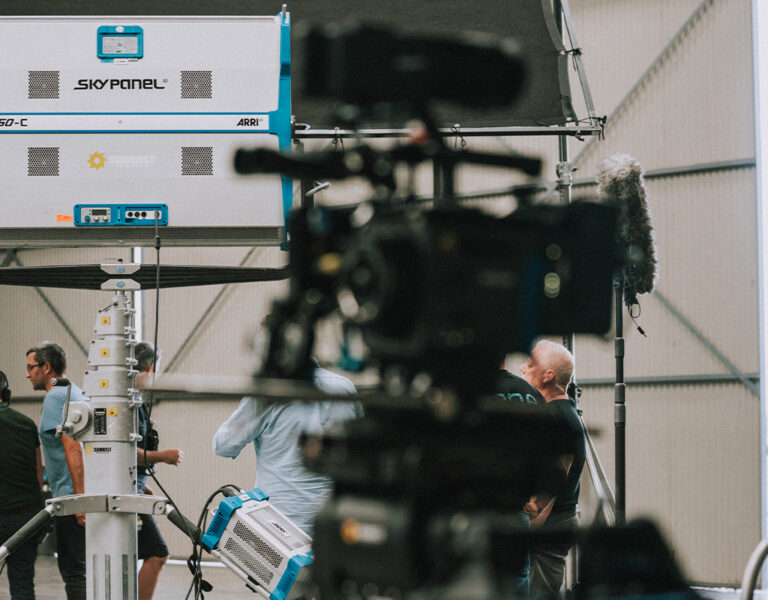
Next on his list of important developments are robustness and ease of use. “In the past you needed to have a bit of a nuts-and-bolts technical background to use something like, say, a SkyPanel,” Ross explains. “Well, nowadays the expectation is everyone must be able to use an LED fixture – the basics, the fundamentals of it.”
The gaffer adds that LEDs have gone from being exotic special sources to the mainstay of most sets. IP ratings have increased and cooling technology – be it liquid or passive – has improved to keep pace with ever more powerful models.
“The types of modifiers I’m now using with LEDs are different to the ones I would use with traditional fixtures,” Ross observes. “I’m using probably more reflectors now over Fresnel lenses, for example, so parabolic type reflectors. Some are silver, some are white, some have diffusers, some have barn doors, some don’t.”
In the last 18 months, Ross has noticed a change in the way fixtures are calibrated. “Let’s just say you want 4,000K and for some reason you want a bit more magenta. You can dial in precisely – in theory – that exact amount of magenta to match another fixture, so that’s super useful. But it also throws in another layer of complexity to someone like a lighting programmer who has maybe five different manufacturers’ fixtures, and they are in theory all doing the same thing… The problem is, they’re not, so more time is now required in prep for those technical people to match [the fixtures].”
Connectivity is also a huge development for Ross, as wired DMX connections have given way to LumenRadio’s CRMX (Cognitive Radio MultipleXer) system. Desk op Edward Riley agrees, saying it’s “an exciting time” for lighting control.
“Since the rapid adoption of LED technology, particularly with multi-pixel heads such as Astera Tubes, the film industry has now caught up with other sectors such as theatre, gigs and live shows in the way it approaches it,” says Riley, “and has a much bigger skillset and knowledge going forward… We now use rigs with many thousands of channels and subsequently the role of the desk op has changed somewhat, almost becoming an IT network engineer to get the rig up and running before any creative programming can begin. This has created new roles with it, such as ‘data techs’ to ease the burden and assist the desk op with the networking and cabling side.”
Once production has made that initial time investment, the opportunities for creativity are huge. “The ability to pixel-map videos over a grid of lights adds great flexibility,” Riley explains. “Videos of fire mapped over RGB-capable lamps is one example. This once would have been a lengthy programming sequence of many cues, whereas now it can be dragged and dropped anywhere in the rig in seconds.”
Words: Neil Oseman