
Cinelab marries analogue craft with digital innovation in the service of the filmmaker’s vision.
Cinelab Film & Digital represents the 21st-century evolution of the film laboratory: a place where a 100-year-old analogue capture medium is integrated with cutting-edge digital imaging technology. Led by a team of engineers, technologists, colour specialists and creative operators, Cinelab focuses on supporting filmmakers, storytellers and image-makers across every scale of production.
“From the very start it was about film needing to be better than it had ever been,” explains Cinelab co-founder and CEO Adrian Bull. “When we launched Cinelab in 2013, it was at the point where everyone considered that film was pretty much passing out of date. Labs that had historically focused purely on photochemical perfection began to introduce digital services into separate facilities or to outsource work to post-production houses. As they switched their focus to supporting more digital shows, they neglected film to the extent that turnaround times often extended to a couple of days.”
If film were to survive as a creative medium, a change of mindset was required. “We recognised that we needed to make it as easy as possible for productions to work with film,” says Bull. “That was, and remains, the concept behind Cinelab.”
Modern workflows and digital integration
From day one, Cinelab co-located directly related services such as scanning and dailies alongside photochemical techniques, with pipelines designed for digital distribution.
Cinelab returned to the service ethic of scanning and processing rushes overnight in order to deliver electronic versions to editorial and production by morning. Its approach is built around consistency: dailies, scanning, colour and data teams operate as one to preserve creative intent throughout.
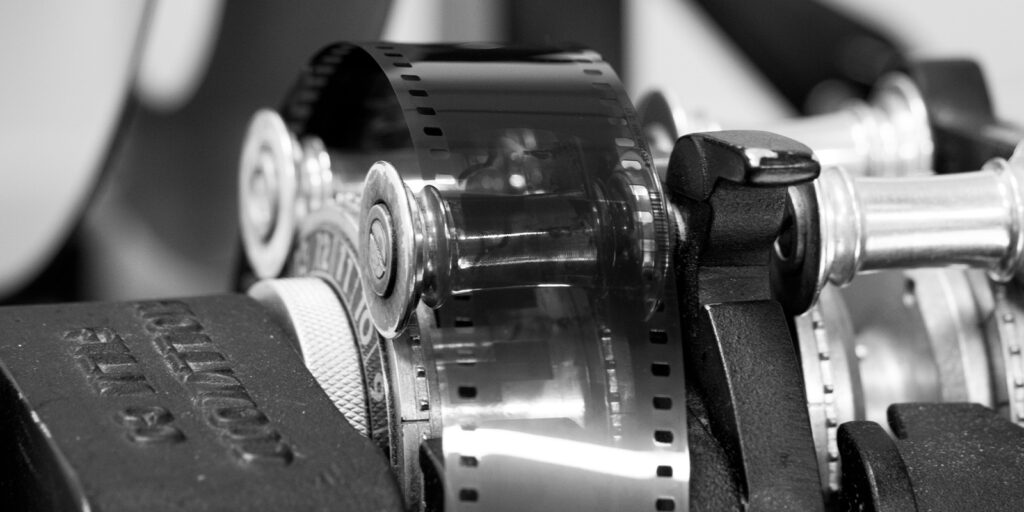
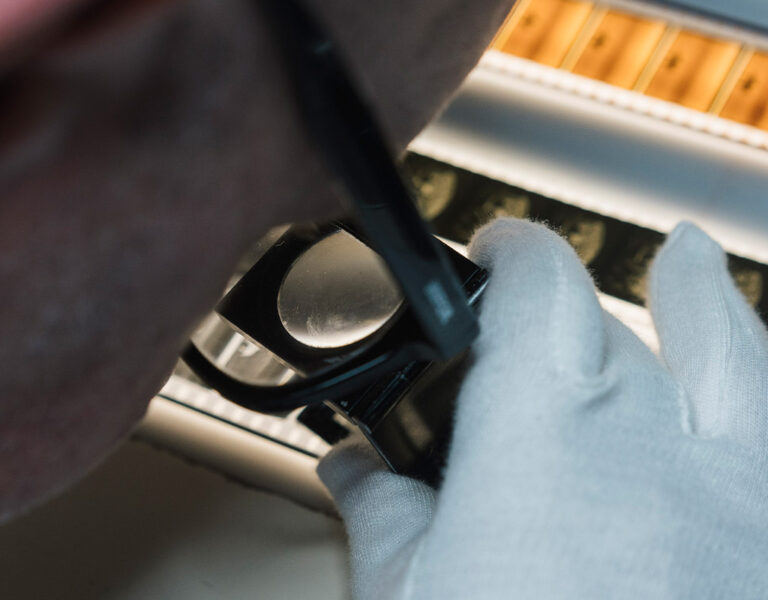
“Most of the time it’s a ‘scan once’ workflow,” Bull says. “The moment we’ve scanned rushes you’ve got data as DPX files in the highest resolution required to feed both VFX and potentially the final conform and grade. We’ll create an editorial file that will typically be delivered electronically, usually graded and sound synced and passed through a QC. That means you know immediately what state all of your rushes are in. You’re not waiting for editorial to go through it and confirm whether there are problems with anything that’sbeen shot.”
A lower-resolution version is simultaneously uploaded to the client’s screener service (Frame.IO, PIX etc) for production to review and approve anywhere in the world.
“It is all about making the overall process as efficient as possible,” he says. “We felt very strongly that for us to sustain the business – and encourage people to have the confidence to work with film – we needed to be better than film had ever been. Film is up against digital, which is perceived as being more reliable and consistent. So, for people to want to work with film, they’ve got to feel like they are getting world-class service.”
That means precision colour pipelines, seamless links from the lab to editorial and VFX, and clear communication from negative to DI.
The evolution of film and resurgence of formats
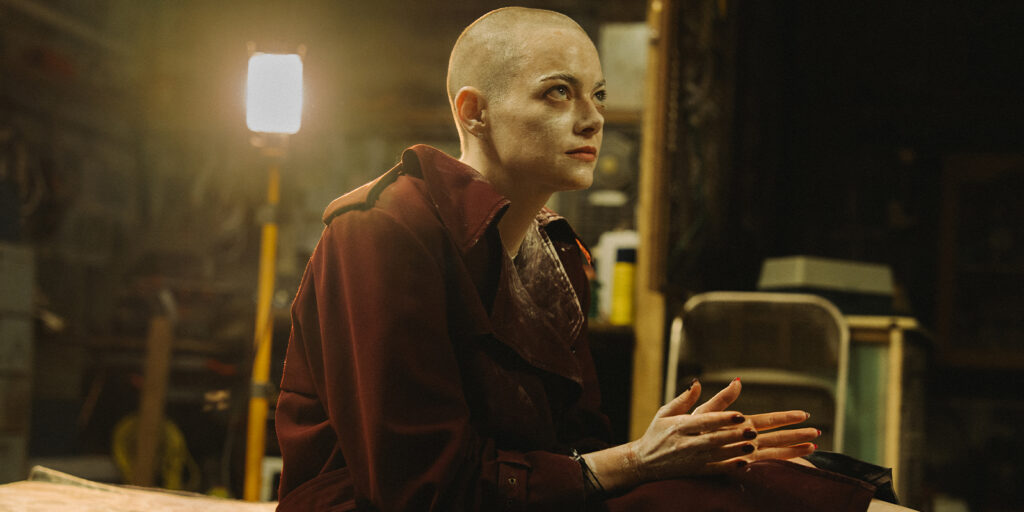
The resurgence of film has brought renewed interest in formats such as Ektachrome and VistaVision, both of which Cinelab supports. (For example, Die My Love was shot on Ektachrome; Wuthering Heights and Bugonia shot on VistaVision.)
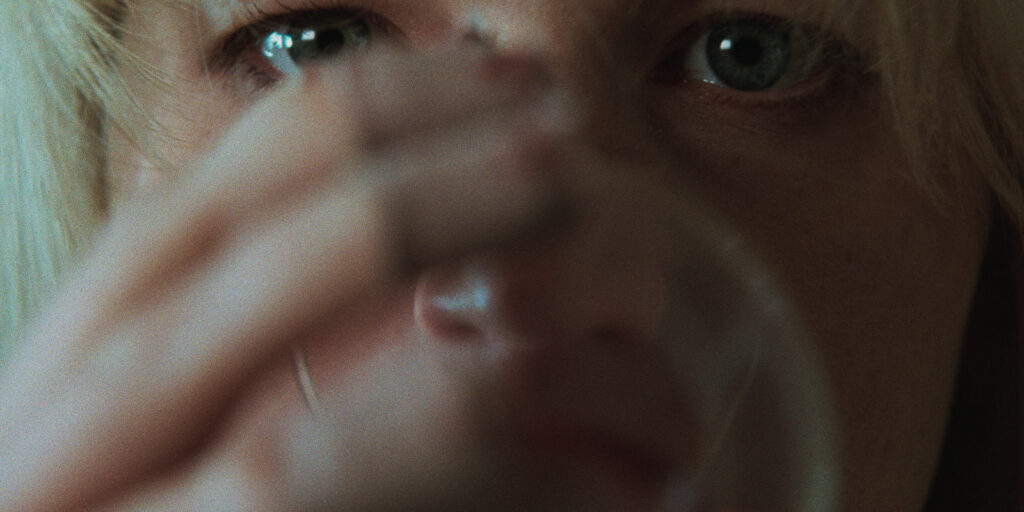
Film stocks continue to evolve: Kodak reintroduced reversal in the past few years and has recently moved to a REMJET-free stock with an anti-halation undercoat to reduce the consumption of water in the laboratory developing process. These are clear indicators of a commitment to the future of film.
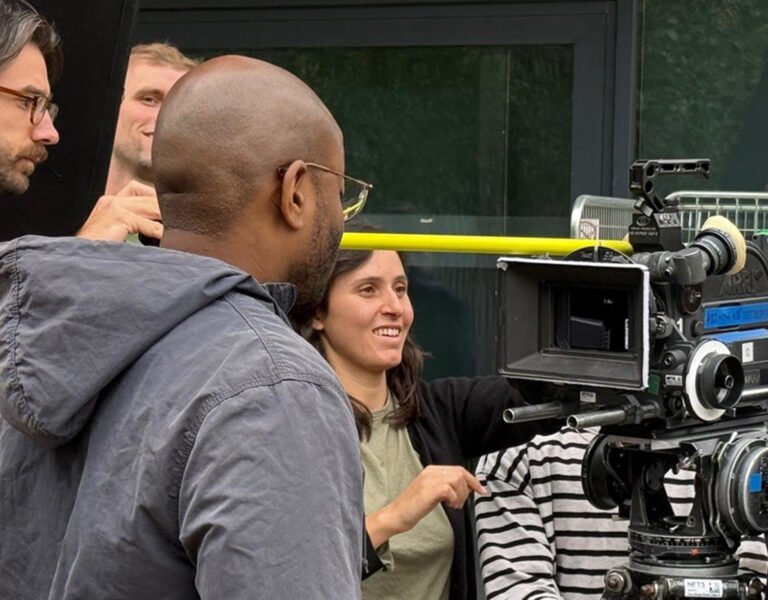
“It’s not just that film looks different, it’s the discipline it entails from crew and actors,” Bull notes. “Film is about ‘rehearse, rehearse, take’, whereas in the digital world you shoot the rehearsals and amass a tremendous amount of footage that you’ve then got to sift through. Because it costs you money every time you pull the trigger, it becomes important that people understand the reason why they’re shooting film.”
And it’s not just experienced filmmakers that desire to shoot film. Bull reports of numerous interviews Cinelab has with young ‘digital native’ filmmakers who say that their Holy Grail is to shoot a feature on film.
“It’s probably the most overwhelming thing we hear people saying they want when it comes to shooting their dream project.”
Digital technology has evolved just as rapidly: today’s scanners, colour pipelines and data systems extract more detail, dynamic range and fidelity from film than ever before. This pairing of analogue capture with state-of-the-art digital processing defines Cinelab’s philosophy. It reframes film not as nostalgia, but as a modern, evolving tool in the filmmaker’s kit.
Digital-Film-Digital
Hybrid productions (film and digital cameras used together) are increasingly common, and Cinelab’s workflows support this without disrupting the creative or technical flow. Even when the majority of a film is shot on negative, there may be digital components such as night exteriors or underwater work. This is where Cinelab’s signature analogue-intermediate process Digital-Film-Digital (DFD) comes to the fore.
DFD allows digital footage to be recorded out to film, processed photochemically, then scanned back to high-resolution digital. Unlike emulation or grading filters, this embeds the physical, analogue character of film into digital-origin material. It has become a powerful creative choice for cinematographers and directors seeking a genuine film look within a digital pipeline.

“We’ve put a lot of effort into modifying DFD to allow us to be able to record directly to 50D or 250D daylight camera negative stock. That gives you the slightly warmer look of Kodak daylight stocks but also imparts halation, particularly with the faster 250D. Naturally, you get grain and texture as well.”
Unifying the aesthetic of projects shot on mixed formats – digital, film or hybrid – has become a really effective choice for filmmakers, including for upcoming features Peaky Blinders: The Immortal Man (cinematography by George Steel BSC) and Crime 101 (shot by Erik Wilson BSC).
Craft in collaboration
DPs often emphasise the importance of a lab that understands intention, communicates clearly and collaborates across testing, shooting and post. Trust in exposure feedback, colour consistency and turnaround speed remains paramount.
Cinelab is a partner helping cinematographers to realise their creative vision. In the past 18 months alone, Cinelab has been chosen by Robbie Ryan BSC ISC for Yorgos Lanthimos’ Bugonia; Kasper Tuxen DFF for Joachim Trier’s Sentimental Value; Seamus McGarvey ASC BSC ISC for Lynne Ramsay’s Die My Love; and Linus Sandgren ASC FSF for Noah Baumbach’s Jay Kelly – all in the running for major awards including Academy Awards for Best Picture. Sandgren also brought Emerald Fennell’s 2026 release Wuthering Heights to Cinelab.
“We are humbled yet proud that many cinematographers describe Cinelab as a ‘craft partner’ and our team as a family that shares the responsibility of translating their negative into the final image,” says Bull. “We believe film remains vital to creative storytelling and in the importance of the lab’s relationship to the filmmaker in shaping the visual narrative.”
The future of film labs
In an age where AI can synthesise images and modify performances, photochemical film remains the last inherently truthful medium. A film negative is a physical artefact of a moment that actually happened – light hitting emulsion and capturing a performance that can’t be corrupted without leaving fingerprints. Film isn’t just a capture format but a safeguard of authenticity and antidote to AI’s ability to fabricate.
Future film labs will be hybrid imaging hubs, blending photochemical craft, digital engineering, colour science and innovative services like DFD. Cinelab’s investment in new scanning systems, evolving stock knowledge, workflow R&D and filmmaker support programmes positions it at the forefront of this Film Lab 2.0 landscape.
With Cinelab, the future of film is in very strong hands.
Words: Adrian Pennington