

LIGHTING THE WAY
Helping to provide opportunities for aspiring filmmakers in the camera department for over a decade, First Steps Cinematography has now turned its attention to lighting. Founder Fabian Wagner ASC BSC and mentee Ibiwunmi Balogun explain why they’re pushing for a new status quo in the typically male-dominated sphere.
It’s no secret that the film and television industry has more to do when it comes to diversity. Just this year, the Center for the Study of Women in Television and Film at San Diego University found that, in the US, men made up over three quarters of major behind-the-scenes roles on the top 250 films of 2024.
Turn that attention to the lighting department, however, and imbalances are perhaps even more prevalent. By and large, it is still a male-dominated sphere, with terms like “best boy” arguably only reinforcing gender stereotypes within the field.
This is why Fabian Wagner ASC BSC, the founder of First Steps Cinematography, has recently turned his attention to addressing these imbalances. First Steps is run by seasoned industry professionals, with camera operator Agnieszka Szeliga ACO, focus puller Mitch Payne and DP Alejandro Martinez ASC AMC also part of the team.
The organisation’s mission is to “provide opportunities for individuals from all walks of life to enter the camera department and the film industry”, selecting mentees and placing them in productions with heads of departments and crew members who are dedicated to nurturing their talent.
Learning from masters
Initially, that mission focused specifically on cinematography, but that has changed in recent years, with one of Wagner’s latest projects–Travis Knight’s upcoming take on Masters of the Universe–playing a key role.
“First Steps Cinematography started with the camera department, and I’ve been running that for quite a number of years now,” Wagner reveals. “It has been going very well and has proven very popular. But it was always my ambition to expand it from camera into grips and lighting, and it was always the case that I wanted to set it up on Masters of the Universe.
“Thankfully, my Masters of the Universe producers and Amazon MGM were really, really behind the scheme. They were very, very supportive, which is obviously one of the biggest hurdles I always have to overcome in the beginning.
“And then the other thing that it needs is not just the studio and the producers to be behind you and to be supportive, but also for you to have the right people to help mentor.”
This is where Jonny Franklin, who had previously worked as a gaffer alongside Wagner on projects like Venom: The Last Dance, came in. “We’ve done a couple of jobs together, and he’d experienced the First Steps programme on the camera side of things quite a few times. And he was obviously a fan and a supporter of the whole thing,” Wagner explains.
“So I then approached him and said, ‘Look, I really want to start First Steps Lighting. I think this one would be a great job to start that on.’ And he was like, ‘Yeah, let’s do it.’
“So then came the thinking of, ‘Who do we take? Who do we get?’ And I said, ‘Jonny, I’ve got someone who I think potentially will be really great. Let’s get them in.’ And Jonny agreed.”
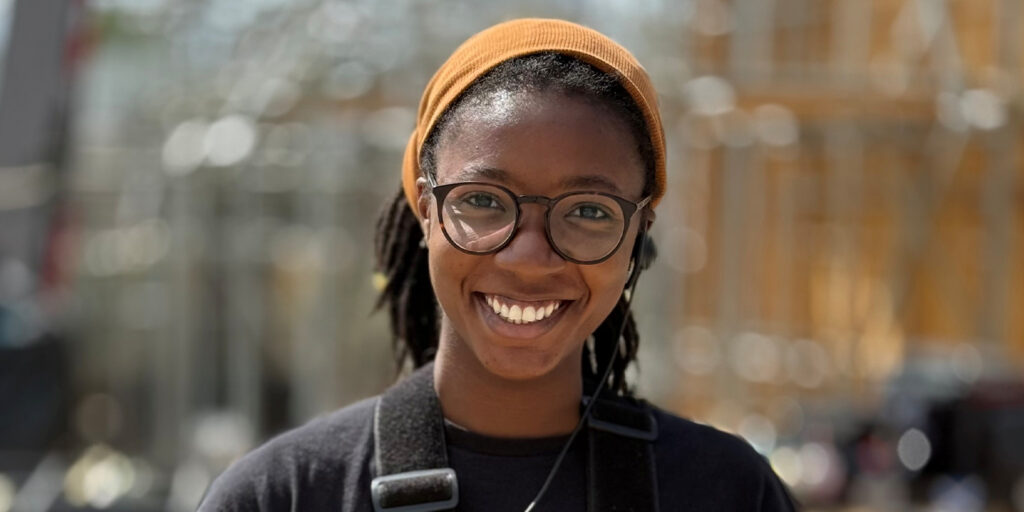
That someone was Ibiwunmi Balogun, who had some electrical training but had not yet had the opportunity to experience a big-budget film set. As someone who’d previously been unsuccessful in applying for First Steps Cinematography, this shift to lighting opened a door for Ibi.
“I had applied for First Steps one year, and I didn’t get it. Then I reapplied the next year, as a camera trainee, but by that time I had actually made the shift towards lighting and the electrical department,” they reveal. “Because of that, I was very honest with Fabian, and told him I’d changed my mind and that I wanted to pursue the lighting department. And Fabian was like, ‘Oh, good to know. Whenever I next have a job, I’ll get you on.’ And he did.”
While some programmes have trainees learning through video presentations or by simply watching and learning, First Steps trusts its mentees to get hands-on, testing themselves and learning new skills in real time. For an ambitious talent like Ibi, the chance to have that experience–not only learning first-hand from some of the best in the business, but actively contributing to a major project–was game-changing.
“I got to learn so much about the lighting department. It was a very hands-on experience. There was no, ‘Oh, don’t touch this. Don’t do that, just sit back.’ It was very much like you’re part of the team. Obviously, if you have questions, people will be there and you’ll be supervised. So it was a great way for me to learn,” Ibi says.
“Jonny Franklin, the gaffer, was very lovely. He was very helpful. I would spend loads of time in the DIT tent with Fabian and Jonny just asking questions about lighting, but also on set, actually doing the work myself as well. So yeah, it was practical and technical and a very, very good experience.”
Building a network
First Steps Cinematography isn’t solely focused on what mentees can learn on set, though. Wagner and his team work to make sure that anyone who has gone through the programme continues to receive support long after their first project comes to a close, getting access to a network of established talent and fellow upcoming filmmakers. In an industry that relies so heavily on who you know, this is arguably just as important as spending time in the DIT tent.
“I had applied for different schemes,” Ibi says. “I’d done other similar things before, and you think, ‘Oh, someone’s getting me into the industry here,’ but then that was it. You don’t hear from them again.
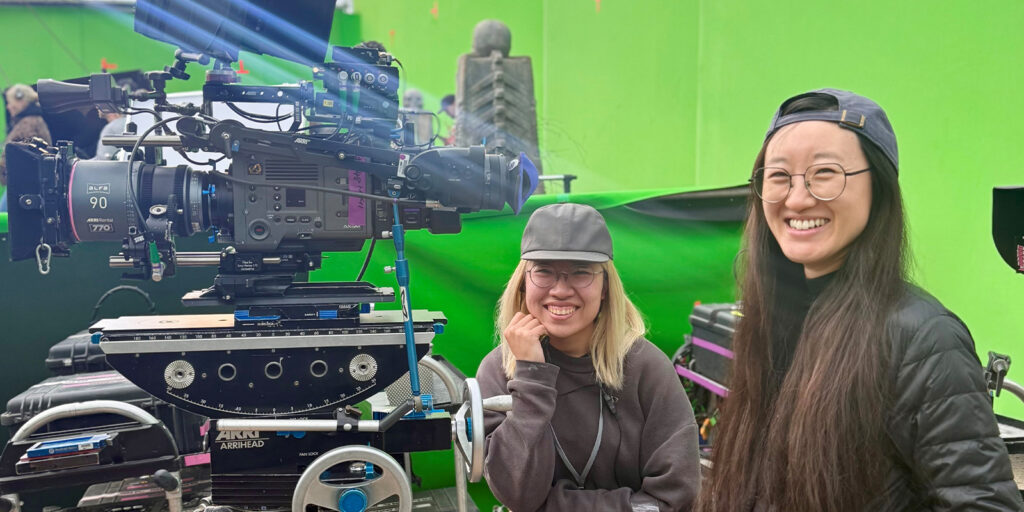
“But with Fabian, I feel that every time I get a message from him, I know it’s going to be good news. I’m so grateful for that, and I don’t think I can get that experience with other schemes. There is that connection. And then I think through Fabian knowing me through the scheme, when I got on set, they treated me really, really well. I had not been employed for months and months and months before, but now I haven’t stopped working since I met Fabian. So the connections you make are so vital.”
A new status quo
By providing these connections, Wagner is aiming to push the industry forward, to a place where there is more diversity on set, in areas like the lighting department, is the “status quo”. “I think it just needs to become more natural. I think it’s obviously all very forced right now,” he muses. “And I think to start the wave, we have had to force that kind of movement. And now there needs to be a point where it just becomes natural. It just becomes the status quo, right?”
As part of that movement towards a new status quo, Wagner is constantly looking for more studios, productions and mentors to get involved, so that more aspiring filmmakers can make the most of the experience and networks that Ibi has benefitted from. “We have hundreds of people applying every time we post something,” Wagner reveals, “and we can only take so many. It’s a shame, because I’d love to do it for more.
“Obviously, anyone who’s interested in becoming a mentor, or feels like they could be a mentor, please get in touch, because there’ll be ways of making it work, and it’s going to change someone’s life.”
Words: George White