

SKIN-DEEP
Lighting a human face is at the core of a DP’s work, but diverse skin tones require diverse techniques to bring out their best.
“Lighting for different skin tones isn’t about increasing or decreasing light in 2025, because we aren’t shooting on 100 speed EXR stock,” says Tommy Maddox-Upshaw ASC. “You truly need to think about the light placement via the blocking.”
“For me, it is really about managing contrast ratios and making sure skin exposure feels balanced in relation to the surroundings,” offers Sheldon Chau, an American DP who specialises in shooting internationally.
“It is mainly about responding to the skin’s nature,” says French-Mexican cinematographer Maria Sarasvati Herrera. “For example, there are lighter skins which tend to turn yellow or orange with low light, so you have to be aware of that to choose the temperature of light… For darker skins, it tends to be advisable to use bouncing and fill a little the shadow side, just to get some volume.”
“Skin in general is not opaque, because it’s a little bit translucent,” explains German DP Jana Laemmerer, “and how translucent it is, and how much light bounces back from the different layers of the skin, and also sub-surface scattering under the skin, depends on how much melatonin and how much haemoglobin.”
Because she likes to light based on the whole space rather than locking the characters into a specific position, Laemmerer finds bounces of different colours to be very useful. “Last year I shot a movie with a wonderful actress [Sarah Mahita] and she had alabaster skin,” Laemmerer says, “and I quickly noticed that a normal Styrofoam bounce board just doesn’t work with her skin tone at all, so we changed it to a linen or an unbleached muslin, something with a warmer tone.”
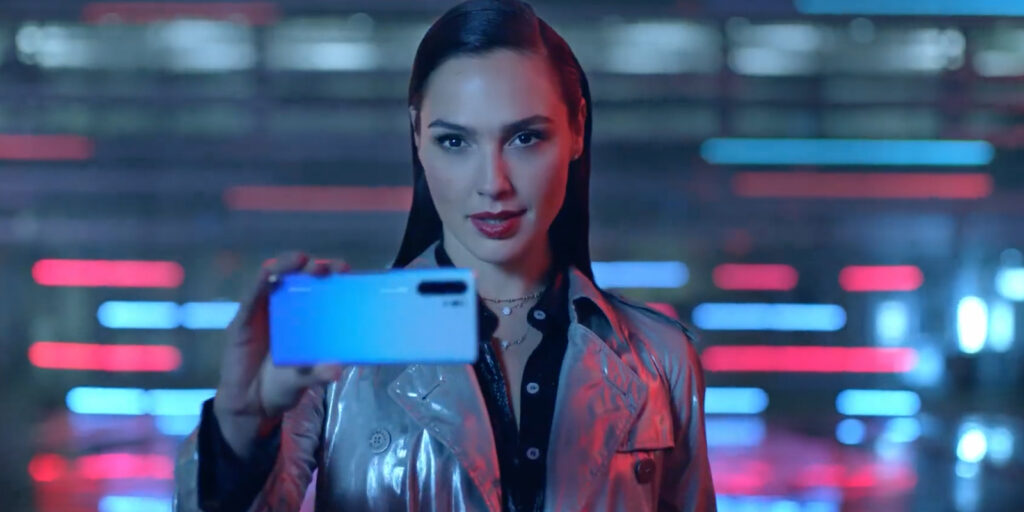
Laemmerer has found that the differences in olive and magenta skin undertones in the same frame can be exaggerated on a digital sensor. “One can really pop out, or be too much. I prefer the method of bouncing on the face, but you can also change the magenta and green shift on the LED lights very, very carefully. It’s better tested beforehand, according to the skin tones, because it’s hard to correct after if you don’t get it right.”
Gaffer Andrea Sachs has had a long career working with high-profile names in feature films and commercials. “There’s some interesting things that happen when you start lighting people who are African-American,” she offers, “and I think part of that is initially looking at someone’s skin tone and finding out: are they going to react better to a bluer light, or they’re going to react better to a warm [light]? With black skin, I think that’s one of the things that is a lot of fun to me – it reacts so beautifully, especially if you start using glancing angles – if you want to pick someone’s cheekbone out, let’s say.”
Sachs set up a test with two different cameras to find an LED fixture that would “glow” the skin for beauty commercials. The winner for her was the Kino Flo 850 Celeb, regardless of the skin colour. “Working with Helen Mirren and having to sit down with somebody for the first time and seeing their skin, having to get it done really quickly and make sure that they look like they’re blooming… I think in that situation I had a couple of 850s – they’re a real go-to for somebody like Helen Mirren, who’s very, very light-skinned. And then I did the same with Kerry Washington [who is African-American], and it was the same light – just I added a little bit of warmth to Helen Mirren.”
For Chau, highlights are the key: “In Senegal, for example, I had to capture the heat of the sun and intensity of street lights on darker skin tones in a dusty, rural setting, and my visual choice was to utilise a rota-pola filter (inspired by the work of HBO’s Insecure DP Ava Berkofsky ASC) to achieve that sweaty highlight kick – though instead of using the filter to mitigate the shine, I wanted to enhance it.”
Techniques for a variety of tones
Scenes featuring multiple different skin tones often require special attention from the cinematographer. Birgit Bebe Dierken BSC explains that the strategy which she and her gaffer John Kevin Gibb use is “exposing more for the darker skin tones, as crushing highlights is easier in post than lifting shadows.” The pair employ “soft key light and shaping with negative fill. In Sexy Beast for Paramount+ we would key for the darkest skin tone and then shape the lighter ones with flags to avoid flatness.”
“On Snowfall and especially White Men Can’t Jump I had juxtaposing skin tones in most scenes,” says Maddox-Upshaw. “I try to make use of big soft sources versus possible hard sources with mixed tonality in the quality.”
“Last year, I shot a film in Upstate New York on a tight budget, with minimal lighting and grip gear,” recalls Chau. “In one scene, I had two actors standing in full sun – one with a lighter skin tone and one with a darker skin tone. I noticed the darker skin handled the front light much better; it kept depth and detail, whereas the lighter skin needed more shaping. It ended up working nicely for the story – the lighting subtly emphasised the emotional weight each character was carrying in the scene.”

Herrera comments, “In episode four in One Hundred Years Of Solitude, I often had to use artificial lighting for exteriors, because we had a studio where you could combine natural and artificial light.” A scene with two women at a washing line required Herrera to approach their respective lighting differently. “The frame where Amaranta is looking back at Rebecca (Amaranta has lighter skin) is entirely natural light and didn’t require lighting,” the DP explains. “The [reverse] with Rebecca is lit almost entirely in artificial light and required bouncing in her left cheek.”
Although diversity on screen (and off) has increased in recent years, many feel that there is still plenty of room for improvement. “There is definitely a lack of training in handling darker skin tones,” comments Maddox-Upshaw, “because the majority of stories greenlit are with people with white or lighter skin tones. Then people look over-lit because they feel that dark [skin] means more light all the time, when in fact [dark skin] is easier to light and is consistently the same colour throughout the day or on set. White skin tones can go pink and tan within the same day.”
“Better education from the ground up” is needed according to Dierken, “more inclusive crew and HODs. As [my gaffer John Kevin Gibb] is from South Africa, he was constantly lighting a mix of skin tones, so he learned how to balance warmth, contrast, and highlight detail instinctively. When he started working in Europe, he realised there is less experience lighting for darker skin without overfilling or flattening it.”
“I’ve been lucky to work with actors of all kinds of skin tones,” says Chau, “and honestly, I think the more diverse the cast and crew, the better the work becomes. Cinematography reflects the world around us, and when the people we collaborate with come from varied backgrounds, the images – and the stories – become more layered, more meaningful. It also makes the visual language that much richer and more exciting.”
Words: Neil Oseman