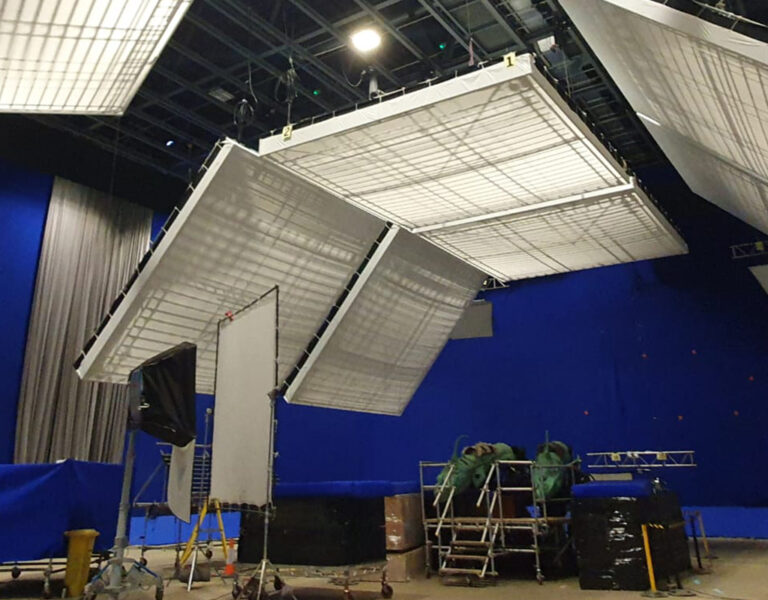


BACK TO BASICS
It perhaps took the 1950s work of John Alton to legitimise a kind of cinematography that prioritises shapes more than faces. That brand of hard-lit film noir has relaxed considerably during the intervening decades, but the idea of illuminating the far side of the subject has long remained a lighting fundamental.
“You can use backlight for so many different reasons, so many different styles,” says Lorene Desportes. “You can have the theatrical backlight, very obvious, not trying to be subtle. Then you can have the exterior backlight which you can’t really control, though the light quality is wonderful because it’s the sun. Then you have the beauty backlight which needs to be very subtle, but does something to separate the subject from the background.”
Desportes’ experience arises mostly from short form, a career demanding a wide variety of different results. “I mainly do commercials – short form in general – but I don’t think I have a specific theme. It ranges from studio to location, exteriors and from handheld to sticks to dollies. Usually if I’m doing beauty or fashion I’ll at least have a kicker or a hair light, just to kind of separate. The focus is the model and the clothes, but just to separate from the background is a good recipe, it works.”
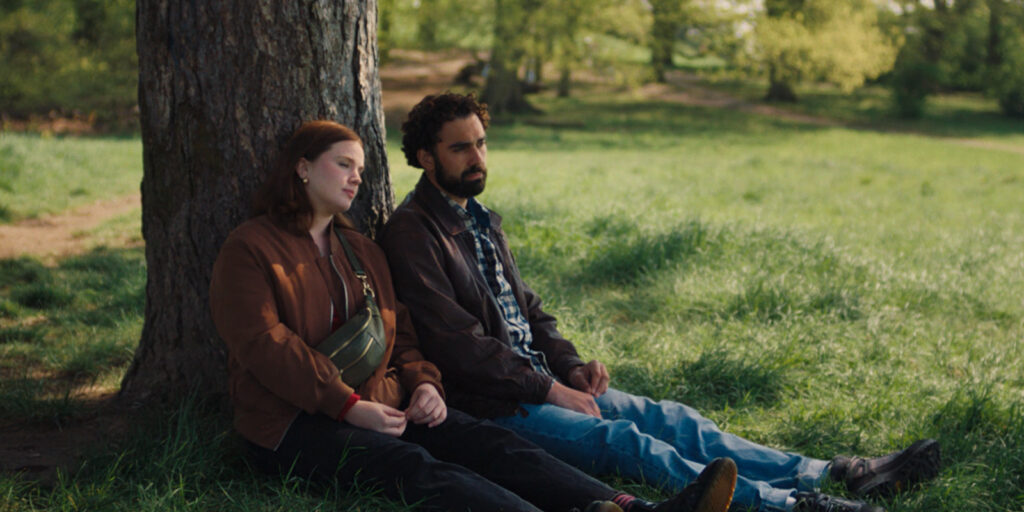
Points of comparison, Desportes goes on, are an important way to understand the approach. “I recently rewatched Breaking Bad and Better Call Saul. It’s all set in Albuquerque, all in the sun, and I noticed that most of the exteriors aren’t backlit. They just went bold, they went with a big old sun straight in someone’s face. Obviously it’s all shot on film, and that helps, but it was quite interesting.”
Geometrically, backlight on one conversation partner logically implies front light on another, an issue with which cinematographers have wrestled – or, often, gleefully overlooked – for years. “I shot one film in which there were two people having a conversation outside in the sun. I got the girl to be backlit and the guy had the sunlight straight on his face. I used some dingle to create some shape because he was supposed to be a zombie, quite pale and there was no hope for any contrast otherwise!”
Thankfully, even for people intent on the most noiresque outcome, technology has rewritten the rulebook on power and brightness. Desportes, though, enjoys the traditional approach. “I think nowadays it’s quite difficult to convince people to get a whole lot of generators and operators and that kind of stuff. I think I’m still quite old-school. I think if I’m going to have something hard it’s always going to be tungsten. LEDs are amazing, and they’re very close to a light quality that you get from tungsten, but I don’t think it’s quite there yet.”
In the context of Alton’s soot-and-whitewash frames, backlight might seem like a shorthand for high contrast, though Desportes proposes moderation. “I always like to see people’s faces, to see their eyes, and even when you’re going for something really dramatic. The Godfather, obviously, is amazing, but realistically it only works for The Godfather. I’ll always have some sort of bounce unless it’s a silhouette and you’ve got loads of haze, or something, but I’ll always try and see a little bit of the face.”
Ultimately, the desire for drama and contrast faces practical limits. “I’m aware that people nowadays don’t watch films in a dark room where they have all the sensitivity in their eyes,” Desportes reflects. “Chances are, they’ll watch on the sofa, on a sunny day, so you need to take that into account. At the end of the day the idea is to tell the story right.”
Words: Phil Rhodes