

POWER TO THE PEOPLE
Sheldon Chau discusses filming Pooja, Sir with the Sony FX6/FX3, navigating power cuts, minimal lighting and the lead actress’s health struggles to capture Nepal’s raw realism.
I’ve been fortunate to work on films across Asia, including India and China—countries with well-established film industries and politically charged landscapes. When prominent Nepali director Deepak Rauniyar approached me to film a police procedural, I was excited even though I knew little about Nepal, where the film was shot. As I learned more about its rich history, I appreciated the depth of the project.
Nepal, known for the Himalayas and Mount Everest, has a complex demographic with many languages, ethnicities, castes, and religions. The Madhesi people, a darker-skinned minority in the southern plains, have long faced struggles. After a decade-long civil war, protests in 2007 and 2015 against Nepal’s new constitution led to police brutality and civilian deaths. Despite some progress, the media remained biased and Madhesis faced increased hostility. Deepak and his wife Asha Magrati co-wrote Pooja, Sir, inspired by the protests, focusing on a woman police officer navigating systemic discrimination and political unrest. Asha played the titular role.
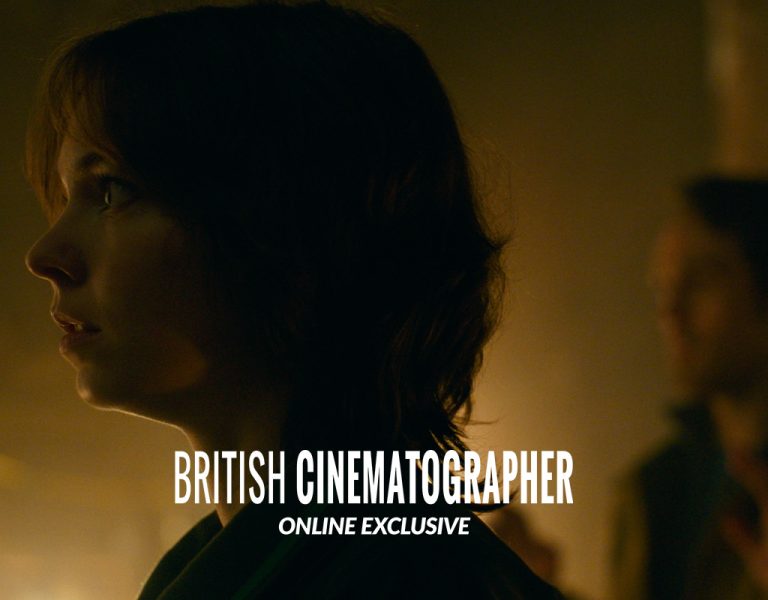
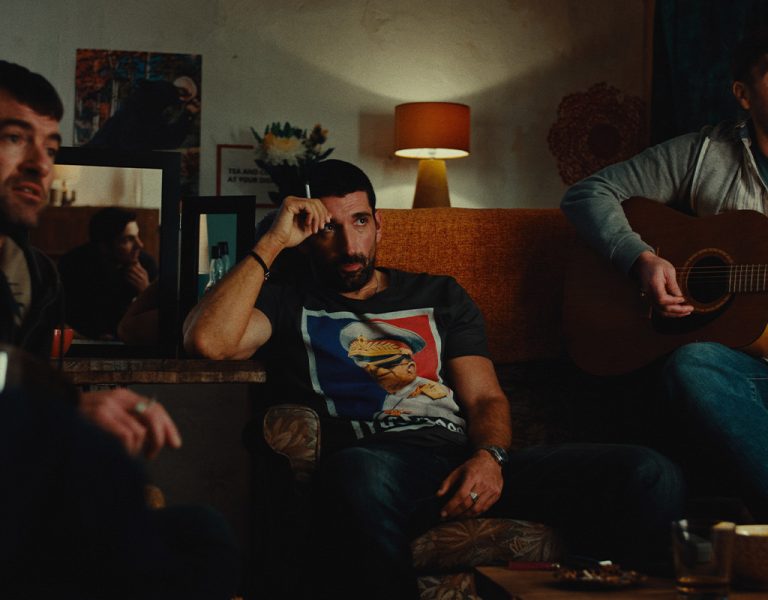
During prep, Deepak and I committed to embracing the truth—accurately capturing the environment, adapting to the conditions, and revealing realism through the human eye. We didn’t want to glamorise or over-stylise the events. The setting was a southern plains city with frequent power outages, where many homes were lit by a single bulb. Using the Sony FX6 and FX3 allowed us to film with minimal lighting and embrace practical city lights. The low-light capability was stunning, enabling quick setups and giving Deepak more time with his actors. As a director’s ally, I strive to complement the story and performances, which are the core of the film.
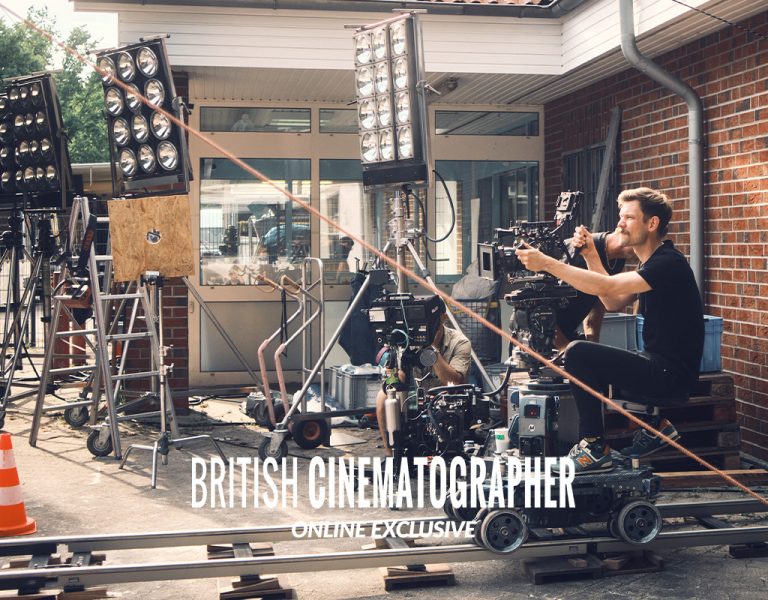
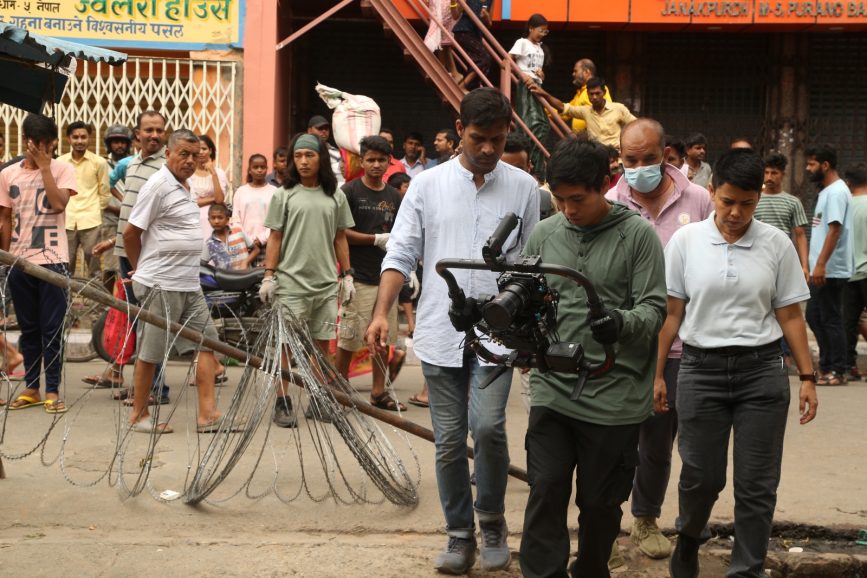
We decided to use the FX6 and FX3 with Sirui Venus Anamorphics. While the FX6 was on a tripod or dolly, the FX3 was on standby with the Ronin gimbal. For protest scenes with large crowds, the compact FX3 allowed me to navigate through the extras and immerse the audience directly in the action.
We chose an ultra-wide aspect ratio (2.59:1) to capture the human eye’s naturally wide peripheral. By keeping the focus shallow and centred on the character, we isolated the characters in mystery, tension, and uncertainty. This ratio gave a specific yet subjective window into Pooja’s internal mindset as she navigated a new and unfamiliar world.
THE WORST KIND OF START
Every film comes with challenges, but we were unprepared for the devastating news that Asha had been diagnosed with three rare types of cancer during pre-production. We delayed filming to allow her time to fight and recover, and miraculously, we reconvened a year later to complete the film. I appreciated Deepak’s trust in me as he balanced the new dates around my filming schedule while remaining committed to realising our collaboration. We continued refining the script, knowing I had only five days of prep when I arrived in Nepal before filming started. It was crucial to study the script inside and out, scene by scene, to be a responsible creative partner.
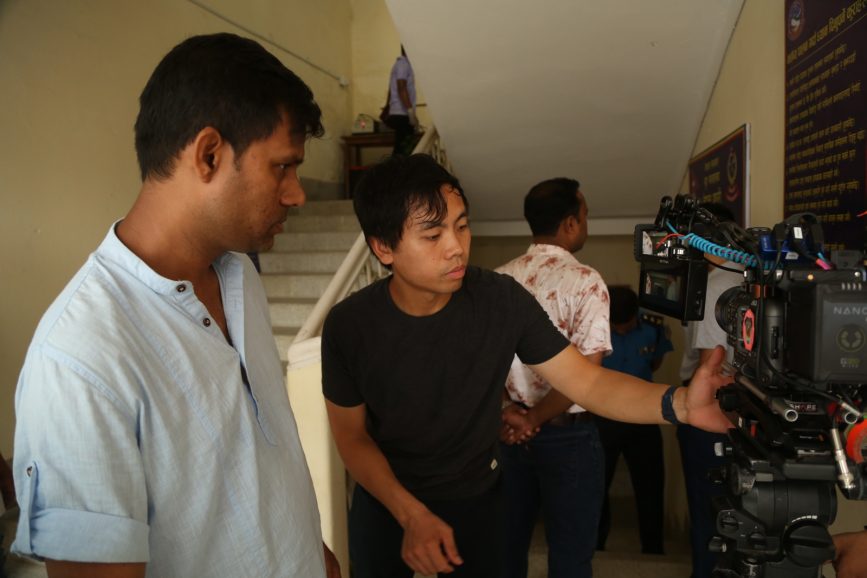
Filming began in Janakpur in the humid heat of the plains. We worked mostly six-day weeks, with key crew members often working longer. I brought my first AC from the US, Riley Shen, because I needed someone who would appreciate the culture and embrace the food and different work styles. This turned out to be the perfect choice. I tried to learn Nepali words to communicate better, but once the crew saw how Riley and I embraced the food and were open to new experiences, we were welcomed with open arms. After a few days, the team felt like family.
Shooting in the vibrant Madhesi community in the south of Nepal was a dream, but it came with challenges. Power cuts and homes relying on single light bulbs meant we had to adapt to tricky lighting conditions.
I created rough guidelines for lighting: embrace top light, use fewer units, rely on practicals, and temper the sodium vapor street light intensity to match the heat between characters. Each character in Pooja, Sir is trying to become someone else—Pooja wants to thrive in a man’s world, Mamata, a dark-skinned Madhesi, wants to become light-skinned, and the Captain, from an Indigenous ethnic group, seeks acceptance from higher castes. I enjoyed bathing them in different shades of orange street light, red neon light, or shadows depending on the mood.
Our lighting package included Aputure lights, my favourite. The Aputure 1200D, PB6 Infinibars, and the 600C were key units. Smaller lighting units were brought from the U.S., and private vendors in Kathmandu supplied additional equipment.
FROM VILLAGES TO VENICE
There were pivotal moments in Pooja, Sir. One of them occurred during a massive uprising in which hundreds of thousands protested the Constitution that violated the basic rights of the Madhesi people. Understanding the social context informed my cinematography, making the scenes more motivated. To follow both Pooja and Mamata, undercover officers navigating the protest, we used long lenses on a gimbal. Deepak encouraged me to move through the extras to discover moments in real time. It was exhilarating. Riley did an excellent job pulling focus from rooftops, Second AC Sangam Rai prevented me from being trampled, and the AD team managed the large crowd of extras.
In another sequence, we filmed in a dusty abandoned factory where kidnappers had set up a hideout. Deepak had stepped out for a moment, and I felt the scene should have warm overhead light splashing on the characters. It was a gamble because if Deepak disagreed, it would have cost us more hours of lighting and blocking. When he returned, he was thrilled. “How did you know to set up warm light here? Did you know I imagined them sitting at this bench?” It was a satisfying moment, reflecting our strong director-DP collaboration.
The crew saw how we problem-solved difficult challenges based on our deep knowledge of the script. Every decision was motivated by the characters, especially Pooja’s psyche.
I still think it’s crazy how everything seemed to revolve around Deepak’s birthday. In 2022, Asha was diagnosed on August 29; in 2023, the emotional final day of filming fell on August 29; and in 2024, the film premiered at the Venice Film Festival on August 29. Somehow, it all felt like it was meant to be.