

Cinematographer Florian Hoffmeister BSC was recently honoured with the Marburg Camera Prize, awarded by the University of Marburg in Germany.
Unlike most industry recognition, the prize is not tied to a single film or awards cycle – instead, it honours a body of work, explored through a three-day academic conference where films are screened and discussed by students, scholars, and critics.
The organisers describe the award as an effort to counter the industry’s tendency to “underestimate and overlook cinematographic achievement” and to “reassert cinematography as a foundational element of film and visual culture”.
In that sense, it’s one of the few platforms actively positioning the cinematographer as an author – not just a collaborator.
Previous recipients include Anthony Dod Mantle ASC BSC DFF, Philippe Rousselot ASC AFC, Agnès Godard, Paweł Edelman, Robby Müller BVK NSC, and Edward Lachman ASC – placing Hoffmeister in a lineage of image-makers who have shaped contemporary cinema.
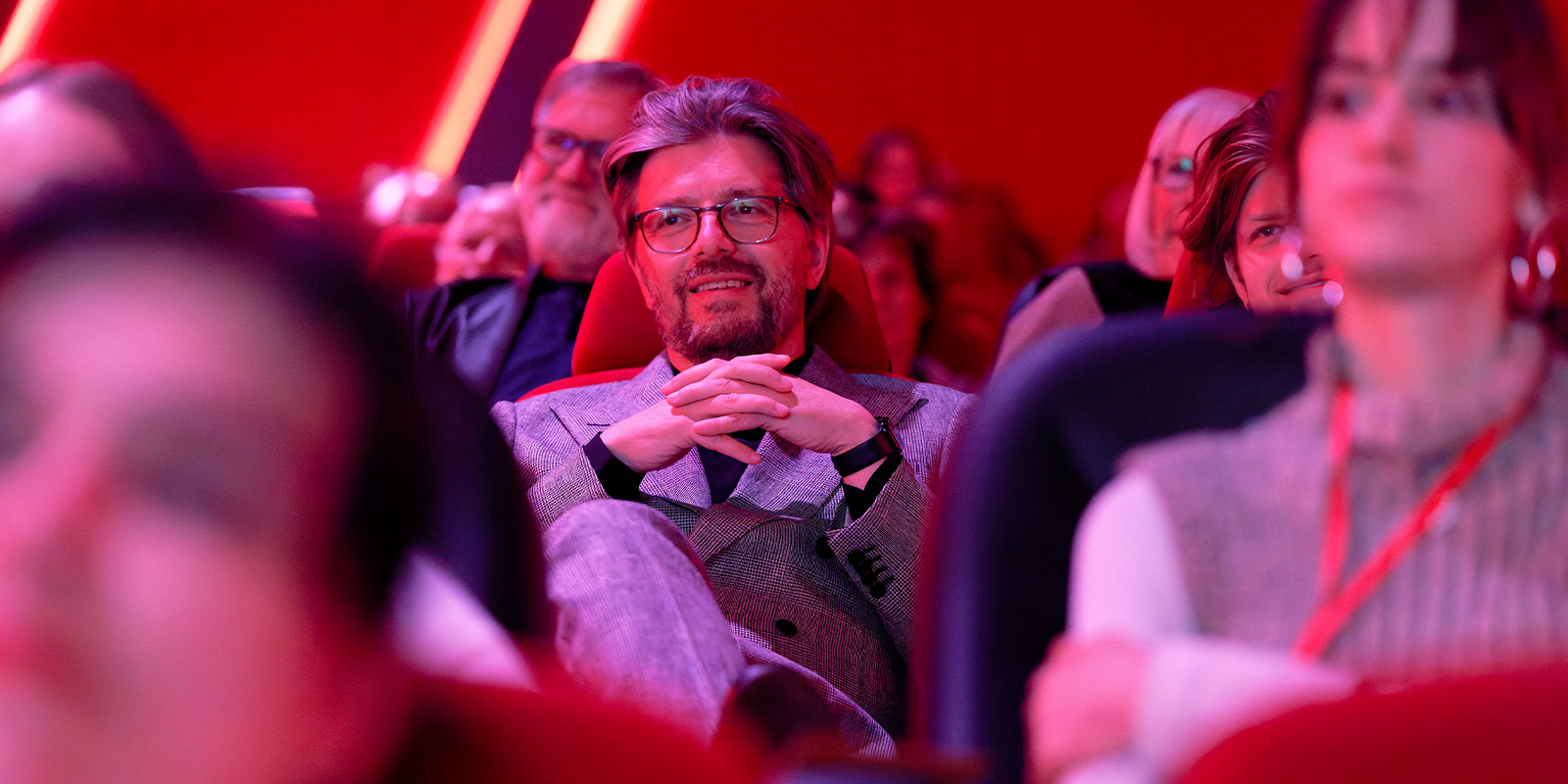
Speaking to British Cinematographer about how it felt to receive the award, the Oscar nominee revealed: “It was an absolute honour, I have to say. It was a brilliant experience.
“This award is a unique thing. It’s not just an awards ceremony, it’s basically a three-day conference where all of your work gets screened, and you have to do three talks – one with an academic, one with a film critic, and one with a fellow film industry worker.
“In all honesty, I completely underestimated it. They start at 9 o’clock in the morning and finish at 11 o’clock at night, and there’s a cinema with maybe 250 seats, and people would watch only my cinematography for three days.”
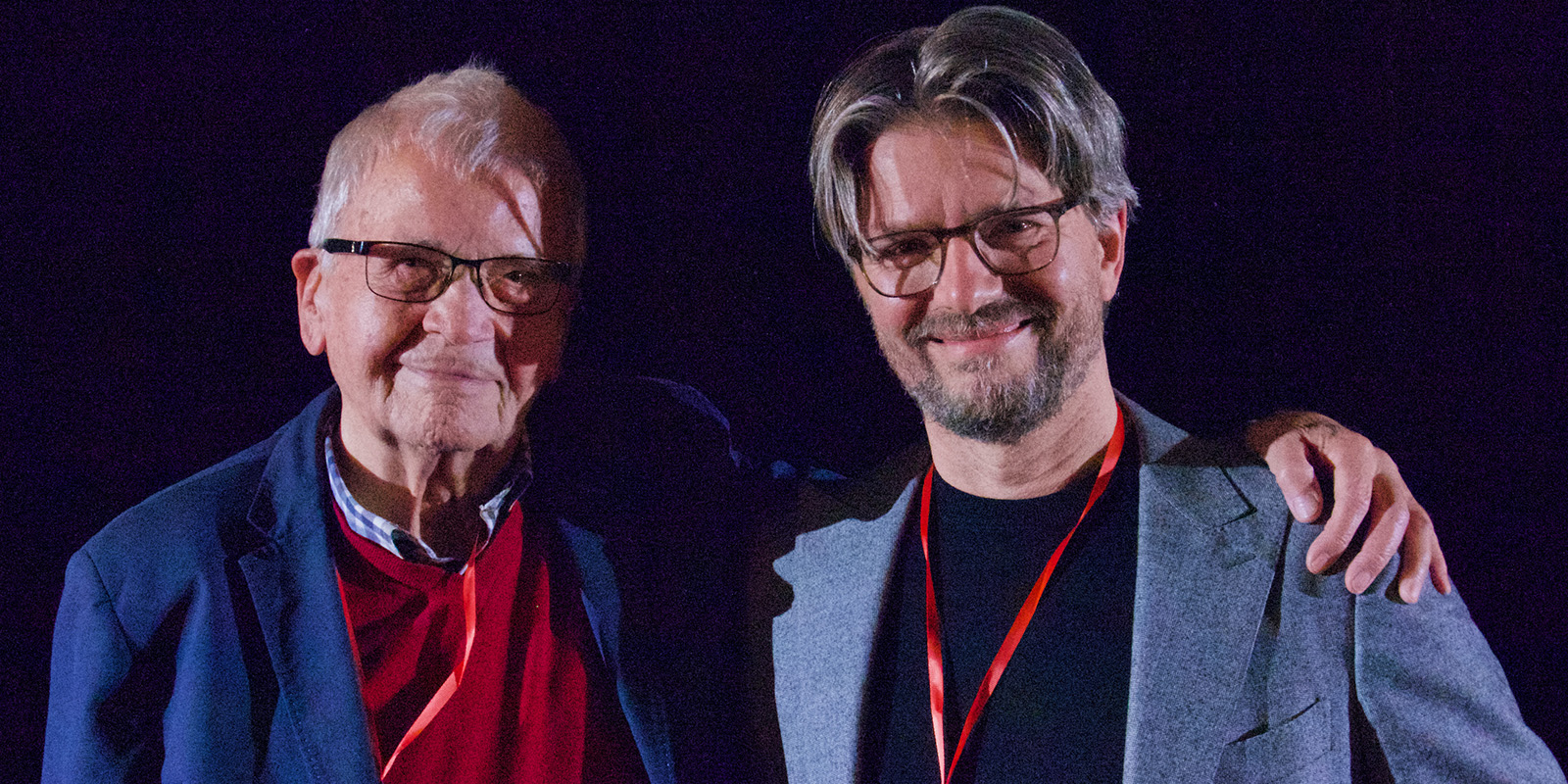
Hoffmeister continued: “They have been doing it for 25 years now, and it was initiated by a couple of professors at the university who wanted to celebrate cinematography. I think the first one was presented to Raoul Coutard, and then Robby Müller, so they really focused on adult cinema. Since then, they have given it to a mix of German DPs and international DPs.
“While I was there, I wanted to get a megaphone out and shout about what an amazing place and cause it is, because it really is just about cinematography.”
Read on for an exclusive Q&A with the award-winning filmmaker – who discusses his career decisions, the role of cinematographer as author, and much more.
As you’ve mentioned, the Marburg Camera Prize involves a three-day deep dive into your work. How did you find that experience?
I completely underestimated what a journey this ceremony would be. It started with a film that I’d shot at film school for a fellow classmate, who was there and who I hadn’t seen for 10 years, and it ended with True Detective. So it was amazing to go back with this time machine and watch all of this stuff that I’d worked on.
It was a gorgeous journey, and it took place in a gorgeous location. It’s a real hidden gem. It truly was only about the work – there were no companies, nobody trying to sell you anything, it was purely about the art of cinematography.
How interesting is it that this prize is celebrating a body of work, rather than just one particular project? Does that add an extra layer to it for you?
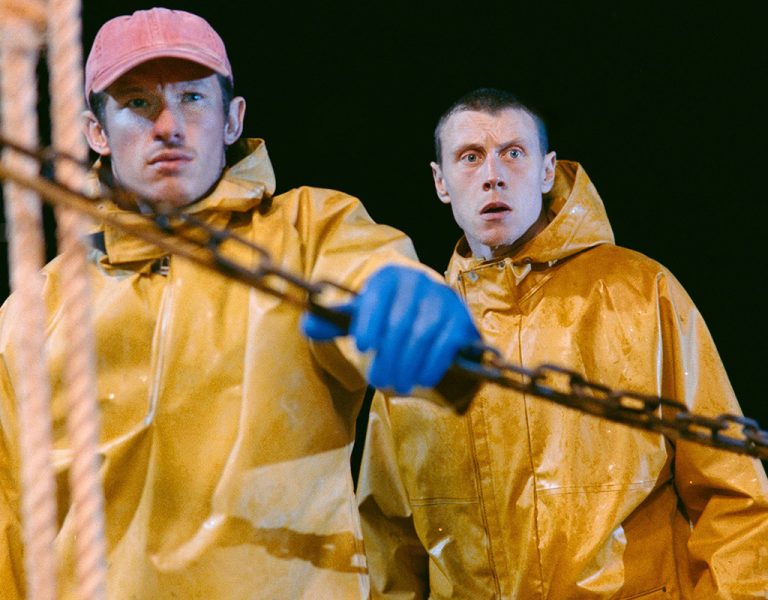
What it really hammered home was how much effort it takes to come up with different looks, that’s what struck me most. For example, I remember I had never seen Great Expectations, a three-part series I did for the BBC and which was directed by Brian Kirk, screened in a cinema. It was very well received – I got an Emmy, ASC Award and BAFTA for it – but this was my first time seeing it on the big screen. So it was really interesting to see that because I don’t know how I managed to shoot it this way within the schedule of a BBC drama. It was fascinating to look back and think about how each look came to life and really reflect on the skill that it takes to make productions happen.
The award is one that positions the cinematographer as an author – how important is it to have causes that take this approach?
I believe the public perception of cinematography has developed in the past 10 years or so. I think people understand our work better, probably due to the internet and podcasts and Instagram and so on. And at this moment in time, with all these conversations about AI and emerging technologies, I think it’s crucial to think of cinematography at its purest as a form of resonance. I go someplace and I look at things and I have an emotional reaction to that, and that will inform my decisions. Then, ideally, I have people around me for whom those emotions resonate in the same way, and you work with those people to create something that will have resonance for the audience. So, to reduce that to a verbal instruction that’s put into a machine is to basically destroy filmmaking. That’s what I contemplated privately throughout those three days in Marburg: what is the emotional process behind my work, and why has it made an impact, why has it resonated? With the rise of AI, it’s important to consider how we maintain this form of resonance, because that’s what making a film is all about.
How have you worked to craft a career that demonstrates cinematography as authorship?
When we say cinematography as authorship, that is not to diminish the other authors. Obviously, there is the screenwriter and the director. And it would be slightly arrogant if I were to claim I alone craft the image, as there is a whole team who works on it – the production designer, the makeup designer, the costume designer.
But in terms of blocking and camera movement and so on, we as cinematographers really sit at the very birthplace of the visual identity of the piece. So in this way, I have been an author since day one, as I have pursued images that I believe will have resonance. I have been lucky that I have worked with directors who are real collaborators, who give you a sense of appreciation and trust, and that makes the process very joyful, to work for someone who acknowledges what you bring to the table.
On the role of cinematographers as authors, in Marburg a regular guest is Jost Vacano ASC BVK, the cinematographer of Das Boot. He became involved in a landmark legal case against Bavaria Film, arguing that the extraordinary commercial success of the film was far out of proportion to the compensation he had originally received. Relying on Germany’s so-called “Fairness” or “Bestseller” provision in copyright law, he successfully established that creative contributors can be entitled to additional remuneration when a work achieves exceptional success. What I find so important about the case is that it reinforces the idea that cinematographers are authors. We help shape the visual language of a film, and that contribution is not merely technical. It can be fundamental to how a film is experienced, remembered and valued by audiences.
Outside of the growing role of AI, how else has the filmmaking process developed and changed throughout your career so far?
One thing that has really shifted is working pace, which is due to technology, and I think that affects how much resonance you can allow yourself. I started on celluloid, then over the last 15 years or so, digital has begun to dominate my work process. And within that digital workflow, the pace at which you can change or adapt on set has increased massively.
LED lighting is a great example – you can often change colour and warmth in an instant. On the first series of The Terror, we shot the Arctic on a stage in Budapest, and the SkyPanel had just recently come out. That was the first time I had worked in an entirely digital environment and worked with LED lighting, and you could change the sky to a rosy sunset, make it warmer, change to 7,000 kelvin, all through someone just pushing a button. Normally, it would take 45 minutes for a team of six people to run up there with pre-cut gels, so through using LED lighting, you lose those 45 minutes to sit and think and watch the space and discover a happy accident. You lose that space to resonate – it switches to ‘bam, go, bam, go’. So the reduction of time is a big change.
I also think there’s been a reduction in intimacy of creation. When you used to shoot celluloid, you’d have the magic of the rushes, and there would be a little secret space that only the cinematographer would inhabit. In the digital working environment, that space is more public through HD monitors on which everyone can inspect the image at any time, so you lose that space too. Pace and space, they’re the two big changes I’ve experienced.