
REALITY CHECK
When shooting coming-of-age tale Mad Bills to Pay instinct and a documentary-inspired method helped cinematographer Rufai Ajala depict a naturalistic portrait of life in the Bronx as a summer of teenage kicks ends and reality sets in.
What began as a short outline of story beats evolved into an ambitious, improvisation-driven shoot in the Bronx, as writer-director Joel Alfonso Vargas’ debut featureMad Bills to Pay was captured by a stripped-back crew adopting documentary techniques.
To shoot the raw and authentic story cinematographer Rufai Ajala and Vargasembraced instinct over extensive planning and exhaustive shot lists. Most of Ajala’s previous work had leaned heavily towards documentary and docu-fiction, including their earlier short film Bleach (2023), and proved valuable when a natural approach was deemed most suitable for Mad Bills to Pay.
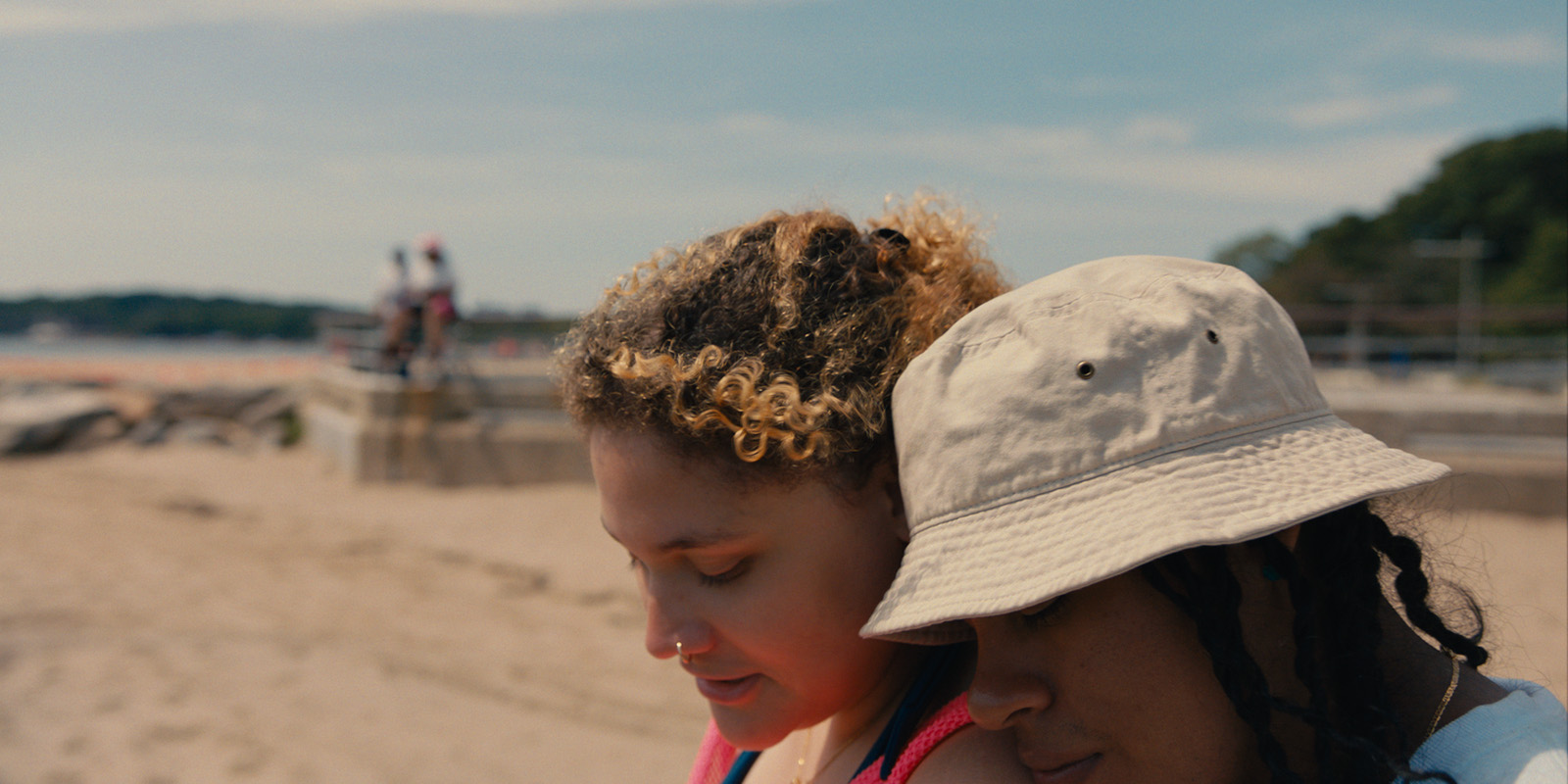
The coming-of-age drama transports the viewer to the Bronx and introduces carefree Dominican-American teen Rico (Juan Collado), a loveable rogue who spends his summer selling cocktails on the beach or partying. Rico is forced to grow up, face his financial struggles and take on additional responsibilities when his pregnant girlfriend Destiny (Destiny Checco) moves into the home he shares with his mother and sister.
“Before this film I’d mainly worked on projects with a very realist almost documentary approach,” explains Ajala, who first met Vargas through the National Film and Television School (NFTS) where they both studied. “Even when applying to the NFTS, I submitted documentary work because I hadn’t really shot purely fictional material. I think producer Paolo Maria Pedullà and Joel really liked my approach, especially since Mad Bills would be shot in a very stripped-back way.”
Although Mad Bills to Pay was submitted as a graduate short at the NFTS, the project was originally conceived and shot as a feature, later playing at festivals such as Palm Springs International Film Festival, Sundance Film Festival and BFI London Film Festival.“It wasn’t like we shot a short and then expanded it though,” the cinematographer explains. “The intention was always a feature and the short just emerged from the footage.”
Fly-on-the-wall approach
With a sensibility aligning with the film’s aims, the small team embraced a minimalist philosophy and was well positioned to capture a naturalistic portrait of life in the Bronx without disturbing the environment and drawing attention with extensive equipment. As many of the cast members had a theatre background and some supporting cast and extras were people encountered on location this also helped achieve the desired authenticity.
“We were often shooting in locations where we needed to blend into the environment so the fly-on-the-wall approach worked well,” adds Ajala. “We tried to keep the camera as hidden as possible so people wouldn’t change their behaviour when they noticed we were filming.”
As the camera package needed to help when blending real environments with staged sequences and spontaneous moments they encountered, the filmmakers chose to work with the ARRI Alexa Mini, stripped back and operated discreetly, sometimes even without a monitor.
“Panavision New York supported the project and provided the Alexa Mini package for free, which was incredible,” says Ajala. “During our tests we found the focal length we liked was between 28mm and 35mm or maybe a little bit wider, so we wanted to source a set of primes around that. We went with Zeiss Super Speed Mark II primes which are fast, compact, and have good character and fitted the pared-back set-up. We used the Zeiss lenses a lot for the low-light night scenes and ended up using a Sigma Cine 18-35mm T2 zoom for many of the other sequences.”
While Ajala operated A camera, 1st AC Oscar Rutishauser-Mills also operated for some scenes. “Sometimes we switched roles — I’d operate while he pulled focus, then we’d swap so I could adjust lighting or framing,” says the cinematographer. “Our camera was powered from batteries in a backpack and takes could last 10 or 15 minutes, so it was physically demanding.”
From Roma to Raising Victor Vargas
Shared references including Alfonso Cuarón’s Roma (Cin. Alfonso Cuarón) and Fernando Frias’ I’m No Longer Here (Cin. Damián García) helped develop the visual language, informing the film’s observational style, wide frames, minimal coverage and the decision to allow scenes to unfold naturally. “I’m No Longer Here follows a young man in Mexico who later moves to New York and the film uses a lot of wide shots where the action simply plays out within the frame,” says Ajala.
Raising Victor Vargas (Dir. Peter Sollett, Cin. Tim Orr), set in New York, was particularly relevant. “When I first read the outline for Mad Bills about this rebellious kid growing up in New York, it reminded me of Raising Victor Vargas which I’d loved since I was a teenager and was about the struggles of a teen in Lower East Side New York,” says Ajala.
Do the Right Thing inspired the idea of storytelling focused around the local neighbourhood and adopting static compositions rather than frequently cutting or moving the camera. “Also, practically speaking, we didn’t want to draw attention to ourselves in public spaces which handheld setups or larger rigs might have done,” says Ajala.
Creative instincts
Working with a stripped back beat sheet of around a page and a half, containing brief descriptions of story moments, allowed the team to focus on performances rather than become tied to a traditional script. This suited the performances as much of the dialogue was improvised during rehearsals or shooting, enabling the crew to react to and adapt their shooting style to suit the action taking place in real environments.
In line with Vargas’requests, rarely more than one or two set-ups were used per scene. Framing emerged organically during rehearsals when actors ran through scenes with Vargas while Ajala tested possible angles and captured three to five options on their phone.
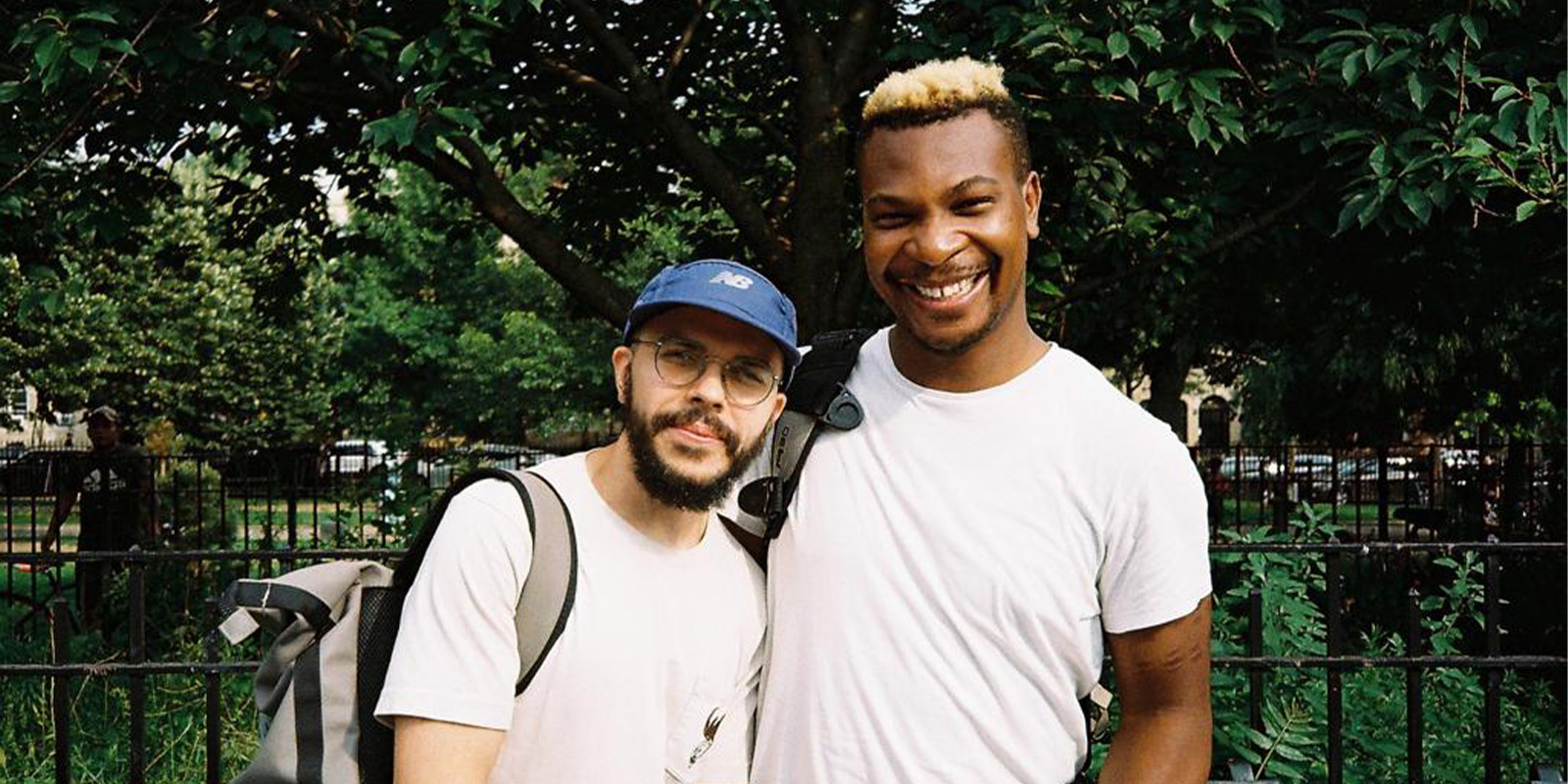
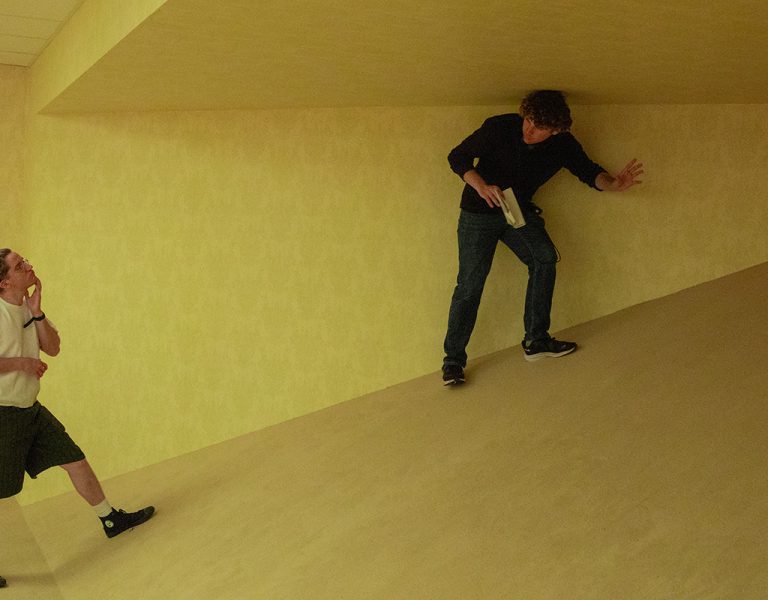
“When reviewing the frames, we chose the most interesting composition. Joel often said, ‘Don’t just go for the classic composition; try something different,’” says Ajala. “This process led to more unconventional framing and angles, pushing ourselves into corners, which helped keep the repeated and sometimes confined locations visually fresh.”
As locations were often unpredictable and sometimes secured at the last minute, planning precise compositions in advance was impractical. The production lost its main location – the family home – on the day filming was supposed to begin and instead, the crew pivoted to a different and rather unexpected location: the house of the exterminator who had been brought in to help rectify a problem at the initial house.
In a twist of fate, the experience reinforced Ajala’s preference for working without rigid shot plans. “In commercials or fashion, which I had mainly shot, you’re locked to a storyboard approved by the client,” they said. “But what I learnt from this film is on fiction projects I prefer not being tied to a shot list. Sometimes unexpected things happen on set – the actors move in a certain way or the space dictates different framing – and if you’re too attached to the plan, you miss those moments. It’s often better to stay flexible and react to what the actors are doing.”
Instinct guided many creative decisions and scenes were often relocated depending on how the shoot unfolded. “We might suddenly realise a scene worked better in the bedroom instead of the living room, so we’d move it there and figure out how to shoot it,” Ajala says.
Compact crew
When working on a production of such small scale at times the entire crew comprised six or seven people, and rarely exceeded 12, including cast members. Certain locations, especially Orchard Beach in the Bronx, where Rico sells “nutcracker” cocktails, required discreet filming and initially the crew only had permission to shoot on quieter weekdays. Wanting to capture the busy atmosphere of the weekend, luckily the filmmakers eventually secured additional permissions through a crew member’s connection with a member of the Bronx community board.
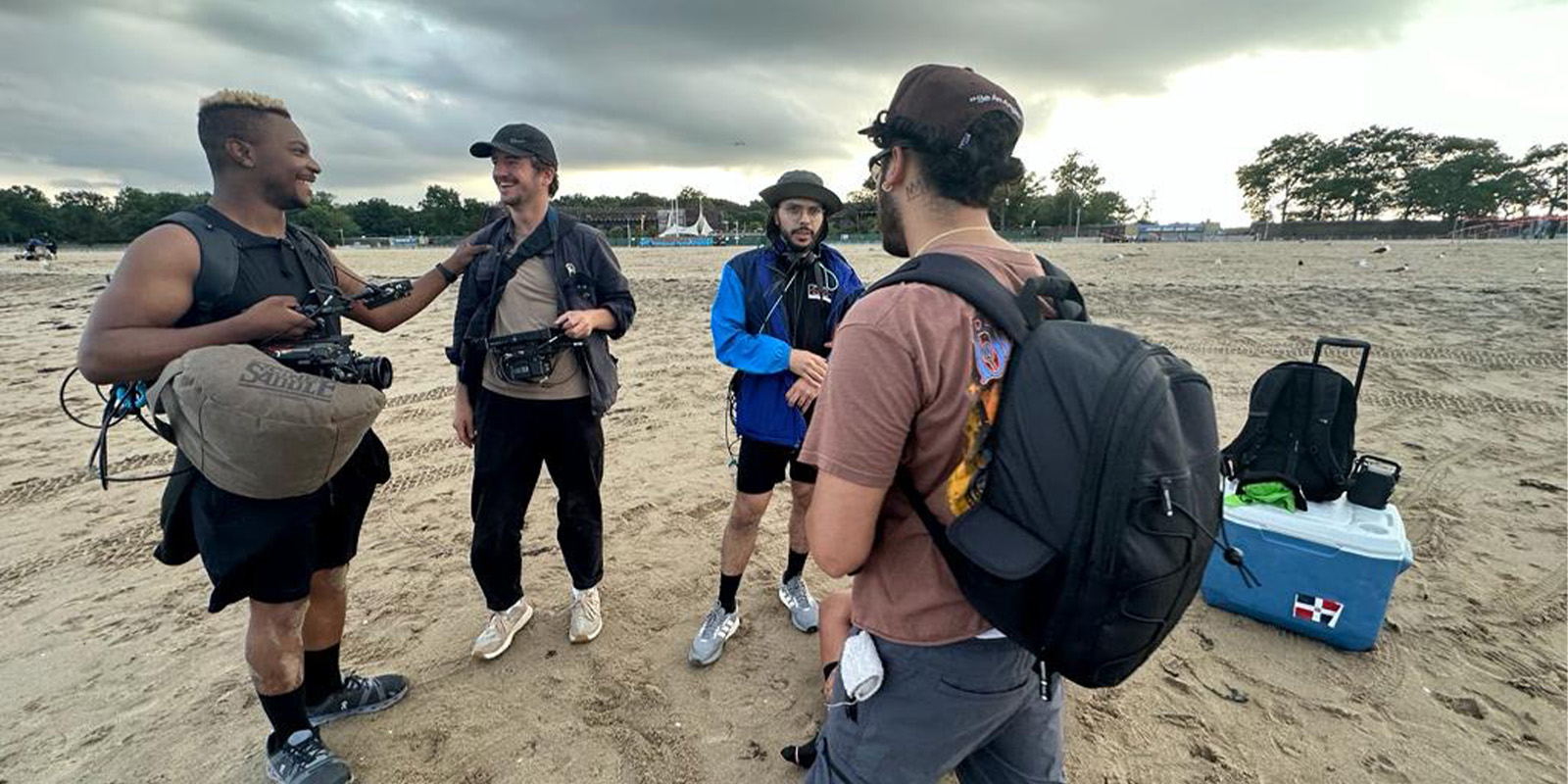
To avoid attracting attention from locals, they used an even further stripped back skeleton crew and disguised their equipment. “Sometimes we hid the crew and at one point our focus puller pretended to be a local sitting under an umbrella,” Ajala laughs.
“Orchard Beach is a very local Bronx beach; many people in New York don’t even know it exists. Most of our cast and crew were from the Bronx or had connections there, which helped a lot. For instance, the party scene was filmed at the house of a relative of our production manager. Some other locations were found by letter-dropping in neighbourhoods while we were scouting and casting locally.”
Family album aesthetics
Many scenes play out in locked-off wide shots, allowing actors to move naturally within the frame, a decision made in part due to the film’s references as well as a result of practical constraints and the minimal equipment being used.
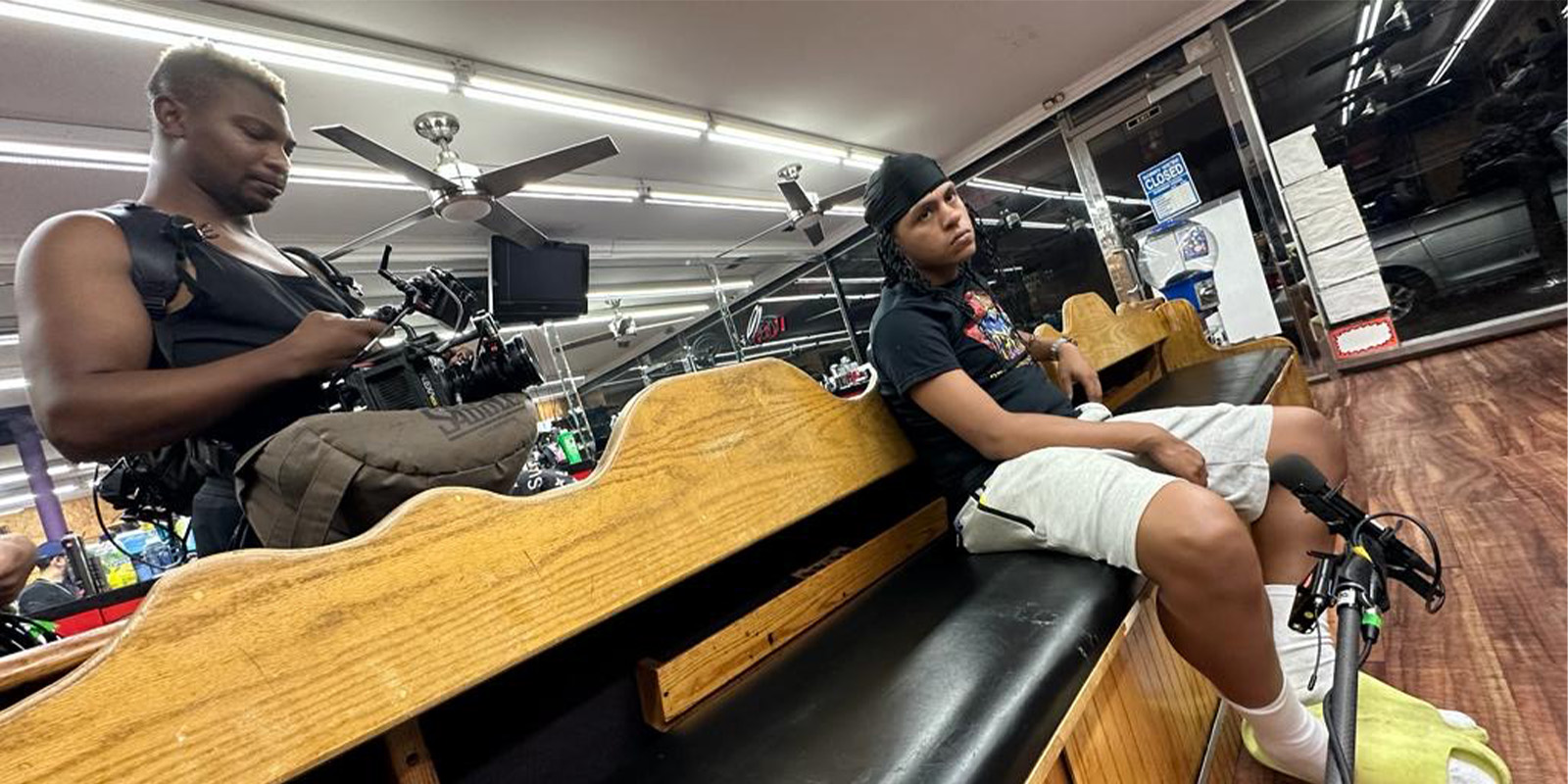
The team often used monopods rather than tripods which allowed them to squeeze cameras into tight corners of cramped interiors. “For some scenes I’d stabilise the camera under my arm using a Cine Saddle which is an alternative to a tripod,” Ajala adds. “On the bus and train scenes we even used crew members as human tripods so the camera wouldn’t shake.”
Placing characters low in the frame with significant headroom above them was a distinctive recurring visual choice, connecting with the project’s photographic inspirations which included a photo book by Wayne Lawrence called Orchard Beach: The Bronx Riviera documenting life in the Bronx. Shot in medium format, the portraits capture local residents using a striking square-frame aesthetic and celebrate the beach’s diversity and community.
“Compositionally our film is different, but we liked the feel of the medium-format photography and the sense of community and character in those portraits. This influences the square-ish frame and feeling of looking through a personal family album which Joel wanted to achieve,” explains Ajala, who rather than directly replicating the compositions directly, drew upon the visual mood and feeling of everyday life.
Thinking outside the light box
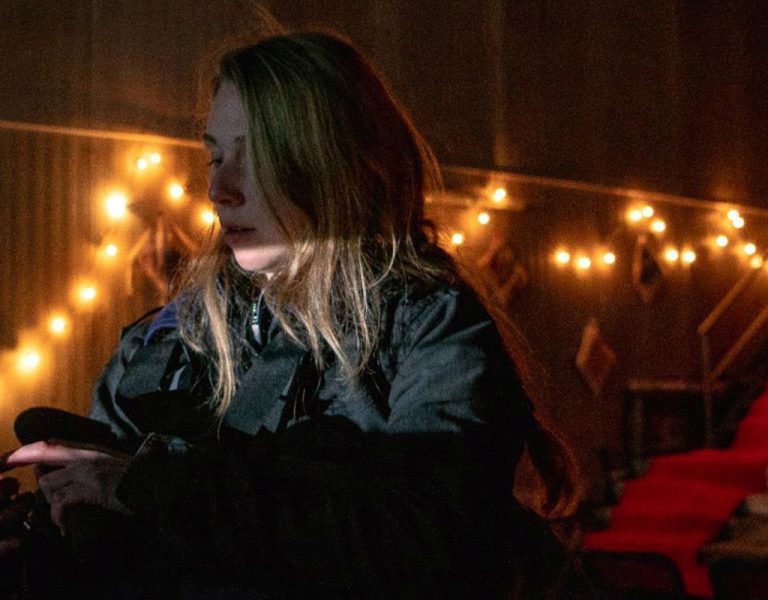
In line with a documentary approach, lighting was intentionally minimal, with most scenes relying on natural light or practical fixtures, working closely with production designer Lia Chiarinto shape the interiors and narrative with practical lamps. Typically only one main lighting unit – an Aputure 1200D – was used sparingly to enhance existing light.
Collaboration with Chiarin and gaffer Jorge Quintero was even more crucial for night scenes. “It was about figuring out where practical lights could go so the lighting felt natural,” adds Ajala.
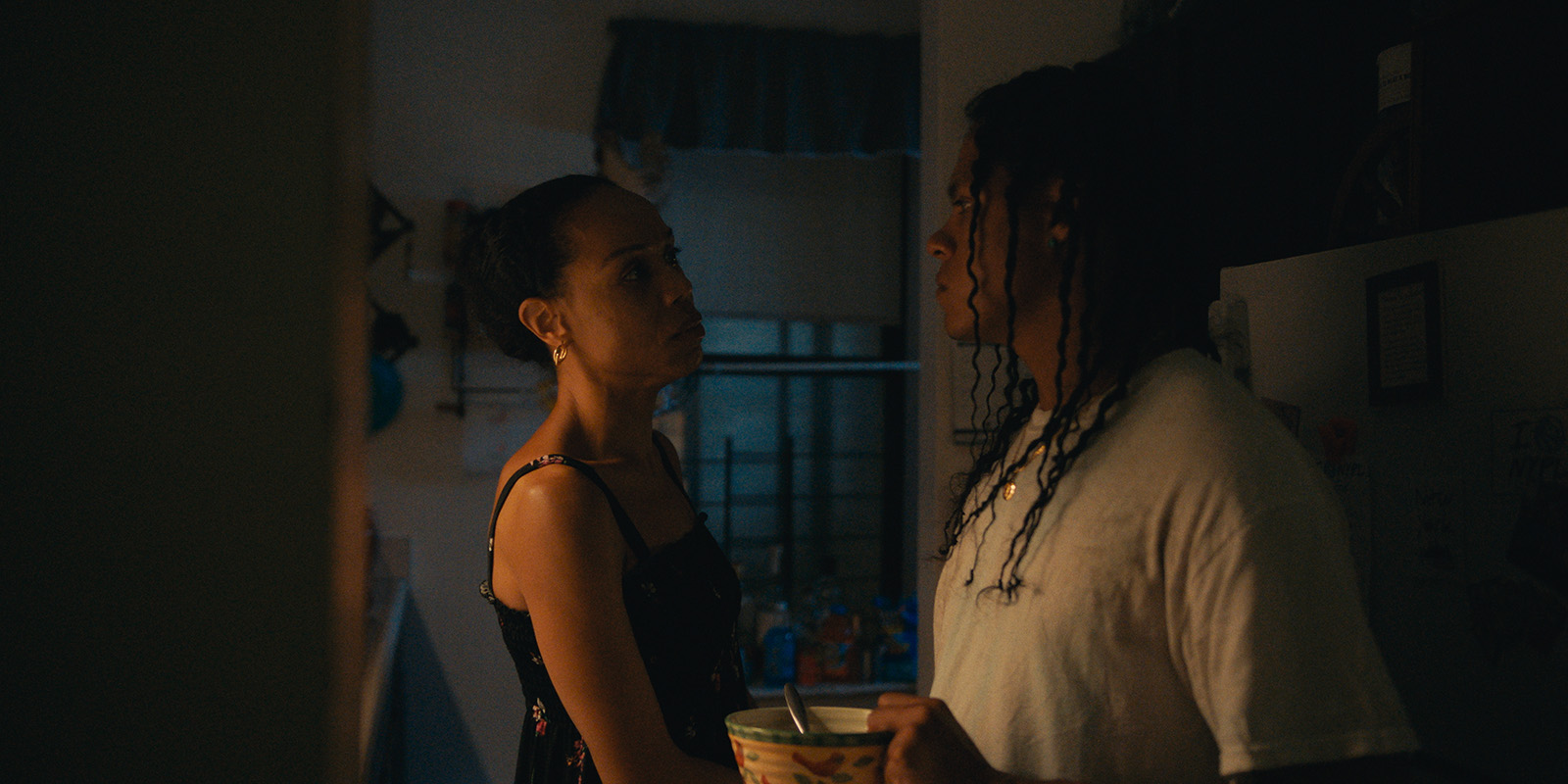
The filmmakers’ improvisational approach shaped lighting choices such as embracing silhouette in one bedroom scene between Rico and Destiny after the crew discovered attempts to add more light felt artificial. One of the most challenging scenes to light sees Rico returning home from jail and being confronted by his mother in what appears to be early morning light when in reality, the scene was filmed around midnight.
To simulate dawn, the crew blasted the Aputure fixture through a window and gradually adjusted gels and intensity until the glow resembled the first glimpse of daylight. Additional practical lights such as the refrigerator light were enhanced with small LEDs and Astera Helios tubes bounced off the ceiling to create a subtle blue early morning ambience. “Getting that balance right took a lot of tweaking; just tiny adjustments until it felt believable,” Ajala says.
Other key lighting fixtures helping shape the story included Aputure Infinibars and Aputure LS 300x. As well as helping motivate lighting naturally, Chiarin transformed locations quickly and effectively including the exterminator’s house which doubled as the family home and which did not originally feature the living room layout needed for Mad Bills. Therefore she redesigned the space, adding couches, a dining table for pivotal dinner scenes and made Rico’s bedroom feel more lived-in with the addition of flags and personal objects.
Grading was handled by frequent collaborator Emmanuel Benjamin, who prior to the shoot had run tests with Ajala in the UK using an ARRI Alexa in sunny conditions to simulate New York’s harsh daylight and see how the image held up.
Ajala typically exposes images about one stop brighter than desired and then brings them down in the grade to preserve highlight detail. “I always shoot with a simple Rec.709 LUT, nothing stylised,” they say. “During post we refined the colour to emphasise the warmth of the New York summer and make sure the highlights and night scenes held up.”
A supportive set
The intimate filming style of some scenes required sensitivity on set and allowed Ajala to draw on their experience as an intimacy coordinator as well as a cinematographer. As some spaces in the family home were so small, only the actors and camera operator could be in the room for certain sequences while Vargas monitored remotely in an adjacent room.
Actor Destiny Checo had little prior experience on film sets and found Ajala’s insight and guidance, from an intimacy coordinator’s perspective, invaluable during certain scenes in which she may feel more emotionally vulnerable.
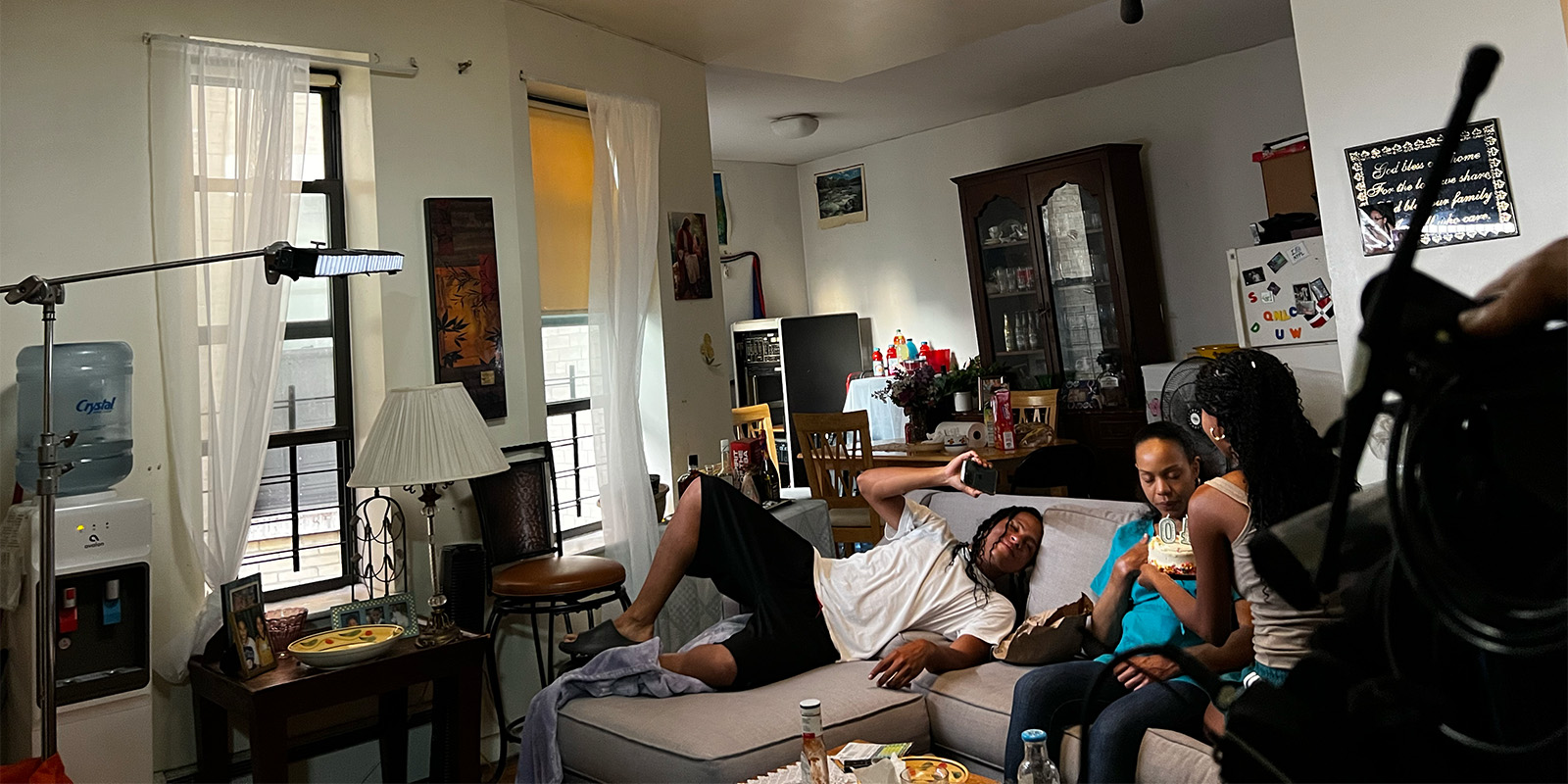
“It was about making sure everyone felt safe and supported, especially when we were working in such small spaces,” Ajala says. “It was important to be there to help and give them exercises so they could feel comfortable with each other and know each other’s boundaries.”
When making a film built upon trust between the small and nimble crew and cast and a liberating script that gave the actors freedom to improvise, seamless collaboration was more integral than ever. For Ajala, the experience also reaffirmed they enjoy a freeform filmmaking philosophy and that “sometimes it is best to stay open and respond to what is happening in front of you”.