TIME AND TIDE
Process is as important as narrative to Mark Jenkin, a filmmaker adopting a liberating analogue approach, shooting on 16mm using his trusty Bolex and embracing imperfections along the way. He reflects on the tactile nature of celluloid shooting and how his latest production, Rose of Nevada, has shaped him as a storyteller.
The idea for Rose of Nevada came to Mark Jenkin in a single haunting image: a fishing boat thought lost at sea that suddenly reappears in a harbour decades later. “When I shared the initial concept with my partner she asked what happens next,” says the Cornish filmmaker. “And I replied, ‘I don’t know. I’ve got nothing after that.’”
The pair bounced ideas back and forth during one intense evening of plotting, gradually building the outline of a story. Yet it was only during the edit — and even after the premiere at the Venice Film Festival and subsequent screenings in Toronto, New York and London — that the film’s core themes began to emerge.
“I always differentiate between the story and the theme,” Jenkin explains. “It was during post-production when I started thinking, ‘This film’s about this or I’m saying this.’ Quite often you don’t really understand what you’ve made until afterwards.”
Even now, the meaning of the film continues to evolve as audiences interpret it in different ways. “Day by day I’ll get more understanding of what the film is saying because the conditions I wrote it in, my state of mind and the world people are watching it in now all change the meaning,” he says.
Jenkin began writing the script during a time of global uncertainty as the pandemic lockdown paused production on his previous film. “I thought I could spend the whole time writing. This isn’t exactly what happened because I spent a lot of time just having an existential crisis and staring at the wall,” he recalls.
Rose of Nevada is the filmmaker’s third feature, following Bait (2019) and Enys Men (2022). As with those earlier productions, Jenkin takes on multiple roles –writing, directing, shooting, editing, designing the sound, and composing the music.
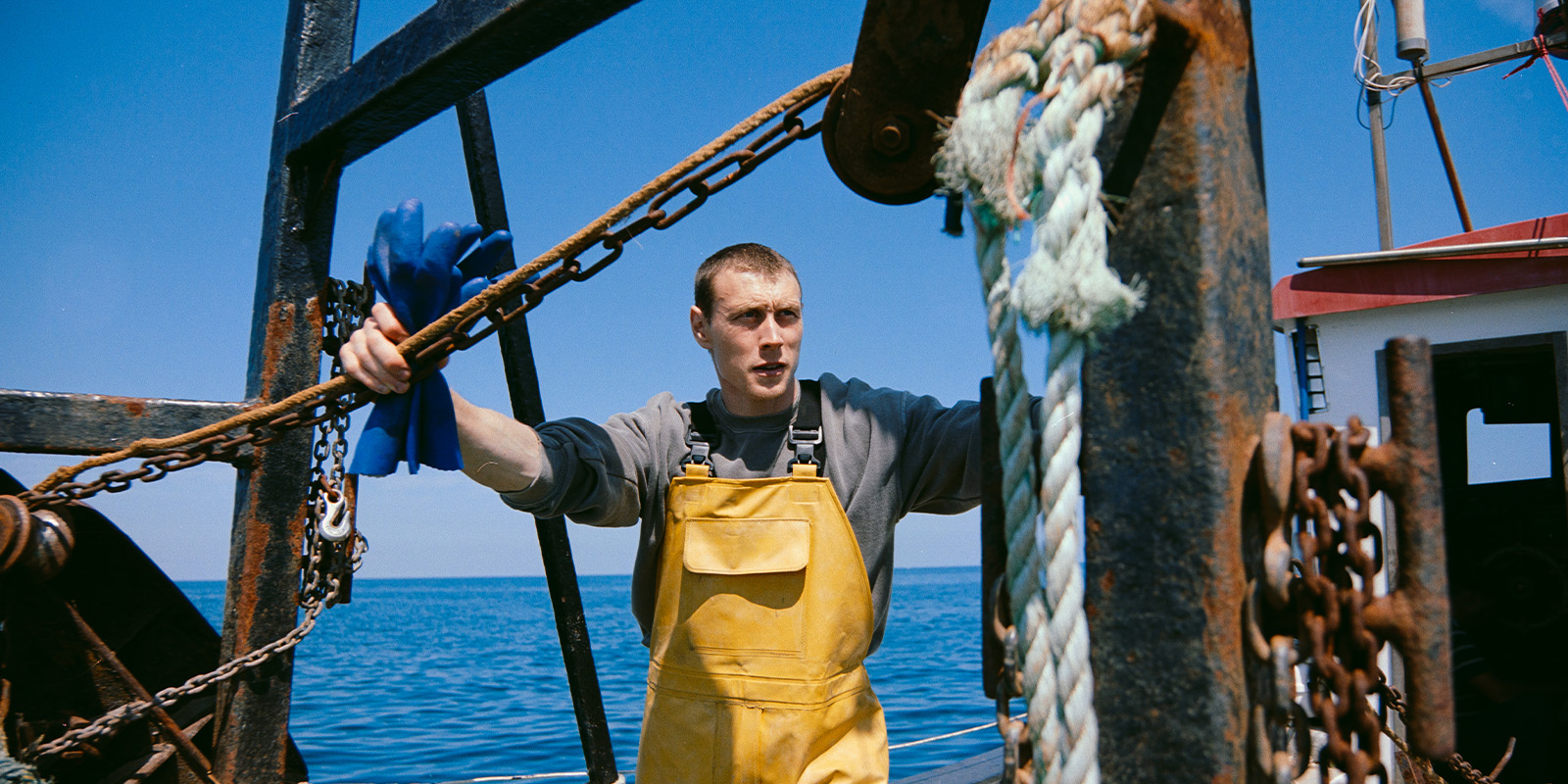
Venturing into the realm of time travel, the film revolves around the fishing boat Rose of Nevada which was lost at sea with all hands 30 years earlier. When it mysteriously reappears in the harbour of a long-forgotten Cornish village, locals believe the ship must return to the sea in the hope it might reverse the community’s long run of bad luck.
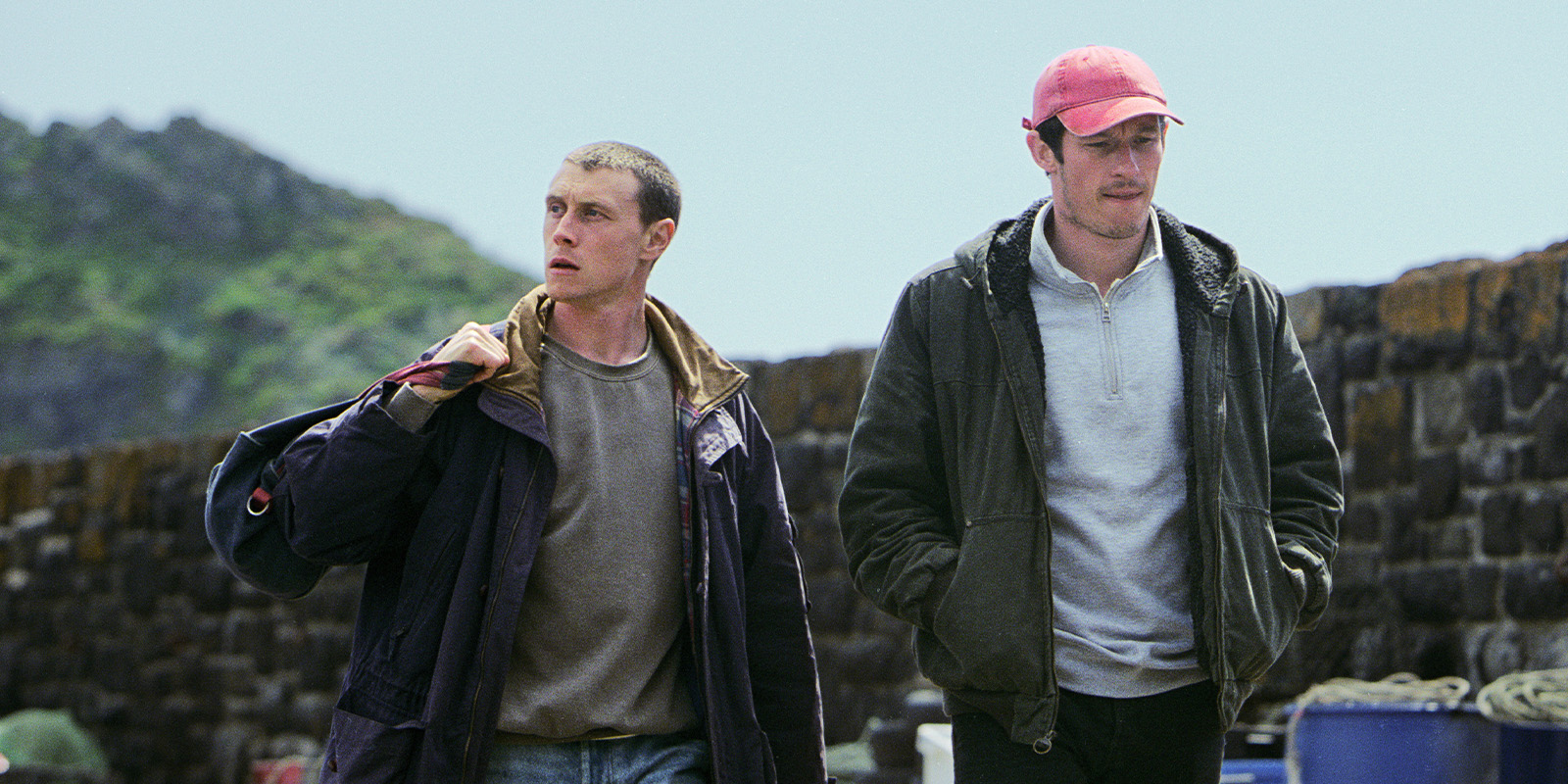
Nick (George MacKay), desperate to find work to support his young family, and Liam (Callum Turner), a mysterious newcomer eager to escape his past, sign on and set sail with Captain Murgey. When Nick and Liam return they discover they have slipped back in time to 1993 and the locals greet them as if they are the original crew of the doomed vessel.
The timelessness of celluloid
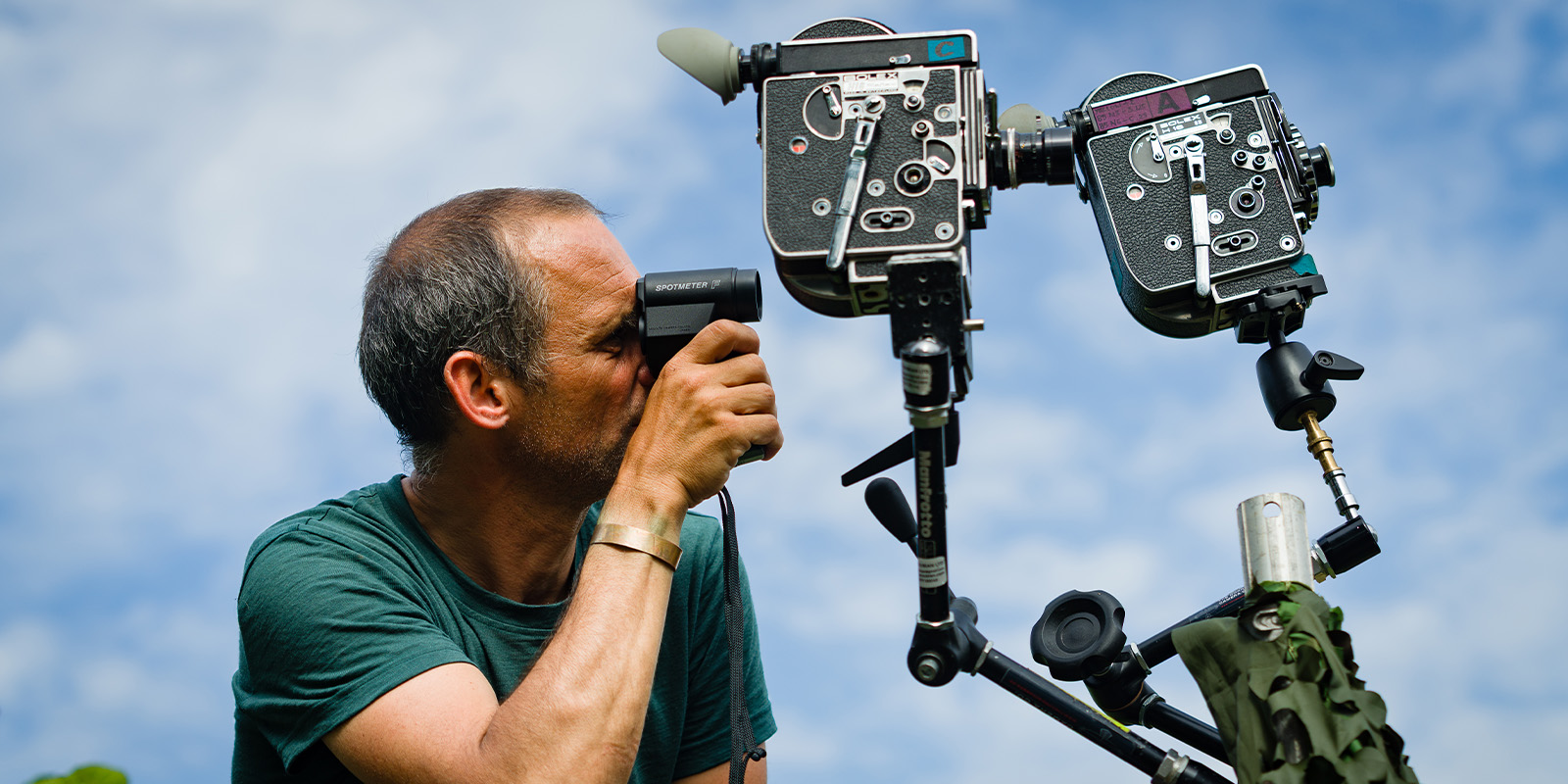
Made in Cornwall, all of Jenkin’s features are shot on 16mm using a Bolex H16 camera, treasured by the filmmaker for its grain and saturated colour. His visual style is largely driven by the equipment. “It’s Academy ratio and people often ask why I chose to shoot in that aspect ratio. I choose the camera, and then the camera sets that style.”
Jenkin developed a distinctive method early in his career out of necessity. The Bolex H16 camera he could afford was not blimped, meaning it produced too much noise to record synchronous sound. “At first I thought not being able to record location sound was a limitation but quickly it became the last thing I wanted to do and now I never record location sound,” he explains.
The absence of sync sound creates a sense of liberation during the shoot. No dialogue is recorded live, so actors re-record all their lines during post-production and foley and sound effects are added later.
“We shoot with the kind of freedom filmmakers enjoyed when they were making silent movies,” says Jenkin. Without the constraints of sound recording kit, he can move the camera instinctively and respond in the moment.
As the Bolex only runs for 27 seconds before it needs rewinding, filming must be efficient. Jenkin also incorporates the “spoiled” frames at the ends of reels andoperates the camera, often placing it physically close to the actors. The result is a visual style built from fragments rather than wide master shots.
“I build up the world through big close-ups of faces, hands and objects rather than big establishing shots,” he says. “I don’t shoot coverage.”
This approach originally stemmed from the expense of shooting on film. With limited stock available, Jenkin could not afford to film scenes from multiple angles. “I couldn’t face starting with a huge wide shot knowing most of it would end up on the cutting room floor,” he says.
Instead, scenes are assembled later in the edit, sometimes in unexpected ways. “I might cut in something from earlier in the film, or even something from later we haven’t seen yet. Suddenly the scene has a different meaning.”
Jenkin remains committed to shooting on celluloid and “wouldn’t be making films if it wasn’t on 16mm”. For him, the format has a timeless quality because film stocks change little over the years, footage shot today resembles material captured decades earlier. “16mm in the 1990s looks the same as present-day 16mm,” he notes.
That continuity partly explains why he avoided altering the visual style between the film’s time periods. Instead, shifts in era were conveyed through production design rather than cinematography.
“The film stock stays the same,” he says. “The difference is in the world around it.”
As with his previous films, Jenkin worked with three Kodak stocks: Vision3 50D 7203, 250D 7207 and 500T 7219 for interiors.
Natural instinct
Jenkin rarely creates reference boards or mood books. “Because I’m my own cinematographer, it’s all in my head,” he says. Influences still appear, though often subconsciously. Watching older films sometimes reveals ideas he absorbed years earlier without realising. “For instance, I watched Mike Figgis’ Leaving Las Vegas recently and thought, ‘Ahh, I’ve done that in my films,’” he says. “It must have been sitting somewhere in the back of my mind since film school.”
Jenkin also suggested the actors watch fishing documentary series such as Cornwall: This Fishing Life or Deadliest Catch to study accents, movement and mannerisms.
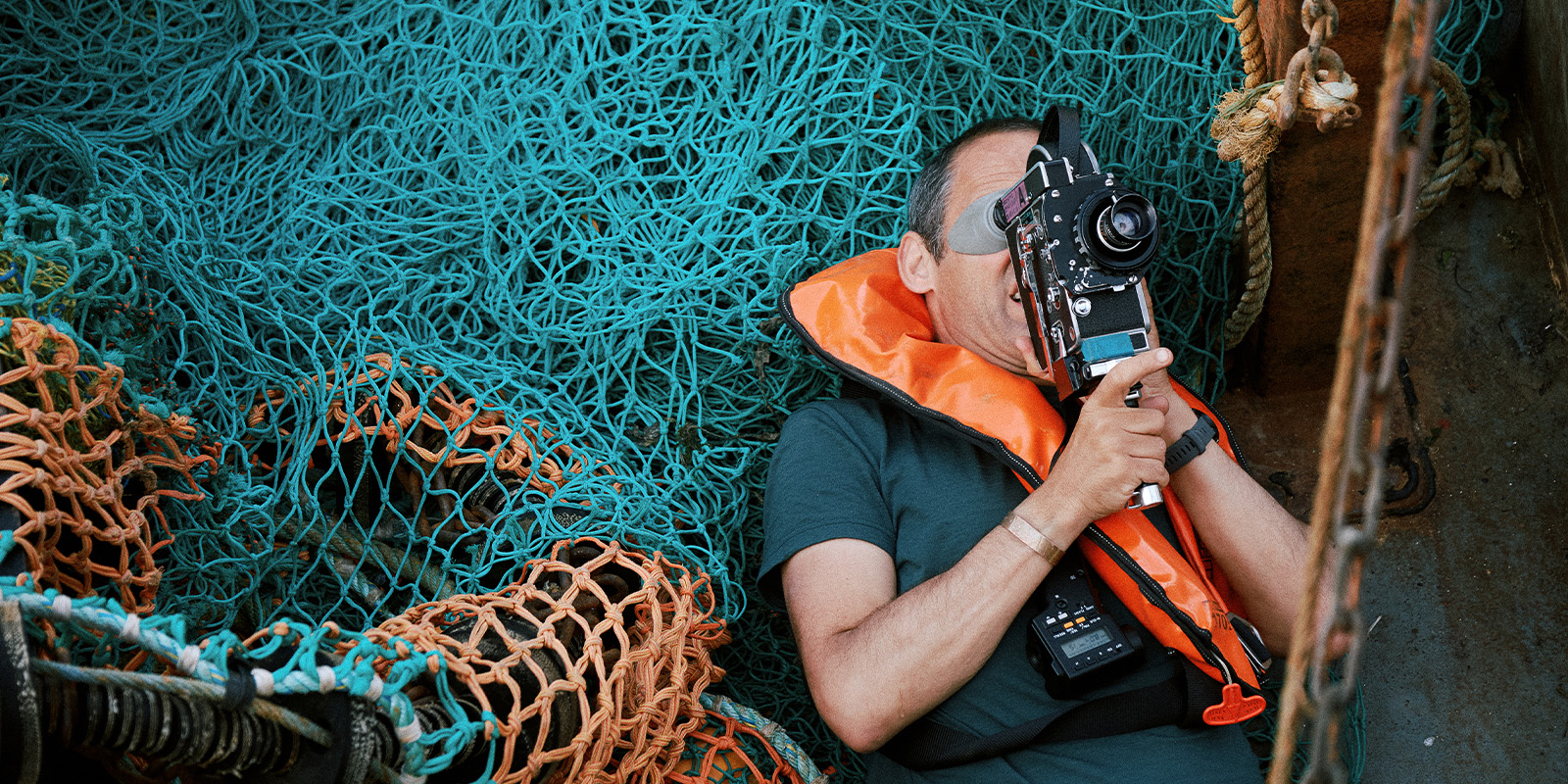
The filmmaker’s minimalist approach is reflected in his technical setup. His camera package consisted of a Bolex H16 clockwork camera with a bayonet mount, three C-mount Kern Switarlenses, a light meter and film. Jenkin shot almost all scenes with a single 26mm lens, occasionally switching to a wider 10mm or a longer 50mm.
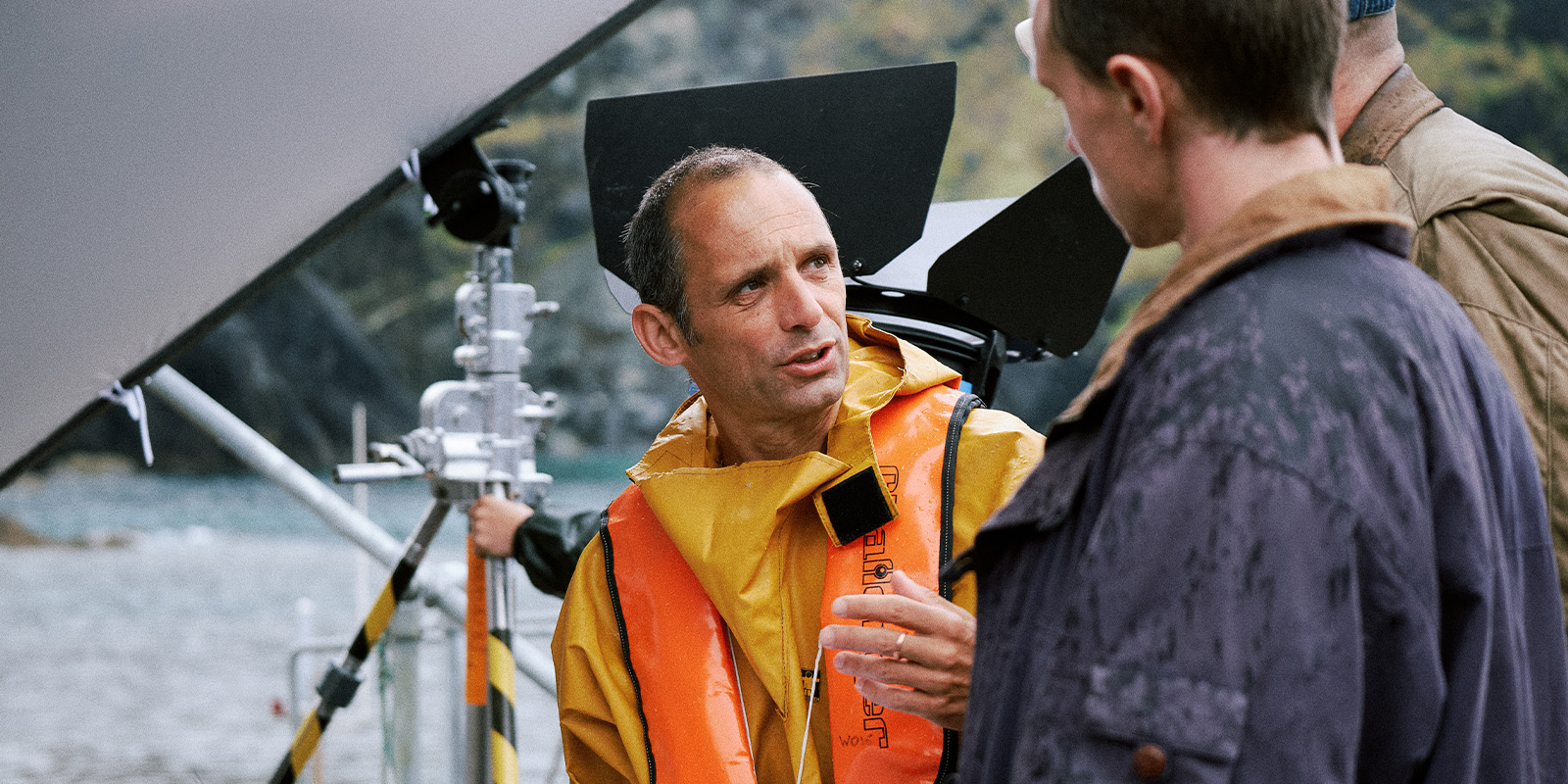
“The Kern Switars are like the Bolex holy grail of lenses but you can’t really pull focus easily on them,” he says. “There are maybe two focus pulls in the film and because I’m on a tripod, I can either focus the lens or move the head of the camera. I can’t do both.”
Almost everything was filmed on sticks. “I like the camera to be as static as possible,” he adds. “The only time we went handheld was on the boat. My intention was still for the camera to be as still as possible. I could roll with the boat a little bit and keep the horizon straight so we didn’t make the audience seasick. There was no grip equipment – no tracks, cranes, jibs or Steadicam.”
“I always have a stills camera with me,” he adds, gesturing to one on the table during our interview at BFI Southbank. “I’ll take stills of things that grab me and later work out why I captured them.”
Freedom and pressure
Taking on multiple roles might sound overwhelming, but Jenkin sees it as a creative advantage. “When you’re a director, one of the main things you do is communicate,” he says. “You formulate a vision, surround yourself with the best people to realise it and communicate that vision.”
By serving as his own cinematographer, he removes one layer of communication. “I don’t have a director of photography I need to explain things to,” he says. “I’m communicating directly with the actors and there’s a real immediacy I can embrace.”
However, this approach also creates pressure. Jenkin loads the camera himself and no one else sees the image during filming. “Because of the camera I use there’s no monitor, no video village,” he explains. “I’m the only person seeing what’s going on. Sometimes I wake up at four in the morning thinking, ‘Did I take the filter out before we shot?’ There’s nobody I can ask or blame. But because I know there’s no second opinion, my focus is so sharp that I normally know whether I’ve got the shot or not.”
Although Jenkin takes on many roles, production design is one area he does not head up. Working closely with production designer Felicity Hickson, the film’s 1990s setting quickly came to life. “I almost had a panic attack when someone pointed out it’s technically a period drama,” he jokes.
The design team reconstructed a coastal street set and recreated interiors from the era. Jenkin even brought cassette tapes from his teenage music collection to feature in a bedroom. “I turned up with a bag of about twenty tapes but it turned out it was expensive to clear them, so I had to choose three,” he says.
Such constraints shaped the creative direction of the project. “The more people who tell me I can’t do something, the better,” he says. “You suddenly realise there’s only one way to shoot it and that’s really freeing”.
Inventive and invisible lighting
Lighting the film required a shift from Jenkin’s previous approach on Enys Men, which relied heavily on single source. “On Enys Men many night scenes were based on the idea that they were lit only by the moon,” he explains. “So we’d put an HMI as high as possible and blast the scene with it, like a giant spotlight.”
Interiors were similarly minimal, often using just one light source and a small amount of fill. But Rose of Nevada required something different. The lighting was designed to blend naturally into the environment. “My gaffer John Crooks had to deal with very tight spaces and difficult locations,” Jenkin says. “A lot of the lighting came from very soft LED tubes and panels I hadn’t really worked with before.”
At first he was sceptical of the technology and the remotely controlled LED’s ability to produce soft, natural light felt almost too easy. “I thought maybe it was a bit of a cheat,” he admits. “But as soon as we started shooting I realised it was the only way we could make the film.
“The way John lit it is really subtle and beautiful. It’s so unobtrusive that it feels like it isn’t lit at all. There’s a strange irony that an enormous amount of work goes into making it look like nothing has been lit,” he says.
Key fixtures helping the story unfold in an authentic way included two ARRI M18s, two Nanlux Evoke 2400B and Lightbridge CRLS reflectors. “We worked with a hard and soft light package that was mostly LED with some HMI and tungsten including Astera, Aputure, ARRI, Nanlite, Rotolight and Dedolight fixtures, portable generators, 8×8 and 12×12 lighting control frames, soft boxes and Jem Balls. During scenes shot on the rocking boat, crew members sometimes stood just outside frame holding light panels and adjusting them as the ship moved.”
The freedom of imperfection
As Jenkin’s commitment to analogue filmmaking continues into post-production, when Rose of Nevada was processed by Kodak Film Lab at Pinewood and scanned by Digital Orchard, performing a precision 4K scan of the 16mm original using their Scanity HDR at Pinewood Studios, he gave very specific instructions.
“I always add notes on the log sheets saying ‘No digital clean-up’ or ‘Don’t remove anything’” he says. “I just want it scanned in the most pure and basic way — shine a light through it and capture it digitally.
“All the imperfections need to stay – the burnout at the beginning and end of the roll, everything.I want to exploit the imperfections of film because I don’t see them as imperfections. They’re the reason for shooting film in the first place.”
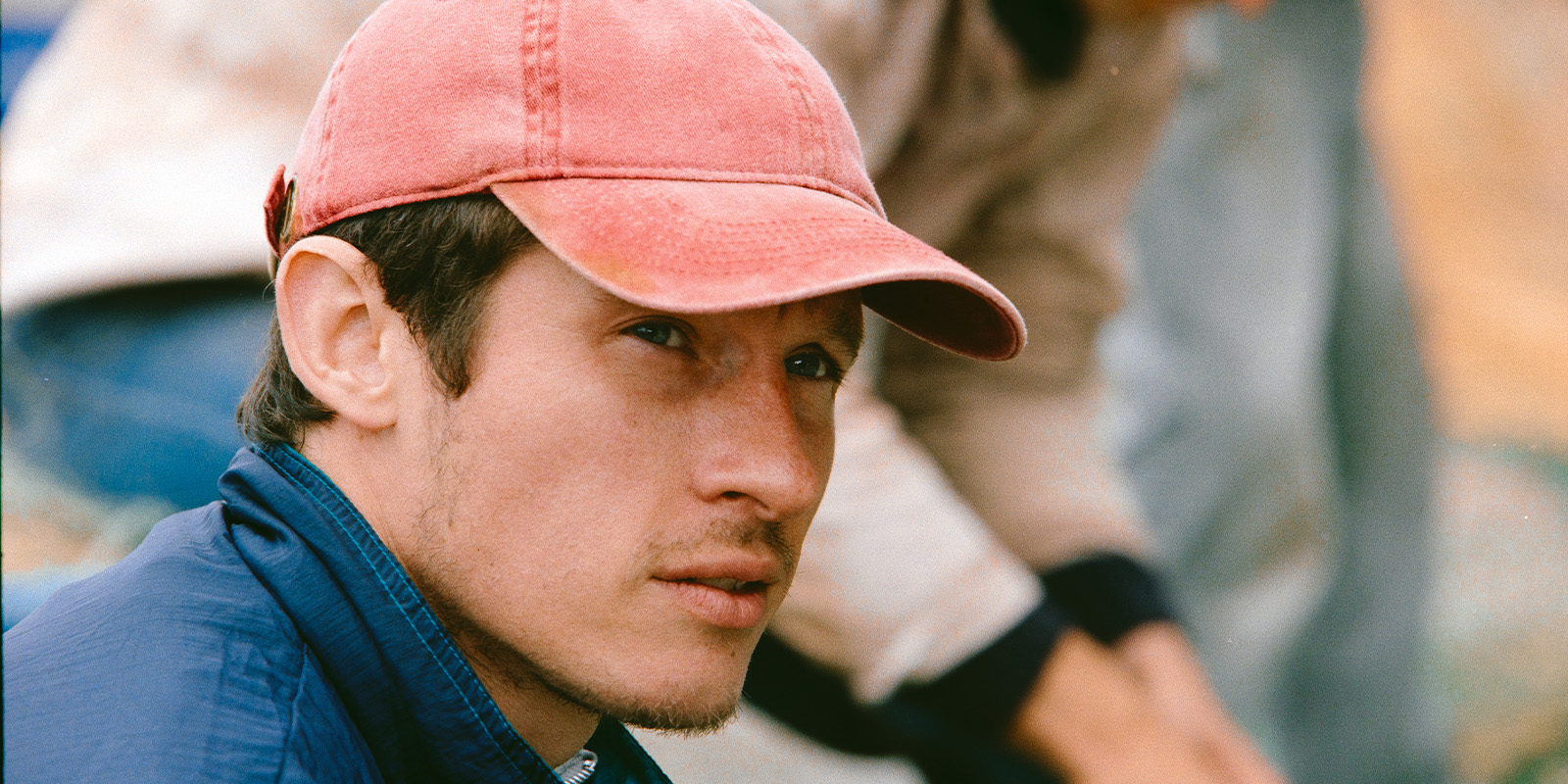
Rushes were sent to Kodak at Pinewood every few days to be processed before scanning took place next door at Digital Orchard. Jenkin often pushes the visual texture further during the grade: “On Enys Men I under exposed everything but didn’t push process it,” he says. “We got a thin negative back which I pushed during colour timing so the colours really popped and the grain came out.”
He aimed for a similar effect on Rose of Nevada. The handmade aesthetic also extends to his camera filters and Jenkin cuts his own gelatine filters and places them behind the lens of his Bolex, often creating a new set each week.
The process can create practical challenges as heavy neutral density filters sometimes make the viewfinder almost impossible to see through. “Sometimes I’d be filming in broad daylight but I’d have so much ND in that I couldn’t see anything through the viewfinder,” he says. “And in very low light we might block the scene using someone in a white T-shirt so I could see where they were. It might sound complicated or risky but in practice it’s completely second nature.”
Eye of the storm
While Jenkin continued collaborating with his core Cornish film team on Rose of Nevada, the film operated on a larger scale than Bait or Enys Men, involving a bigger crew, budget and complicated practical effects and action sequences.
His fragmented approach is perhaps most evident in Rose of Nevada’s storm sequence; the largest action scene he has shot. “There’s no wide shot,” Jenkin says. “It’s all done in close-ups.”
The sequence was captured over two night shoots on location in Hayle, west Cornwall, simulating stormy seas using manual wave makers, rain machines, water whooshers, and dump tanks. All the below deck interiors of the fishing boat were built in the studio and mounted on a gimbal made from scaffold poles and tyres which was manually rocked.
Despite limited resources, this aspect of the shoot proved to be a turning point and revealed something new and unexpected about Jenkin’s filmmaking instincts. “I didn’t realise I was an action movie director,” he laughs. “We filmed that storm in around six hours with a very small budget, and it has real production value. When the trailer was being cut I kept asking them to include more of the storm.”
The enlightening experience has shifted Jenkin’s ambitions and he is now developing a larger project – a swashbuckling period adventure based on a book. “I turned it down years ago because I thought it was too big a film,” he says. “I assumed I’d have to compromise the way I work, but now I’ve realised I can push the scale without changing the way I make films.”
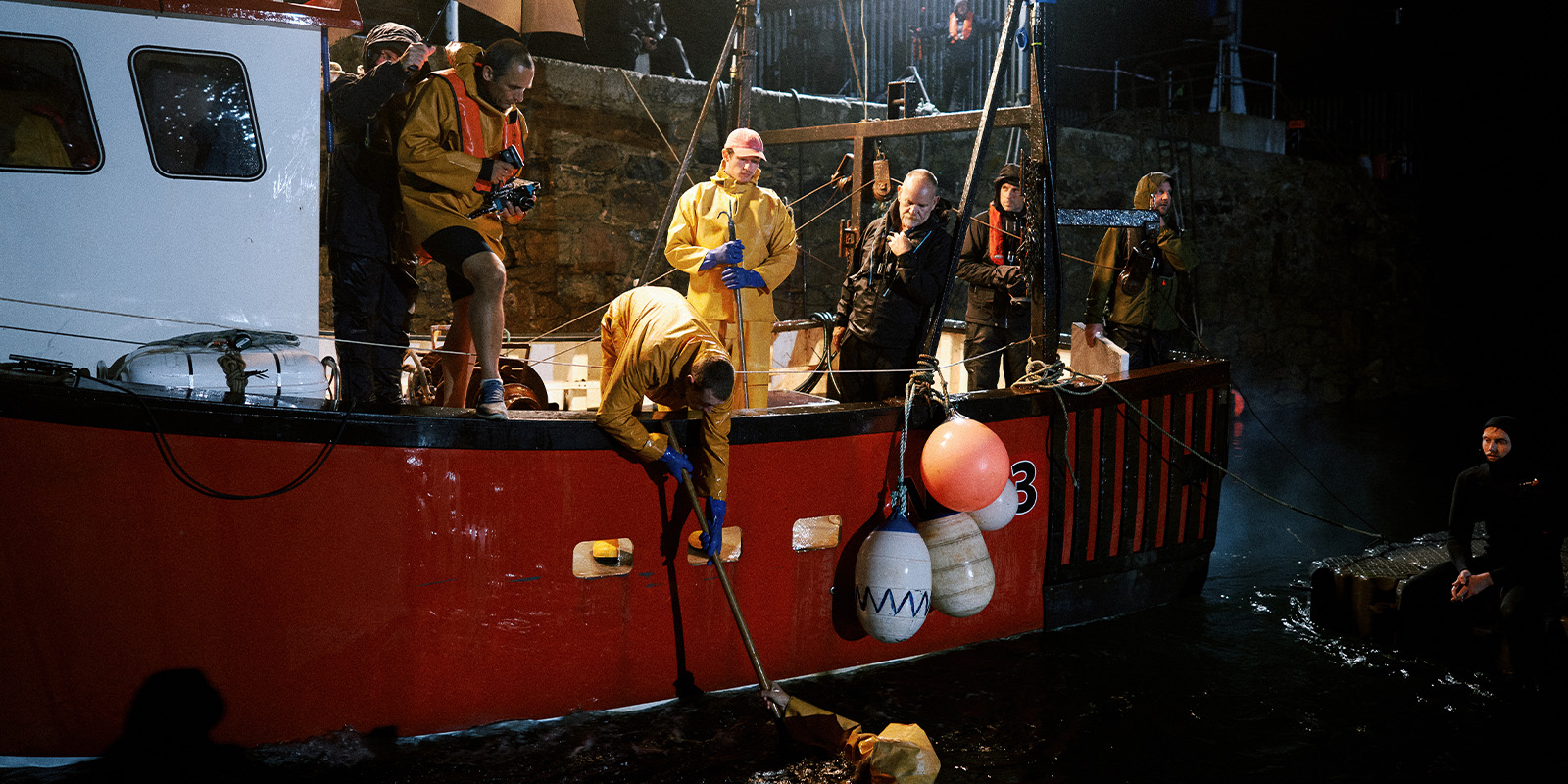
As Jenkin recalls, at the time of filming the storm there was sometimes doubt over whether a dramatic scene was being created. “Everybody left thinking, ‘Did we get anything?’” he says.
It was only during the edit — once the pieces had been assembled with sound design added — that the scene came to life. “When I watch it now, I think it’s amazing.”
Many sequences rely on practical illusion. Scenes supposedly set at sea were often filmed in harbour using tricks such as nets being pulled by speedboats while jet skis churned the water around a stationary fishing vessel to create the appearance of movement. “If you took two steps back, you’d think, ‘This is never going to work,’” Jenkin says. “But because the camera is so close to the action you never see around the edges. I relish the trickery of filmmaking and the smoke and mirrors of it.”
Outside of the storm sequences, other scenes were captured in the harbour of Mullion Cove, while wide shots of the boat at sea were captured from cliffs overlooking the harbour. To capture the sequences where the boat is at sea, the crew travelled out twice into St Ives Bay.
Excitement for the experimental
At first Jenkin worried that the “rough, handcrafted nature of his process might appear unprofessional to the established Hollywood actors” he was working with on Rose of Nevada. “I thought I might have to disguise how handmade the film is,” he says.
Instead, the cast were fascinated. George MacKay even visited the set before shooting to observe Jenkin’s method. “I realised part of the reason they wanted to be there was because of the way the film was being made,” he says. “It reinforced something I have picked up on throughout my career: people aren’t interested in my films despite the way they’re made. They seem to be interested because of the way they’re made.”
Jenkin’s creative philosophy and enthusiasm for the art of filmmaking remains as strong as it was at the start of his career. “The art form is only about 130 years old,” he says. “I’ve been working in film for about thirty years and it still feels incredibly young.”
The never-ending possibilities keep him committed to experimentation and independence. “I find it inspiring when you see filmmakers who refuse to compromise and make things their own way,” he says.
He hopes that spirit continues to spread throughout the filmmaking community and audiences who enjoy imaginative creations. “When someone tells me my work inspired them, that’s the highlight,” Jenkin says. “That’s why I love doing Q&As and talking about the films afterwards. You get something back and realise the process means something to other people too.”