
FILMMAKING WITH PRIDE
The Rainbow Crossing Academy effortlessly blends comedy and drama – with DP Neal Parsons explaining how he and his team navigated the short film’s ever-changing moods.
I love the challenge of working with a director I don’t know. You have to very quickly get on the same page with them – chances are they’ve been thinking about this film for months, if not years, whereas as the DP, you have just a couple of weeks to get inside their head and see the film the way they do. Then, you’ve got to successfully communicate that with your camera, lighting, and grip team with limited prep and recce time.
I was very encouraged by my early conversations with director Jacob Sarkisian, however. For the cinematography, Jacob wanted colour, energy, and for the camera to be part of the joke. We started sharing references from everything from the early work of Edgar Wright to ’90s/’00s music videos to The Thick of It. There would be whip pans, crash zooms, dolly zooms, double dollies, some handheld, some Steadicam, and, at other points, a locked-off camera to allow a moment to land.
Jacob did an extensive shotlist, which we then spent a camera rehearsal day roughly shooting the shotlist with my Sony A7SIII, a zoom lens, and a couple of stand-ins in a rehearsal space. I find this an invaluable way to learn what will and won’t work, to make sure we’re speaking the same language, and also to develop ideas you hadn’t even thought of yet.
From this, I did shot maps for each scene and a lighting plan came together pretty speedily. It was clear with the number of characters and SAs in the scenes, plus some fairly small locations and the extensive camera movements, that we would need to light from outside of the set as much as possible. Working with gaffer Frank Hammond, we planned to shoot light through windows at 90 degrees from the key cast to give shape and utilise a ceiling mounted F22 to give us as controllable a source as possible, all whilst ensuring the colours of the costumes popped as Jacob wanted.
We knew for the main hall of the conversion camp that we needed a location that felt somewhat timeless and a little run down but also with the logistical flexibility to shoot quickly and effectively. Jacob and I searched all the corners of London (literally!) for our main hall and we were delighted with the locations we secured.
Maximising resources
As ever with low budget films, however, compromises had to be made and to get the hall we wanted we had to lose a morning of shooting to allow the regular Alzheimer’s Singing Group to keep their booking. That meant that a much reduced second day of filming meant moving an entire scene to another day, and another location. I was really impressed with the way Jacob rewrote the scene mid-shoot to problem solve this and to work in our other location, the much grander Porchester Hall, and as it turned out it’s probably my favourite scene of the film visually, with Jacob taking inspiration from Matilda.
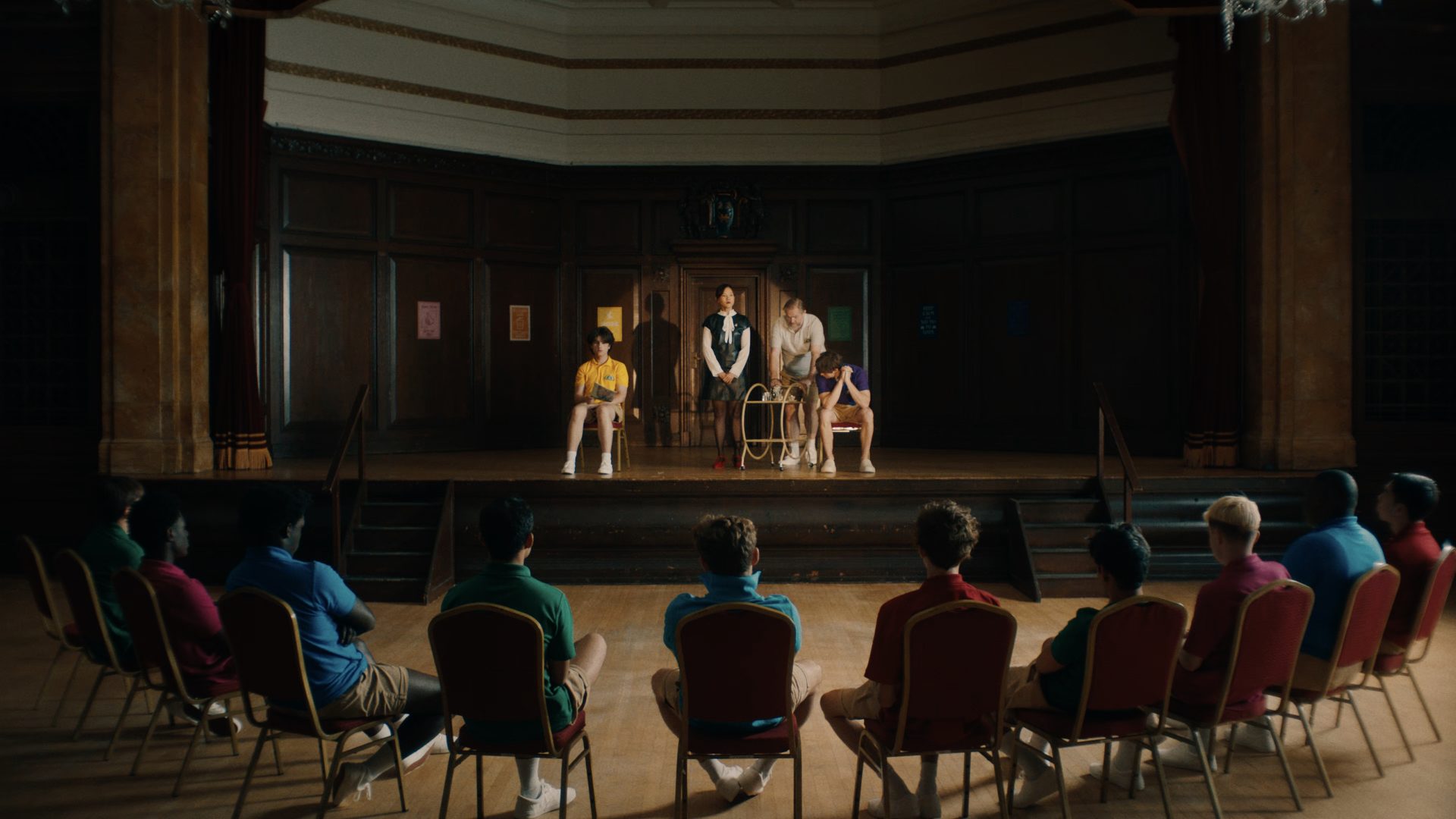
We had to map it quickly and shoot it double fast, but for me, the success of the scene was the proof that he and I had synced our thinking and could adapt our plans accordingly. The ‘Salt Scene’, as it came to be known, is the most serious of the film, but Frank improvised a lighting gag that I loved: deliberately swinging a spotlight in late to miss Eve’s entrance. It undercuts the heaviness right at the top, and by cutting the shots down to the absolute essentials, we allowed the actors the space to find the truth of the scene. The performances of our principal cast, Raphael Goold, Louis Ashbourne Serkis, Crystal Yu, and Steevan Glover, are equal parts funny, heartbreaking, and harrowing in the Salt Scene, and I can’t think how we could have pulled it off in the same way in the original location.
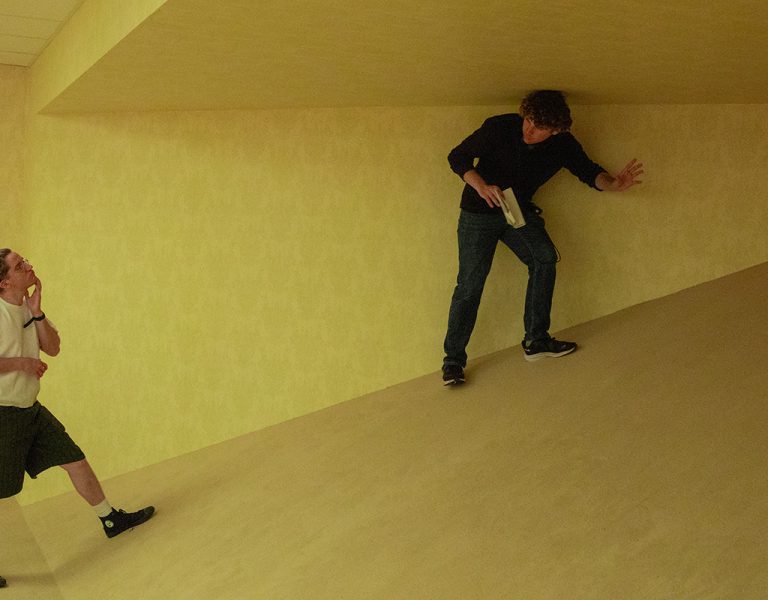
For the camera package, we went with the Alexa Mini and, after much conversation about different options, a set of Cooke Panchros paired with a Cooke Varotal 20-100 from One Stop Films. I love the Panchros – they’re fast enough for low light settings, a good weight for handheld and steadi work, and have such fantastic character across the focal lengths. RCA is a somewhat period-non-specific film, but Jacob was keen for it to have a nostalgic quality and I think the Panchros served this perfectly. The Varotal was also perfect for our dolly zoom, executed beautifully by our grip Thomas Treveil, giving us exactly the change in compression we wanted for Seb’s reaction to the entrance of Jordan.
Going through the emotions
While camerawork here was used to highlight comedy, its chief use was to place us in the headspace of this confused, lonely young man as he tries to navigate his way through self-acceptance and internal homophobia. There is lots of energy in the camera movement in the beginning of the film as Seb feels positively towards the camp, but as he realises the truth, we back off that camera movement and go into something more sympathetic to his changing emotion.
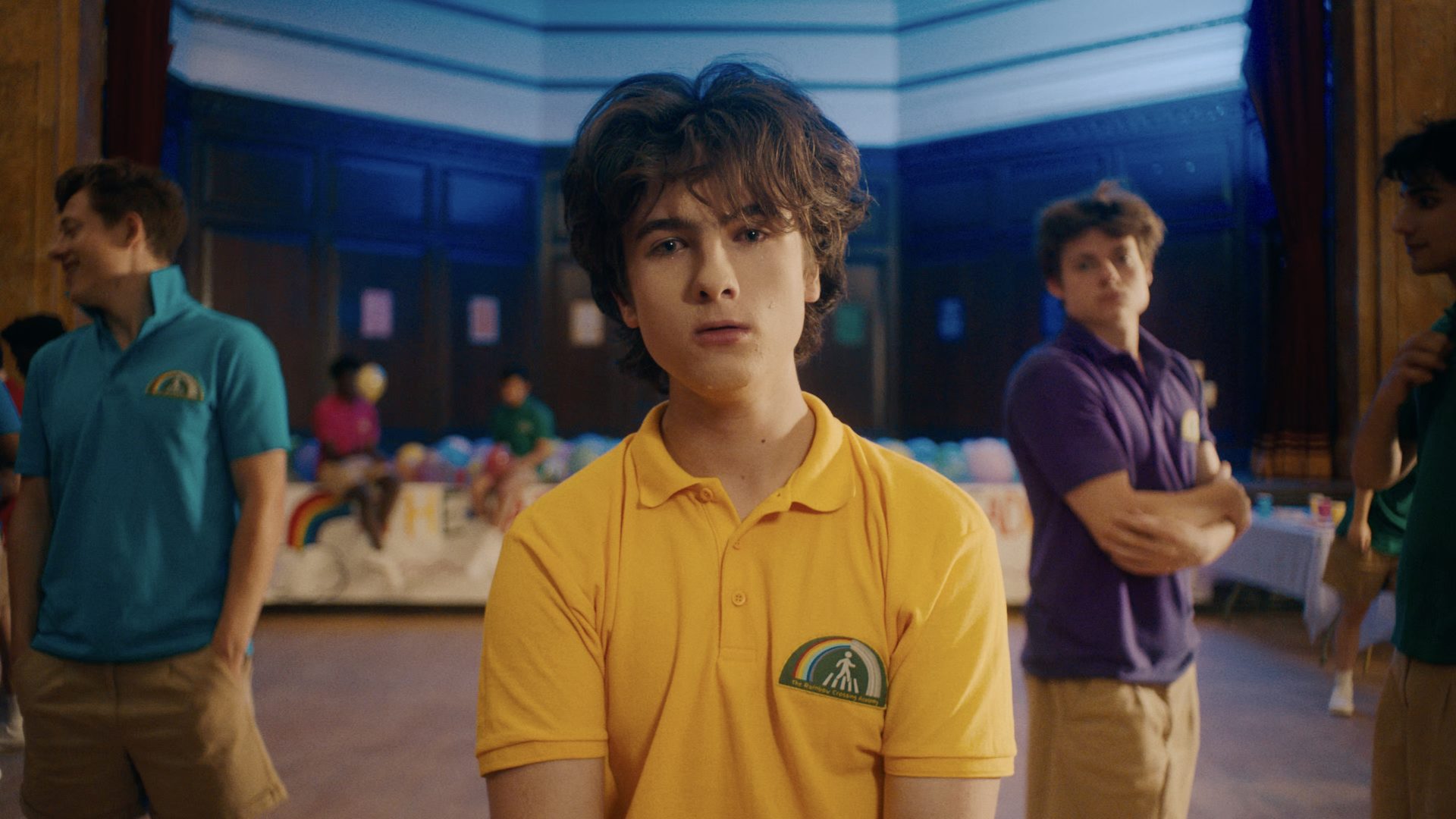
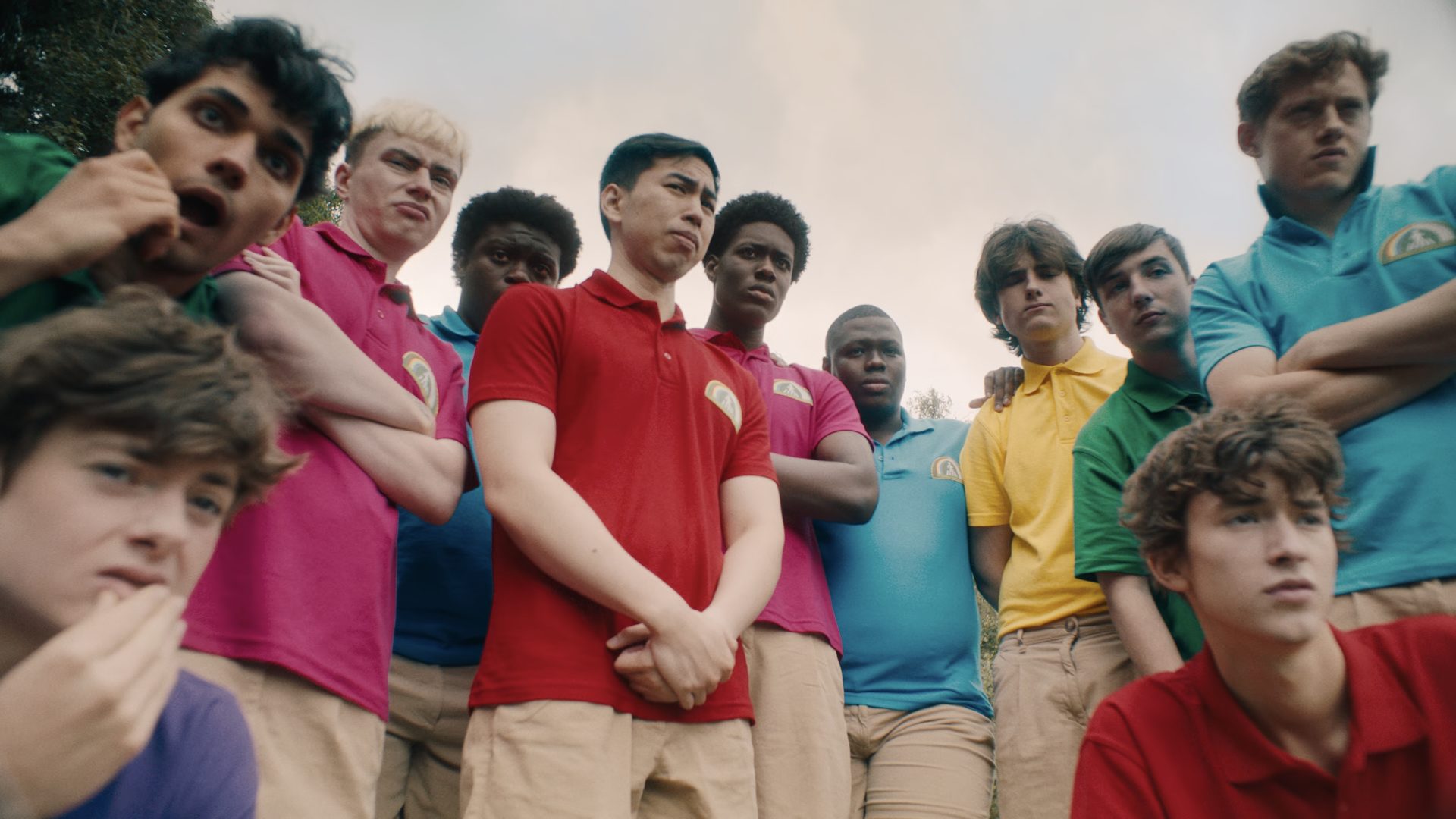
Pairing the Mini with the Panchros also ensured we had a richness to our colours. Jacob told me that the first image he ever had of this film was a line of boys in the colourful camp uniforms which inadvertently make them look like the colours of the rainbow. The image of these boys in gay conversion camp uniforms that make them look like a collective gay pride flag is a very funny irony that sums up the entire film. Costume design therefore became integral to successfully capturing this image, and Elaine Said, our costume designer, did a great job bringing these to life. We wanted this film to feel rich, vibrant, and of its own world. We didn’t want this to feel like other, much more serious conversion camp films, which are mostly more muted to reflect the pain and suffering the characters go through. Our aim here was to poke fun at their oppressors, and we wanted the film to look fun and playful, too.
A huge weapon in our arsenal of ensuring what we shot on the day became the colourful and visually expressive film we wanted was our colourist Sara Buxton working at Goldcrest. I’ve worked with Sara on numerous projects and have always been indebted to her knowledge and skill in doing just this. She never tries to manufacture something that isn’t in the footage, and without fail makes the footage sing. As a DP, it makes me very comfortable on set knowing I have a team who sees the film how I see it and can give the director what they’re after. On RCA we had just that.