

PACKING A PUNCH
Like other established film series, the Karate Kid franchise has evolved stylistically over the years in keeping with different times and new audiences. Despite, that, from the original 1980s trilogy onwards, the basic story has remained the same: using martial arts, an underdog wins out over bullies and injustice guided by a wise mentor.
The latest instalment in the Karate Kid franchise — Karate Kid: Legends, released by Sony Pictures — sees Daniel LaRusso (Ralph Macchio) from 1984’s The Karate Kid (DP James Crabe ASC) and its two sequels (1986 Crabe/1989 DP Stephen Yaconelli ASC) join forces with Mr Han (Jackie Chan), the kung fu master introduced in the 2010 reboot (DP Roger Pratt BSC), to help train the latest Kid, Li Fong (Ben Wang).
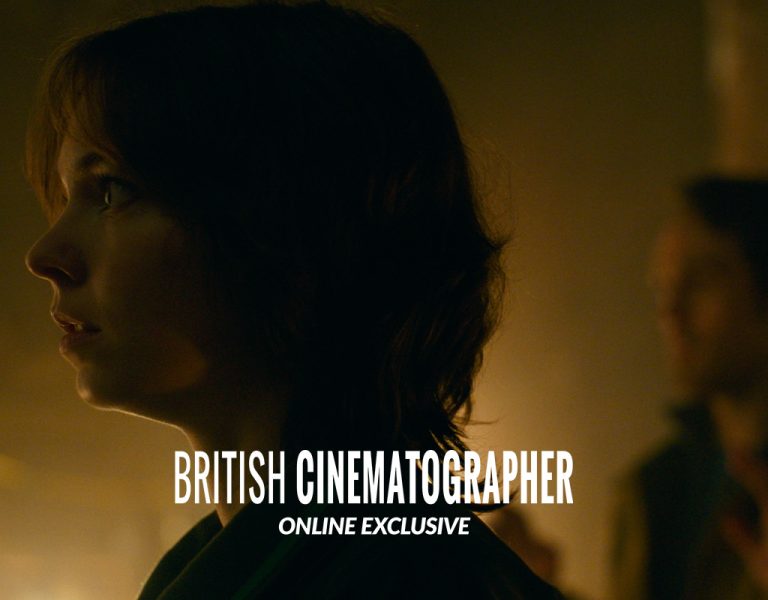
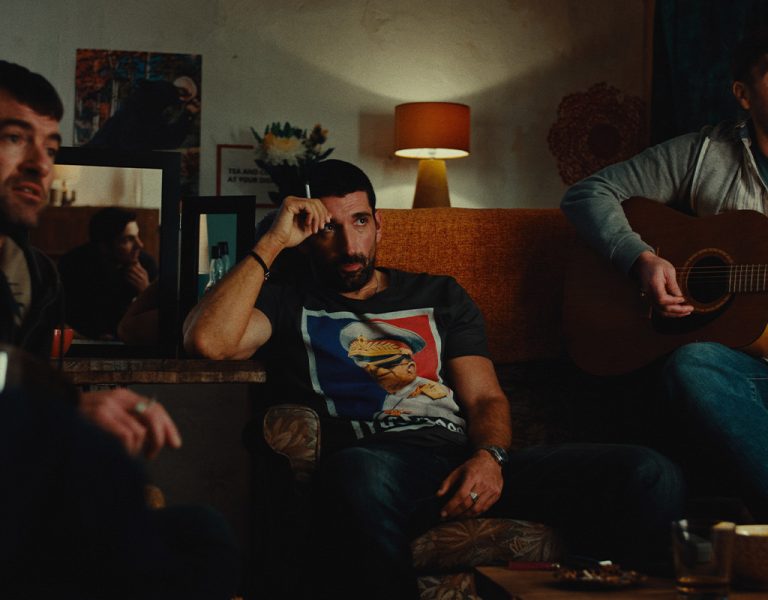
Succeeding Crabe, Yaconelli and Pratt as cinematographer was Justin Brown BSC, who teamed up again with director Jonathan Entwistle, following TV series The End of the F**king World (2017) and I Am Not Okay With This (2020), for what is their first major studio feature. “We’ve worked together for a long time and it was a natural evolution to where we are now with Karate Kid: Legends,” Brown says. “There wasn’t really a brief from the studio, I think they hired Jonathan with his aesthetic, which is my photography. So, they were happy with our natural leaning visually.”
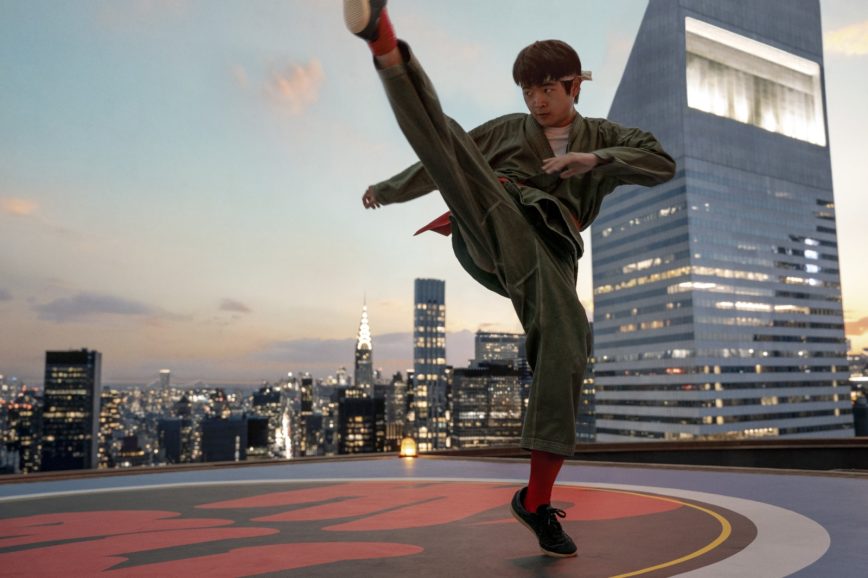
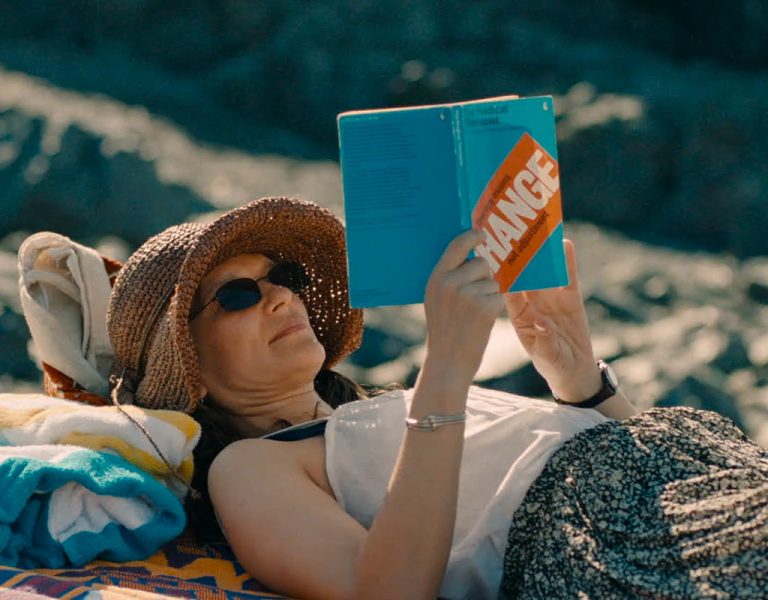
This, Brown explains, comes from being influenced by the visual styles of the films he and Entwistle grew up watching in the ‘90s: “The richness of the image, the filmic blacks, the colourful skin tones and the highlights with bokeh.” While the studio accepted Brown and Entwistle’s proposal for the look of the film, it did, for obvious reasons, want them to shoot on Sony cameras. The cinematographer and director, however, wanted to shoot on ARRI Alexa 35 and convinced executives it was the right camera for the job after extensive testing and side-by-side comparisons.
“The Alexa 35 has the best sensor and gives the most dynamic range of all the sensors I’ve tested,” Brown comments. “It also had about two more stops highlight range because we were shooting with a lot of neon. Another reason was I wanted to shoot with a classic Super 35mm gate size, so we used Alexa 4K but cropped the sensors. Then there’s the beauty of the in-built grain. It all fitted our vision, which was quite an old school, classical cinematographical one.”
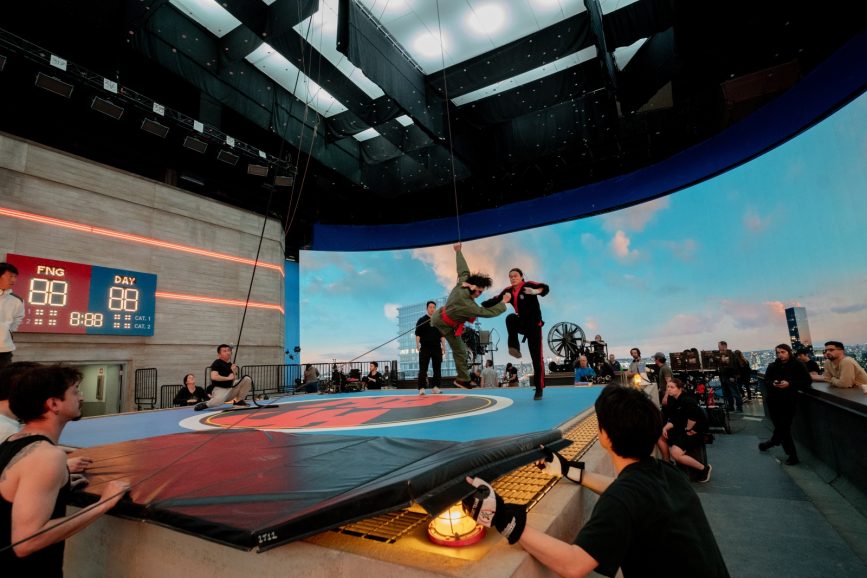
ARRI also provided the lenses, with Master Primes used for the entire shoot, particularly, Brown says, the 21mm, 27mm, 32mm and 40mm. The only non-ARRI visual equipment were the 10 RED Monstro 8K cameras used for shooting the plates that formed the backdrop of the climatic fight scene. For this the roof of a skyscraper in Manhattan was photographed panoramically at dusk, with the shots “stitched together” and then replayed on what Brown describes as “a humongous volume” for the actual scene.
This was one of the few shoots to take place in New York, where most of the film is set. While some sequences were shot in the American city, including second unit aerial work, the bulk of filming was in Montreal. “Everything there was on stages, even the street scenes and the final fight, although the rooftop used for the training sequences was a real location,” Brown says. “We did have connections to New York, such as the taxi drive from the airport over the bridge into the city, which was inspired by Home Alone 2.”
Creative control
Working primarily on sets gave the crew greater control over the shooting and action, especially when it came to the fight scenes. A good example of this is the first big set piece, set in an alleyway behind the pizzeria owned by Victor Lipani (Joshua Jackson), whom Li Fong later trains for a boxing match.
“Originally that was going to take place in an alley in Montreal but as it was a night shoot over probably three or four nights, it wasn’t practical,” says Brown. “But the main consideration came from the stunt team, who needed to have a rubber floor and walls plus rigging points in the ceiling. There wasn’t a lot of wire work but the locations we found wouldn’t allow us to rig as deeply as we needed to.”
While Mr Han does not feature in this scene, it bears many trademark Jackie Chan techniques. Brown says the Hong Kong star’s influence was “major”, in both the fight choreography and the comic tone of some of the moves. Another key figure was second unit director and stunt co-ordinator Peng Zhang, who liaised with Chan during the preparation period and passed notes on to Brown and Entwistle.
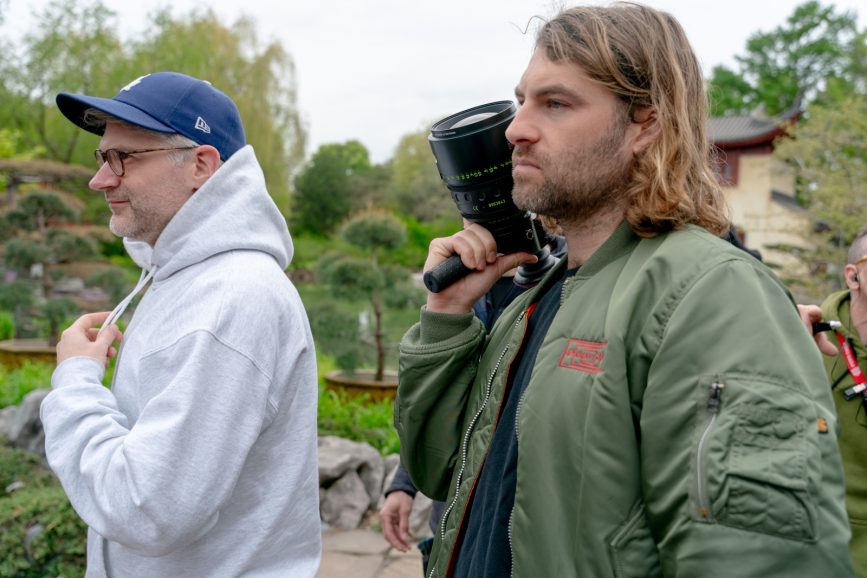
Brown observes that many of Chan’s own films were shot wide with static frames, enabling the audience to take in the slapstick comedy and see that the fights were real. “Because of the schedule we didn’t have that luxury, so we had to come up with a more dynamic way of focusing on specific moves,” he says. “We also filmed all the fights at 48fps so they could be slowed down when needed. In the end that didn’t happen too much but the idea was we would always cut back to 22fps to make things more impactful.”
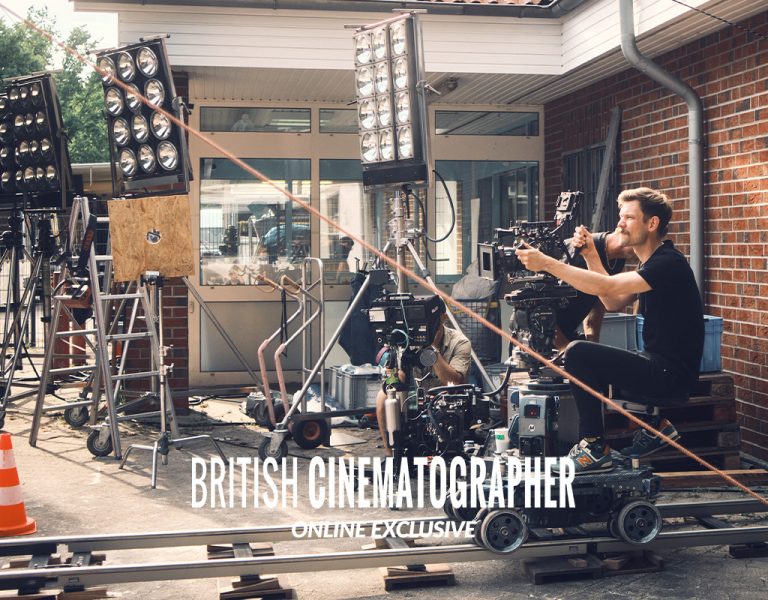
Most of the fight work was shot handheld but a Technocrane with a Libra remote head was used for some sequences. “We were able to operate it like a handheld camera for both the boxing match and the final fight,” Brown explains. “It allowed us to get over the top of the fighters. But we spent a lot of time on the Techocrane, which was used mainly for positioning the cameras very quickly, particularly in a bigger room like the pizzeria. We also used a Technodolly but mainly for visual effects shots, such as getting the action and plates on the dragon kick, which involved dropping the camera down after the stunt work had been done. We also had a Steadicam, which was operated by our A camera operator, Frédéric Chamberland.”
All of which has made for some thrilling fight scenes, shot through with Jackie Chan’s comic timing, which carry Karate Kid: Legends through to its expected feel-good ending.