

MISSION ACCOMPLISHED
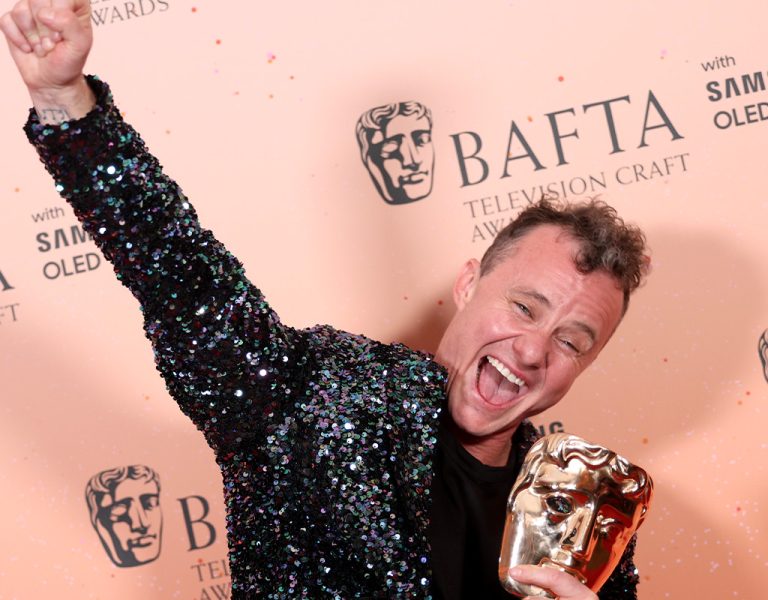
Cinematographer Fraser Taggart reveals how he captured Mission: Impossible – The Final Reckoning’s most perilous scenes—some of the most extreme camera work ever attempted in a fictional feature.
Your mission, should you choose to accept it, is to witness Tom Cruise appear one last time in the high-octane finale of a legendary action spy saga—an explosive legacy inspired by Bruce Geller’s 1966 TV series.
The Top Gun star returns as Ethan Hunt, elite agent of the Impossible Mission Force (IMF), in Mission: Impossible – The Final Reckoning—the direct sequel to Dead Reckoning Part One, the seventh instalment in the long-running franchise. Originally conceived as a two-part epic, part seven sets the stage, while this climactic eighth chapter brings the saga to a close.
Fraser Taggart (Edge of Tomorrow) served as cinematographer on this 2-hour 50-minute instalment, delivering heart-stopping action, intricate espionage, and breathtaking stunts—performed, as ever, by Cruise himself.
“When we shot Seven (Mission: Impossible – Dead Reckoning Part One), I did a lot of testing,” says Taggart. “I’d worked with ARRI a lot on previous films but had never really used the Sony Venice. The testing process was brilliant, but long and drawn out—because initially we wanted to shoot on film. Eventually we realised that wouldn’t be practical for that one. And since it was a two-parter, I stuck with the Sony Venice family.”
In fact, Taggart and his team commenced filming portions of Mission: Impossible – The Final Reckoning prior to the completion of part seven, leading to a deliberate decision to minimise mixing of formats.
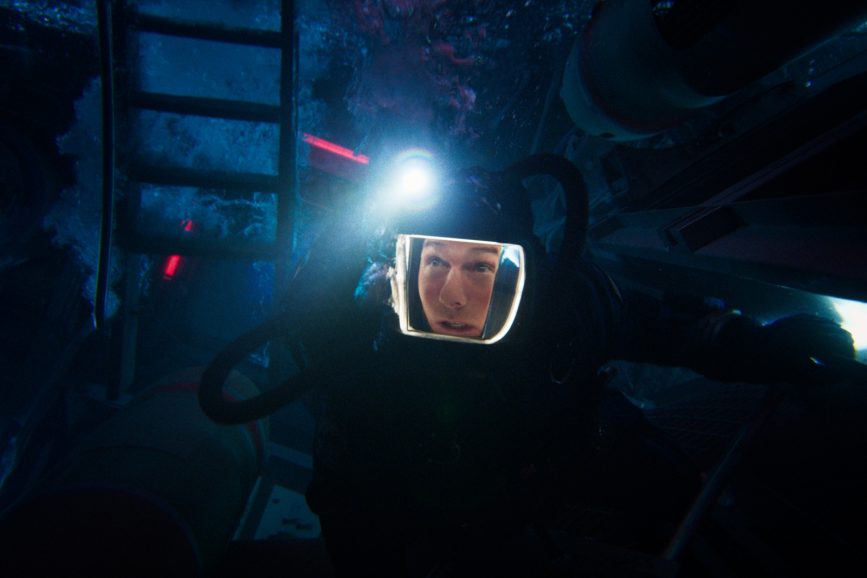
“The only significant change on eight was the transition from the Sony Venice to the Sony Venice 2, primarily driven by the underwater sequence as it’s an 8K camera, which required greater detail, as well as the IMAX format. So, the majority of the film was shot on the Sony Venice 2. However, I continued to use the Z cams from Schriseven for the car scenes. They were employed for the hard-mounted cameras in the aircraft sequence and underwater shots, where we had custom housings made to place the cameras in challenging positions or to achieve additional locked-off coverage. For these, we used Zeiss CP.3 spherical lenses. For the Venice, I opted for the C-series Panaflex prime lenses — old glass that’s quite imperfect, but beautifully so.”
Taggart says this “helped reduce that overly digital look a bit,” and once it was confirmed they’d be shooting major IMAX sequences with the primary Sony Venice cameras underwater, he had to switch to spherical lenses, as required by the format.
“We went with the Panavision VA sphericals—after extensively testing everything available,” Taggart recalls. “The VAs are rehoused vintage glass, which gave us a softer quality that matched well with the anamorphic lenses used for the dry scenes. The Sony Venice performs impressively in water environments too. I just love the sensor—it’s really forgiving. I find some other sensors tend to bias green, which becomes exaggerated underwater because you’re shooting through cold water. Of course, the housings play a big role—you can use any camera, really—but the Venice just worked well as part of the mix. Initially, we thought the sequence would run continuously, but it ended up intercutting between Tom in the air, the mines, and the server room. I didn’t want the look to jar between those extremes, so it was important everything felt cohesive. And it did—it all just sat together better that way.”
Despite the number of housings at his disposal, Taggart and his team built their own housings because of the demands. “The trouble is, a lot of the underwater housings are too big—especially for interior sets like submarines,” he explains. “You don’t have the same space underwater as you would on a dry set. You can float lights or use gimbals, but building a traditional set and trying to light it properly underwater would’ve taken weeks just to get a wall out of the way. So I mixed the cameras and we built custom, compact housings that let us get the lens right into tight corners. With a standard underwater housing, your lens might end up three feet from the set wall. With our smaller builds, we were able to get within about 10 inches. It was really about making the underwater work practical within the time we had.”
Taggart, who also used a Sony Burano for the submarine sequences due to its compact size—alongside the Z Cams—says the writing of the underwater sequence only added to the challenge.
“From the start, my argument was that putting an underwater sequence in would naturally slow everything down—everything becomes like slow motion – you have to remember: no one’s chasing Tom, there are no villains in the submarine to generate tension,” he says. “The excitement had to come solely from his journey through the rotting sub.”
The water sequences were shot in Longcross Studios in England and Lites in Brussels.
At the former location, there were two water tanks—one of which the team referred to as “the deep dive tank”. It was approximately 40 feet deep and around 200 feet across.
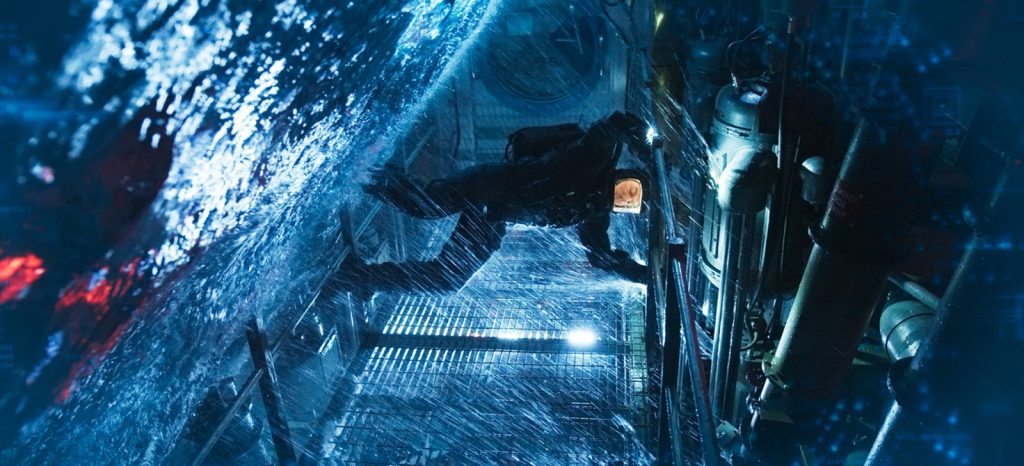
“We also had the gimbal tank, which was incredible,” Taggart says. “I’ve never worked on anything like it—thousands of tons in weight. When I returned to the studio after a few weeks away—during either the writers’ or actors’ strike—I couldn’t believe what I saw. I thought a theme park ride had been delivered to the wrong location. Just extraordinary. The tank allowed us to build sets inside a gimbal that we could rotate, pitch, and submerge for flooding scenes. An engineering feat, especially considering how quickly it was constructed.”
Such is the nature of the Mission: Impossible series—with its life-threatening stunts and high-risk filming scenarios—that external help was often parachuted in, both on set and on location.
GOING UNDER
When it came to filming the underwater scenes, Taggart was happy to delegate, handing over duties to “the brilliant Australian operator” Simon Christidis ACS.
“I’m too old for that now,” he jokes. “We’d already planned the lighting, but we were still figuring out the methodology of how to shoot the sequences. We needed a lot of things. First, we had to put a guy in a suit with a handheld camera underwater. But we also wanted to capture the rotation of the gimbal—like a washing machine effect.”
To achieve this, the team designed special arms and brought in cranes that could detach from the rig while still allowing it to rotate. “That worked well,” Taggart says. “Then we used a lot of fixed rigs, some with remote underwater heads, so we could shoot transitions from submerged to surface. We wanted the audience to really feel like they were moving with the set through the water. It was all about mixing those sensations—for the audience and for us. We also filmed in a tank at Lites Studios in Brussels for the stormy surface sequences. After searching globally, no other facilities met the film’s needs. Both studios proved brilliant.”
Lighting can be challenging at the best of times, so one can imagine how difficult it was during underwater sequences.
“We were all discussing how we could make it more visually dynamic,” Taggart adds. “Martin Smith, my incredible gaffer, director Christopher McQuarrie, Tom and I came up with the idea that the failing sub could be powered up again using a nuclear battery. That added a sense of danger and unpredictability. Planning the lighting to reflect that—making the environment feel unstable and mysterious—was one of the most rewarding parts of the film. We try to do use LED for everything we do now just to be friendly to the world. However, filming in water is quite a specialist thing and there’s not a huge range of underwater lighting available and laws have obviously changed for safety. So all the old HMIs we used to use, and things have gone or you just wouldn’t use them now.”
Through kit provider MBS Equipment Company, Taggart used AquaBat lights—available off the shelf in 4ft (1200mm) and 8ft (2400mm) lengths—alongside Barracuda lights.
“We used those primarily for exterior hull shots and Tom’s descent down the rock face,” Taggart explains. “Our practicals team built nearly all the underwater lighting from scratch—around 90%—because the lights had to work on dry sets and then remain submerged for extended periods. Led by Joe Tooke (head of the electrical practicals department), the team created LED panels, some designed to be integrated into the set walls as practical lighting. They also built powerful LED units we could float around the set to enhance the existing lighting. The whole system was incredible—an entirely custom-built battery setup. The amount of work that went into it was just amazing.”
Elsewhere, Taggart stayed loyal to LED lights.“My night shoots really developed after we tested these Creamsource Vortex lights for large exterior scenes,” he continues. “Because of the Sony Venice sensor, I could use the Vortex lights to achieve great output and an excellent spread. Obviously, I have complete control over the colour temperature, and with our amazing dimmer operator, Dan Walters and his team, we had full control over balancing from the ground, right from the desk. I still use some HMIs for key punches, as LEDs don’t quite deliver the same impact. Most of the HMIs were ARRI units. We also used tungsten to get a clean, warmer look for some scenes, such as the DC-3 aircraft sequence, where we deployed older 20K and 12K tungsten units for exteriors. Overall, there was a real mix of LED lighting for interiors.”
FIGHT AND FLIGHT
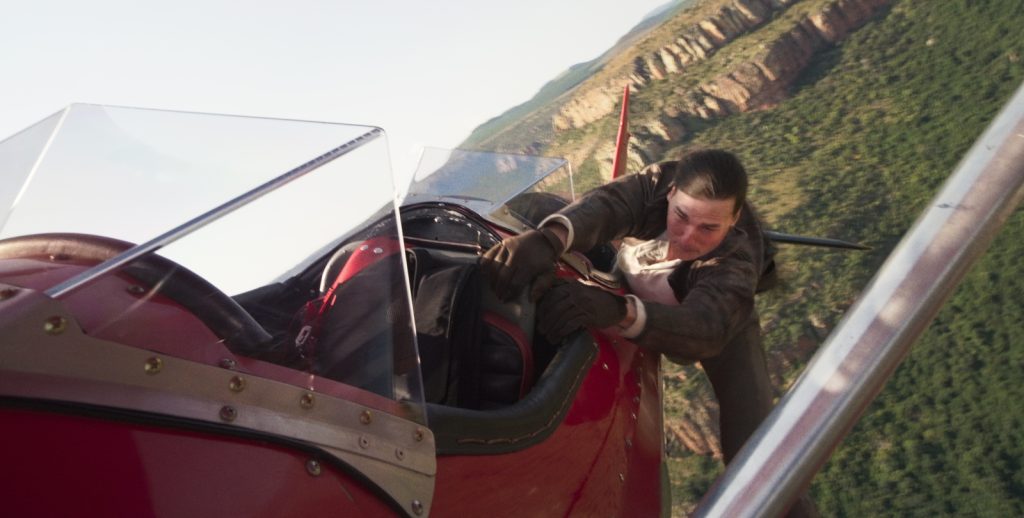
Without giving too much away, one of the standout moments in Mission: Impossible – The Final Reckoning is the jaw-dropping aerial showdown between Ethan Hunt (Tom Cruise) and his longtime nemesis Gabriel (Esai Morales). You’ve likely glimpsed fragments of it in trailers, and the film’s poster makes a bold reference—Cruise clinging to a hurtling aircraft mid-air is hard to miss. But seeing it in full context is something else entirely. Filmed with IMAX cameras and prioritising practical stuntwork over digital effects, the biplane chase delivers breathtaking intensity, underscoring the franchise’s signature commitment to doing the impossible—and doing it for real.
“We didn’t use any drones – it was mainly done by the Aerial Film Company and we used helicopters with shot over mounts on them for the air-to-air stuff,” Taggart adds.
“We used a Yak fixed-wing aircraft equipped with an additional mount on the wing, allowing us to film the biplanes because helicopters struggled to pull them at that speed and capture a good angle. The rest of the shots were all done with fixed cameras mounted directly on the aircraft. We adopted that approach—placing two or three cameras on board. An amazing rigging expert named Dani Rose from CineAero, who I’ve collaborated with extensively on drones and other gear over the years, helped develop a custom system for the biplanes. Working alongside my grips team, we created what we called ‘lances’—extensions from the wings that allowed us to get wider, hard-mounted shots that would otherwise have been impossible.”
The Final Reckoning marked Rose’s third Mission: Impossible film designing bespoke systems. As director of CineAero and CineArray, he began the biplane project in 2021 after being tasked by Tom and McQ to create a rig that could mount cameras anywhere on the 1940s aircraft — any position, any angle.”
“Alongside an incredible aircraft engineering and flight team we spent the year developing the process and the technology. Each aircraft was heavily modified with reinforced wings, removable mounting frames, bespoke hardpoints across the airframe and a completely new loom for power, video, telemetry and camera comms,” he says. “It was by far the most advanced and complex aerial sequence ever undertaken.”
Taggart says managing the weights and stresses was quite complex, but after extensive testing, they got the system running safely. “I’m glad to say nothing dropped off,” he says. Once that was in place, they got into rigging in earnest. “It was still time-consuming because safety was paramount,” he notes. “That made things tricky, but we settled into a rhythm.” In the end, they used a mix of hard mounts and stuck to that style, which blended well with the air-to-air aircraft work.
Whilst Rose and his team did the rig work, Will Banks and Phil Arntz from the Aerial Camera Company did the air-to-air. “They’re fantastic,” Taggart adds. “I’ve only ever felt that level of safety with one other pilot before—Will gives you complete faith and confidence in his abilities. We were flying literally four feet off the back of a biplane, trying to avoid using too long a lens, which can feel too detached. We wanted to be right in the middle of the action. There were moments when you’d instinctively push yourself back into the seat, thinking, ‘Hang on a minute—we’re practically on top of this aircraft!’ But everything was done with such care and attention to safety. Phil operated the aerial camera—he was the main operator on this and someone I’d previously worked with on part seven. I’ve always loved his work; he’s a brilliant operator. The whole team was amazing. I’ve been doing aerials for years, but I don’t think I’ve ever felt so close and personal with an aerial sequence before.”
Arntz, adds: “It was a real privilege to reunite with Fraser after Dead Reckoning and be entrusted with the aerials for The Final Reckoning—this time on a scale unlike anything we’d done before. From the Arctic to the Adriatic, and into the heart of that wild, final biplane sequence, it was always about the storytelling. Fraser, McQ, and Tom didn’t want the aerials to sit outside the narrative—they wanted the camera inside the chaos, carrying the emotion and momentum of that pivotal moment in the film.”
That meant stepping away from coverage and leaning into immersion. The team embraced wide lenses to convey scale and speed. However, going wide meant getting dangerously close, threading aircraft through canyons at high speed. That proximity required total trust and precision.
“Of course, long lenses still had their place, especially to capture Tom’s inverted stunts on the vintage aircraft, but our guiding principle never changed: don’t just show it – feel it,” Arntz continues. “McQ pushed us to the edge creatively and physically, always asking for more intensity, more presence. But to his credit, he was there with us on every flight, in the thick of it, never asking for anything he wouldn’t do himself. That earned everyone’s respect and resulted in everyone’s best work too.”
Camera helicopter pilot Banks says mixing helicopters with vintage aircraft, multiple pilots and Tom Cruise strapped outside meant zero margin for error. Every flight had to end safely, demanding meticulous planning, precise communication, deep aircraft knowledge and total team trust. “McQ kept pushing for closer, more chaotic, more immersive flying to make it feel like everything was barely holding together,” he continues, “and that’s the illusion: behind what looks wild and erratic on screen is a wall of discipline, nerves of steel, and hours upon hours of very thorough briefings. From low-level canyon runs to high-altitude choreography, we flew with one thought in mind: make it feel dangerous, but never be dangerous. The audience should feel like they’re in those planes, skimming rocks, swooping through canyons and always one slip away from absolute carnage and disaster.”
BEEN THERE, DONE THAT
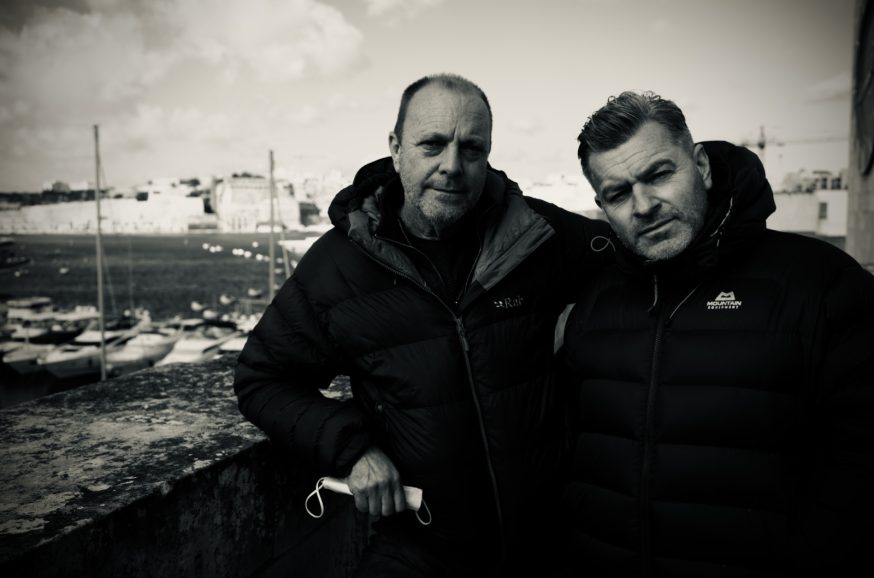
“You come up with ideas, but someone in the room will always say, ‘Oh, have you seen Quantum of Solace?’—or something similar,” he says. “Everything’s kind of been done before. You’re just trying to find a different way of doing it, to give your film a fresh edge, which is bloody hard.
“You want to feel free to create something new, but also be mindful of what’s already been done in the Mission films. We didn’t want to repeat too much. Whether it’s a boat, car or plane, action has its own recipe—and our job is to keep adjusting the ingredients.”
Cruise may be in phenomenal physical and mental shape at 62, but even the most unstoppable forces must eventually slow. So, is part eight truly the end of his journey?
“Who knows?” Taggart says. “It’s Tom’s project and I can’t see anybody else playing the role. Who else can and will do any of that stunt work?”
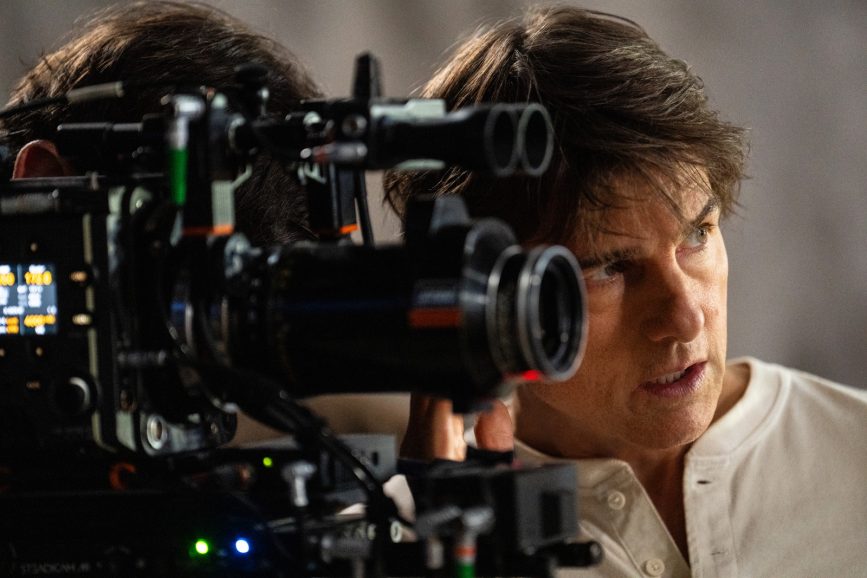
One thing’s certain: if there’s another outing, Cruise will be closely involved in the cinematography—he’s “extremely technical” behind the camera.
“Sometimes you’d explain something and he wouldn’t quite get it right away, but he wouldn’t let it go either—in the best possible way,” Taggart jests. “Every five minutes he’d say, ‘I didn’t get that. Can you explain it again?’ I used to joke with him, ‘Tom, I can’t tell you, or you’ll end up lighting it yourself and get rid of me!’ But he’s very engaged with the look of the film. We’d always have big discussions—my operator Chunky Richmond, who’s extraordinary and I would talk through the feel of the shot, the movement, the look. His involvement in all aspects is huge. I always say that working on Mission sometimes feels like doing a live theatre production. It gives the whole process an edge. You turn up to a set with your finder and line things up, but things will always shift. The story develops as we go, so we adapt the visuals in real time.”
Mission accomplished.