
THE CRAFT BEHIND THE CAMERA
Ryan Kernaghan ISC and filmmaker Jordan Bryon led a strong night as Adolescence and The Celebrity Traitors triumphed at the BAFTA Television Craft Awards, with BAFTA celebrating the talent behind television’s finest work.
They are the people you rarely see — the sound mixer layering the ambient dread of a prison corridor, the costume designer sourcing every stitch to tell a story without dialogue, the editor finding the cut that breaks a million hearts. On Sunday 26 April at The Brewery in London, they stepped into the spotlight.
The 2026 BAFTA Television Craft Awards brought together the architects of Britain’s best television, celebrating the craft that begins long before an actor steps on set and continues long after they leave.
Before the awards were handed out, BAFTA chair Sara Putt struck a balance between celebration and candour. She acknowledged what everyone in the room already knew: the past few years have been tough. “Budgets are tighter, commissioning practices are evolving and uncertainty remains,” she said. Yet her message ultimately leaned toward optimism. “The work we are celebrating tonight is bold, ambitious and assured — and that is testament to the people in this room.” With 124 nominated programmes and BAFTA albert marking its 15th anniversary, she argued the industry — despite everything — remains in robust health.
Among the night’s biggest winners, Adolescence and The Celebrity Traitors each took home two awards. Philip Barantini won the Director: Fiction category and James Drake, Jules Woods, Rob Entwistle, Kiff McManus, Kyle Pickford and Adam Méndez won for Sound: Fiction for Adolescence.
Ben Archard, Siggi Rosen-Rawlings, James Tinsley, Stuart Frossell, Martin Adams and Nathan Lindley won the Entertainment Craft Team category, and Sound Team won for Sound: Factual for The Celebrity Traitors.
Introducing…
New voices gave the evening much of its warmth. Writer Janice Okoh collected the Emerging Talent prize in fiction for Just Act Normal, while director Olaide Sadiq — a BAFTA Breakthrough — won the factual equivalent for Grenfell: Uncovered, a film that proved once again that the most important television is often the hardest to watch.
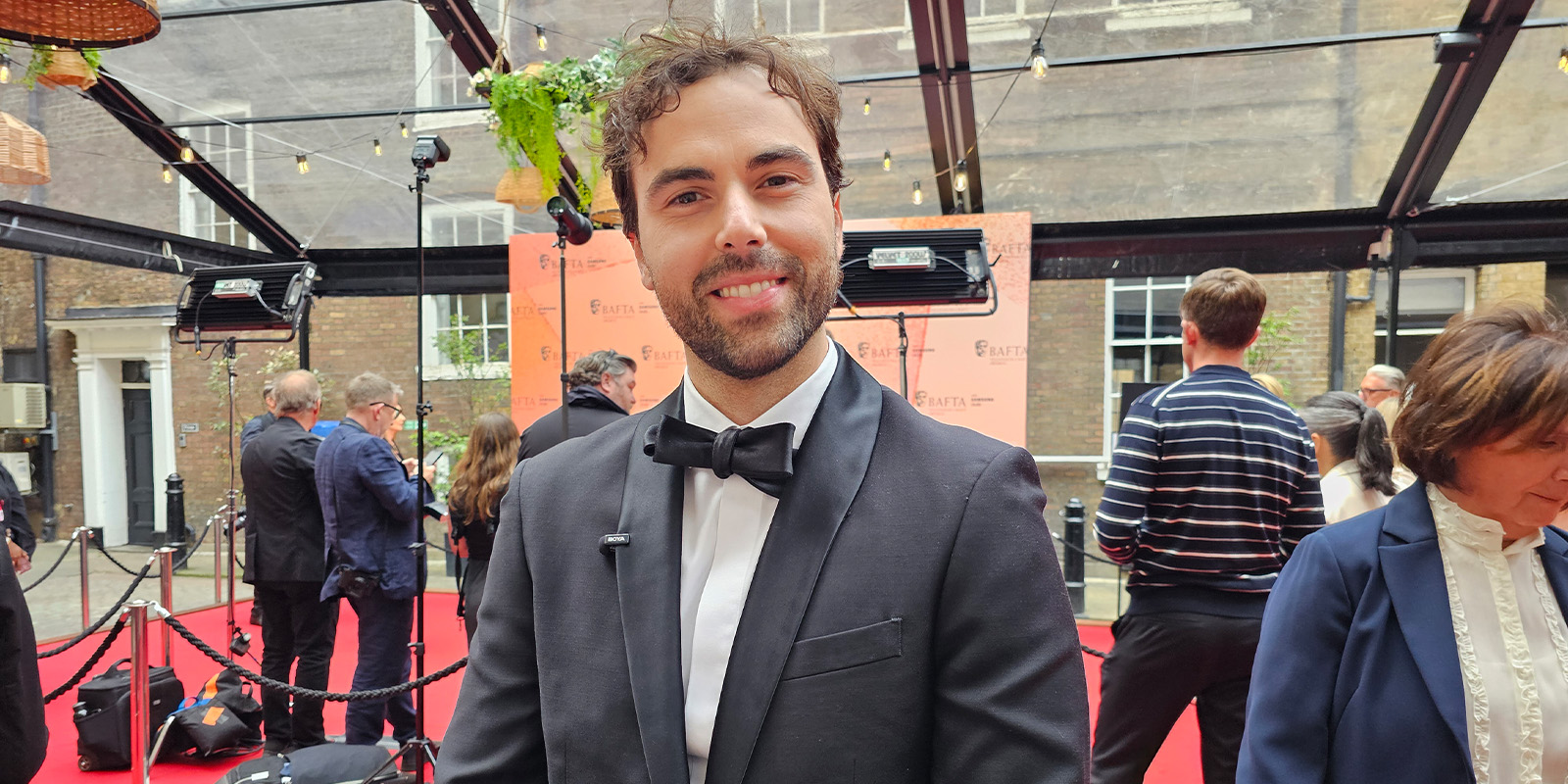
Ryan Kernaghan ISC (Trespasses), Catherine Goldschmidt ASC BSC (The Last of Us), Matthew Lewis (Adolescence) and Suzie Lavelle BSC ISC (Severance) were nominated in the Photography & Lighting: Fiction category. Speaking on the red carpet, Goldschmidt talked about how much went into shooting.
“We shot almost entirely in Vancouver, but for the episode I’m nominated for, we went to Alberta for a week to shoot in the Rockies,” she said. “I’d never shot somewhere so amazing before — so logistically challenging, but incredible on camera.” She added that her fondest moment was “going up this mountain where Inception and The Revenant had been shot”.
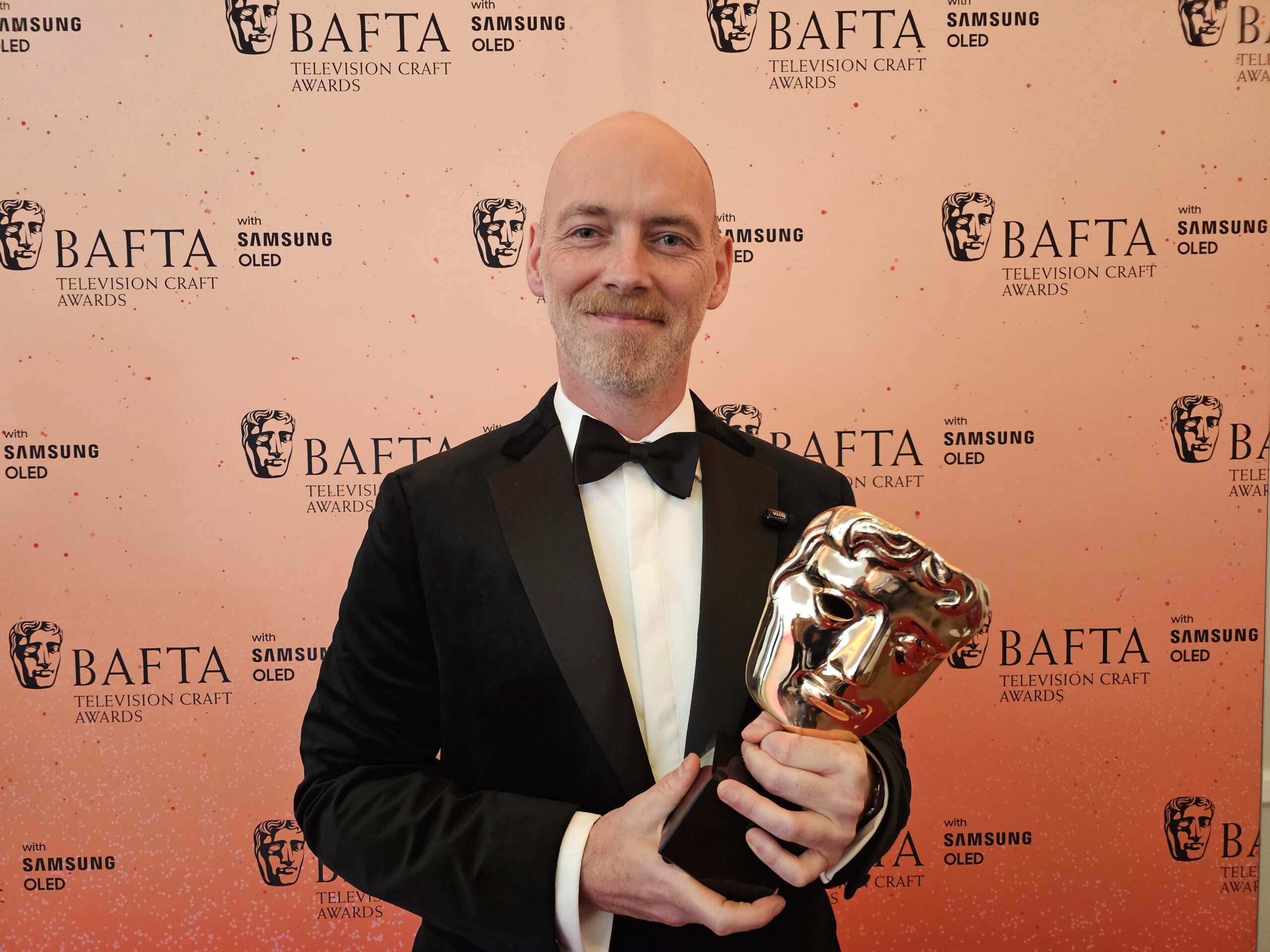
Kernaghan ultimately took home his first BAFTA for Trespasses. He said, “Our director, Dawn (Shadforth), said she had a feeling, and I didn’t believe her,” before his name was read out.
“Sorry, I’m still a little bit out of [my] body,” Kernaghan joked. “I guess the thing that separates the BAFTA Craft Awards from others is the rich heritage BAFTA has with the British film and TV industry.”
Also speaking before the event, Lavelle said it was “amazing” and “very intense” working on Severance. “I was so glad to get to be there,” she added. “It was brilliant — I loved it, loved the crew, loved the work. Amazing cast. It’s just so cool to do something so original; they let you run wild with ideas and I love that.”
Meanwhile, Jordan Bryon, now a three-time BAFTA winner, scooped the gong for Photography: Factual for Our Land: Israel’s Other War.
“This is the award for the people who are on the ground doing the work, bringing the pieces to life,” Bryon said. “I think we are the ants in the colony that are working together to do incredible work. Often, it’s not so recognised because we are behind the scenes. These awards are absolutely fantastic, but for me, the most important thing about it is that now a lot of people will go and watch the film and become informed about the West Bank.”
Stefano Ferrari and Tim Cragg were in the same category with Bryon for Surviving Black Hawk Down. The former said one of the biggest things he learned was lighting continuity as some of the interviews could be run for seven hours uninterrupted.
“When we shot it in Kenya, a lot of the interviews were done in natural light,” he said. “So obviously that helped with our butterfly lighting, but it was a steep learning curve for me. Lighting darker skin tones was something I hadn’t done much of before and my gaffer was incredible because he taught me a lot. For example, we changed the diffusion materials we used — moving from grid or heavier diffusion to lighter bleach muslin — which really helped with the skin tones.”
A special moment in the ceremony saw Simone Pennant MBE receive the BAFTA Television Craft Special Award, recognising her leadership and lasting impact on the screen industries through The TV Collective.