

FROM THE FRONT LINE
Madelyn G. Most reports back from the 37th Visa pour l’Image, the International Festival of Photojournalism, which featured a range of powerful exhibitions from across the world.
“It is the mission of shining light on injustice that has most guided my work as a photographer” – Sebastião Salgado
On 23 May 2025, the world lost one of the greatest photographers of all time, who has inspired and continues to inspire generations of photographers and journalists. Today we are living in somewhat darker times than before, and where it has never been more urgent to talk about freedom of speech and freedom of the press. Every day we are reminded of what is safe to say in public without fear of reprisals. In a world where minds have been poisoned by social media’s lies and hate speech, where the proliferation of fake news remains unchecked and unregulated, and as AI leaves us doubting the authenticity of what we see, hear, and read…how can we be sure what is true and factual?
Many of Britain’s greatest cinematographers started their early careers in still photography, that often led them towards documentary filmmaking for British industries: the Coal Board, the Post Office, British Rail, the Ministry of Defence, and the Army during World War II. Legendary cinematographers like Freddie Young, Robert Krasker, Wolfgang Suschitzky, Douglas Slocombe, Freddie Francis, Billy Williams, David Watkin, Bob Paynter and Jack Cardiff found jobs doing industrials, where they learned to compose, frame, light a shot with basic equipment, edit and, most importantly, structure a story. Several made the transition from directors of photography to directors. Because Britain was in a unique, unenviable position of fighting Nazi Germany, fascist Italy and Spain and the Axis powers completely on its own until 1944, it had the unexpected consequence of developing a large professional cadre of skilled film technicians who made propaganda films that boosted the confidence, morale, and economy of the nation.
In the late ‘90s, my American friend in Paris, John Morris, urged me to tag along to Perpignan with his entourage, to experience the oldest and greatest photojournalism festival in the world, Visa pour l’Image. Established in 1989, by former journalist Jean-François Leroy, Visa remains a hub and the so-called ‘centre of the universe’ for both established and aspiring photographers, agency representatives, and photo editors. They make their yearly pilgrimage to the southern tip of France to exhibit their work and pitch their projects for the following year, or to find and recruit fresh new talent. In those days, dozens of magazines from around the world filled the third floor of the Palais de Congres, there was a buzz of activity from the likes of National Geographic, Paris Match, Le Point, Figaro, Der Spiegel, Stern, Geo, Le Monde, Elle (I can’t remember if Time, Look, or Life still existed). Sadly today, a drastically reduced cohort attends to represent those working in digital media – imagery and films: Getty Images, Geo, National Geographic, The New York Times, Washington Post, to name only a few. Note – there are not many British outlets participating at Perpignan.
Based in London during the war, John Morris was the picture editor at Life magazine who worked closely with Robert Capa. For decades, he accepted credit and blame for the dark room catastrophe whereby Capa’s black-and-white negatives of the Allies’ D-Day landings in Normandy of 6 June 1944 were tragically burned, supposedly because the lab technician, frightened by John shouting and banging down the darkroom door, turned the drying temperature up too high. It is believed that Capa sent off by motorcycle courier at least four rolls of 35mm film. All except the four iconic images we know today of the Normandy landings were indecipherable, blurred, or destroyed. As one of the original founders of the Magnum Photo Agency in Paris, John Morris was loved and revered at Visa. One summer, when John was in his mid-90s and needed money for his archival project, he found an undeveloped 35mm film cassette while rummaging through a bedroom drawer. This turned out to be ‘snapshots’ he took while roaming through the recently liberated territory of Northern France with Capa in the summer of 1944. They found themselves dodging German bullets from soldiers in retreat, wandering through fields and towns in their attempt to get back home. John’s photos made up the book Quelque part en France (Somewhere in France) which he presented at Visa’s book signing event the following year and which helped him get out of debt.
Throughout history, photographers, journalists and war correspondents risked their lives to get a picture or a story, but in today’s world, instead of protecting them, their flackjackets marked PRESS identify THEM as a dangerous enemy, more valuable in the crosshairs of a soldier’s rangefinder.
As of 11 August 2025, 274 journalists have been killed, primarily due to the ongoing conflict in Gaza, with 269 of them being Palestinian. Today, only one in five countries has a free press. At Visa pour l’Image, there is almost a month of activities starting in late August until mid-September, for professionals, for the general public, and for school students from all over France. During Pro Week, morning sessions whereby photographers discuss their individual images start at 10am in the Palais des Congrès, and continue until 7pm with a healthy few hours for lunch break and visiting exhibits. In the evening, the outdoor screenings begin at 9:30pm, within the brick walls of Campo Santo, the cloister-cemetery built in the early 1300s, and can go on sometimes until almost midnight. After that, everyone walks down to Cafe de La Poste at Le Castillet for “un pot” until the wee hours of the morning, perhaps a little bleary eyed and worse for wear the following morning – but on time!
Admission is free and open to the public: every night for one week, thousands of spectators experience the year’s highlights of world news in pictures, all introduced and narrated by Jean Francois Leroy and Pauline Cazaubon, and accompanied by an emotionally charged, provocative, hip and jazzy soundtrack. These six days of visual immersion in world events are intense; what you see is brutal, violent, bloody, mind-bending and heart-wrenching. Depictions of innocent lives ravaged by war, famine, drug addiction, abuse, flooding, bombs, drone warfare, or natural climate disasters that devastate the landscape and nearby populations can be scary and overwhelming. It is all a sobering reminder of how assaulted our planet has become by human activity and how fragile life on earth really is.
Here are only a few of this year’s extraordinary stories.
JUAN CARLOS “EL SALVADOR: Asi es la vida en el Cecot” (“This is life in Cecot”)
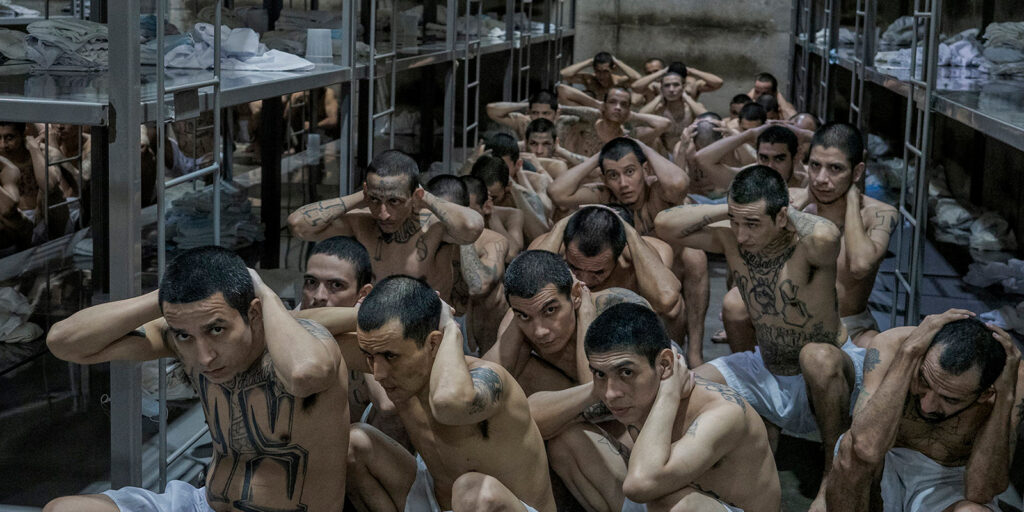
Juan Carlos was allowed to visit Cecot and stay overnight at this mega prison, built hastily in six months, that is notorious for its harsh conditions. El Salvador does not have a death penalty, so prison sentences can range between 80-140 years. El Salvador’s president, Nayib Bukele, proudly says he brought peace to the country with his war on the three infamous gangs – by arresting and locking up almost 2% of the adult population. Because the government demanded quotas, innocent people might have been arbitrarily rounded up, and concerns for human rights are nonexistent. Cecot gained the world’s attention when the Trump administration deported Kilmar Ábrego García, accusing him of being a MS-13 gang member, along with more than 260 Venezuelans and Salvadorans. US officials say the tattoos on his fingers prove they were gang members; that has been disputed. An indelible memory I have of Juan Carlos at Perpignan was when he said during his presentation: “I cannot lie. I am a journalist, I must tell the truth.”
JEAN LOUIS COURTINAT – “40 YEARS OF SOCIAL PHOTOGRAPHY”
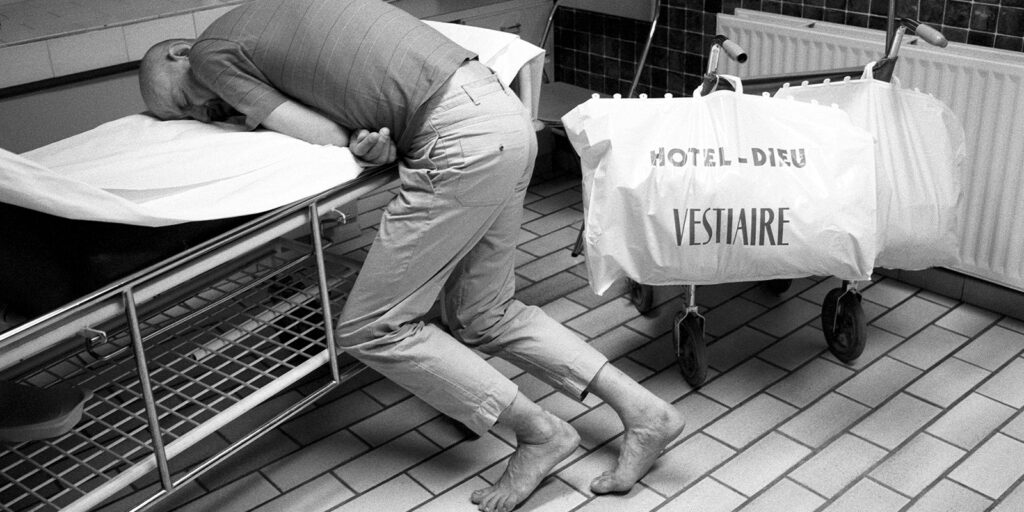
Jean-Louis Courtinat says “No Miserablism!” – his work is to show positive things. Courtinat photographs the most fragile of lives, those rejected by society who are ignored and erased, and he does this with sensitivity and respect (tendresse). Courtinat works by immersing himself in his subjects and their lives beforehand – he often spends several months visiting them before taking a single photo; he tries to build trust before pointing his camera. His methodology and technique are the total opposite of his mentor, Robert Doisneau, with whom he worked for over 30 years.
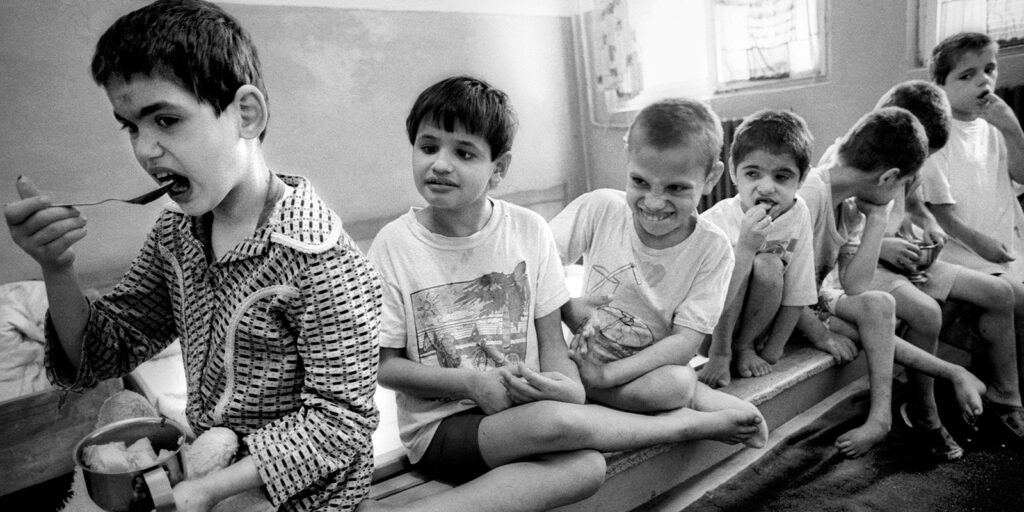
Doisneau is a towering figure in France, one of the country’s most recognised names in photography, renowned for his ironic and iconic, humorous, tongue-in-cheek photos that critique society and have multiple meanings that can be stinging, caustic, satirical. When I asked the quite humble Courtinat about how his parents influenced him and the environment he grew up in, he replied, “My father wanted me to work at the SNCF (French national railways) where one does administrative exams to compete for a steady job that brings security. Actually, they never did understand what I was doing, they never understood my photographs, and especially never understood my work in black-and-white.”
STEPHEN SHAMES – A LIFETIME IN PHOTOGRAPHY
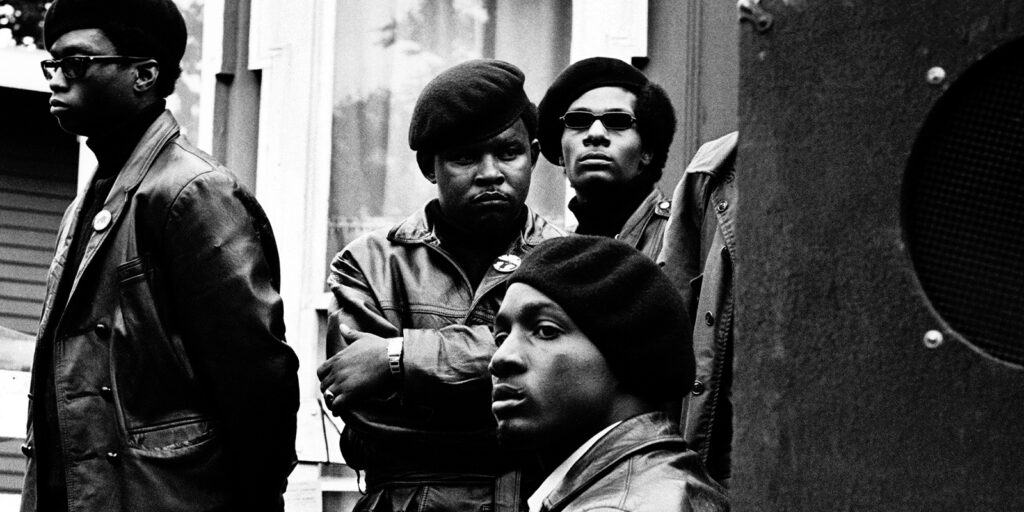
Stephen Shames’ six decades of work started as a student in UC Berkeley, California, in the 1960s, where he took photos for the local newspaper and got involved with the Black Panther movement. He calls Bobby Seale his mentor and co-wrote a book with Ericka Huggins entitled COMRADE SISTERS: WOMEN OF THE BLACK PANTHER PARTY, as two thirds of Black Panthers were women. “The Panthers taught me how to see a community that wasn’t my own, from the inside,” he says. One of their great successes was the breakfast programme for schoolchildren, and they created the Children’s Defense Fund. Shames’ first published book, Outside the Dream: Child Poverty in America, was about the 12 million children living in poverty in the US.
After that, he travelled the world documenting street kids, child labourers, child soldiers, and society’s ‘outcasts’, but he always showed their inner strength with hope and resilience. “Being a photojournalist, your camera is a ticket to go anywhere…while my work is in the documentary tradition, it is also about the edges of experience, where things are more ambiguous and non-rational.” When I asked him if he looked through his FBI file available through the Freedom of Information Act, he said he wasn’t interested…. but his son was, and discovered that his friend and colleague working alongside him on the Berkeley newspaper was an FBI informant who was (most likely) reporting everything he was doing.
ALFREDO BOSCO – THE IRAQI CAPTAGON AND SYNTHETIC DRUGS CRISIS
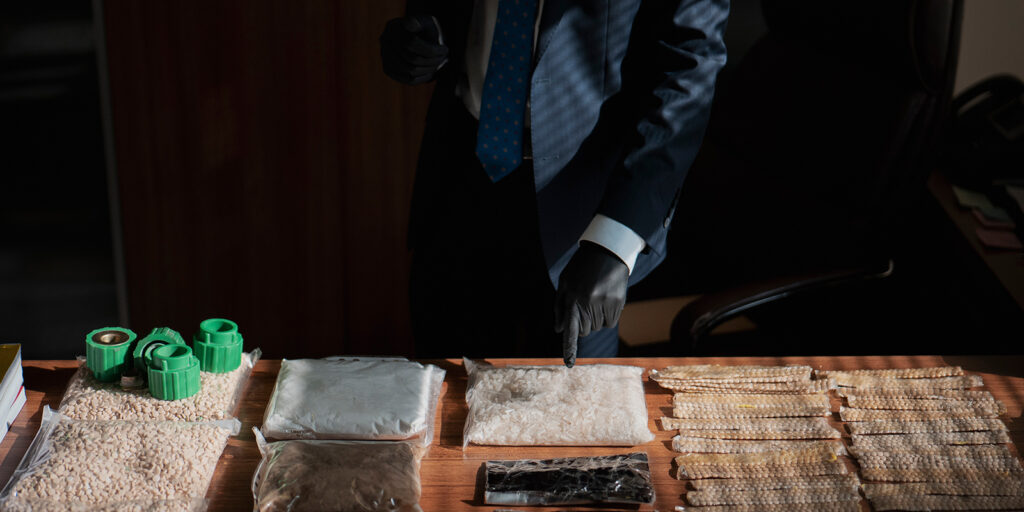
In his exhibit, Alfredo Bosco explores the surge in drug trafficking of ‘captagon’ (fenethylline) in Iraq, which is manufactured in Syria. Crystal meth (methamphetamine) is believed to be produced in laboratories in Iran. Captagon is called “the jihad drug”. Soldiers from Al Qaeda and ISIS are using it, and it has spread to schools, universities, the police and the Iraqi army. Syria was transformed into a narco-state that generated $5.7 billion dollars in 2021 from captagon production. The Iraqi government declared the synthetic drug addiction epidemic an emergency, and has opened rehab clinics – for men only. Women are not treated for drug addiction. Ketamine is used also by soldiers fighting in the war in Ukraine. “As we are fighting terrorism, we are fighting drugs.”
*Rémi Ochlik was a French photographer (working with journalist Edith Bouvier) who was killed in the February 2012 bombardment of the bunker in Homs along with veteran war correspondent Marie Colvin, believed to be targeted by Bashar al-Assad. Survivors of that bombing are Edith Bouvier and Paul Conroy, who is now reporting from Ukraine.
BRENT STIRTON – 100 YEARS OF RESILIENCE
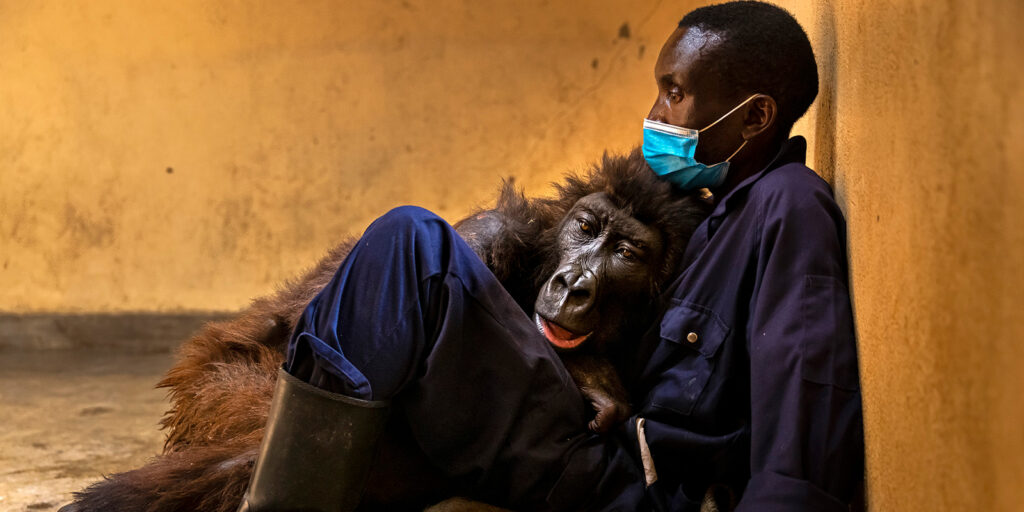
Brent Stirton comes regularly to Visa, and this year presented photographs from his book about Virunga National Park, Africa’s first and greatest national park. Virunga is home to endangered wildlife – elephants, chimpanzees, lions, hippos, and the world’s largest population of mountain gorillas. Situated in the eastern Democratic Republic of Congo, the park is marking its centenary despite continuing threats from armed groups and regional instability. “Eight hundred rangers look after this vast area. Over the past 20 years, more than 240 of them have been killed and many more wounded,” Stirton explained. The park warden, Emmanuel de Merode from Belgium, has survived multiple assassination attempts and continues to be under threat, but, “Despite ongoing conflict and political instability – including the current M23 occupation of parts of the park – a dedicated team continues to pursue an ambitious vision for conservation and sustainable development. But what I always find extraordinary is that no one abandons their post. No one leaves.”
GEORGE STEINMETZ – FEED THE PLANET
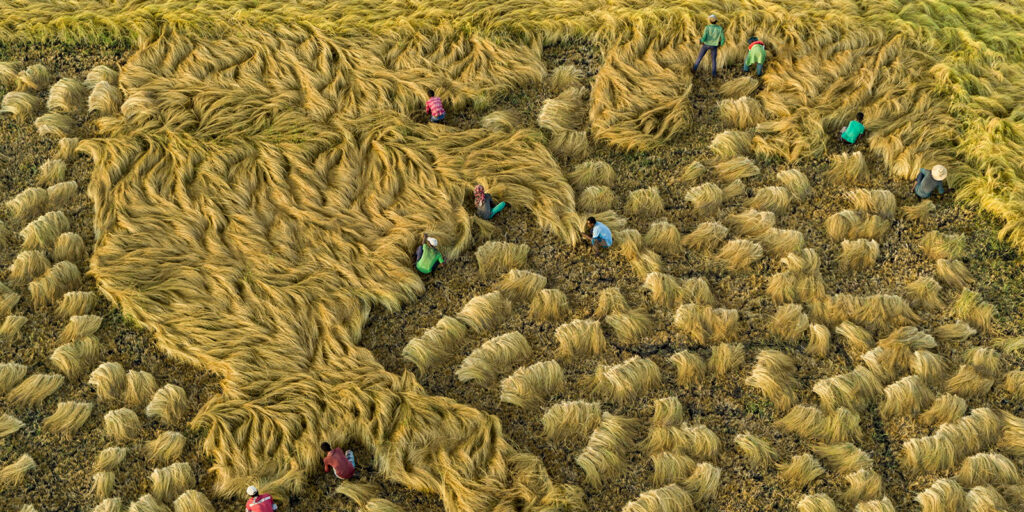
In stark contrast to most other exhibits, the beauty and serenity of George Steinmetz’s photographs is captured with the use of drones at lofty heights from great distances. Steinmetz depicts the global food system with its ecological and ethical consequences: we are wiping out animal species and depleting the earth’s wilderness to produce more food. Forty per cent of the Earth’s landmass has been converted into farmland. Overfishing has eliminated 90% of the large fish population, and 30% of global greenhouse gas emissions are due to the production of food. The question ‘how can we provide enough food for the global population expected to reach 9.7 billion by the year 2050?’ has never been more acute.
ANUSH BABAJANYAN – AFTER THE ARAL SEA
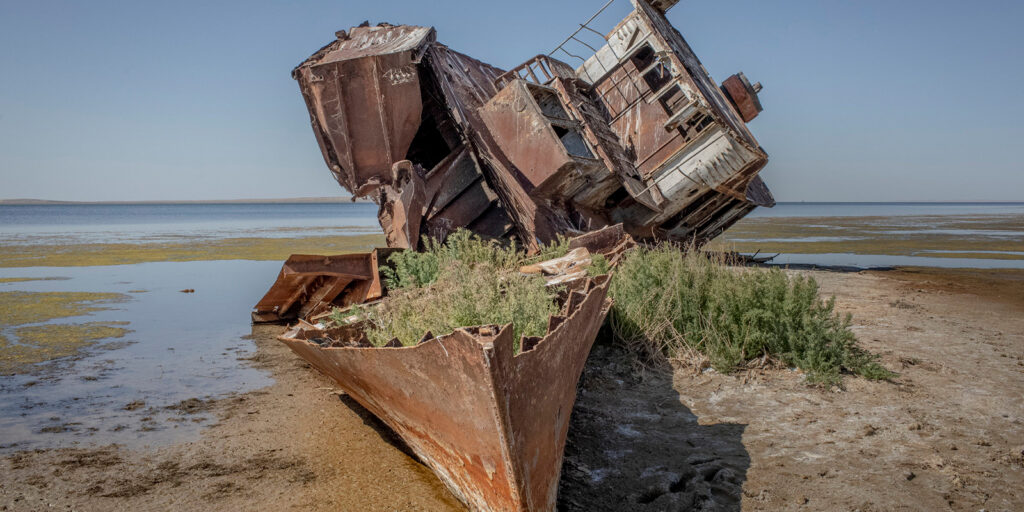
This exhibit by Armenia’s Anush Babajanyan is a visual journey about a catastrophic landscape that is being turned into one of resilience. It is about adapting and building a new future. The Aral Sea was once the fourth largest lake in the world, but lost 90% of its water due to Soviet era irrigation projects that diverted its tributaries to support cotton production in Uzbekistan and Kazakhstan, resulting in the seabed turning into a desert – the Aralkum. Today, the construction of a dam has brought back water that helps the fish populations. The projects reintroduces native vegetation to help prevent further desertification. Anush Babajanyan is a local to this region and has been working here for a very long time. She knows and understands the subject intimately and on a personal level and has built up trust among the local population.
EUGENE RICHARDS – DO I KNOW YOU?
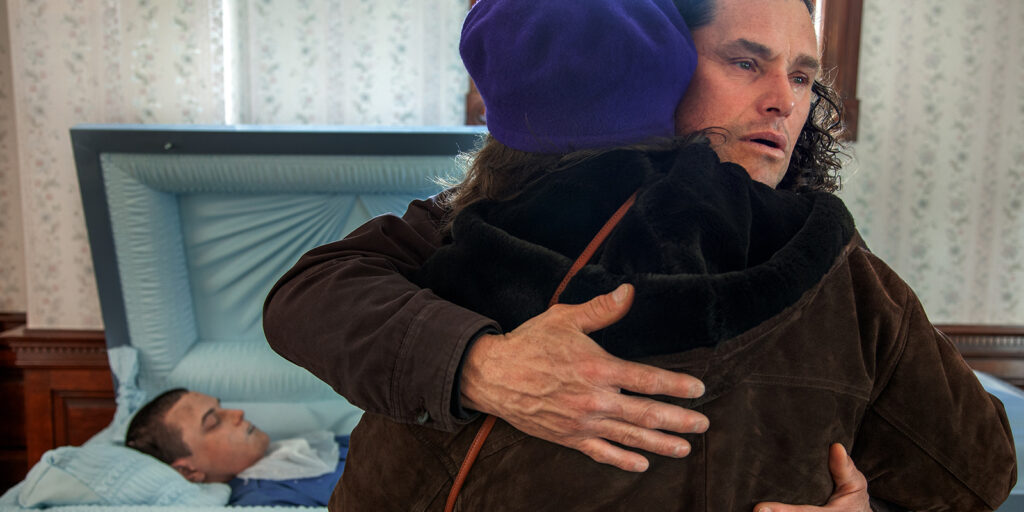
“I go out empty when I start,” says Eugene Richards, whose exhibit includes his 56 years of taking pictures. Richards says he thought of himself “first as a social worker with a camera, then as a street photographer, then in the ‘80s as a photojournalist, and part of the world of truth seekers. Today I see it as real-life storytelling.” He says his photographic stories “speak of America, of survival, the shadows cast by slavery, crime, imprisonment, poverty, incomprehensible loss, the longing for love and what it means to be beautiful”.
Richards understands that the demise of photo magazines like Life and Look has affected the long-form picture story in modern times. “There is no way around it – the options in print for any extended photo stories are almost nil, which leaves us with the online digital world, where stories are being done in increasing numbers as small media pieces such as videos of animated slides,” he said. “It is increasingly hard to explore something in-depth. Doing books is so incredibly hard today, when most editors don’t think anyone is interested in looking at things in books and everything is presented in bytes of news. There is a temptation to turn away from documentary work, as there are increasingly limited opportunities, but whatever is still called ‘social documentary’ work I still do, although I am kind of in a holding pattern,” said Eugene Richards in an interview with B & W Magazine.
CYNTHIA BOLL – RESHAPING HOME: INDONESIA’S CAPITAL MIGRATION
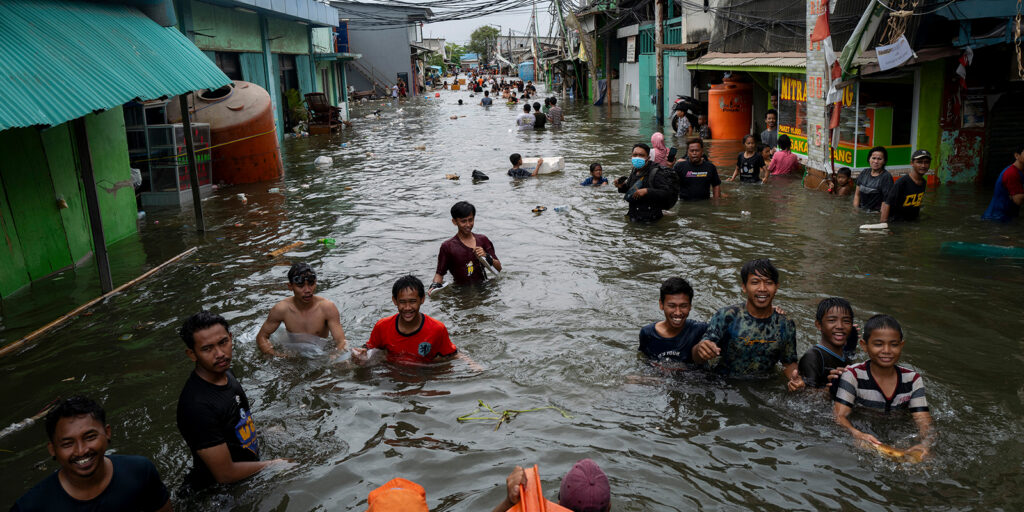
Indonesia’s decision to build a new city from scratch, moving its capital from Jakarta to the forests of East Kalimantan on the island of Borneo, is intended to move 2 million people. It is a very bold experiment. Cynthia Boll is bringing attention to the fact that “20% of the world’s cities are sinking”. She is documenting the experiences of people in cities facing worsening floods brought about by a changing climate and a broken infrastructure. People are living in a city that is sinking between eight and 20 centimetres each year, with some areas four metres below sea level. This unique project examines the shift from an overpopulated sinking metropolis to a planned sustainable capital. Boll and filmmaker Stephanie Bakker are documenting visually and journalistically this bold experiment and exploring how people adapt, resist or reimagine their environments. The outcome of success or failure will be determined in the future.
ADAM GRAY – AMERICAN MADNESS
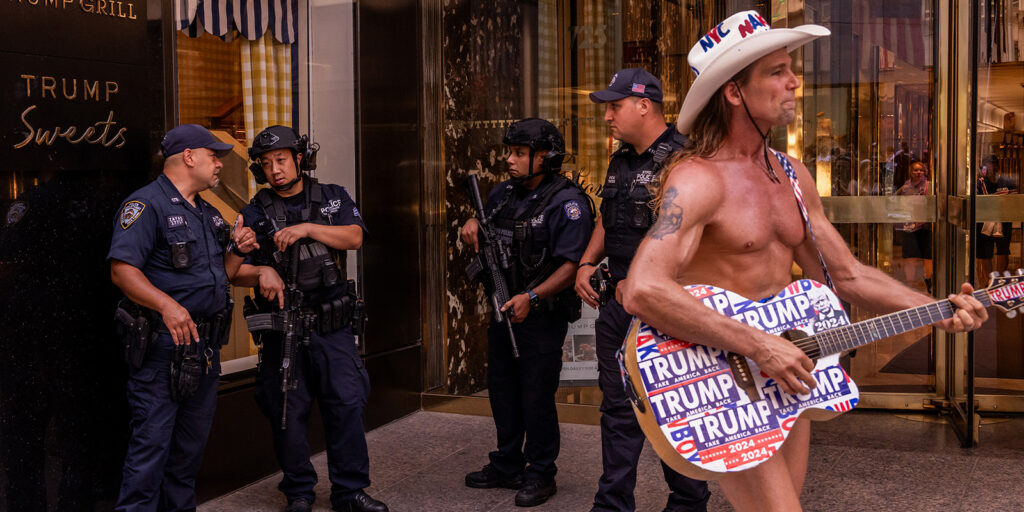
Since the 6 January 2021 storming of the Capitol building, Gray documents the fractures in American society.
SAHER ALGHORRA – WE HAVE NO ESCAPE
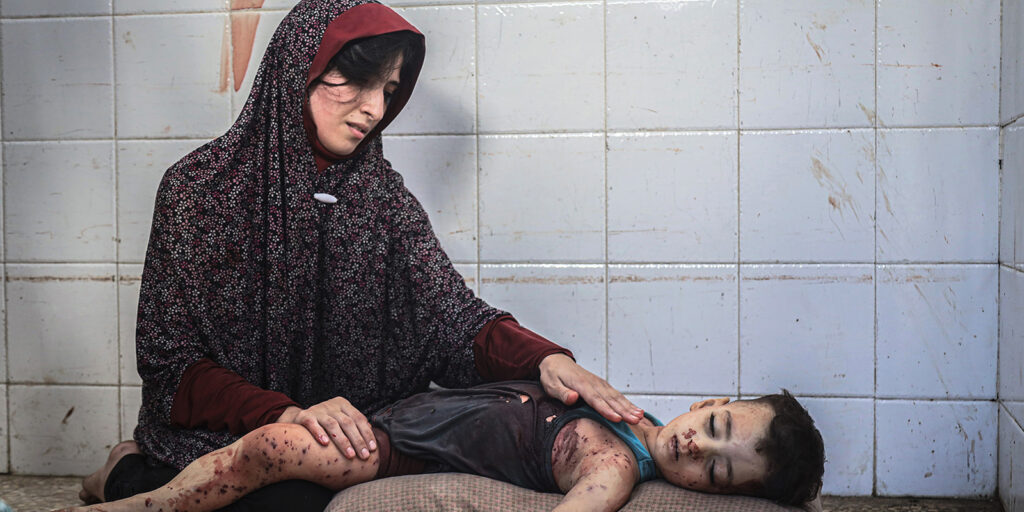
For over 17 months, Saher Alghorra spent time with families trapped in a conflict of unprecedented violence, capturing scenes of survival, pain and resilience.
SANDRA CALLIGARO – AFGHANISTAN: IN THE SHADOW OF THE WHITE FLAGS
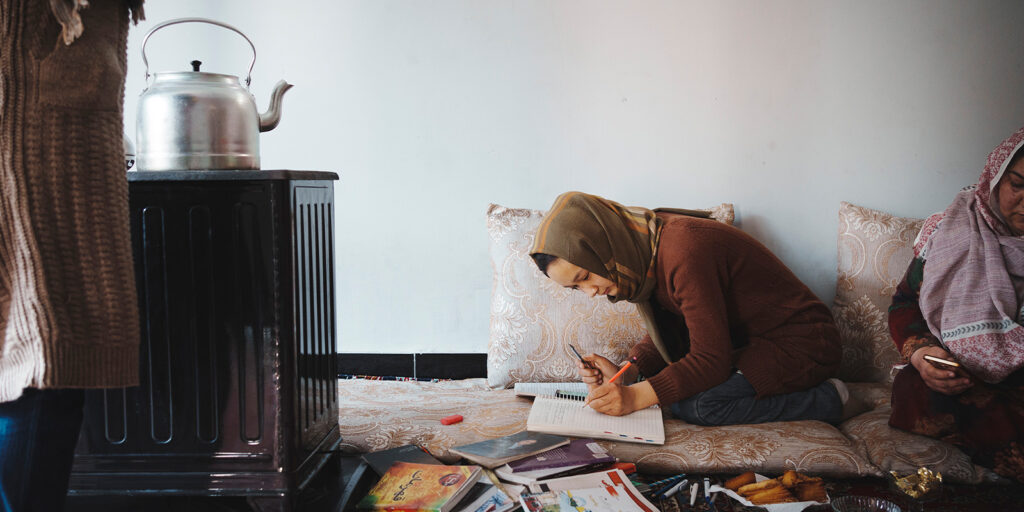
Sandra Calligaro is very down-to-earth, humbly explaining that she was an art and photography student who worked in a café. She showed her work to her teacher who pressed her to follow her dream. Calligaro spent the last four years observing women in Afghanistan as the Taliban cut back their freedom to go outside, to work, to go to school, excluding them from most places in society. Between resignation and resistance, hope and despair, Calligaro’s photos show glimpses of some respite and depict a few moments of freedom, defying Taliban law.
SALWAN GEORGES – THE FALL OF ASSAD
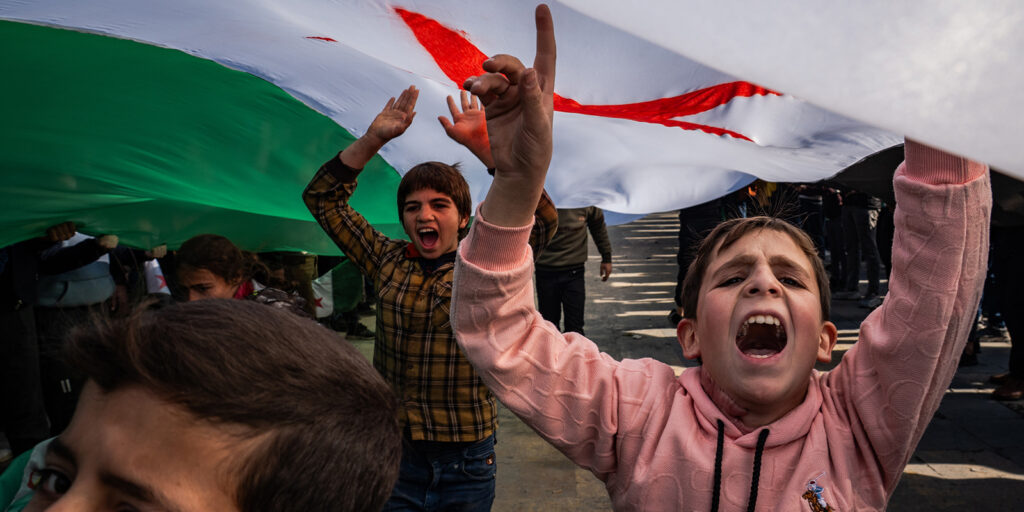
Washington Post staff photographer Salwan Georges travelled to Syria in December 2024 to bear witness, document and report on the country after the dramatic collapse of Bashar al-Assad’s authoritarian regime in 2024. The regime lost the military and financial backing of Russia and Iran; the downfall marked the end of the half-century rule of oppression by the Assad family. Salwan Georges photographs scenes from the notorious underground prisons, the torture cells, and the total obliteration of the historical cities of Aleppo, Homs, and Damascus by Russian bombs.
FATMA HASSONA – THE EYE OF GAZA
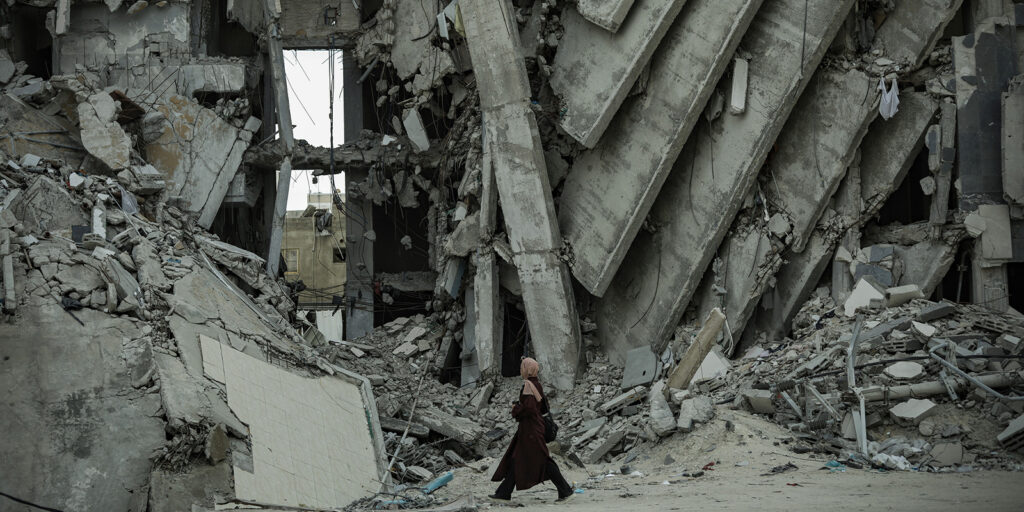
During the spring and summer of 2024, Palestinian Fatma Hassona shared her photos by video calls with filmmaker Sepideh Farsi, who followed Hassona through a year in the life of Gazans living through continual bombardment. From this communication, Sepideh Farsi had the material to make what became an award-winning documentary, Put Your Soul on Your Hand and Walk, that remains a shattering memorial to Fatma Hassona, who was targeted by Israeli forces.
RIJASOLO – MADAGASCAR, LAND OF SPIRITS
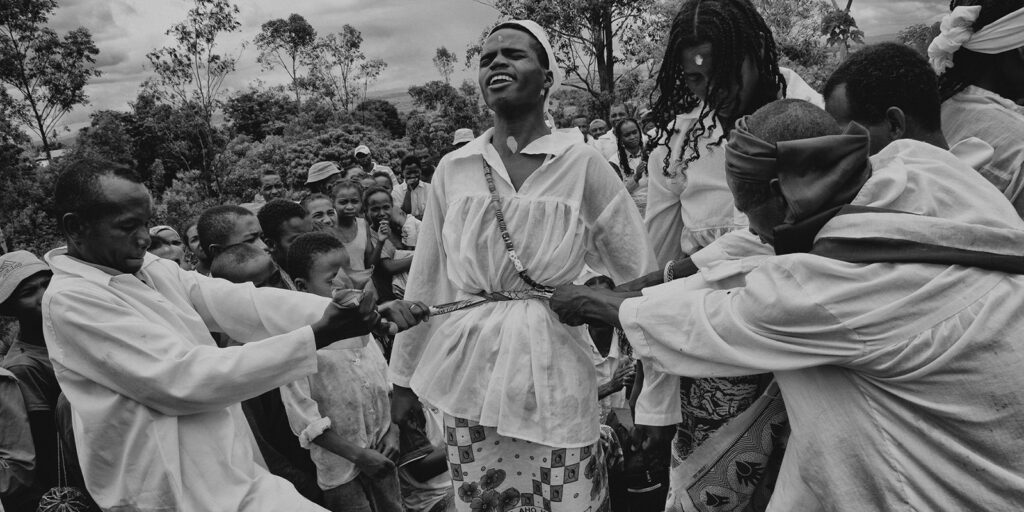
One of the more unsettling exhibits was from musician Rijasolo, who shared his voyages to Madagascar, and stories of the Shamanism, spirituality, sacrifices, animism, spirits in nature, witchcraft, sorcery, spells, and exorcisms that take place there – still a land where ceremonies for children possessed by demons take place, where strong belief in the healing powers of a shaman plays a crucial role in the communities, and ceremonial rituals are regularly practised.
Belief in ancestral trances, the invisible world, the path to the sacred in nature, in forests, in waterfalls, and in species, while nature itself is collapsing and the bonds are breaking down. Some eerie stories were told not only by Rijasolo, but by a member of the audience who returned to Paris from Madagascar with a strange illness that was determined to be from a spell, a curse, that was put on her by a specific shaman she encountered when she was there.
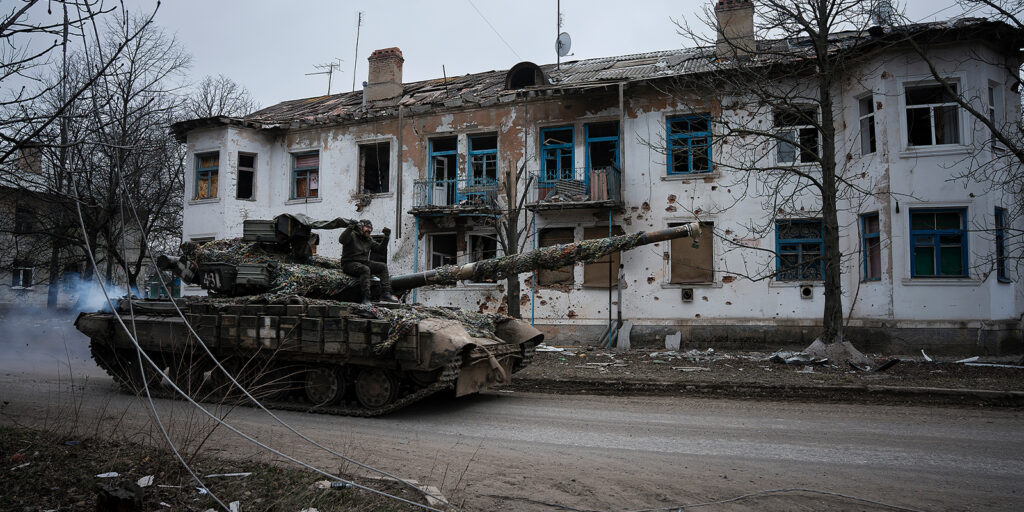
GAELLE GIRBES – UKRAINE, SURVIVING AMIDST THE RUINS
JOSH EDELSON – CALIFORNIA: A DECADE IN THE MIDDLE OF THE INFERNO
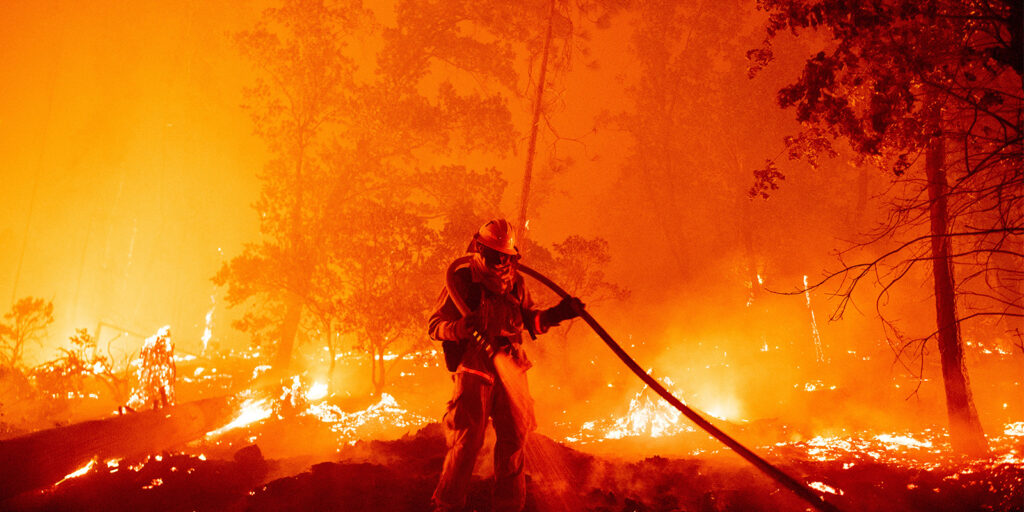
Josh Edelson is an American photographer who attended Visa with his wife and young boy. He said he made a promise to his wife that he would stay safe and never go too close to the flames, despite having created a remarkable career photographing the vast, out-of-control wildfires in California at close range. I spoke to him after the session, and he lowered his voice saying that he must be careful about what he says in a public forum. There is a lot of political controversy surrounding the true nature and causes of forest fires.
Below is an excerpt from the Weather Photographer of the Year article, that explains the image better than I can. “In this image, photographer Josh Edelson captured a lone firefighter attempting to hold back flames as they began to threaten people’s homes in Madera County, California: ‘This moment happened during the Creek Fire of September 2020 which exhibited wildfire weather, including multiple fire tornadoes. In some situations, firefighters had to pull out of residential areas.’ The photograph is a stark reminder that climate change requires action; in this case it was immediate action as lives and homes faced imminent threat. However, long-term action is also needed to mitigate against and adapt to climate change; this is key to tackling the climate crisis. In the Western US, the number of large fires doubled between 1984 and 2015. Warmer and drier conditions lead to greater availability of dry organic matter such as leaves and twigs. This organic matter acts as a fuel source for fires, allowing them to spread, a key reason why climate change is increasing the risk of wildfires. Not only does this organic fuel make wildfires more likely, but it also releases more carbon into the atmosphere, creating a feedback loop. It is estimated that each year, wildfires in the state of California emit the same amount of carbon into the atmosphere as 2 million cars.”
There is so much more to tell about this year’s Visa pour l’Image, and the awards, honours, grants and prizes given to many photographers, but everything can be found on its website.