

CREATIVITY ON THE CROISETTE
With daring debuts, politically-charged works from stalwart filmmakers and creative collaborations, Cannes Film Festival continued to demonstrate film’s powerful role in the cultural conversation.
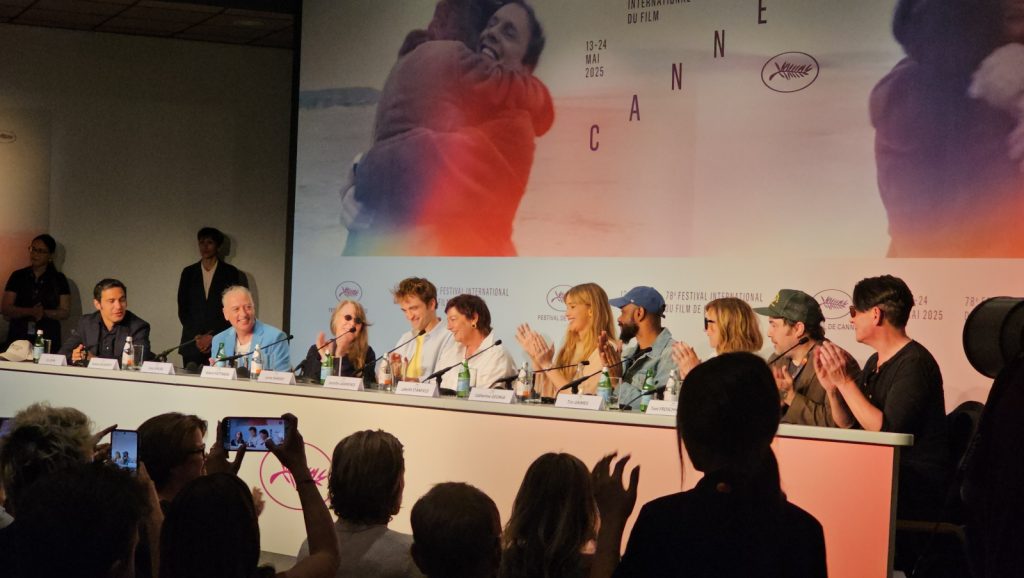
The 78th Cannes Film Festival started in the most glamourous – and explosive – way possible. Ahead of the festival’s French curtain-raiser, Amelie Bonnin’s musical comedy Leave One Day, the opening ceremony saw Robert De Niro receive an honorary Palme d’Or, presented by his two-time co-star Leonardo DiCaprio. The legendary actor’s history with Cannes stretches back more than 50 years, to Martin Scorsese’s Mean Streets, but his acceptance speech saw him in fiery mood.
With the film industry still reeling from the news that President Donald Trump intends to impose 100% tariffs on movies made outside the US, De Niro launched into an attack on Trump, making a plea for the “democracy we once took for granted.” Of the tariffs proposal, he witheringly added: “You can’t put a price on creativity, but apparently you can put a tariff on it.”
The following day, De Niro participated in an hour-long “rendezvous” in front of a packed house at the festival’s Debussy theatre. Among other things, the famously taciturn actor dug into his acting technique. “The first impulse — trust it,” he told one audience member, before recalling a quote from the inspiration for Joe Pesci’s character for Scorsese’s 2019 gangster film The Irishman, in which he co-starred: “When in doubt, have no doubt.”
De Niro wasn’t the only major star participating in an on-stage Q&A. On the same day, shortly before the out of competition world premiere of Mission: Impossible — The Final Reckoning, its star Tom Cruise made a surprise appearance at the “rendezvous” with his Mission director Christopher McQuarrie. The actor shared his ‘don’t take no for an answer’ moviemaking philosophy. “Don’t wait till everything’s perfect because it’s never going to be perfect. Movies aren’t perfect. People aren’t.”
This year, the main competition boasted 21 films. Much like last year’s Palme d’Or winner, Anora, which played in the second week of Cannes, the 2025 winner – chosen by the jury headed by Juliette Binoche — did not reveal itself until the festival’s latter days.
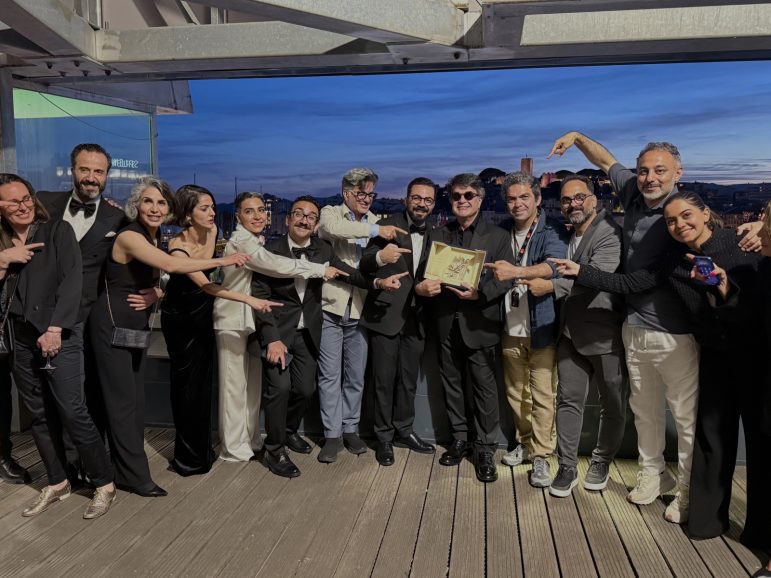
It Was Just An Accident marked the latest film from Iranian filmmaker Jafar Panahi, and his first Palme d’Or — making him one of only four directors to win the top prizes in Cannes, Berlin and Venice. Thankfully, he was also present to accept the golden Palme, given his previous run-ins with Iranian authorities (he has twice been imprisoned, as well as being banned from making movies).
Set in modern-day Tehran, Panahi’s angry and impassioned drama was surely a reflection on his own experiences, given it deals with a man who may – or may not – have been a state interrogator. Taking on the duties of cinematographer was Amin Jafari, who previously shot Panahi’s 2022 film No Bears. Here, his long takes and discreet, observational camerawork help Panahi and his characters traverse some devastating emotional terrain.
The thriller was created in unique and challenging circumstances. Jafari shot most of it with RED Komodo with Samyang prime lenses, and part with the ARRI Alexa Mini with Ultra Prime lenses. The decision to use both systems came from the specific needs of the production: working quickly, discreetly, and under nonstandard conditions, without sacrificing image quality.
Panahi already had a strong sense of how Panahi “builds meaning — not through big drama, but through small, precise moments that slowly reveal deeper truths”.
“What really struck me about this film was how quiet and simple the story seemed at first — just a small event, almost ordinary. But underneath that simplicity, I felt something urgent and unsettling,” says Jafari. “It’s a story about responsibility, silence, and the way people look away when something uncomfortable happens. That tension — between what is shown and what is avoided — made the whole concept very powerful for me as a cinematographer.”
Panahi and Jafari agreed the camera should never try to explain — it should simply witness. “The story unfolds in a very natural way, with emotional tension running beneath the surface, so we felt the visuals should be calm and observational, not dramatic or stylised.
“We chose to shoot in real locations with minimal interference — no artificial dressing, no visual “cleaning.” I believe the texture of reality carries its own kind of beauty, and we wanted to let the environment speak. This meant adapting to each location rather than controlling it — a kind of visual humility that matched the spirit of the film. And of course, we were not working under normal production conditions. The film was made without official permits, so we had to move quickly and stay invisible, while still maintaining a high visual standard. That pushed us to rely on precision, flexibility, and trust — not just in the equipment, but in each other.”
Awarded the Grand Jury prize was Norwegian director Joachim Trier’s latest, Sentimental Value, a touching story of Gustav (Stellan Skarsgård), a self-absorbed career-driven filmmaker coming to the end of his relevance. The scene where Gustav meets with his long-term cinematographer, and they lament the passing of years, particularly hit home. Filming Sentimental Value was Danish cinematographer Kaspar Tuxen, who previously shot Trier’s 2021 Oscar-nominee, The Worst Person In The World. So did they have the same discussions as Gustav and his DP?
“Sure. I mean this film is also about the limits of time,” Trier told British Cinematographer. “I’ve shot films since I was a kid, actually. I made skateboard videos when I was younger. That was my life. I’ve always just filmed. I still do. So one day, maybe it’s over, and that’s a very sad thought, but something I will have to accept. Kasper, my wonderful DP and I, shot that scene and were like, ‘Oh one day [that will be me, unable] to handle it anymore!’”
Compelling competition
Although it won no awards, Lynne Ramsay’s Die My Love walked away, arguably, with the biggest prize of all. This wrenching portrait of marriage and motherhood, starring Jennifer Lawrence and Robert Pattinson, was snagged by MUBI, who bought the rights for the US and multiple other territories for a staggering $24 million. While MUBI also grabbed the rights to Óliver Laxe’s Sirât and Mascha Schili’s Sound of Falling – two competition entries, which tied for the Jury prize – the Ramsay deal was a real show of strength from the streamer.
Die My Love was one of the most visually compelling films of the competition, shot by Northern Irish cinematographer Seamus McGarvey ASC BSC. Ramsay previously worked with the DP on We Need To Talk About Kevin, her searing 2011 take on Lionel Shriver’s novel. “He’s got the charm of the Irish,” Ramsay said. “He’s kissed a Blarney Stone. We’re quite in tune. And if I don’t like something, he’s cool about that. He always says, I’m his co-cinematographer. I think he’s being too generous there.”
The film’s expressive visuals came in part from shooting day-for-night, but also because Ramsay and McGarvey elected to film on 35mm Ektachrome, the rarely-used stock that fellow cinematographer Robbie Ryan BSC ISC so brilliantly deployed on Poor Things. Ramsay was worried when, for a couple of days, she took over duties with McGarvey absent. “The light was going down, and I was like, ‘Oh, my God, it’s going to go dark. This is Ektachrome! It’s going to be black!’ Because I hadn’t shot for a while…but it ended up looking really nice.”
Following the screening, McGarvey spoke about the “great privilege” of working on a film with Ramsay. “With Lynne, who is a cinematographer as well as a brilliant director, it’s lovely to witness what happens in the sacred zone of a film set, a magical space, with great actors and to see the story unravel.”
Another visually stunning work was Wes Anderson’s espionage caper, The Phoenician Scheme. Set in 1950, starring Benicio del Toro, the film boasted the meticulous framing and design schemes that Anderson’s work has become famous for. But intriguingly, this was the first Anderson-directed feature-length project not shot by Robert Yeoman ASC, a run that stretches right back to his 1996 debut Bottle Rocket. Instead, he collaborated with French director of photography Bruno Delbonnel ASC AFC, who previously shot a commercial for H&M’s ‘Come Together’ clothing line for Anderson.
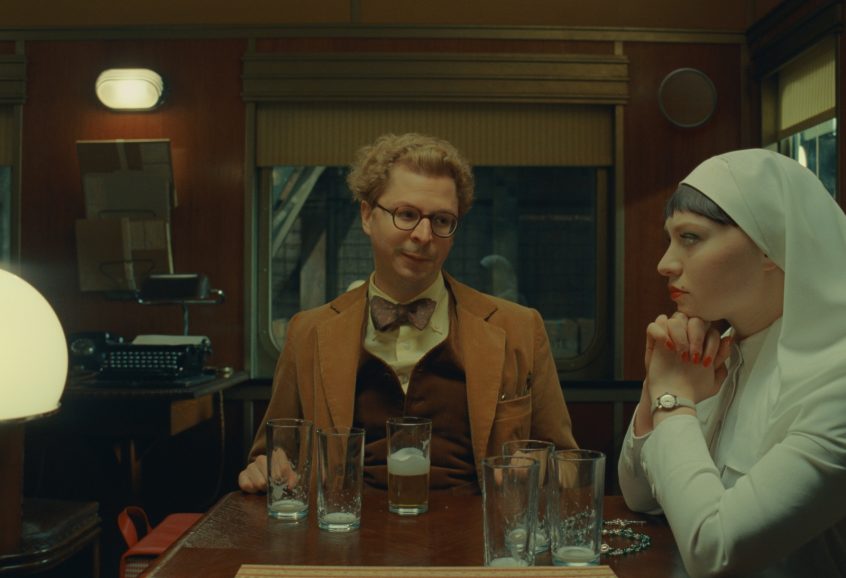
Actor Michael Cera, who plays Bjorn, one of the characters encountered by del Toro’s morally questionable tycoon, felt the film still feels “unmistakably Wes in every way”, but did notice a slight visual shift thanks to Delbonnel’s work. “I do think it’s a somewhat new palette for [Anderson] and a new look, in a way, because Bruno has a very specific way of lighting. It’s certainly got Wes’ compositional style and camera approach. But I think the palette is really its own. I can’t think of a movie of his that looks quite like this. It has such a nice textile quality to it.”
One of the most vivaciously filmed works was Richard Linklater’s Nouvelle Vague. Shot in black-and-white, replicating the feel of 1959 Paris, the film accounts for the making of Jean-Luc Godard’s seminal French New Wave entry Breathless. Starring Guillaume Marbeck as the former Cahiers du Cinéma critic Godard, it proved Cannes’ likeliest selection for Oscar glory, with suggestions that it could win France its first Academy Award for Best International Feature in over 30 years.
The film was shot with great warmth by David Chambille (who also had The Great Arch, directed by Stéphane Demoustier, in the festival’s official selection). “Well, the whole goal was to create what a film would look like in 1959,” Linklater explained. “It’s all a big trick.” The production had shot in Cannes, but blended footage with archive material. “Black-and-white [stock] is very forgiving, so it could look like it, but, yeah, it’s all a big magic trick. There’s no purity.”
Playing out of competition, Spike Lee’s Highest 2 Lowest was one of the biggest titles on the Croisette. Starring Denzel Washington as a New York music mogul whose son gets kidnapped, this remake of Akira Kurosawa’s High and Low was shot by Matthew Libatique ASC LPS. Continuing a two-decade relationship with Lee that began with 2004’s She Hate Me, Libatique brought a suitable big-scale luxury to the visuals.
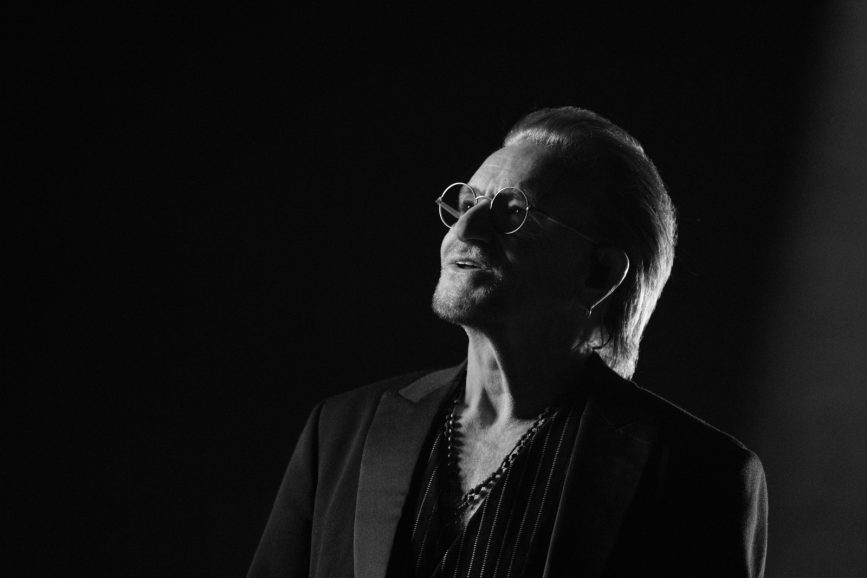
Also shot in black-and-white, Andrew Dominik’s Bono: Stories of Surrender premiered at Cannes as one of the festival’s special screenings. Part concert film and part documentary, the production is lensed by Erik Messerschmidt ASC and reimagines Bono’s one-man stage show, incorporating performances of some of U2 iconic songs and personal stories from Bono’s life.
“It was fantastic Apple gave us the opportunity to make the film in black-and-white,” Messerschmidt told British Cinematographer. “It was quite a strong choice and the film has a very contrasty, stylised black-and-white aesthetic. We wanted it to be as cohesive with what’s happening on stage and Bono’s storytelling as we could. Bono was very curious about how the film was looking and we’d have discussions around lighting, camera movement and what lenses we were using to capture him.
“The companion piece to the film is the first full-length film produced for the Apple Vision Pro, with elements of stereo photography, regular 2D photography and animation. It was an exciting process to go through and learn about and completely different to anything I’ve done before.”
Un Certain Regard rare gems
The Un Certain Regard sidebar was dominated by debut filmmakers. Diego Céspedes won the strand’s top award, the Un Certain Regard prize, for The Mysterious Gaze of the Flamingo, a Chilean drama set in the 1980s in the shadow of HIV that was shot by Angello Faccini. The jury was chaired by British director, screenwriter and cinematographer Molly Manning Walker (who won the Un Certain Regard prize 2023 for Howe To Have Sex), and included French-Swiss director and screenwriter Louise Courvoisier and Croatian director of the International Film Festival Rotterdam Vanja Kaludjercic.
The most raucous reception from the Un Certain Regard screenings was reserved for Pillion, British director Harry Lighton’s first feature, which won Best Screenplay for its story of Colin (Harry Melling), a shy wallflower who falls into a submissive relationship with enigmatic biker Ray (Alexander Skarsgård).
British Cinematographer caught up with Pillion DP Nick Morris after the screening: “I’ll never forget the unbelievable response and standing ovation at the premiere. Pillion is a rare gem of a film. Harry wrote something really extraordinary with complex characters that take you in so many directions.
“Visually, Harry was keen to push for something that felt grounded. We aimed for something very sedate and rarely moved the camera, letting things play out over an extended period which meant lots of dolly work and tripod work, some handheld and a few sequences using the Ronin 4D for extended long takes.”
Also screening in Un Certain Regard and causing a stir at the festival was Charlie Polinger’s directorial debut, body horror The Plague about a socially awkward young boy whose anxiety spirals as he endures the ruthless hierarchy at a water polo summer camp. “We were going for a very classical look and Charlie and I love many films from the ‘70s,” says DP Steven Brecon. “Because it’s a coming-of-age film, there’s a timelessness to that experience we wanted to capture in the visual texture so shooting on 35mm and exclusively Kodak 500T gave us that quality.”
Brecon and Picture Shop colourist Natasha Leonnet built on the celluloid capture by creating an interesting LUT. “We went into the historic Technicolor emulation library and did a combination of ENR and three-strip Technicolor,” adds Brecon. “The ENR gives us rich blacks and wonderful contrast. Off the shelf, it desaturates the image a little more than we wanted which is why we added in the three-strip Technicolor.”
A lot of buzz also surrounded three debuts from famous A-List actors. Urchin marked the first film by Britain’s Harris Dickinson (Babygirl). Telling the trials of a young homeless man on the streets of London, the UCR jury rightly awarded star Frank Dillane the Best Actor prize. French-Canadian cinematographer Josée Deshaies (who shot Ira Sachs’ much-admired Passages) handled the visuals, which swayed between social realism and surrealism, with real aplomb.
Scarlett Johansson’s Eleanor the Great, starring June Squibb as an elderly lady who befriends a young journalism student, saw the actress drawn to work with French cinematographer Hélène Louvart AFC (Rocks, The Lost Daughter). “She’s the most observant woman,” said Johansson. “It feels like she’s just observing the entire world around her all the time. She’s so present when you’re talking to her. But you feel that she’s really taking you all in. She’s extraordinary. I can’t imagine any other thing she could do but be an observer in the way that she is.”
Kristen Stewart’s The Chronology of Water – an adaptation of Lidia Yuknavitch’s frank 2011 memoir of addiction and abuse, starring Imogen Poots – was a formally engaging exercise. An intense work, often held in close-up, it was shot by Corey C. Waters, whose previous work in music videos for the likes of Charlie XCX and Machine Gun Kelly has put him on the map. Stewart gave an impassioned shout-out to Waters at her introduction before the screening at the Debussy, dubbing him “my brother, my father, my cameraman…I love you so much.”
Elsewhere, the CST Award for Best Artist-Technician was presented to DP Ruben Impens SBC and sound mixer Stéphane Thiébaut of Alpha (directed by Julia Ducournau), acknowledging the powerful creativity of sound and image in the film. Éponine Momenceau, director of photography of Connemara (directed by Alex Lutz), received the CST Award for Best Young Female Film Technician for the “delicacy and subtlety of the work on the images that accompany the film’s story and direction”.
Filmmaking rhythms
The Caméra d’Or jury, presided over by Alice Rohrwacher alongside Frédéric Mercier, Tommaso Vergallo, Géraldine Nakache, Rachid Hami, and Pascale Marin, honoured the best first film among the 27 films in competition. The President’s Cake, directed by Hasan Hadi and shot by Tudor Vladimir Panduru scooped top prize. Set in 1990s Iraq, the film follows nine-year-old Lamia who must bake the President’s birthday cake.
Panduru was intrigued by the story from the first reading of the synopsis because of where the action takes place and the underlying theme of dictatorship, which resonated deeply with his own background. “I was born in Romania, a country that had just emerged from a difficult dictatorship, so the reference to Saddam’s regime held a strong personal significance for me,” he told us.
“The idea of framing the story as a kind of fairytale was especially inspiring. It encouraged us to collaborate creatively in finding the right visual and dramaturgical tools from camera movement to mise-en-scène. The references to Mesopotamia, to Gilgamesh, and to a world that no longer exists gave depth to the film’s rhythm and to our understanding of the world we were trying to recreate. The journey from the idyllic village in the marshes of the Tigris and Euphrates a kind of Garden of Eden into a decaying world providing the film with both emotional weight and visual poetry.”
The film was shot on ARRI Alexa 35 – an essential tool for managing Iraq’s harsh sunlight. Given the importance of the vast landscapes and the horizon to the visual storytelling, the filmmakers shot in widescreen 2.35:1, using Master Anamorphic lenses, combining this with diffusion filters and subtle work in post to create a magical, slightly abstract feel evoking the 1990s.
Hadi’s choice to work with non-professional actors also convinced Panduru of the project’s potential. “When you make bold artistic choices with the right mindset, you can create something with genuine sensitivity and uniqueness. We dedicated significant time to building a relationship with the children who are the film’s main protagonists so they could feel comfortable around us. Our goal was to give them as much freedom as possible to deliver natural performances, while maintaining a strict and coherent visual language. Camera movements were carefully choreographed to ensure nothing distracted from the characters or story.”
My Father’s Shadow – directed by Akinola Davies Jr and shot by Jermaine Edwards – received a special mention from the Caméra d’Or jury. The film follows two young brothers exploring Lagos with their estranged father during the 1993 Nigerian election crisis.
Edwards spoke to British Cinematographer about his work on the film – which was shot on 16mm – at Kodak’s Cannes event celebrating celluloid shooting: “It’s a massive honour to be here at Cannes and representing Nigeria as it is the first Nigerian film to compete in the Main Competition. I spent three months in Nigeria taking pictures, traveling and recceing, speaking with Akinola and getting a better understanding of what the film meant to him and to Nigeria. The pictures I took informed the film’s visual language and created a surreal yet naturalistic feel.”
Also shot on celluloid, Promised Sky (Promis le ciel) competed in and screened as the opening film of Un Certain Regard. Director Erige Sehiri’s third feature follows the fate of three women – a pastor, a student, and an exiled mother – whose delicate cohabitation shifts when they take in four-year-old Kenza, rescued from a shipwreck. Shot in Tunisia, it was lensed by Frida Marzouk AFC, who told us, “Like a film I made with Erige film four years ago, we wanted to shoot handheld, and for it to look naturalistic but a little more blue and cold as a many African films are orange because it is seen as a very warm country.”
Tools and trends
Outside of the screenings and press conferences, a variety of topics were explored in panels and masterclasses. Green tips, tools, trends, and training initiatives were spotlighted at the Eco Hub at the Marché du Film, hosted by Greenigma and Green Film Shooting in collaboration with Ecoprod, Green Toolkit, and Baltic Green Film.
For three days, Eco Hub presented a series of green talks on topics including education and training, procurement, planning, and management to calculating carbon footprints and certifications. The potential and pitfalls of using AI to automate carbon calculations in film and TV production was also on the agenda as well as green animation, post-production, and sustainability requirements for funding applications.
Thierry Hugot, programme manager and financial controller, Eurimages, explained how sustainability is considered in the selection criteria. Producers who are trying to navigate sustainability without losing track of their budget and schedule received a streamlined roadmap of key steps that should be taken.
Cannes Next at Marché du Film continued to evolve as an innovation-focused platform for business, networking, and exploring the future of entertainment. Cutting-edge technology met creativity through a vibrant program spanning AI to virtual production and including networking events and panel sessions from companies including Film Soho.
As part of Cannes Next and with insight from academia, industry programs, and creative professionals, a panel from ROE in partnership with British Cinematographer examined the critical role of education and research in shaping the future of virtual production. Panellists Zoltan Batho G, VP/VFX/XR producer, Cradle Buas; Morgann Brun, project manager, La Planete Rouge; Frank Murray, CEO & founder, producer, Hangtime/Hi-Magnet; and Phil Adlam, chief technology officer at Production Park and CoStar and head of XPLOR joined
moderator, British Cinematographer Editor-in-Chief Zoe Mutter, to discuss how education ensures a steady pipeline of skilled talent, while ongoing research drives the continuous development of new tools and techniques essential for innovation in the VP landscape. The full session will be available on CinePlayer soon.
Away from the Croisette, Raindance Film Festival organised an event in partnership with Canon, headline sponsor of Raindance. At the glittering gathering for filmmakers, clips from writer/director Christopher Anthony’s film Heavyweight (Cin: Chas Appeti) – the opening film of Raindance – were shown. “Much like filmmaking, putting on a festival is all about collaboration and it takes a lot of effort. From the tech and creative side, it’s important we unite to support emerging voices and give them the right platform and tools,” David Martinez, executive director of Raindance, told us at the event.
“You don’t need to be shooting on the most expensive gear, it’s about finding tools that work for you and telling great stories,” added Canon’s content production manager, Ben Morse.
The following evening, Female Film Club made an important announcement at their event when the global network for women and non-binary filmmakers unveiled a €10,000 Global Short-Film Fund, a dedicated international fund to support emerging directors regardless of geographical location.
Honouring excellence
Towards the end of the festival, the annual Pierre Angénieux award took place. Angénieux, the French zoom lens manufacturer – that itself was celebrating 90 years in the business – honoured distinguished cinematographer, Australian-born Dion Beebe ASC ACS, whose credits include films for such revered directors as Jane Campion (Holy Smoke!, In The Cut), Michael Mann (Collateral, Miami Vice) and Rob Marshall (six films, including Memoirs of a Geisha, which won Beebe the Academy Award in 2006).
Angénieux also continued celebrating the work of young cinematographers during the ceremony, presenting South Korean cinematographer Eunsoo Cho with the Angénieux Special Encouragement Award.
The ceremony was a moving experience for Beebe, who hadn’t been to Cannes since 1992, when his very first movie – Alison Maclean’s Crush – premiered in competition. “There’s something about being recognised for your work, and there’s something quite validating about that,” he told British Cinematographer. “So this has forced me to look back on those movies and remember the amazing people I got to work with.”
The day before, he had a real chance to do that, participating in a masterclass hosted by The Hollywood Reporter’s Jordan Mintzer, who guided Beebe through his career. The cinematographer reflected on that first time in Cannes, back in 1992, when he felt the audiences were more “reactionary” than they are now. “At certain points, in anyone’s career, there’s those moments where you suddenly see that things are possible. Maybe things you hadn’t really imagined or thought of. And being so young and coming to Cannes, it was all possible.”
Likewise, this year’s Cannes rang with possibilities. Daring debuts, politically-charged works from stalwart filmmakers and eye-watering deals…the festival showed just how film still matters in the cultural conversation. Above all, this year’s Cannes was a reminder – even in embattled times – of the power of cinema and the power of the artists who collaborate on them. To once more borrow from De Niro’s acceptance speech: “Art is inclusive. It brings people together. Art looks for truth. Art embraces diversity.”