

FRAMING THE FUTURE OF FILM
From tributes to David Lynch and groundbreaking cinematography to urgent discussions around AI and creative inspiration, Camerimage blended technical innovation in an evolving industry with a celebration of the craft of image-making.
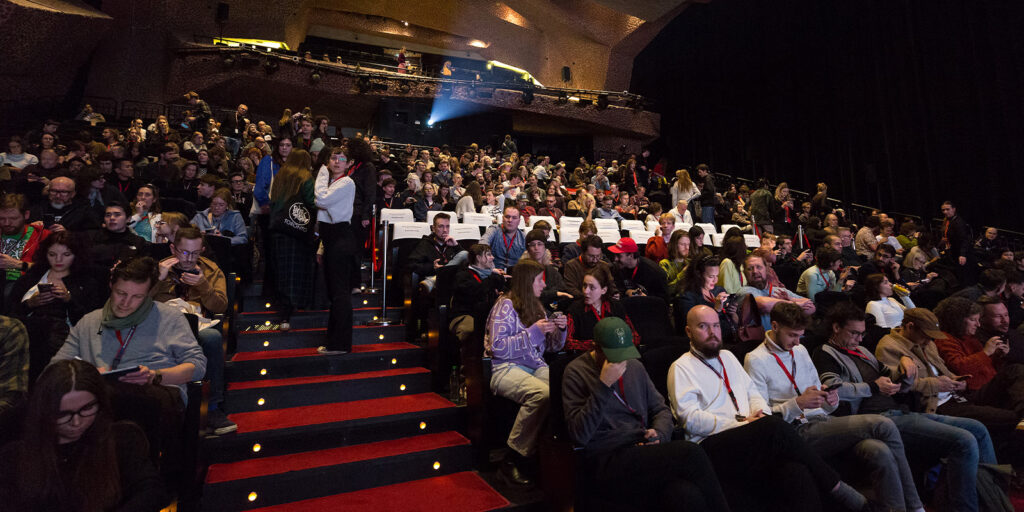
The birthplace of Nicolaus Copernicus has a museum, planetarium and the house he grew up in but for one week a year Toruń, Poland is the centre of the cinematographic universe.
The 2025 edition of Camerimage opened with a tribute to the late filmmaker David Lynch and his longtime collaborator Peter Deming ASC.
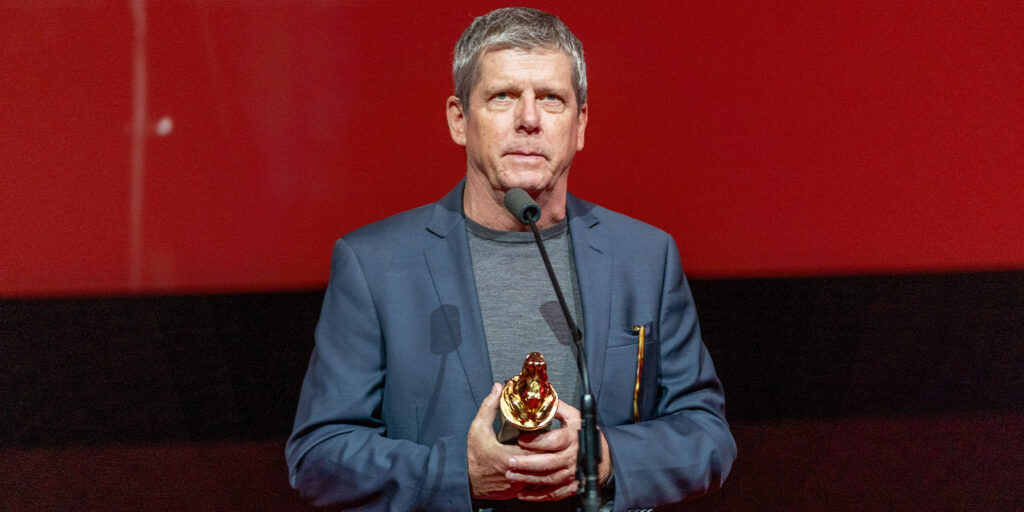
It ended with the award of the Golden Frog being presented to Judith Kaufmann BVK for Late Shift, directed by Petra Volpe. One of three women among 13 main competition nominees, Kaufmann issued a call to arms to young female DPs to fight for visibility.
“Talent has never been limited by gender,” she said. “Only opportunity has. I accept this award with deep gratitude, but also with the hope that it becomes unremarkable for women to be here. My work is one voice among many. There are countless women emerging mid-career and long overlooked whose visions are changing film in extraordinary ways.”
Deming and Lynch were awarded the Duo Award, an honour handed to cinematographer-director partnerships (previous recipients include Werner Herzog and Peter Zeitlinger ASC). Lynch took a fondness to Poland after receiving a lifetime achievement award at Camerimage in 2012, donating a dozen artworks to a museum in Toruń shortly before his death.
The presence of Lynch was felt throughout the event. As well as David Lynch’s World of Imagination, a comprehensive programme that offered everything from Twin Peaks screenings to a Q&A with Deming, clips of the director or his work would appear on screen before every showing. Similarly, Bill Viola: Visions of Time celebrated the work of an icon of moving image, with 32 installations taking over Toruń.
In competition, William Rexer ASC turned to the old masters, especially Caravaggio, for reference and inspiration before shooting The Testament of Ann Lee, writer director Mona Fastvold’s musical drama about the 19th century religious leader.
“Caravaggio has a naturalistic approach that evokes chiaroscuro – daylight ebbs into night and candles and Ann Lee and her followers must have been overcome by the bright bustle of the colonies,” he said.
Rexer employed widescreen 2.35 Cinemascope so the audience “profoundly experiences the broad canvas of Shaker life. The dance and singing and the circumstances – both reverent and dire – led to the use of handheld.”
He shot on film for its painterly qualities and to better evoke the period, transferring 35mm to 70mm for maximum effect. Candlelight plus a pleasing bokeh led to Sigma Cine and Classic lenses which also worked well in low light.
Dariusz Wolski ASC, a regular partner of Ridley Scott, shared perspectives on shooting courtroom drama Nuremberg. “Ridley’s films have elaborate plots and usually set in space. This is a historical film with a lot of dialogue and it was a challenge to focus on close-ups of people in a courtroom and prison cells. I’ve never done anything like this, which is why I took it.”
Growing up amid “communist propaganda” following the Nazi invasion of Poland before relocating to the US, Wolski added that he was now ready to tackle the subject. “There are a few Polish movies about WW2 which are considerably more powerful than any Americans have ever made,” he added.
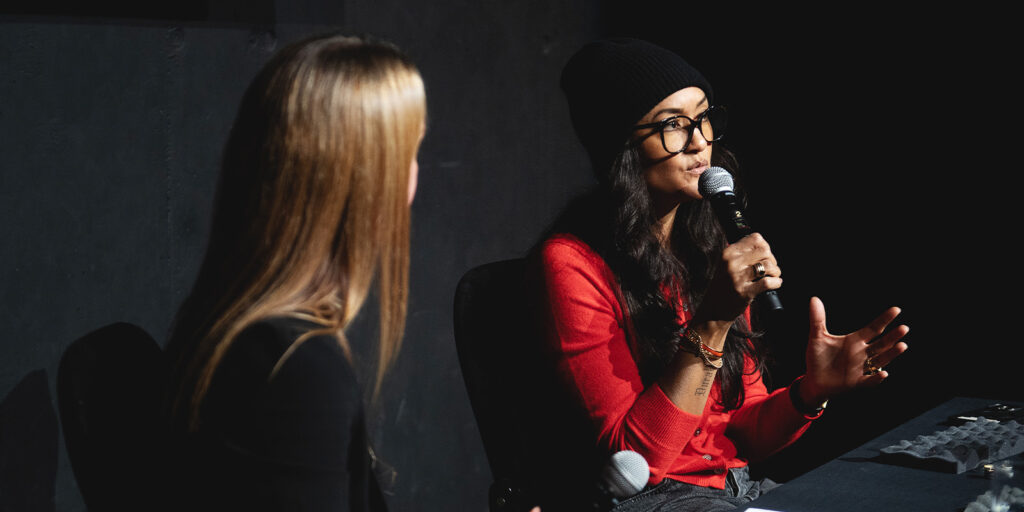
Autumn Durald Arkapaw ASC took a deep dive into the making of Sinners during a session in association with Panavision. It is the first movie to be simultaneously shot on Ultra Panavision 70, incorporating 65mm in its widest aspect ratio, and in IMAX, at the tallest ratio for 65mm. On stage and in conversation with British Cinematographer Editor-in-Chief Zoe Mutter, Arkapaw revealed that the film starts with a different sequence than was scripted. “It was only a few days before schedule when Ryan [Coogler] decided he wanted to turn that into an IMAX sequence. It’s a heavy dialogue scene and we’re shooting IMAX which is not a sync sound camera so presented technical challenges.” It’s now one of her favourite scenes of any she’s shot; “I can’t see it not being in IMAX so it was a beautiful decision that he made.”
Two competition films were shot on Venice and coincidentally both concern musicians. A Complete Unknown is set in the sixties and Chopin, a Sonata in Paris (Chopin, Chopin!) in the 19th century but shared a photographic approach since both lead actors performed live.
“The energy of someone like Timothée (Chalamet) or Joaquin (Phoenix in Walk the Line) dictates how the camera moves,” said Phedon Papamichael ASC GSC at a Sony roundtable. “It makes it very difficult technically because for the final concert he’s playing three songs all the way through, there’s no cuts or resetting the camera. It’s like doing a live concert but the value is you feel it.”
Lead actor Eryk Kulm learned piano for the Polish period biopic Chopin to such proficiency that not a single hand replacement was required, according to Michał Sobociński PSC, who scooped the Bronze Frog this year. “It’s a unique experience because you are free to shoot whatever you want but only single camera in master shots, long takes and wide lenses.”
He also described the elaborate sets, 86 locations, and 5,000 extras as creating a fantasy world like science fiction. “We obviously don’t have archival footage and only two photographs of Chopin, so this allows for a certain freedom to create a world from scratch.”
Robbie Ryan BSC ISC was presented with the first Visionary in Cinematography Award at the opening ceremony, a newly introduced award from The Hollywood Reporter. Following a screening and Q&A for Bugonia – which was competing in the Main Competition – Ryan got behind the DJ decks for a set at the festival’s unofficial social hub and after party location, NRD club.
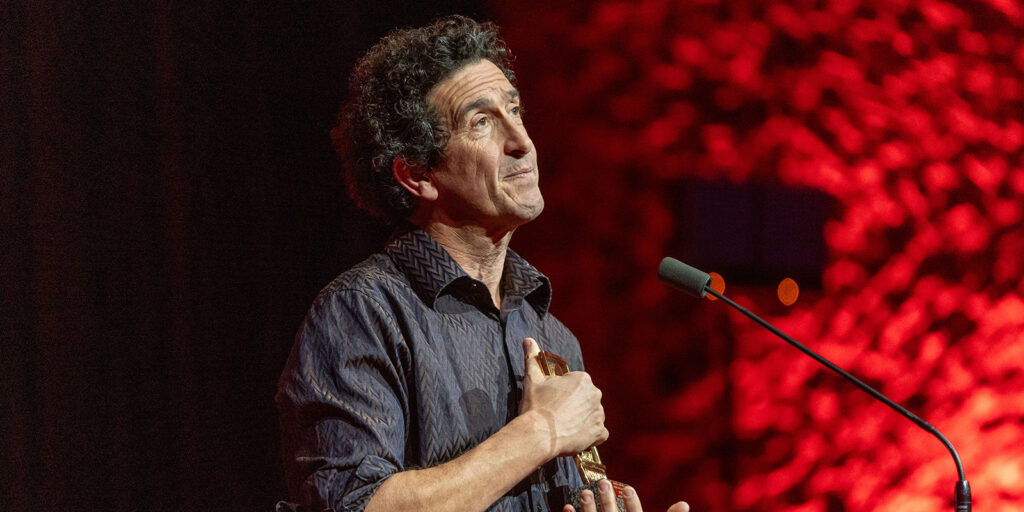
Elsewhere, Joel Edgerton stopped by CKK Jordanki to pick up the Actor’s Award, with a packed screening soaking up his powerful performance – and Adolpho Veloso ABC AIP’s stunning visuals – in Train Dreams. Accepting the award, Edgerton called the relationship between actors and DPs “one of the most important” on any film set; the relationship between himself and Veloso was clearly a strong one, with both heaping praise on each other during an insightful Q&A post-screening.
Another big name from outside the world of cinematography was Kristen Stewart, whose trip to Cinema City included a chat about her “brother” Corey C. Waters, with the pair instantly aligning on Stewart’s vision for The Chronology of Water. “This movie had lived in me for so long that I knew exactly how I wanted to see it,” she told a captivated audience. “He was like, ‘Dude, let me help you say what you want to say.’”
An all-star line-up of Mandy Walker AM ASC ACS, Fred Elmes ASC, Phedon Papamichael ASC GSC, Ellen Kuras ASC, Dion Beebe ASC ACS and Ula Pontikos BSC gathered to shareinsight into their inspirations when creating images during an ASC/AMPAS roundtable ‘Inspiration and Passion: Creating Images’.
As well as sharing clips from their own films and the work of others that inspired them, the panellists highlighted how special and supportive the cinematographic world is.
“I’m a newcomer in London and the UK and the cinematography community is the community everyone is always jealous of outside of the film industry because I could call anyone from anywhere in the world and somehow we would become friends and I feel really privileged to be part of that community,” Polish cinematographer Pontikos said.
A dream double act of Ed Lachman ASC and Bruno Delbonnel ASC AFC were in conversation with David Heuring, revealing their creative processes, tools and techniques and fascinating stories from their careers.
“There’s a time and place for handheld versus moving the camera and the problem is sometimes I see they use handheld because the director is relinquishing the point of view of how to tell the story,” Lachman said on the topic of camera movement. “They figured the emotional reality is that if they are handholding in a shot with actors that it’s believable but I think we’re way beyond that so I get tired when I see a film being shot handheld that didn’t need to be because what’s it bringing to the storytelling? I love handheld if it’sbeing used properly.”
AI as a creative tool
Camerimage brought the elephant of AI into the room in an invigorating discussion between Michael Goi ASC ISC (American Horror Story; Glee) and Ellenor Argyropoulos, co-founder of AI studio Mermaid Toast.
Goi exhorted cinematographers to take a lead. “Especially those cinematographers with 30-50 years of experience in creating images, it’s important that all these people get involved in what’s going to happen with AI. We can’t bury our heads in the sand hoping that the AI bear just passes us by because the bear will eat us, and then we lose our relevance as image creators.”
Argyropoulos walked delegates through how to use GenAI to generate animated photoreal storyboards from rough sketches and how to continually direct AI to refine your vision.
“None of these video models have memory so you are constantly having to stop, start and use different tools based on what they are good at.”
She called GenAI a “slot machine” because “you’re never sure what you’re going to get” adding, “There’s no science behind prompt engineering. AI is really unpredictable. But art is not random. If you have a specific vision as a creative visual artist then you have to decide if AI is the right tool for you, because it can be very frustrating for somebody with a very specific vision to get exactly what they want.”
Polish filmmaker Jarosław Żamojda is in production with a team of 12 on an 80-minute AI generated film and showed some raw clips from the work in progress in the session ‘The Light That Thinks.’ “Filmmakers know how to create a story using light and set design and different lenses but with AI those possibilities are even greater and allow you to go even further,” he said.
The downside was AI’s inability to convey emotion like an actor. “AI doesn’t have the subtlety that an actor’s face and eyes can express. What we can do is create films in a different way using classic crafts of production design, composition and colour around the actor.”
At an ASC-hosted session which also shone a light on artificial intelligence’s impact on the filmmaking world the ASC announced that an AI Summit would take place before Cine Gear in LA.
Technology showcase
Fujifilm presented a series of promotional shorts made to showcase the new GX5 Eterna 55. The camera features a large format 102MP CMOS II sensor with a 4:3 Open Gate making it the tallest sensor in the 65mm format.
Writer director Andrew Kitlinger wanted to evoke Spielberg and Bergman with his narrative short OKAY, photographed by Oren Soffer (The Creator). “The particular strengths of the camera is the sensor, specifically the 4:3 Open Gate shape,” Soffer said. “When paired with the right lenses, it creates this really shallow depth of field, the look of medium format stills photography that creates these frames of beautiful isolation.”
Fujifilm also hosted filmmakers at an offsite location opposite the main festival centre, featuring fascinating presentations and kit demonstrations.
Elsewhere, we went behind the scenes on Bedlam, a forthcoming period action movie set within the confines of an asylum. What marks the Blackwater Pictures feature out is that it’s the first to be shot with the Blackmagic URSA Cine 17K 65.
It was the sensor rather than the potential resolution which attracted DP James Butler. “I started to get interested in using the URSA 65 when Blackmagic began teasing it at the end of 2024,” he explained. “I met up with them at BSC Expo in London and got my hands on an early model to test. I thought shooting medium format could be a great decision for Bedlam and director Jon Shaikh was fully supportive.”
The film, which is in post, shot 8K at 5:1 compression with Hawk65 anamorphics housed in a specially built rig for Steadicam operator Horia Cojan.
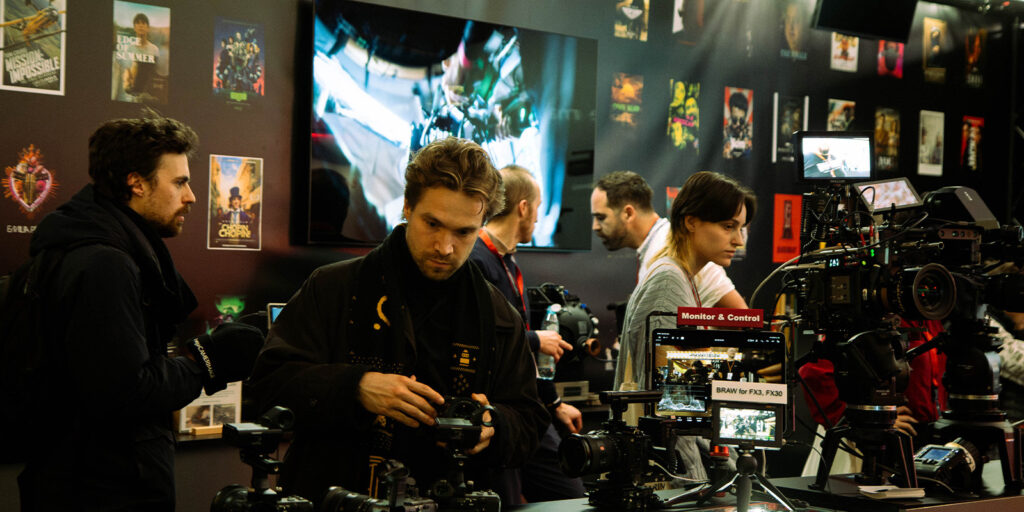
Sony was handing out models of the FX2 to cinematography students who wanted to try the camera out around Toruń. The full-frame camera is billed as “a gateway” into a professional filmmaking career and features the same visual philosophy as the top range Venice series, according to Michal Wozniak of Sony.
Also on the Sony stand, cinematographer James Medcraft was demonstrating the Cyclops, a head-mounted POV rig which he invented. Tom Holland wore one on the current Marvel production of Spider-Man: Brand New Day while DPs might wear it to capture authentic POV perspectives including while driving vehicles.
Covering all bases, Camerimage held fascinating sessions on the collaboration between production designers and DPs; and on the evolution of action cinematography with Daniel Ilabaca. Known globally as the Godfather of parkour and freerunning, IIabaca transferred his knowledge of how the body interacts with architecture, gravity, and momentum into shaping his understanding of physical storytelling.
“It taught me something essential: when movement becomes central to a scene, perspective matters,” he said in the Zeiss sponsored seminar. Ilabaca was a stunt performer Argylle and Kraven the Hunter and a second unit operator in The Marvels.
“With smaller camera bodies and compact full format lenses such as the Zeiss Nano Primes, it’s becoming possible to literally wear the camera without compromising the quality of the footage,” he said.
It’s rare to get a glimpse of a feature in its formative stages before a single shot in earnest but that’s what attendees to a talk between Lianne X. Hu (The Mummy: Tomb of the Dragon Emperor (2008)) and Andrzej Bartkowiak ASC witnessed. She is a producer and actor who has chosen to make her directorial debut Red Cactus with the highly experienced Polish DP who shot 11 pictures with director Sidney Lumet, including Oscar nominated The Verdict, and Prizzi’s Honor (1985) for director John Huston. Bartkowiak is also a director of action films, including the Jet Li vehicles Romeo Must Die (2000) and Cradle 2 the Grave (2003).
“The pre-pre-production phase is essential to work with your key collaborators to shape the film and to find its soul,” Hu said. “If you’re lucky enough to work with your key creatives early as possible you can understand how each of you think, how you communicate and how you want to collaborate.”
Camera movement was to the fore at a packed ARRI sponsored session featuring the work of Maria Sarasvati Herrera AMC; Ellen Kuras ASC; and Barry Ackroyd BSC.
Kuras reflected on working with Michel Gondry on Eternal Sunshine of the Spotless Mind (2004). “The film was completely handheld apart from one shot. We started out using 1000ft ARRI mags and ended up going to 400ft mags which helped save me and my co-operator, Chris Norr. The whole film was two cameras constantly moving around the actors.”
On shooting her block of Colombian TV series One 100 Years of Solitude, Herrera said, “Sometimes the camera is floating like a ghost and just accompanies a character. It has its own life. When you are in a long series like this it is hard to operate yourself. Sometimes I play some music to the operators before a scene so that they can feel the mood of the character.”
A completely different approach to camera work was taken by Ackroyd for Kathryn Bigelow’s nuclear thriller A House of Dynamite. “We shoot three Alexa 35s and for each take we probably move the camera to some degree. There are no camera rehearsals and no marks. My operators and I are aware of where each of us are and we keep shooting long takes. I consider the cameras all A camera. There’s no such thing as one being less important. My skill, if I have one, is I can visualise the geometry of a space and realise that’s a good place for a camera.”
Other panels included a discussion titled ‘Breaking Boundaries: Early Field Experiences with the New Nikon ZR’, which saw cinematographers Stephan Burchardt, Zuzanna Zachara-Hassairi PSC and Ed Lachman ASC explore their first impressions of the new Nikon ZR. The session included two film clips showcasing the camera in use, contributed by Burchardt and Zachara-Hassairi. Lachman joked that he had initially considered declining the invitation, having never worked with the ZR before. However, after gaining access to the camera shortly ahead of the event, he spoke enthusiastically about its capabilities, saying “I only got to use it for a short time but I was impressed with it.”
During an intimate off-site discussion at Astera LightTalk, Phedon Papamichael ASC GSC described his instinctive approach to cinematography, explaining that his “final creative decisions” are made only once he sees actors “on set, dressed and moving through the space.” He adjusts lighting and framing live during rehearsals, often watching performers like Timothée Chalamet in A Complete Unknown (2024) walking around and exploring the space while he subtly dials in the mood. Papamichael prefers fluid blocking, citing Catch Me If You Can as a reference for “letting actors create the close-up by moving into the shot.” He reflected on his long collaboration with gaffer Raphael E. Sánchez, who he said has “a really amazing eye.” On Nebraska, he demonstrated this adaptability, changing framing to match Bruce Dern’s body language.
At the session Lighting The Ballad of a Small Player with James Friend ASC BSC and gaffer Harlon Haveland — hosted by Aputure — the pair discussed shooting the film in China. Friend spoke about filming in Macau’s casino districts: “If you’re working in the studio, you naturally start with a black void. So you have to build layers and layers. But on location you want control — you want to turn everything off and have a black canvas — and the reality is you can’t.” Haveland added that the locals “didn’t even know how to turn them off, because they’ve never turned them off. Everything’s on 24/7 and we said, I need that switched off now. They’ll be running around trying to work out what it is, and then it’sjust quicker to get a pair of steps and black wrap everything. And we’ve found that a lot.”
After hours
Evening gatherings included another successful Celebration of Cinematography event hosted by British Cinematographer, the BSC, the ASC, American Cinematographer and Netflix. Over 100 guests attended to share drinks, food and great company with leading cinematographers and industry professionals, exchanging filmmaking stories and making new connections.
Highlights included rousing speeches from Oliver Stapleton BSC (who has since been appointed BSC president) and ASC president Mandy Walker AM ASC ACS, who highlighted the continued importance of cinematographers in an ever-changing world. This wouldn’t have been possible without our event partner, so we’d like to thank Netflix for sponsoring this special night. Thanks also to Lars Pettersson FSF for capturing the night in photographic form and Nanlux for providing lighting equipment.
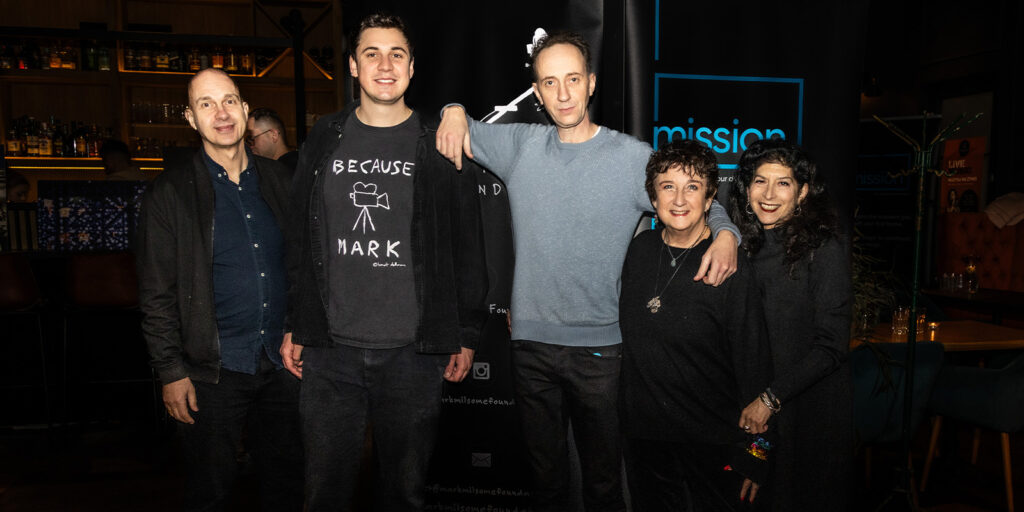
The 2026 Perspectives of Space Calendar was launched at an event hosted by the Mark Milsome Foundation, Andra Milsome, in collaboration with Mark Purvis from Mission Digital. The calendar, curated by Fabian Wagner ASC BSC, showcases a collection of stunning images captured by an array of camera crew members, exploring not only architecture, but themes of space, community, form, function and wellbeing. The sale of the calendars directly benefit the Mark Milsome Foundation.
Other evening events of note included a masquerade ball at the spectacular Palac Widokowy to celebrate the launch of Ancient Alliance – a collective of lens rental houses including Ancient Optics, Old Fast Glass, No Drama, One Stop Films, RVZ and ATM working together globally to offer unique, vintage and specially modified lenses for filmmakers seeking distinctive visual character.
A colourful celebration
The FilmLight Colour Awards were only established in 2021 but they’ve grown in stature by bringing the ‘dark art’ into the spotlight.
“It isn’t always an easy relationship, and one that still can be difficult occasionally, but what we find is that the best projects come out of a genuine understanding between cinematographer and colourist,” said Wolfgang Lempp, joint MD, FilmLight. “That is hardly a surprise because they’re both trying to tell the same story.”
Jury president Bradford Young ASC echoed the sentiment: “These awards are special because what it’s essentially doing is highlighting people who are grossly overlooked in the filmmaking process. Colourists are so important. I feel like they put the final articulation to our creative process.”
Collaboration between cinematography and colourist is, of course, not the only one that matters. Directors are equally invested in visual storytelling. That’s why FilmLight reached out to more directors to join the awards’ jury with the invite accepted by Park Chan-wook. In a pre-recorded speech the director of The Handmaiden and Decision to Leave said that even in black-and-white, grading is a powerful tool.
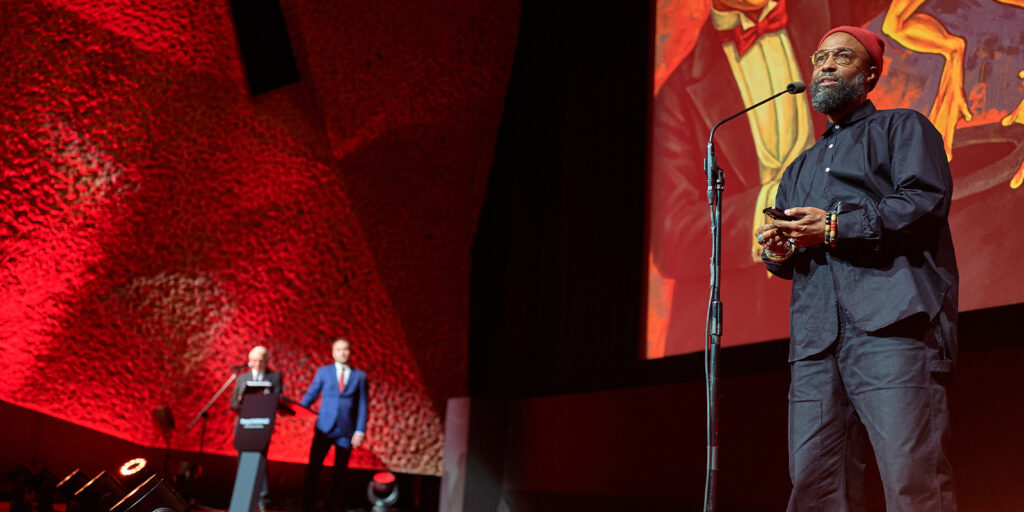
“There are many tones and textures, some purely monochrome, some with a subtle touch of colour, that move the audience’s emotions from deep within their subconscious,” he said. “It’s not simply about making the image beautiful, it’s about shaping the character of the film itself from its genre and sense of time to the personalities of the characters.”
Elsewhere, with an eye on the next generation of talent, the Film and Art School Etudes Competition saw Stephen Lighthill ASC and Oliver Stapleton BSC spotlight the finest student films from across the globe, with the duo offering advice and heaping praise on the young filmmakers behind each production. One particular standout was the Vietnam-set coming-of-age short Rooftop Lempicka, lensed by Carlos Estrada, which received glowing remarks from Stapleton for its simple yet moving cinematography.