

After the Oscar nominations were finally revealed, including for Best Cinematography, Mark London Williams takes a look at some of those in the spotlight – as well as running through one of the West Coast’s latest festivals…
“Oh my God!” That utterance could apply to much of our Present Moment, especially on this side of the pond, but in this instance, it happily turned out to be the off-the-record reaction – replete with a bit of infamous Anglo-Saxon verbiage between the “my” and “God” – by one of this year’s Oscar nominees, upon watching the Academy’s announcement livestream, and learning they’d be included among the “final five” in their particular craft category.
One might guess there were similarly unfettered “epithets of joy” heard in what were the early hours in Los Angeles (and later hours elsewhere), though the round-up here generally tends toward the somewhat more composed, later-in-the-day reactions from some of this year’s nominees – after the initial OMG!s were out of the way.
Autumn Durald Arkapaw ASC, who, of course, was the DP on this year’s most heavily Oscar nominated (indeed, history’s most heavily nominated) film, Sinners, said she was “deeply honoured to be recognised by my peers and the Academy. It feels only right that Ryan [Coogler]’s story would touch the world so deeply, and I am profoundly grateful he trusted me to help bring this beautiful story to life on the big screen. To pour your heart into a project you believe in and have it celebrated in this way is nothing short of a dream come true. I am immensely proud of our filmmaking family and so happy to see their collective brilliance being celebrated. I know how much this nomination means to the next generation of cinematographers, and I truly share that excitement and inspiration with all of them. Thank you to the Academy, my heart is full.”

Arkapaw’s collaborators on the VFX side – effects supervisor Michael Ralla and producer James Alexander – mentioned not only being “incredibly humbled and honoured” by their own nods, but also called the of-our-moment vampiric historical saga, from its “visionary director [and an] incredibly kind human being […] a deeply soulful film that takes audiences on a powerful ride that transcends genres, time and space.” They also thanked producers Zinzi Coogler and Sev Ohanian “for trusting us with this film, as well as to our closest collaborators […] our incredibly talented fellow department heads, crew and cast members.”
And lest we get in trouble here, they of course also thanked spouses and families, but that extension of their own accolades to other departments and crafts was evident in other nomination reactions too, including one of the most memorable, from Hamnet’s costume designer Malgosia Turzanska, who described herself as being “absolutely stunned! I honestly still cannot believe it! I was watching the announcement in Krakow with my mom, who had a stick in one hand (in case I got too sad and needed reminding to get over myself haha!) and a bottle of champagne in the other.”
The champagne turned out to be the correct hand, and Turzanska said she was “so proud to be among these incredible nominees”, who hopefully had some stand-by bubbly of their own. She also added that she knew “I would be nowhere without my incredible costume team, and all of our incredible Hamnet collaborators — Chloé [Zhao], Jessie[Buckley], Paul [Mescal], Fiona, Nicole, and especially Łukasz [Zal]. To quote my mom again — he is the person who made my costumes look the way they did, so this nomination is also his.”
Fiona, of course, would be Oscar-nominated production designer Fiona Crombie (who, in her own reaction email said the film “was made with great love and care from every person on set. To have that recognised means the world”), and Nicole is BAFTA-nominated hair and makeup designer Nicole Stafford. Zal, however, despite two prior Oscar nominations for his cinematography, didn’t get one for Hamnet, though it’s a particularly strong field of finalists this year (and also a year where the cinematography nominees for Oscar, BAFTA and the ASC all align).
A work of Mart
But her “kudos sharing”, as it were, does bring up a perennial question about awards – namely, if a collaborative work is so striking that it becomes part of a the cultural zeitgeist after its release, how, really, do we separate, and unravel, all the different strands that made it so?
Darius Khondji ASC AFC also echoed the same thing in his emailed statement, after his nomination for Marty Supreme: “I am very happy and very grateful to have this nomination for Marty. I first think about our amazing director Josh [Safdie] and want to share this nomination with all our extraordinary crew.”
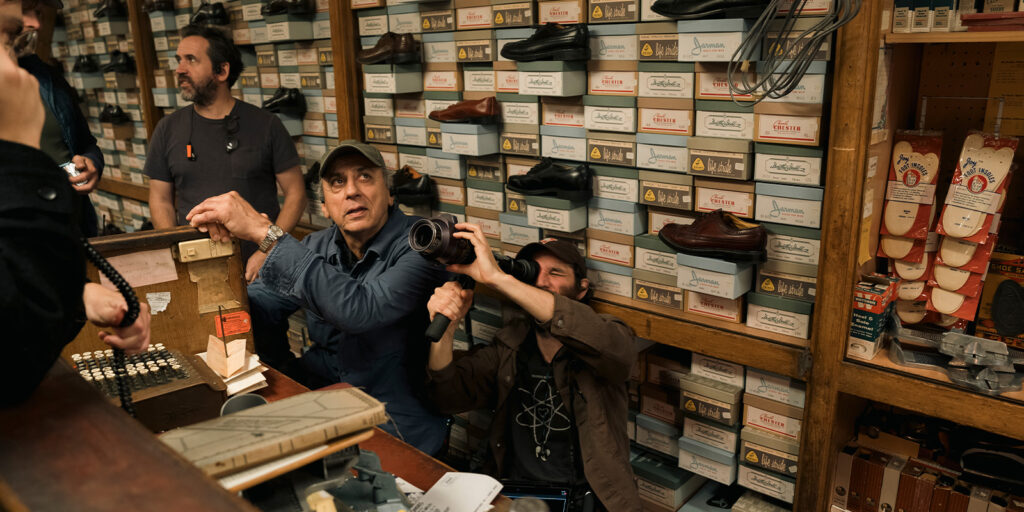
That kudos sharing theme kept reverberating right up the highway to the 41st Santa Barbara International Film Festival, where we were able to take in its opening weekend.
The programming is generally balanced between a lot of films – docs, narratives and shorts – still mostly off the collective radar (and, of course, hoping for buzz and/or distribution to get fully on it) along with retrospectives, red carpets and panels for a number of each year’s Oscar nominees (mixed in with a few other luminaries). These take place at the Arlington Theater, along stately State Street, the historic town’s original (and still) “main drag”, where the original adobes have now given way to eateries, galleries, upscale chains and, each February, crowds hoping to catch the likes of KPop Demon Hunters’ Ejae, Sydney Sweeney or Jacob Elordi, heading into their respective evening panels.
About which, more in a second.
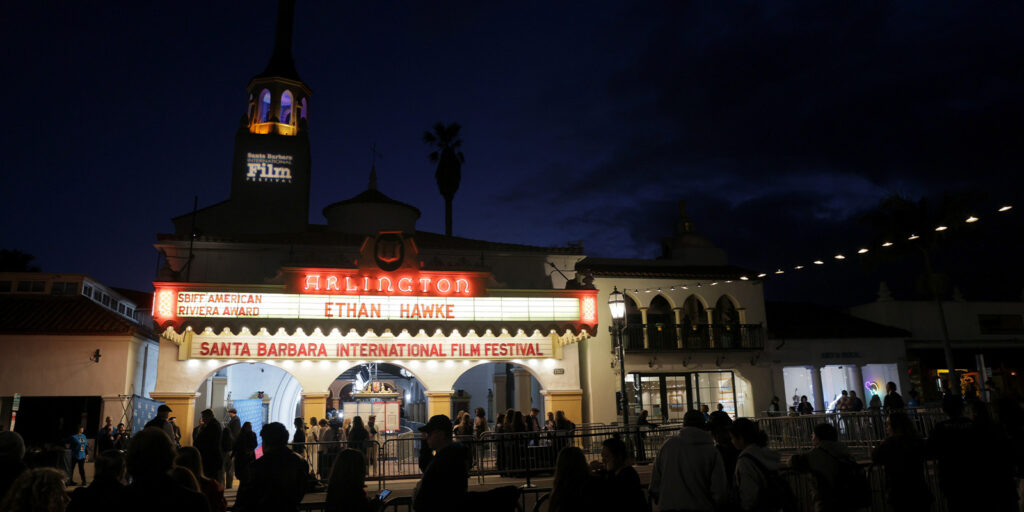
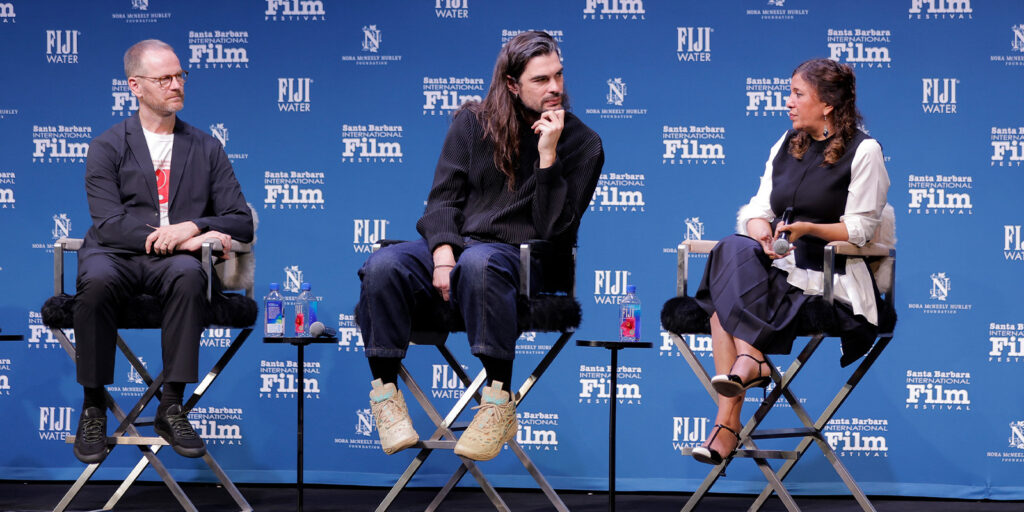
One recurring daytime panel at the fest is the simply-named “Women’s Panel”, which, at its first gathering some quarter century ago, evidently drew only 11 audience members, according to festival chair Roger Durling, introducing the panel and its moderator. Now, in the middle of a Saturday morning, there was nearly a full house.
Rave reviews
The Oscar nominee-laden group included Marty Supreme’s costume designer, Miyako Bellizzi, producers Yvette Merino, Alisa Payne and Ashley Schlaifer (encompassing the emotional range from the animated Zootopia 2, to harrowing documentary The Perfect Neighbor, and the visually stunning Train Dreams, respectively), director Natalie Musteata (of the marvelously titled short Two People Exchanging Saliva) and Laia Casanovas, part of the historic trio nominated for their sound work on Spain’s Best International Feature nominee, Sirāt.
Historic, because Casanovas, along with her colleagues Amanda Villavieja and Yasmina Praderas, are the first all-female sound team to be thusly honoured: “The significance of this moment is not lost on us,” they said in an earlier statement. “The film required taking risks on both a technical and creative level in order to create a raw, impactful and atmospheric soundscape in service of the story [and] it is an honour to share this alongside such talented and inspiring colleagues.”
On the panel, Casanovas spoke of the film’s “emotional journey”, revealed by the literal one taken by the film’s protagonist father, looking for his daughter, gone missing somewhere in the desert rave scene – an apocalypse-eve landscape (as we glean from background news reports), stitched together from locales in both Morocco and Spain.
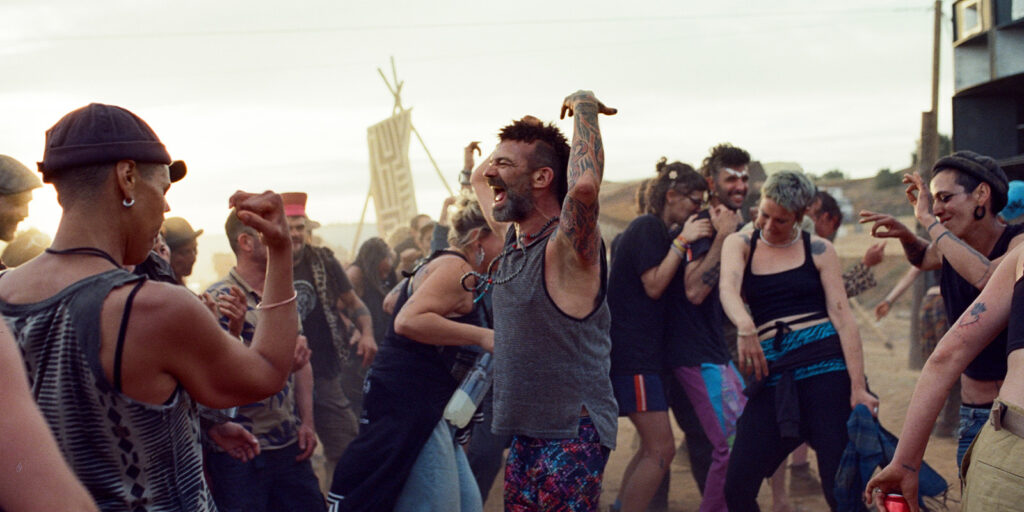
An early rave sequence unfolds in a 17-minute sequence, as we get our first true “look” at the subculture – via our ears. Director Óliver Laxe wanted the music to remain unbroken throughout, to underscore the same “kind of truth”, Casanovas said, as the images did.
Laxe himself – at a rather marvellous International Directors panel that came the next day (which time and space may let us get back to in a subsequent column) – talked of wanting audiences to be able to “watch the sound”, with spectators feeling it, and Kangding Ray’s already renowned score.
Laxe also referred to audiences as part of the “congregation” of cinema – where the act of gathering for filmed, and projected, stories in darkened, immersive spaces is, of course, a kind of “rave” of its own – in terms of a willingness, a hope, of being transported, and perhaps somehow changed. Even if just a little.
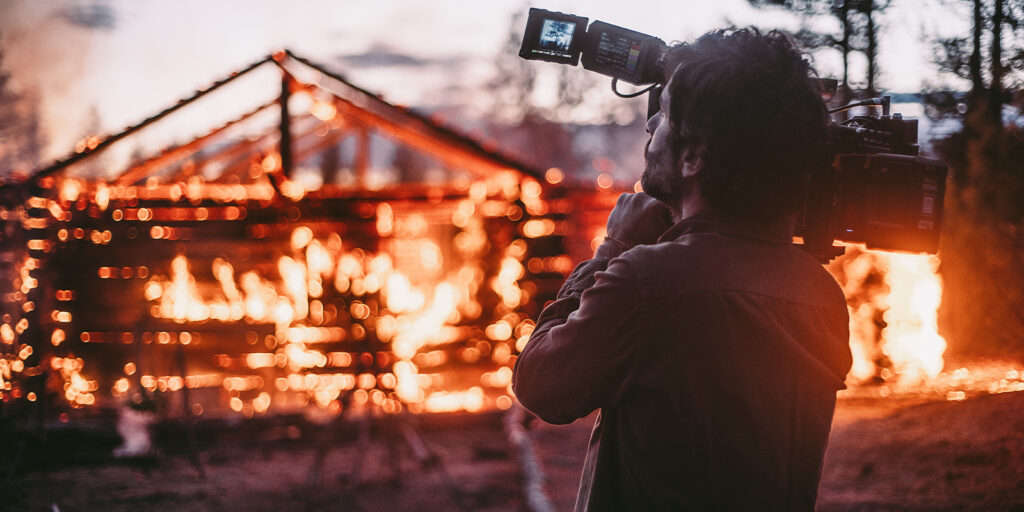
Similarly, back at the Women’s Panel, Train Dreams’ producer Schalifer talked about other ineffable, potentially magical aspects of the creative process, including the decade-long journey of bringing the late Denis Johnson’s renowned novella to the screen. “The good ones take their time, but they find their way,” she said. “[This] film found all the people who were meant for it.”
One of those, for the best picture nominee, is of course its DP, Adolpho Veloso ABC AIP, who also said earlier “this nomination belongs to the entire crew who brought this film to life, and to my family and friends for their endless support”, adding the Oscar nod was “a dream come true. One of those dreams that feels so distant it almost lives in utopia.”
Though he didn’t forget he lives in Brazil, either, as he added, “I’m so proud to represent Brazil in such a special moment for our cinema. Vai Brasil, vai Corinthians!”
When he arrived in Santa Barbara, some days later, for the sprawling Variety Artisans Panel, where numerous nominated craft nominees are honored, he also said he was “half drunk (courtesy of SBIFF’s generous Green Room, referenced by several panelists), jetlagged and nervous.”
He told the panel’s moderator, colleague Jazz Tangcay, Variety’s senior artisans editor, between his nomination and that of countryman Wagner Moura, as best actor in the also-terrific (and suddenly timely) The Secret Agent, all of Brazil was celebrating, saying it was “almost Carnival”. (Including, evidently, for his favourite football team – yes, in the original, not American sense – those aforementioned “Corinthians”, who evidently have already given him a jersey.)
Though “almost Carnival” could refer both to the level of celebrating, and the fact that Fat Tuesday is imminent on the February calendar.
But for this film savvy crowd – in addition to the young K-pop fans who’d been brought by their parents for a glimpse at Ejae (who was very generous about signing and posing with those fans, on the carpet outside), Veloso could also talk about using two sets of lenses for Train Dreams – including a faster one for night shots, so that campfires, for example, could serve as the solitary light source.
And the crowd was leaning over, taking it all in. Which is really the beauty of it – whether you had come for Ejae, Veloso, Alexandre Desplat’s Frankenstein score, multiple-Oscar-nominated production designer Jack Fisk (here for his own work on Marty Supreme), or any of the other distinguished panellists, it was their work, and how it came together – and how it resonates in the audience’s lives – that brought this particular congregation together.
Switching to the small screen
Of course, as much as the runup to Oscar feels like a whole “winter of content” given over to movies, awards, festivals and other celebrations of this particular industrial art form, there’s still a lot of TV going on, as well. In fact, television – streaming and broadcast – is also honoured at the season’s various guild awards, as well as at the Indie Spirits and Golden Globes. Almost everywhere, really, but the Oscars.
And there are also shows whose buzz runs concurrently with all those “best of” lists being compiled on the film side, such as the recent final season of Stranger Things.
Over the years, the original ‘80s-set, monsters-and-military fightin’ kids have grown into young adults, some becoming stars on their own, outside of the series, but all returning for what appears to be a final reckoning with the Upside Down, the Mind Flayer, Henry Creel, and everyone in uniform who can’t see any world beyond their current orders.
Returning to shoot that finale, working with series creators the Duffer Brothers, was DP Caleb Heymann, who’d come aboard in season three for second unit work, and then started the penultimate season four as lead cinematographer.
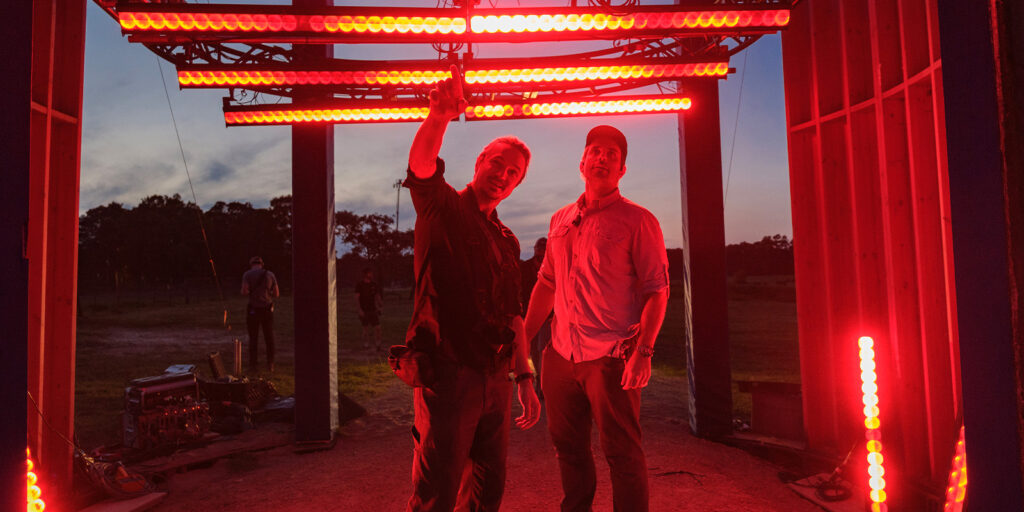
He’s also shared those lead duties the last two seasons with DP Brett Jutkiewicz, shooting “all the ones the Duffer Brothers were doing”, with Jutkiewicz working with the other episode directors like Shawn Levy and Frank Darabont.
And for episode seven, “The Bridge” – speaking of penultimates – where the directing credits were shared between the Duffers and Levy, DP credits were also shared.
Which somewhat fits the show’s motif of divvying up between different equipment over the seasons, too. “The first three seasons,” Heymann recounts, “were all shot on RED cameras – but all with a different sensor,” with the Monstro being used when he arrived for season three.
“By season four, we switched over to ARRI Alexa LF – depending on the day. Depending on when we needed slo-mo. Most of the shooting days we were on the mini-LFs.”
For season five, however, “after testing, we made the decision to change to the Arri 35,” owing in part to “the unparalleled dynamic range of that sensor,” especially given the “ton of action this season,” replete with “big overexposed searchlights sweeping through windows, heavy contrasty lighting (and) so much sweeping camera movement in the show.”
To say nothing of moving between Hawkins, Indiana and the Upside Down. With an off-world final action sequence,to boot.
The Alexa was mostly paired up with Cooke S4s and MasterBuilt lenses, though it was the pairing with the lights that became an even larger consideration. Quite literally, in the case of the massive shootout and showdown with both Hawkins’ occupying Army, and Vecna and his Demigorgons, marking the finale for “Volume 1” – the first batch of episodes that Netflix released on Thanksgiving.
A finale that included “all this mayhem with the Demigorgons”, mayhem provided by “60 stunt performers – we didn’t use digi-doubles [so it was] very tightly choreographed.”
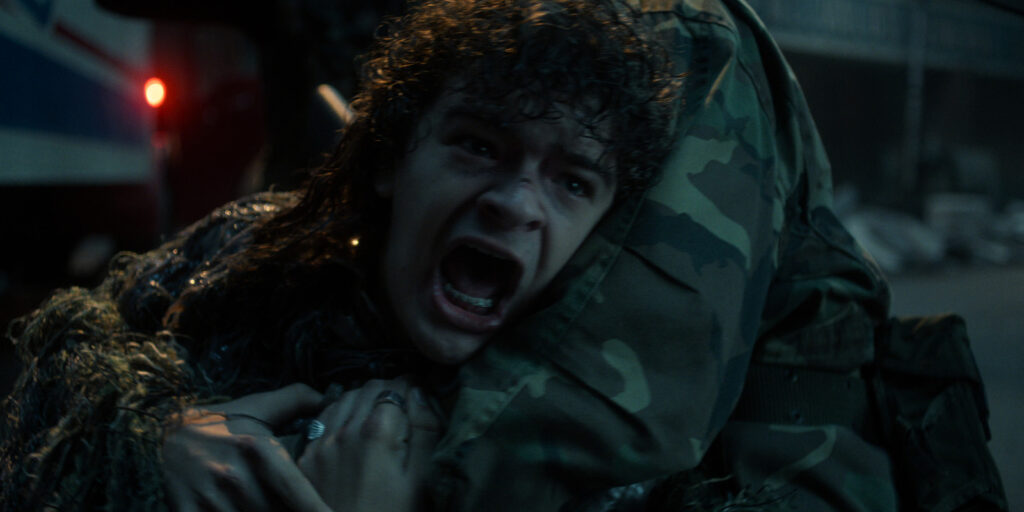
That episode’s own final showdown “starts as a Technocrane shot to sweep us into the scene” then becomes a “big oner”, thanks to “phenomenal camera operator Nick Müller” working a ZeeGee rig. Which is where the lights come in.
Heymann says they “wanted it to feel out of control”, like literal “reportage” from a war zone, which included being “able to pan around 350 degrees in the entire shot”, which meant, in turn, the scene “had to be lit in its entirety. We had about four hundred fixtures there.”
“Fixtures” that included “electricians operating Xenon searchlights, dressed up in military fatigues”, and the dimmer board, being able to “fade all the lights” on the south side of the set “as the camera looked north”, as well as the reverse, and for east and west.
Heymann describes it as an “inter-departmental challenge […] so we could do everything in camera without relying on doubles.”
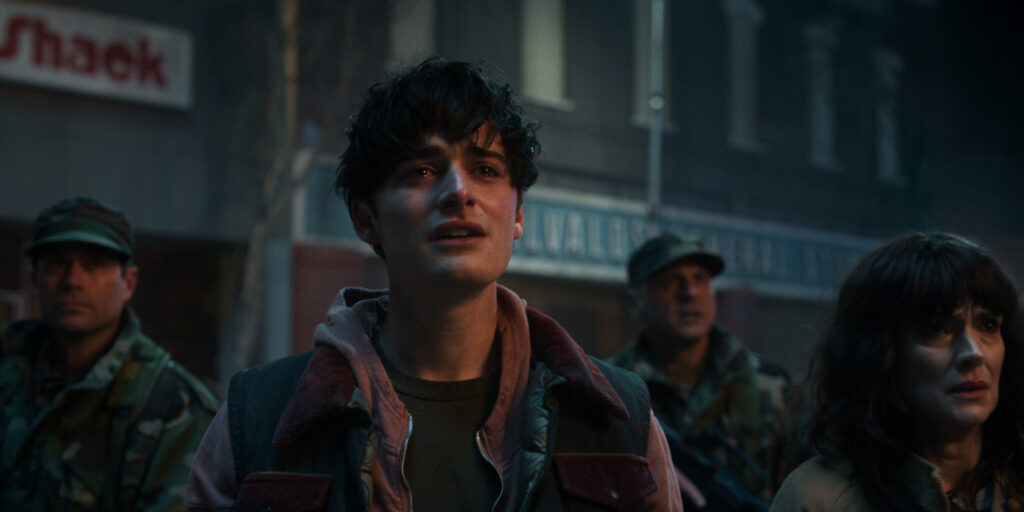
Though when you’re Upside Down adjacent, VFX are still bound to come into play, and among the many collaborators, he also cites visual effects supervisor Betsy Paterson. “She’s incredibly smart, very supportive of making sure we get it right in the lighting,” which includes “as much interactive lighting as possible – we would have different types of LED lights,” which included Astera Titan Tubes, and Creamsource Vortexes “that we could put in pixel mode – so we could have this undulating red light pulsating,” including “light from the supernatural world [seeping] into the practical set.”
“Everywhere we could,” Heymann says, “we were motivating the lighting.”
Which may be as good a spot to wrap this particular Carnival-eve column as any: May you keep motivating the light, and may it motivate you right back, until we meet again even deeper into this season of kudos, shared congrats, and of course – all the OMGs.
@TricksterInk / [email protected]