
PULLING UP TREES
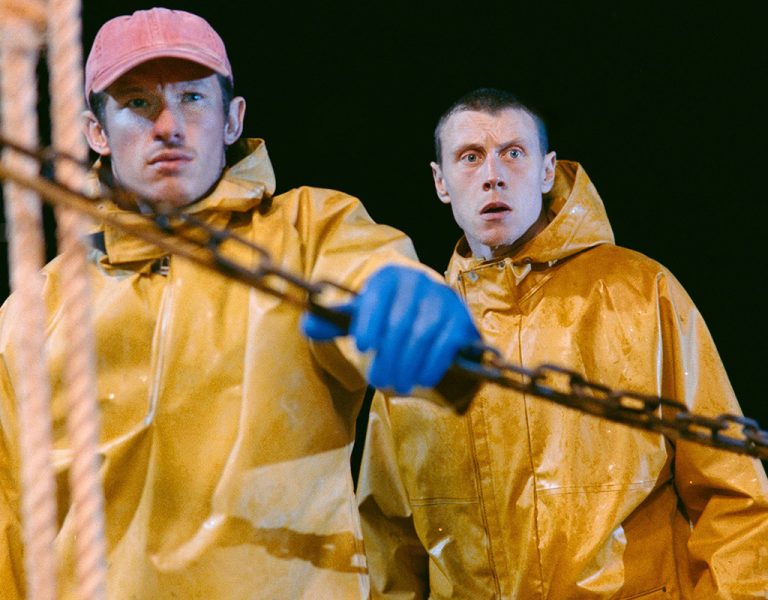
Following a logger in 1900s Washington, US, Train Dreams uses a grand canvas to tell a personal story – Adolpho Veloso ABC AIP explains how he and writer-director Clint Bentley crafted a period piece that feels relatable in the 21st century.
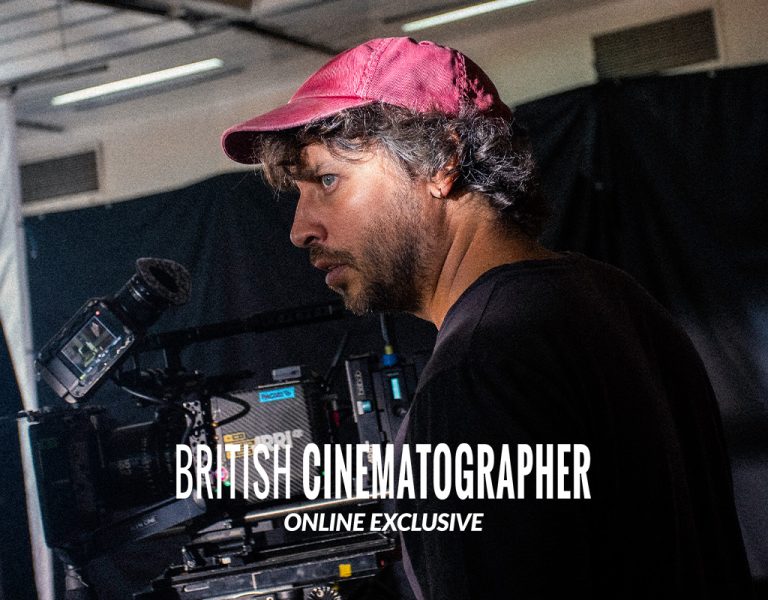
When Adolpho Veloso ABC AIP first read the script for Train Dreams, he was immediately struck. Adapted from Denis Johnson’s novella, it tells the story of Robert Grainier, a logger and railroad worker – played by Joel Edgerton – living in early 20th-century America. “It was like, ‘This feels like a cinematographer’s life.’ Grainer’s life just felt so much like mine, going out somewhere new, spending months there away from your family, and then sharing your life in a very intense way with a bunch of different people that become your family.”
Like Grainier, the Brazilian cinematographer was also at ease in nature. The 2021 film Rodantes, for example, took him to “the most devastated area in the Amazon”, while Jockey (also 2021), his previous film with Train Dreams’ writer-director Clint Bentley, saw him immersed in the outdoors, working closely with racehorses. “I wanted to allow Clint to be able to do what he does, in my opinion, best…that is take advantage of the real world and the things that are actually happening,” he says. “So we wanted to really capture the same feeling in Train Dreams.”
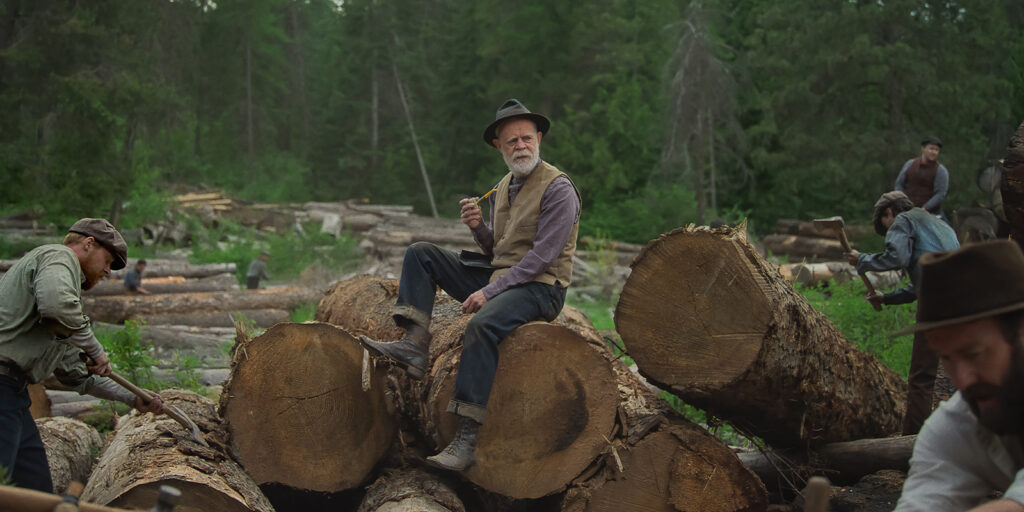
When Bentley heard just how Veloso intimately connected to the story, it sparked their early conversations. “We started talking: how do we make it even more connectable? I feel like there’s always something about period movies…you feel detached in a way. Because you’re watching people that dress in a different way than you, that talk in a different way than you, that are living in a completely different environment than you are. So how can we make that transition and that distance less of a thing?”
Light work
With the production shooting across the state of Washington during the spring of 2024, Veloso and Bentley elected to film using the ARRI Alexa 35, determined by the choice of using naturalistic lighting. “Some scenes are really just lit by a single candle. And I think that’s all possible because of the amazing dynamic range the Alexa 35 has.” Nick Kelling, Veloso’s first assistant camera, was also crucial, following the actors around for long unbroken takes. “He just nailed it every time. It was so good to have someone to rely on and know that you were not losing special moments or takes because of focus.”
Kowa Cine Prominar Spherical lenses were chosen for daylight work. “I just always loved the way that lens behaves with sunlight,” says the cinematographer. At nighttime, they switched to Zeiss Super Speed Mark II lenses, which aided shooting real firelight. Equipment-wise, Veloso was keen to keep things simple, partly to ensure the production’s footprint was minimal so as not to disturb the forest surroundings. Another reason was to immerse the actors in the period. “Not having a lot of equipment around, either cranes or LED lighting, can help them,” he says.
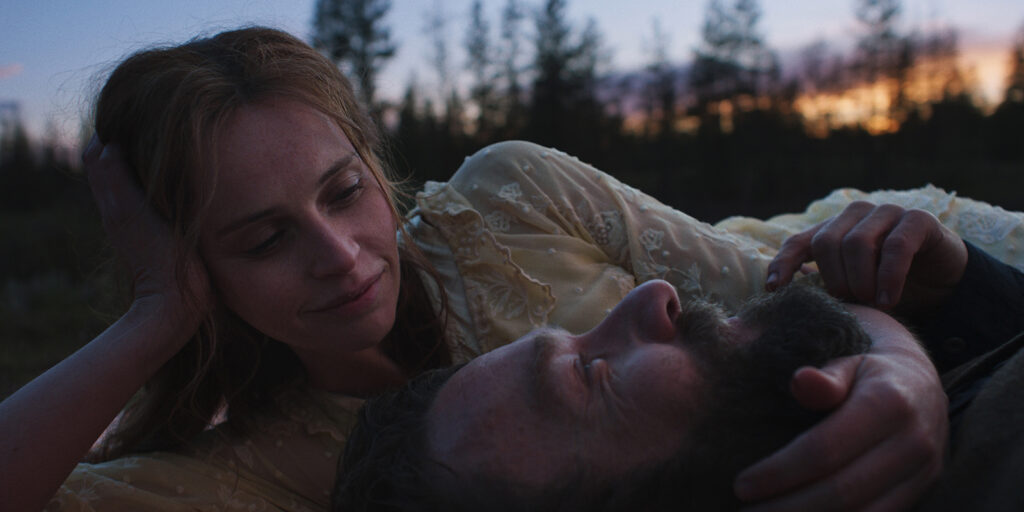
Veloso also credits Ryan Fritz, the key grip. “He was amazing, shaping those lights. We basically used natural light, and that meant shaping a lot with negatives and bounces,” he says. But other departments also pooled resources, as candles and gas lamps were brought in. Production designer Alexandra Schaller was instrumental in building Grainer’s cabin, with windows carefully placed to catch the light, as “the direction of the sun during that time of the year” was studied.
Fire drill
Inspiration, visually, came from Dorothea Lange’s Depression-era photography and also Andrei Tarkovsky, and the way he embraced nature in films like Mirror and Stalker. “He used a lot [of] slow dolly tracks. And we felt that was a good way to show the character moving through nature.” Veloso and Bentley also watched material from the era, loggers working in their environments, and footage of real fires. “We wanted to get away from what was done previously on movies,” says Veloso, who also nods to gaffer Kevin Cook for embracing shooting with fire where possible.
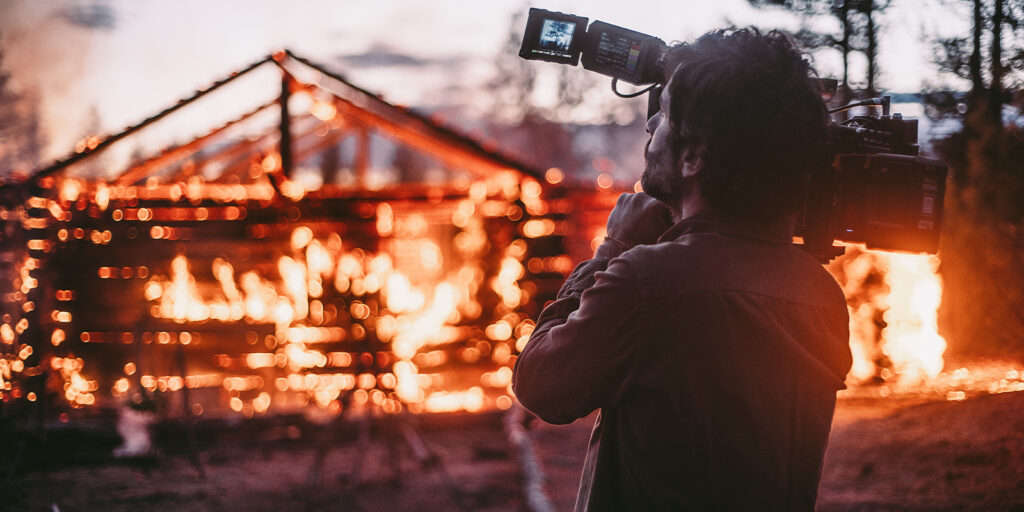
While “99 percent of the movie” used real fire, the key sequence where a blaze spreads through the forest where Grainer works had to be shot, for safety reasons, with lights rather than fire. “The other fires are real, just made with gels that would burn for 20 seconds and that would be enough for the take,” says Veloso. “But that wall of fire was just a huge wall of par candles. I think that was maybe 50 metres long. And they would just have different gels on it.”
The fire wasn’t the only complex scene. Take the one remarkable POV shot of a tree, with the camera attached to the trunk as it was felled. The highly durable RED Komodo digital camera was used, “which we could spare in case anything went wrong!” Which, thankfully, it didn’t. “I feel like once you are living amongst loggers – because we had a few of them on the shoot – you realise that they are really able to know exactly where the tree is going down.” The result is a memorable one.
Contuining the ambition to make Train Dreams feel authentic, Veloso worked in post with fellow Brazilian, colourist Sergio Pasqualino Jr. “He did amazing films like City of God, and he’s a legend back in Brazil,” he says. While the colourist was sensitive to what was shot, the way Veloso describes, everyone bought into the approach during the shoot, even when it meant difficult, unsocial hours to accommodate the needs of filming with natural light. “I need to thank everybody on the crew,” he adds. “We had a team that really embraced it.”