EXPANDING THE VISION
As hit HBO series Euphoria moves beyond the heightened intensity of high school and into the uncertainty of early adulthood in its third and final season, Marcell Rév ASC HCA expands the portrait of youth through wider frames, a cinematic homage to the history of American filmmaking and the use of a brand-new film stock.
The viewer’s visual experience has always been the starting point for Euphoria creator, executive producer, writer and director Sam Levinson and cinematographer Marcell Rév ASC HCA. While the third and final season was no exception, this time the vantage point had shifted. “We’d already done this kind of ‘manic high school amphetamine storytelling’ so one thing I was trying to figure out – and Marcell and I talked about at great length – was how can we use imagery to tell the stories of our characters without always feeling like we are inside their worlds?” says Levinson.
Previous seasons’ kinetic camerawork and rapid editing were driven by emotional realism, how the characters see the world and the intensity and instability they experience during adolescence. For the latest series Levinson and Rév wanted to “take a step back and see them in a larger frame, both metaphorically and literally”, opening up the aspect ratio of 1.78:1 in season one and 1.86:1 in season two to an even more expansive 2.20:1 in season three “and see how they either fit or don’t fit into the wider world”.
Levinson also wanted to alter the rhythm of the storytelling, allowing scenes to play out “as opposed to the kind of clipped, frenetic nature” of the previous seasons. “In the past, I think we saw individual episodes almost like mini films that were somewhat disconnected. There were also a lot of camera pushes – where an actor says a line, then we cut to the next storyline,” he says. “This time we wanted to tell the story more through dialogue and plot as opposed to montages. This season is overall a more coherent, cohesive journey.”
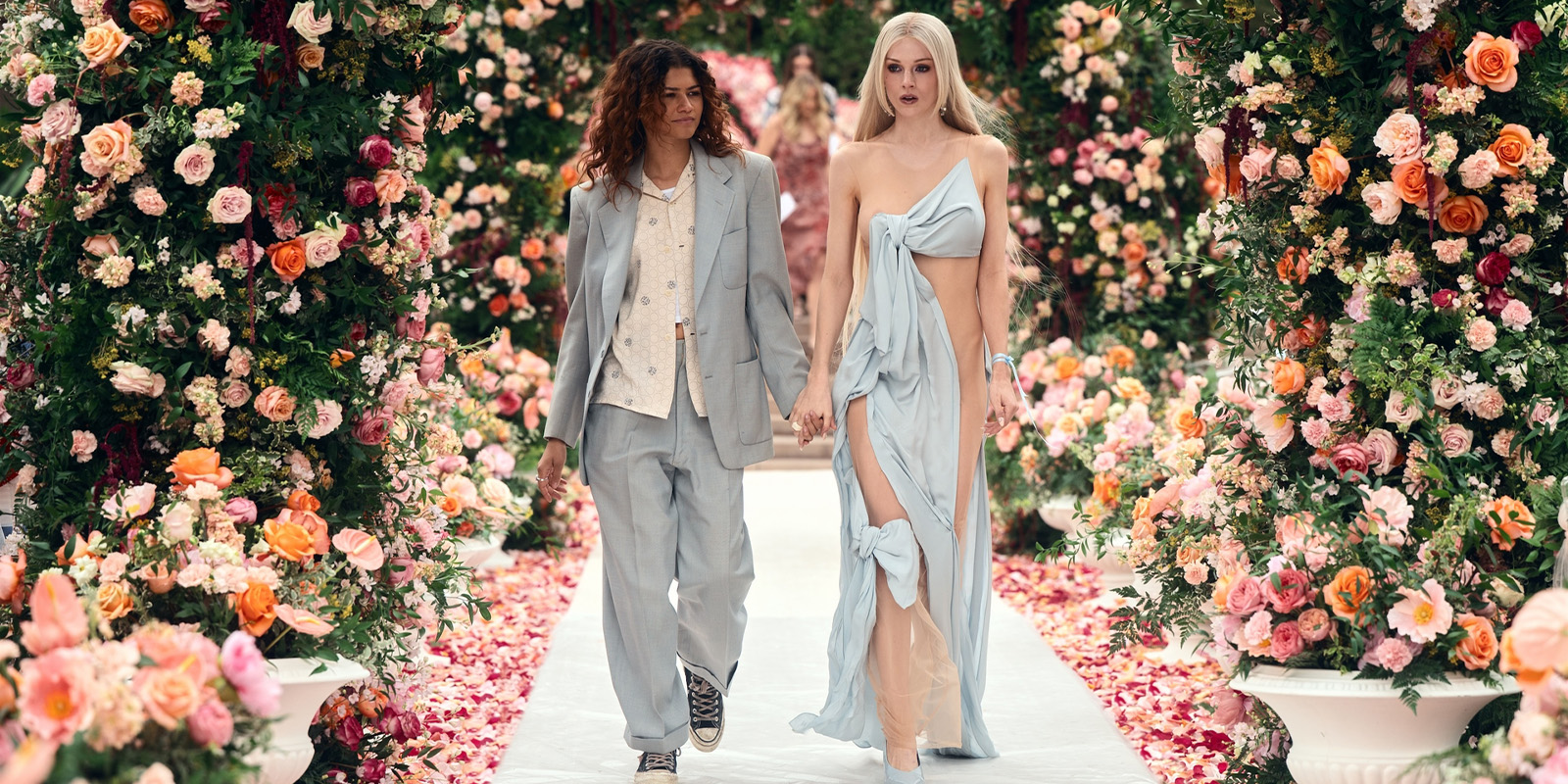
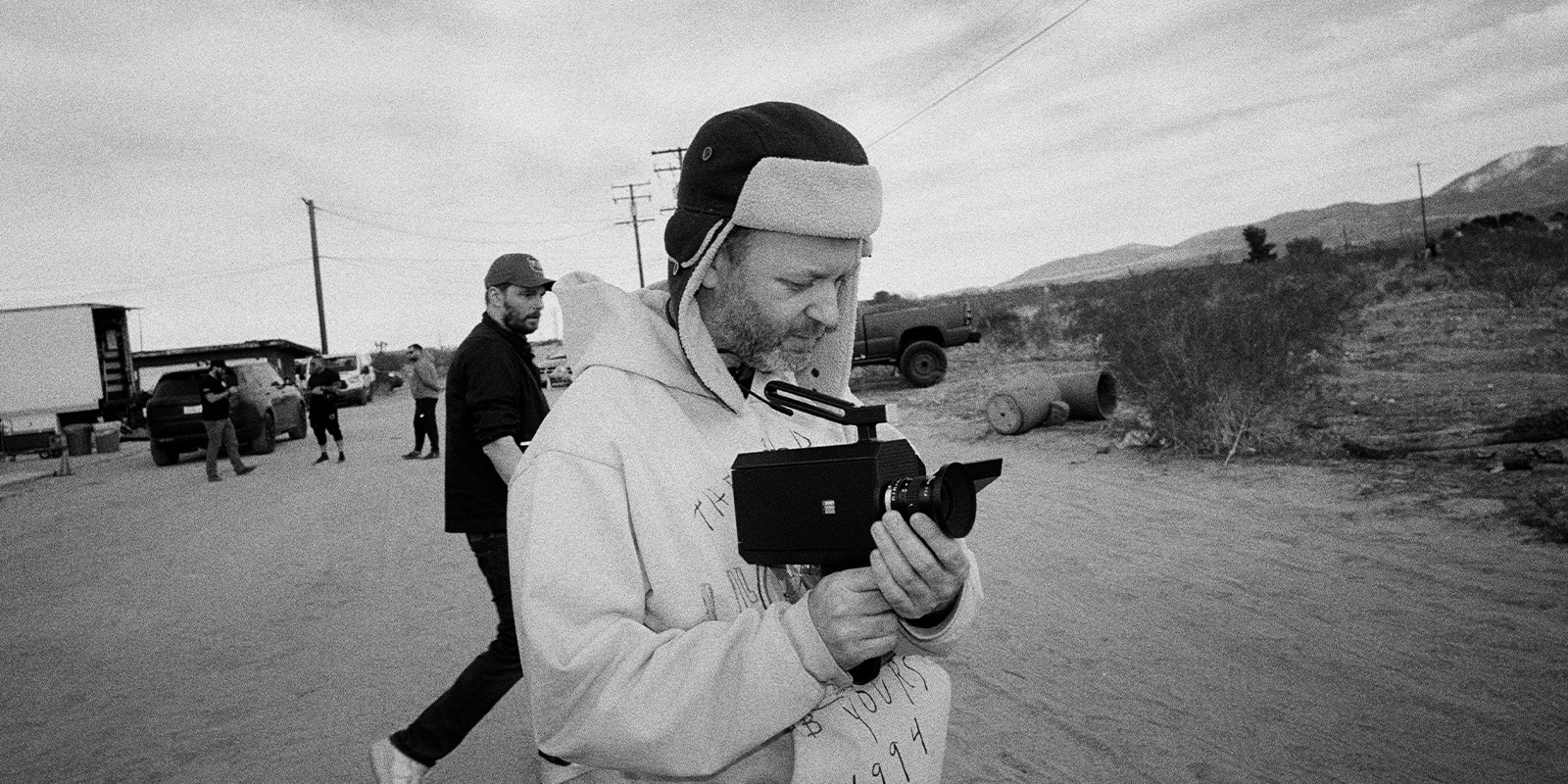
From capturing the chaos of youth through to the highs and lows of the wide world beyond high school, Rév has been integral to developing the visual identity of Euphoria since its early conception. Long before scripts for the first season were completed, Rév and Levinson were discussing how the series should look and feel.
Their previous collaboration on revenge horror Assassination Nation formed a creative partnership that naturally carried over into the new boundary-pushing project following the discoveries and misadventures of teens including struggling drug addict Rue (Zendaya), Jules (Hunter Schafer), Nate (Jacob Elordi) and Cassie (Sydney Sweeney) as they navigate everything from identity and relationships to addiction and social media.
An evolving visual language
Levinson worked with Rév and the creative team to develop a guiding concept that defined the show’s distinctive look. Rather than presenting the characters objectively, the cinematography of series one would be rooted in a more abstract idea. “It should look and feel like how these kids think about themselves, not how they really look from the outside,” Rév says.
This idea helped interpret the characters’ emotional experiences and psychological conflicts using visual choices including colour palettes, lighting styles and camera movement to create the heightened aesthetic that became synonymous with the series.
As the story progressed, so did the visual style of each season, representing a different way of looking at youth, memory and the nostalgic and sometimes distorted recollections. “The second season was more like a memory of high school rather than something contemporary,” he explains. “Like a fractured memory of youth.”
Season three marks an even more dramatic departure which Rév describes as a cinematic collage that draws inspiration from the history of filmmaking. “It’s more conceptual: a broader, wider tableau of contemporary American life. It’s more classic and traditional and a tribute to American cinema and its past with recognisable themes like the visual language of classic Westerns from the 1950s.”
Being a Hungarian cinematographer working in the United States, Rév believes his perspective influenced how he approached those references, creating an homage to old Hollywood. “I have this outsider perspective on American cinema, being a Hungarian citizen living in America and I probably look at it a little differently to most Americans,” he says.
The cinematographer and Levinson referred to classic Westerns like John Ford’s The Searchers, works by Sergio Leone, Alfred Hitchcock’s North by Northwest and gritty police drama Dirty Harry. “We loved their commercial lushness and landscape imagery. There was something about that old-school-Hollywood style that we felt could inform this season’s core themes of dreams, success and survival,” says Levinson.
“I also wanted our visuals to make the viewer feel like anything was possible and make use of California’s diverse and iconic landscapes. So often we think only of the cities here as opposed to the worlds that exist outside—the farmland, agriculture and the endless desert, a portrait we felt hadn’t been represented onscreen in a while.”
Beyond cinema, Rév also looked to fine art for inspiration. “When I talk about scripts with Sam, we obviously talk about movies, but usually it’s more about referencing certain feelings,” he explains.
During development of the latest season he became particularly interested in the work of French painter Pierre Bonnard. “His work has nothing to do with the season directly, but composition-wise—the richness of colours and compositions is what comes to mind,” he explains.
A whole new world
Levinson was determined that the final season should represent a clear evolution rather than repeating visual or narrative rhythms. “We’ve always tried to find a way to evolve. After season two, I knew we wanted to pick up after high school, thus the natural evolution would be to pick it up some years later when you’re dealing with different types of problems; relationships are strained, and people have lost touch,” he says.
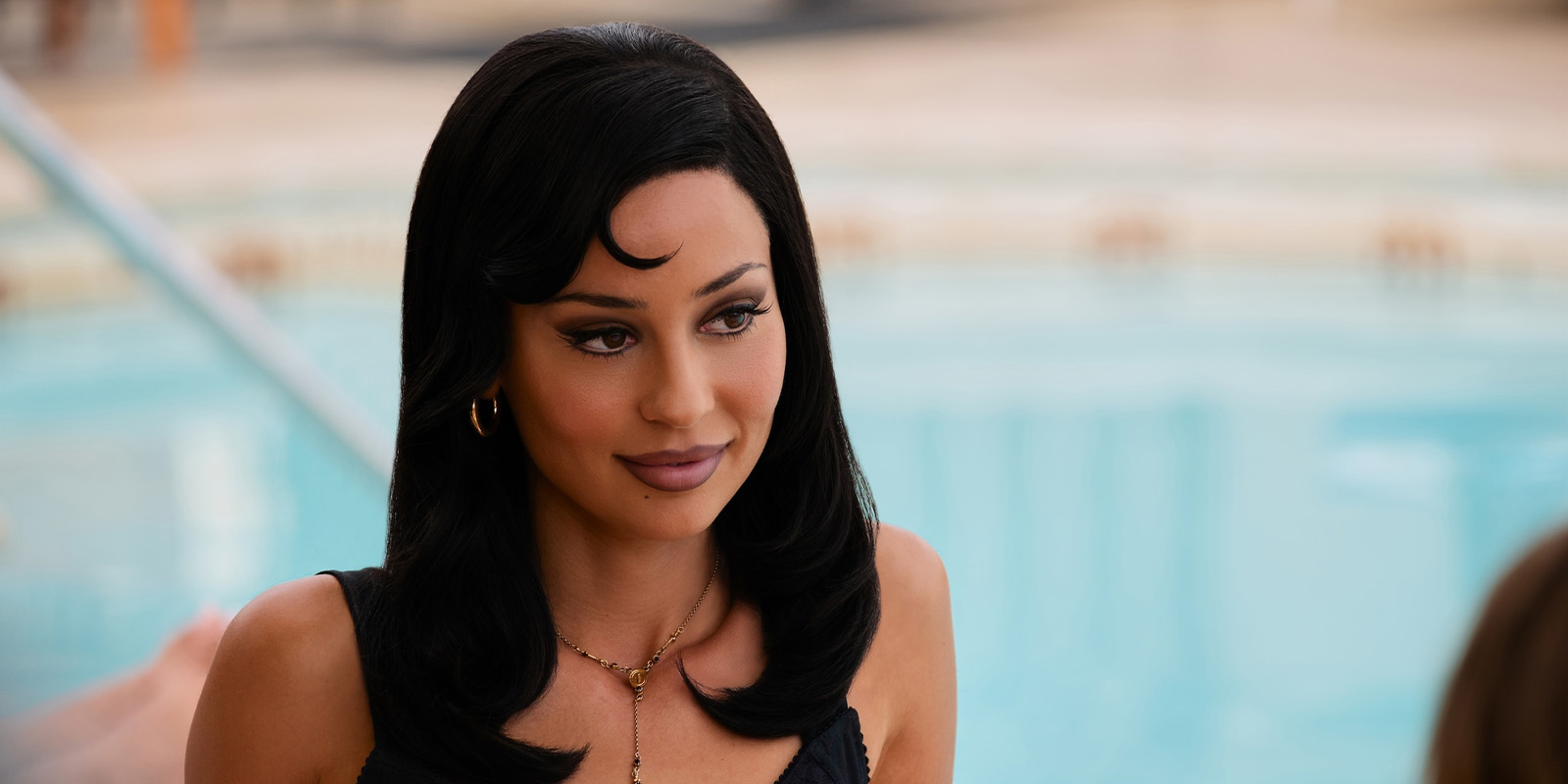
“In your early twenties, you’re trying to figure out who you want to be in life and in work, especially now as so many industries are rapidly changing. There’s an aspect to our current reality that feels very ‘wild west.’ So I think of this as the ‘God and Country’ season because of the unlimited freedom each of these characters has to make both wise and unwise decisions and live with the consequences.”
With the characters now adults who have made a variety of lifestyle choices, the narrative expands across multiple environments outside of what audiences experienced in the first two seasons, moving from the confines of high school into the desert, city and strip club.
Rather than separating those worlds visually, Rév focused on maintaining a unified cinematic language. “Every storyline or central character had its own world,” he explains. “But at the same time it has to feel like one unified thing.”
As much of the differentiation between characters’ environments was achieved through production design, part of Rév’s role was to visually unify them through technical choices. “When it comes to tying things together, it’s important to make certain decisions, almost like technical dogmas,” he says. “Choosing lenses, format, aspect ratio and film stock helps connect the diverse settings, colour palettes and textures seen throughout the show.”
Designing environments
A large portion of the production was filmed on soundstages at Warner Bros. Studios in Burbank. One of the central sets built there was the Silver Slipper strip club, designed by production designer François Audouy to evoke a vintage rather than contemporary look.
“A main area in that set resembles a 1970s strip club,” Rév explains. “We emphasised that using tungsten lighting, Edison bulbs in frame and no modern strip club aesthetics.”
Behind the main stage area, the set included a maze of corridors, offices and bathrooms that allowed the crew to explore a variety of camera angles and staging possibilities. “It has a sleaziness and an old-school quality that gives it patina and makes it interesting visually,” Rév adds.
For Levinson, working with Audouy was a “dream come true”. “The goal was to be able to shoot it in a beautiful way and give it a nice tungsten silver-white light, while also creating something off the beaten path. We wanted it to feel more burlesque and with a lot of coloured lighting,” he says.
Audouy envisioned the club as something between a desert gentleman’s club and a Western saloon that needed “to feel at once hip and dangerous and have the requisite texture and grit of a space most likely built in the 1980s”.
Reflective surfaces played a key visual role and using various security-style mirrors added visual value. “You can see out, but customers can’t see in,” Audouy says. “You can use a lot of cool camera angles when shooting through portals and mirrors. We shot more days in the Slipper than on any other set in the show. And each time we were able to capture it in a different way.”
Jules’ chic penthouse was another elaborate set. Although the team initially found a real apartment in downtown Los Angeles, it proved difficult to light due to its height and location so the space was rebuilt on a soundstage. To replicate the city view, the crew used large-format photographs printed as backlit translight panels. Subtle lighting effects including small LED flickers were added behind the panels to simulate atmospheric movement.
Landscapes and locations
With Levinson wanting series three to “be a sunnier seasonand generally move away from nights and night-lighting”, relying more heavily on daytime exteriors, location choice was crucial to suit the series’ expanded frame. Most of these sequences were captured in the desert landscapes around Lancaster, California.
“Sam and I are very involved in the decision-making and location scouts. It’s a long process but also really inspiring. Sometimes locations inspire the script, and they definitely inspire my work,” Rév says. “The exterior of the club was also in the desert which we shot over three days.”
Scenes at Cassie and Nate’s house were captured in a real location in a house that already had a strong ‘70s to ‘80s Los Angeles look and reminded Rév of photographer Larry Sultan’s photographs of 1980s suburbia in California. “The house was a bit run down so François pushed it further, making it more extreme and fun,” he says. “The carpet and wallpaper were already there, and he extended that aesthetic through the kitchen and other rooms so it felt consistent.”
Wedded bliss?
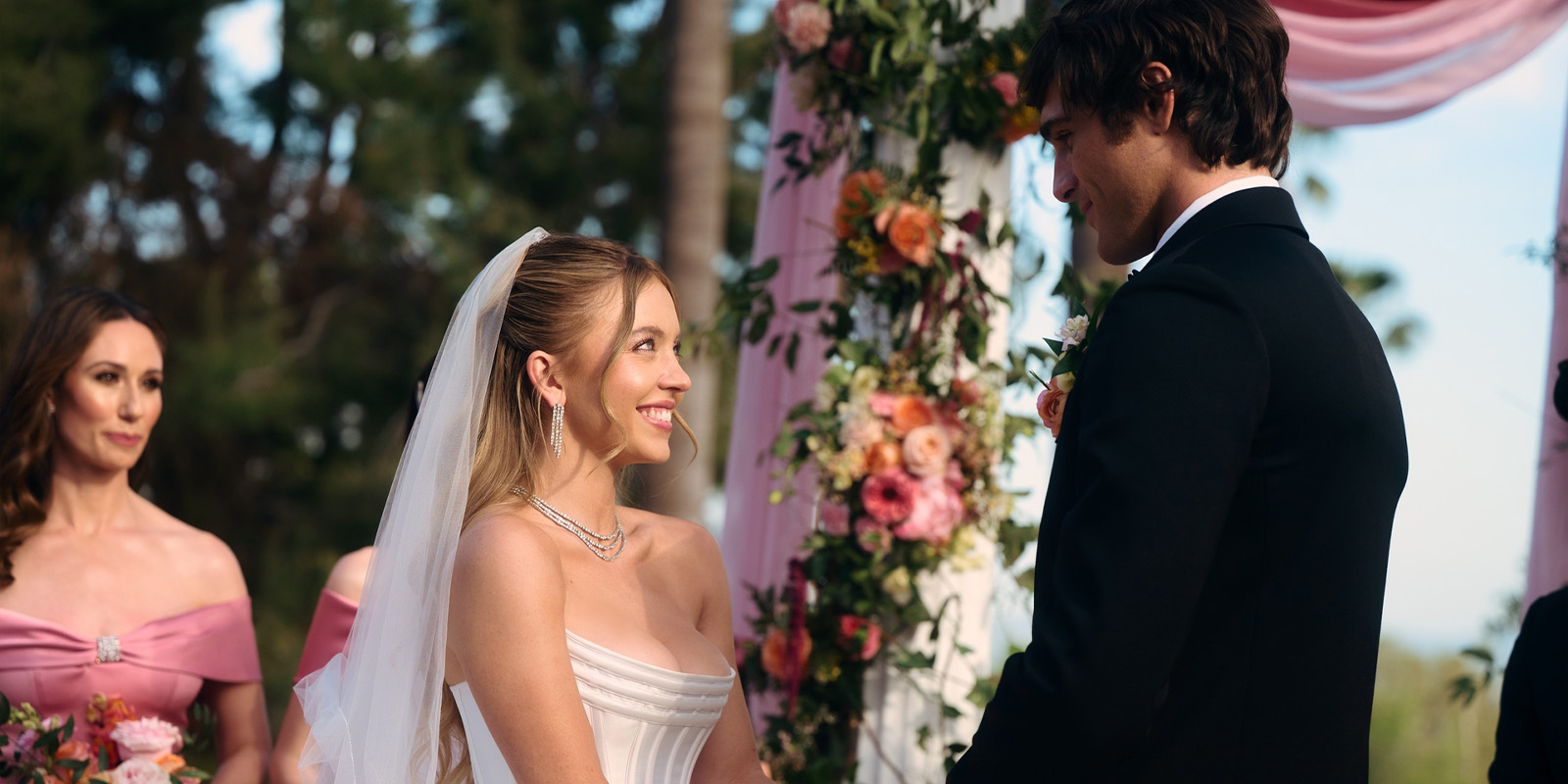
Cassie and Nate’s extravagant outdoor wedding — an ambitious element of episode three — demonstrates the series’ ability to pivot from beauty to destruction as it descends into chaos and ventures into horror territory in terms of the visual techniques.
The ceremony was filmed at an oceanfront hotel location, while the reception was constructed on stage at Warner Bros. “The reception took about a week or more to shoot, with the design being inspired by a ballroom we saw on an old cruise ship in Long Beach with three large halls, almost like cathedral architecture,” Rév says.
“We recreated that idea by incorporating a central space with the dance floor and stage, and guests on the sides and then we had to carefully decide where everyone sits so characters can see each other, or be obscured by columns, depending on the scene. We also needed flexible lighting for dance sequences and long dolly shots, so the crew designed special chandeliers and top lights that allowed quick adjustments.”
This season adopted a more classical approach to lighting, often working with “old school” equipment. “This meant we’re in the world of less sensitive stocks and bigger lights. It’s a more refined but a bit more rigid way of relighting for each shot instead of lighting the space and adjusting for angles,” Rév says. “With my gaffer Danny [Durr] it’s so easy to pull off these bigger setups as he thinks ahead strategically. When pre-lighting a set we always think about the flexibility and how we use a unit or big source for multiple purposes in different setups. Speed and being able to adjust, even in the bigger sets, gives us the freedom we like.”
Rév pushed for real tungsten sources whenever possible, enjoying working with MoleBeams for direct sun sources and Maxi Brutes for big night exteriors. “I often prefer round-shaped diffusion sources for close-ups, so we used a lot of paper lanterns combined with a bounced key light, so we carried ETC Source Fours too,” he adds.
The cinematographer’s favourite fixture for season three was one created with Durr and his team called the Cooler Light. “It’s a metal box incorporating 20 150W Edison bulbs in four rows that has the option to slide a layer of diffusion in front of it,” he explains. “We used it all the time on night scenes and it became my go-to source for almost everything at the Silver Slipper set. We also came up with a simple concept for a one-bulb version of this source we called the casket light, that served as an eye-light in a lot of scenarios.”
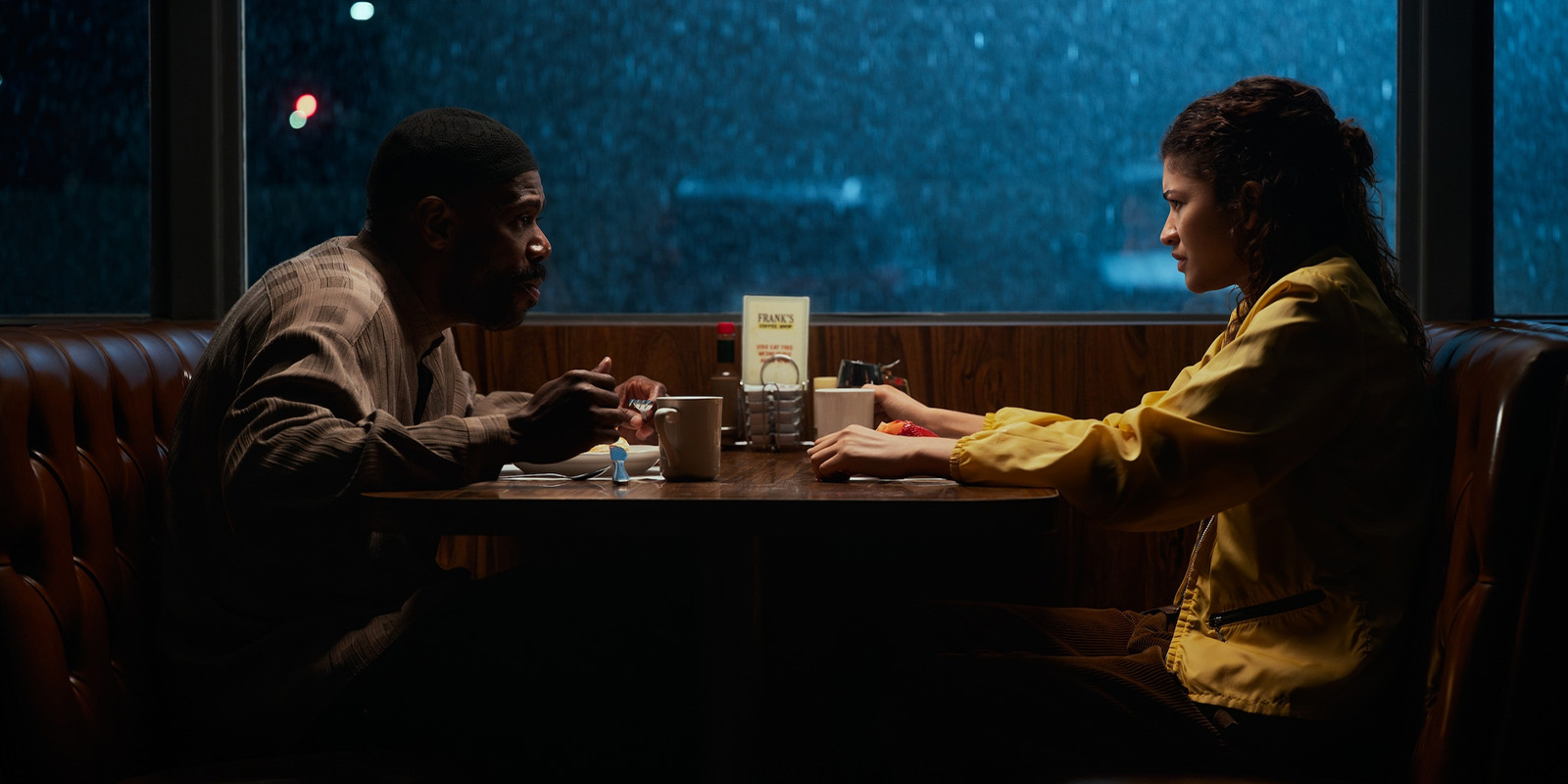
Rév wanted to avoid colour contrast and most nighttime scenes are clean in terms of colour. “Even the strip club is something of a golden tungsten glow reminding us of a ‘70s club rather than a colourful LED spectacle. So clean tungsten light was my main source and we tried to figure out how we could create shapes and shadows instead of colour compositions. I was trying to find the beauty in primary colours of objects and natural, rich skin tones. Even the few moonlit scenes are leaning to that warmer tone.”
For day interiors he mostly used big HMI sources like ARRIMAXs and the HMI versions of MoleBeams, in combination with LEDs. “For the Verita stock we shot our day scenes on, it’s important to be on the daylight balanced side. So we only used LEDs if we really thought they were needed. It was important for me to have a fuller spectrum of visible light so we tested a few LED sources to make sure they have a broad spectrum and the skin tones look rich when we use them.”
The Verita stock delivered a highly saturated image for daytime scenes and those set in the desert landscape. “The balance of sometimes embracing the brutal midday top light for the scenes set in Mexico [shot in Mexicali, Baja California in Mexico] and choosing moments when the sun is low like in the Homestead scenes or even shooting entire action sequences in sunrise elevated these moments,” Rév adds. “With the day exteriors it’s mostly about shaping the sun which key grip Jeff Kunkel is a master of. We didn’t use a lot of additional sources in these day exterior scenes but usually we had quite a few frames to cut, diffuse or bounce the sun.”
Finding a rhythm
Euphoria features contrasting themes and settings, from drugs, debauchery and social media’s dark side through to the glamour of what on the surface appears to be a lavish wedding. Rather than following rules when capturing different aspects of the story, Rév and the crew used “a set of tools to glue things together”.
“But it’s not that rigid that we say, ‘When we’re in the desert we only do circular tracking shots’,” Rév adds.
The extensive production schedule spanned around 170 shooting days and although official prep was about four months, Rév says in a way he was prepping since season two. “We had ideas already and we’d been developing a film stock with Kodak for more than a year and a half,” he explains.
Over such a long period, a natural rhythm began to emerge. “When you start making a long-form project like this, the series begins to make itself in a way. You start making decisions that make sense within the logic of the series, and they become practice.
“Having a rhythm like that’s great, but it can also be dangerous. Every day you have to remind yourself not to fall too deeply into that groove. The whole crew starts developing practices for that specific project and it’s important to understand those patterns that emerge in camera movement, lighting and approaches to staging, but also sometimes break them so it doesn’t become repetitive.”
Film first
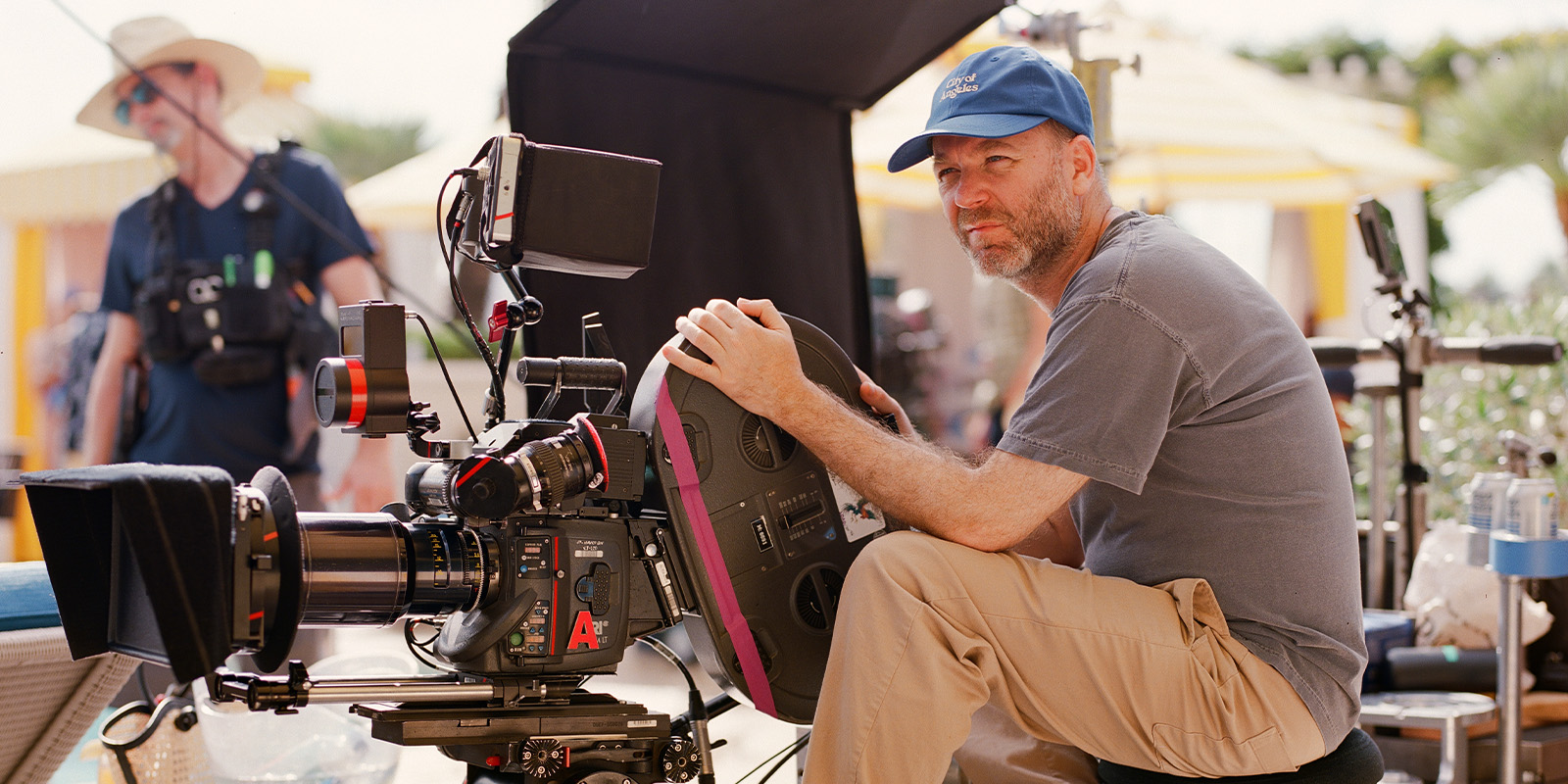
The decision to expand the aspect ratio — moving to 2.20:1 and incorporating large-format photography — was central to the visual strategy of the latest season. “The themes are broader; we’re not in high school anymore,” Rév says. “We also switched formats, shooting about 60% on large-format 5-perf 65mm film which has a native 2:2:1, mixed with 35mm anamorphic which we cropped slightly to match.”
The wider frame changed the way scenes were staged. “As Sam wanted longer scenes with multiple actors moving within the frame rather than constant close-ups, it’s more about choreographing actors around the camera,” Rév adds.
One of Euphoria’s defining visual characteristic is its use of film in season two. After moving from digital [shooting on ARRI Alexa 65 and ARRI Prime DNA lenses] in season one to celluloid in the second season, the production embraced film even more extensively in the latest instalment.
“I simply think film looks better than digital,” Rév says. “In my opinion, digital hasn’t matched the quality of film yet. Whenever I can, I choose film unless there’s a very specific reason not to. For this season we wanted richness in colour and texture which I don’t think digital achieves in the same way.”
Season two was shot on Kodak Vision3 500T 521935mm film, with Ektachrome 100D 5294 as the main stock. “It’s a very low-sensitivity reversal stock and we cross-processed it as a negative, which gave it smaller latitude, stronger colours and more grain. That worked well for the fractured memory feeling of that season,” he explains.
For season three, however, Rév and Levinson wanted something more polished, with richer resolution and colour separation so they collaborated with Kodak to develop a new motion picture stock: Verita 200D. “This season also shifts heavily toward daytime scenes whereas most of the action in previous series unfolds at night,” Rév says. “The new stock is daylight-balanced and makes daytime imagery more interesting.”
Selectively trade-tested by cinematographers over several years and inspired by the striking reds and blues of classic colour photography such as Kodachrome and Technicolor, Verita 200D 5206/7206 colour negative stock will be offered in 65mm, 35mm and 16mm formats. Compared with Kodak’s Vision3 colour negative films, it features a shorter yet rich dynamic range for a more classical cinematic look and offers detailed highlights, high colour saturation, deep blacks and warm, natural skin tones.
For Rév the stock offered “the richness and density curve” that reminded him of “the golden age of colour film, with the flexibility and latitude of modern negative stocks”. He also found it allowed for easier employment of the primary colours Levinson wanted to use to brighten up the series from its darker, nocturnal palettes.
“Yellow, blue, red — an overall wider spectrum of colours harmonising with each other,” says Rév. “This season also was more about objects being very colourful and using a lot of natural light. Instead of manipulating them, we were able to capture their surfaces and raw, natural beauty more easily. It’s why we went to Kodak for a larger-format photography and special film stock: to enhance our technical ballpark,” adds Rév.
More than one million feet of Verita 200D 5206 in 35mm and 65mm formats were exposed when shooting season three, the first television production to shoot significant volumes of large format 65mm film.
Multiple phases of testing were involved when developing the stock with Kodak who gave Rév several options based on what was possible with the available materials as well as direct access to Kodak engineers. “We first tested with still photography and then motion picture film as still stocks and motion picture stocks are processed differently, so even the same stock behaves differently,” he adds.
Having worked with FotoKem on the previous two seasons, Rév relied on their processing expertise once again. “It was mostly normal processing, but I sometimes pushed it a stop because the 65 is such a big negative that there’s little grain,” he says. “And sometimes you want a little bit of roughness there which also enhances the contrast a bit. It’s hard to explain why I like the look of push processing for certain sequences – it could be the grain. It just looks different; magic is created by the chemicals.”
Company 3 senior colourist Tom Poole also played an important part in shaping the visuals. “Tom’s role was instrumental in finding the final look of the Verita stock, he was involved early while testing it,” Rév says. “We developed a Look Up Table we used as guidance for the dailies. It’s a practice we usually do on longform projects with Tom.”
Production and personal lessons
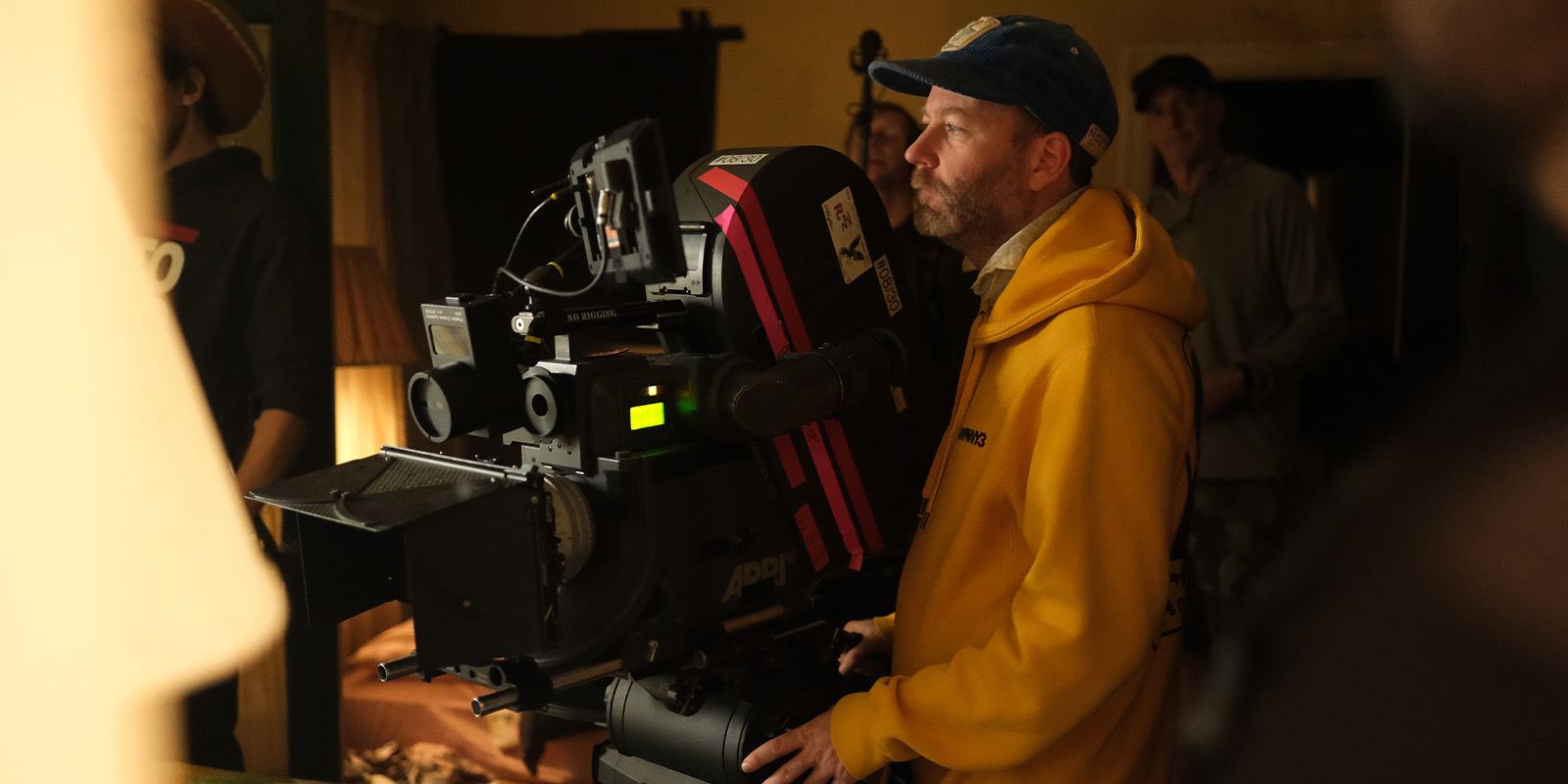
Season three was shot primarily on large-format 65mm film using the Arriflex 765 camera. “Only eight of these cameras exist and we paired them with prototype large-format lenses being developed by ARRI which produce extremely sharp images and they flare a lot, so we had to be extremely careful with any backlight,” Rév says.
He also used some older ARRI 765 Prime lenses for focal lengths that were unavailable in the prototype set. While around 60 percent of the show was captured in 65mm, the remaining sequences were shot on 35mm using classic anamorphic Panavision C-Series and E-Series lenses. “They’re older lenses but incredibly beautiful, a great balance between sharpness and character,” he says.
When shooting digitally Rév often uses diffusion filters, but with film he prefers the natural qualities of the stock and only occasionally worked with polarizers and soft grad filters.
Compared with earlier seasons, the latest chapter in the Euphoria journey relies more heavily on traditional camera movement. “We mostly used dolly moves and sometimes cranes. There’s only one handheld scene in a narrow tunnel where Steadicam wasn’t possible,” Rév says, praising the work of A cam operator Josh Medak, B cam operator Rocker Meadows, first AC Norris Fox and second AC Jonathan Clark.
Rév finds using larger camera equipment creates a sense of weight and stability. “If you lay dolly track or place a crane, it’s a conscious choice,” he says. “Similar to using slower film stocks, it forces you to make deliberate decisions and think carefully about each shot’s composition and lighting.”
After more than a year of work on the season, Rév says the experience presented lessons that extended beyond cinematography. “You always learn technical things,” he says. “But with a production this long, you also learn a lot about yourself.”
The scale of the production demanded endurance and even tighter collaboration across departments, resulting in deeper, more rewarding creative relationships. “It’s a marathon. You discover your limits and strengths and form strong bonds,” Rév reflects. “Those connections – friendships or professional relationships – are extremely important to me.”