DANCES IN THE DESERT
Following a man and his son as they navigate discos in the desert in search of his daughter, Óliver Laxe’s Sirāt tapped up real-life ravers to bring authenticity to its raw story. Speaking after his European Film Awards nod for the film, DP Mauro Herce reveals how the crew pulled off its ambitious plan.
The raves were such an integral part of Sirāt, but we had to convince the ravers to want to participate in the film, which was not so easy because they are quite politically engaged. Cinema for a lot of them is not a good thing – especially if they get the feeling that it’s an expensive film. So we had to make our case to them, outlining what kind of film we were going to do and what we had planned. We had to pass some tests with the collectives, basically, and after they agreed to do the film with us, we thought together about how to prepare the raves, who could be good for the ravers, because we wanted to have a real ring with people dancing and enjoying themselves in the way they do.
We started with a military scene, when the military try to put them away and shut them down. I think this was a good idea to start with, because narratively, it’s very clear – there is the military that is coming here and they want to stop you. It was easy to give instructions on how they should react to the military, how they have to act and react in these moments. And I think some of them enjoyed getting to be in confrontation with the military – it was a dream for some, because they can’t be in confrontation with a military power in real life, but here they could do so without any consequences. So it was easy for them to be focused on the military and forget the cameras, and because they enjoyed that, it helped us a lot for sorting the rest of the parties with them.
The right moves
In terms of the distribution of the space, we thought a lot about where to place the cars and the dancers for having good views of the topography of the landscape. There was a kind of collaboration between cinema necessities and rave necessities, but we managed to find a good middle point.
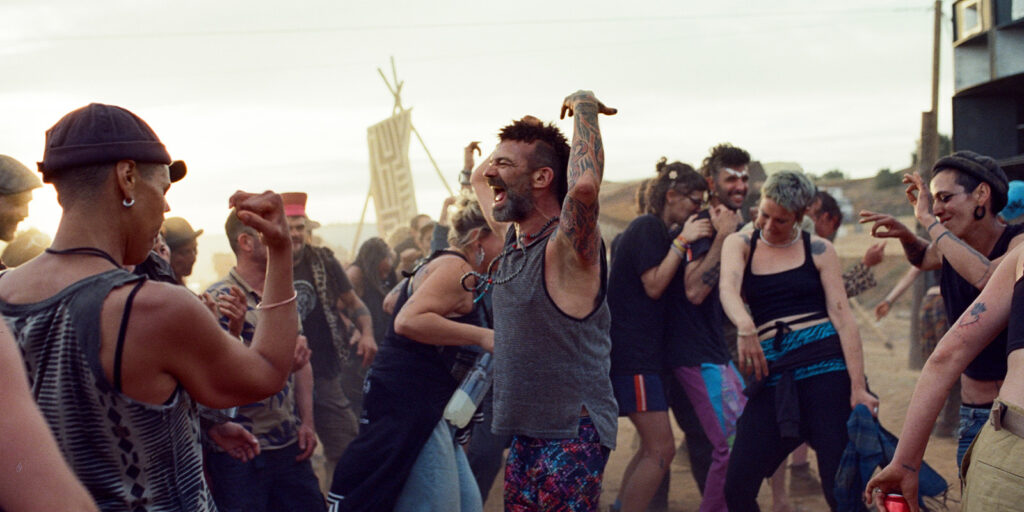
For the rest of the shoot, we had a lot of rehearsals before filming, but not so much orientated around how to do each scene. Óliver was more focused on creating a really friendly atmosphere between the main heads of the technical crew and the cast – we wanted to create a close collective. It was all about bringing energy and spirit and making everyone feel relaxed in the shooting process. When you don’t know anybody and you have a camera in front of you, it can take a while to establish believable dynamics, so we stayed together in the countryside sometimes, all together for a week. Then two months later, one or two weeks together again. Establishing these relationships meant we could then give the performers a lot of space to improvise, as they started to feel more confident.
In terms of locations, we had production compromises because part of the money came from Spain and another part from France, and in the obligations we had to, for example, shoot around 30% of the film in Spain. But the locations in Spain are not as vast as in Morocco, where we mostly filmed – the scale is less impressive. So it could be hard to find good places in Spain where we could shoot 360 degrees – sometimes we’d have to settle for 180 degrees. Spain has a little bit of desert in places, but we had to do a lot more searching for the right spots.
Thankfully, Óliver negotiated with the producers to let us stay a little bit in different places, so we could understand how we were going to shoot them, how the light was going to be, how we were going to execute different scenes in each space; trying to get the maximum out of these places. For this, you need to spend time to understand the best perspectives, where you can put each shot and how you want to react with the light and so on. Getting this right was very important to us.
The reel deal
We shot on film because that is how Óliver likes to do it. He doesn’t want to shoot digital-first. For me, it’s impossible to replace the feel of film. I am very happy to work on film first, because the way you work on film is very different in the way you approach the shoot. On film, you have to trust in the support of your team, because you never really know what you are getting until it is developed. You never really know exactly what will happen inside the camera. And film is more like your imagination and your dreams than it is something that you see each day in real life, and that adds an extra dimension to the visuals. Normally, you are always positively surprised when you see the results, because the filter has something really magical that happens within its set-up.
Also, you become less focused when working on digital. It can be a never-ending process, making tweaks and changes. I never stop working on digital images and it’s exhausting, and I am always quite frustrated because I nearly never like the images during the process. When the film is finished, and I see it with distance, I might like the images, but in the process of doing them, it is a much more frustrating process, and it takes much more time to reach something that feels good for me. Film avoids that.
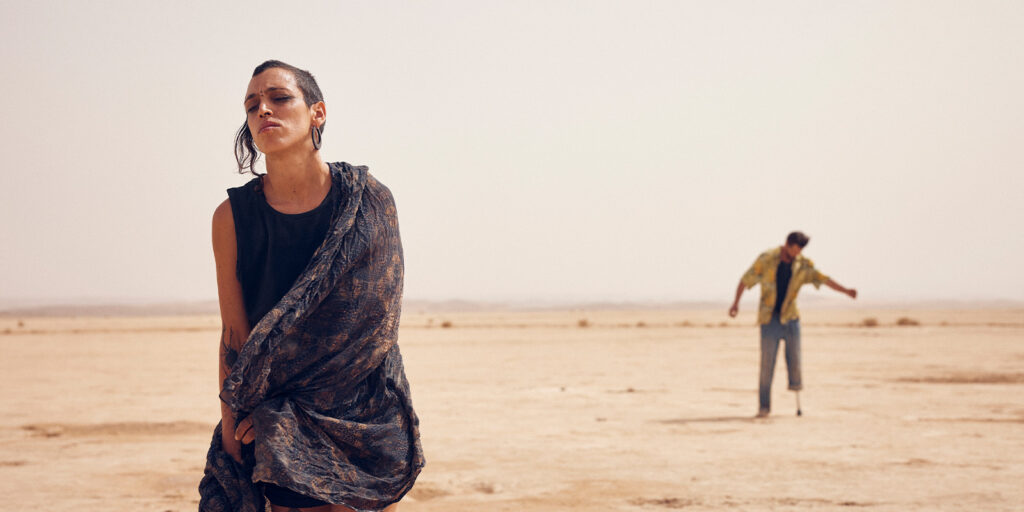
There was also a very practical and concrete reason for shooting this on film – it is 80% under the sunlight and 90% in exterior, and we had very harsh, vertical light. The only thing that could help us a little bit is the analogue nature of film – I think the analogue reacts better under the sun and under violet light. We went for 16mm because of our budget, and we shot on the ARRI Arriflex 416. It’s very, very resistant and it has a good look with a viewfinder. It’s a little bit lighter than previous models. I think it’s the best tool for working in this system. We also sometimes used the Arriflex SR3. Usually, I paired the 416 with Zeiss Ultra Primes, because in 16mm the support is very small. You have to amplify the image a lot for filling a cinema screen. When I am using digital, I never use Ultra Primes – if I do, I use filters for breaking the sharpness. But for 16mm, because we need sharpness and definition, I often used them.
Back to basics
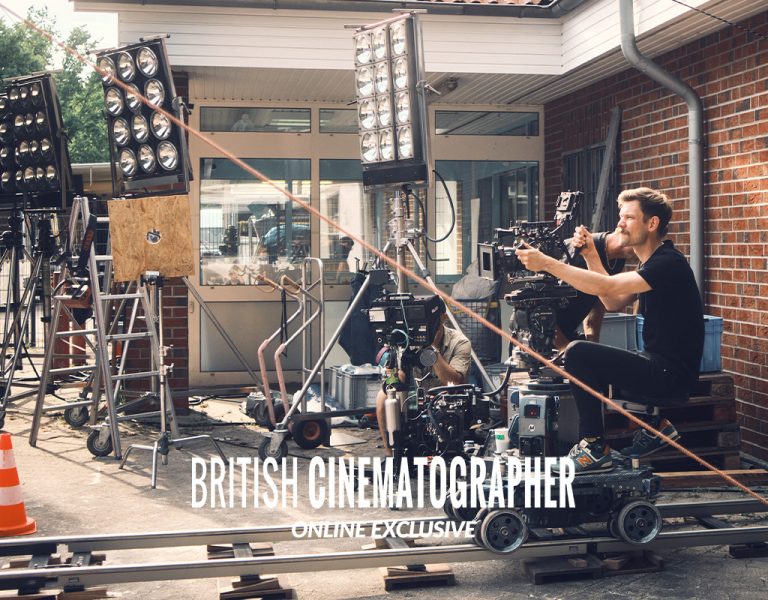
Working with natural light, we used a lot of classical tools, big frames, for softening the light of the sun. Sometimes we worked with bounces directly with the sun, sometimes we’d fill them with stronger HMIs. But a lot of the time we didn’t have time for that and we went with almost nothing, only the sun and some reflectors, some black tissues – really quite archaic ways of using tools; tools that we have been using since close to the beginning of cinema. When lighting feels fake, when you feel the light, that’s something that I don’t like. I prefer to be discreet and a little bit humble. For this film, it was good to be organic. If a director asks me to be more expressive, I can work with that, but my preference is to keep the set-up natural.
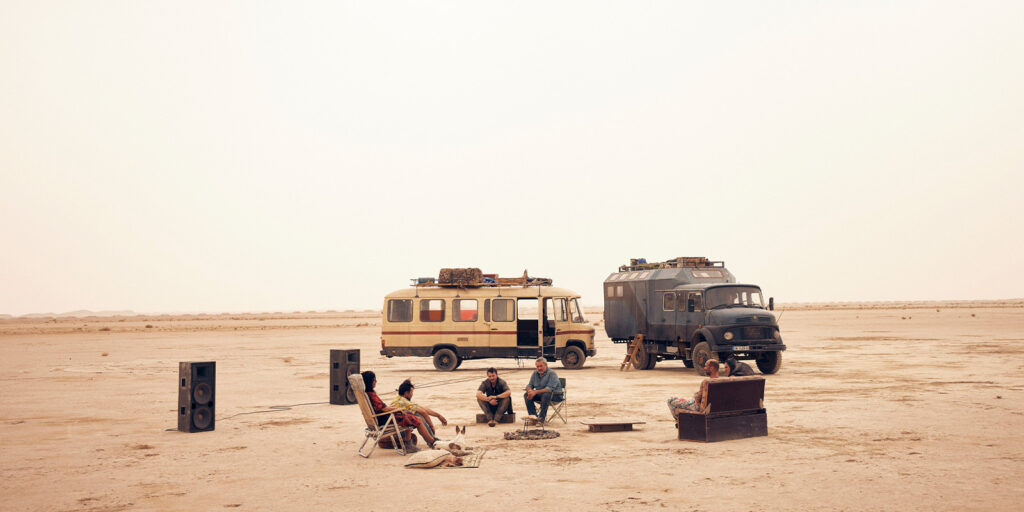
Sometimes the natural lighting complicated the continuity. For example, for the scenes with the mines, we stayed on location for a week getting that right. Because we have more shooting time than natural light, we’d sometimes have to do close shots with artificial light to try and keep the consistency. We were a little lucky because we had a little bit of smoke in the air, which helped us to make this atmosphere and soften the light. There were a lot of sandstorms in that area at the time. The footage of the storm in the film is real – we moved very fast to capture it. We were very lucky with that.
I think we managed to execute our vision on Sirāt because of preparation. Except for the rave scenes, 90% of the film was planned out with a long shooting list, so when we went to shoot, we knew very well what we were going to do. I’m always learning when working on any new film. This film really emphasised that I have to do more complex shooting plans because the stakes are high and we have to understand what is going on in each scene to keep the tension inside each sequence. I spent a lot of time working on that shooting list, and I think I grew my skills in this area of filmmaking. That was a big learning curve and it took a lot of time and energy for me.