
LIGHTS, CAMERA, MAC-TION
Stranger Things is synonymous with thrilling sequences, and season 5 is no different. DP Caleb Heymann explains how the major Mac-Z showdown in “Chapter 4: The Sorcerer” came together.
For the big action sequence in the Mac-Z at the end of “Chapter 4: The Sorcerer”, we used the ARRI Alexa 35 with Cooke S4 lenses. There are hundreds of flashing practicals around the set as well as very bright Molebeam spotlights sweeping through from the guard towers. The Alexa 35 allowed me to overexpose the Molebeams several stops and hold detail through the exposure range in the flickering lights, without worrying about clipping.
There’s a moment in this sequence when the action moves into slow-mo, and we then flash back to Will’s childhood. We tested 16mm, 8mm and a 12mm extraction from the 16mm, but we really loved the grainy low resolution feel of the 8mm, which is what Will’s family would have likely owned in the early 1980s. We opted for the new Kodak Super 8 camera and Angenieux 8-64mm F1.8, and in the end shot a mix of that and a stripped-down Red Komodo for any flashback shots that needed VFX, but we always shot an 8mm version of each setup for reference.
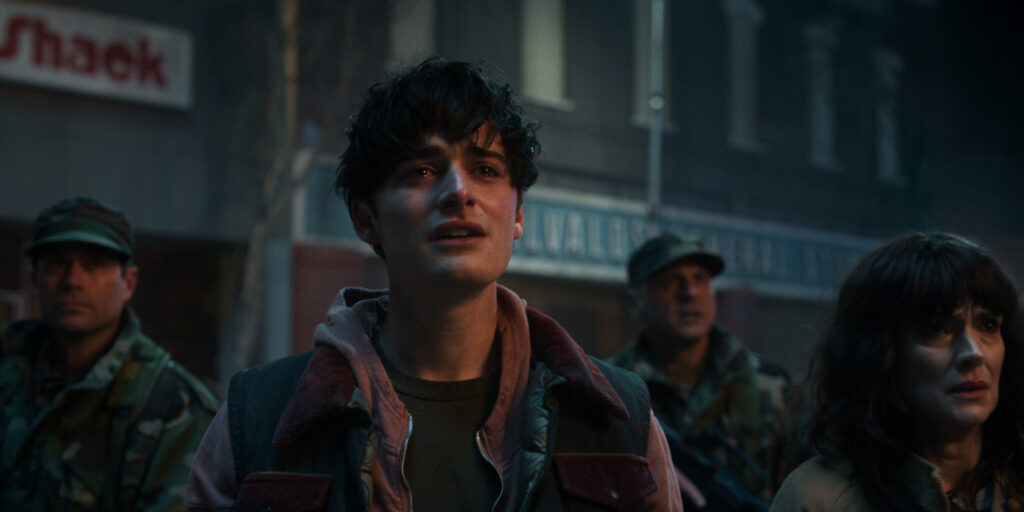
The Mac-Z set was built out on our backlot and was massive – roughly 400’ long by 300’ wide. We had several weeks of shooting there, mostly nights, and much of it was going to be action-heavy. I wanted to play with the colour contrast of warmer sources (somewhere between tungsten and sodium) and cooler sources that were motivated by uncorrected fluorescents and mercury vapour lights. When we pre-lit the set I worked with our gaffer Stephen Grum to create alternating pools of warm and cool light chequerboarding the set so that anywhere you looked, there would be colour contrast in the background. It was important that it be lit 360 degrees as an environment so that we could move around quickly and shoot with multiple cameras with minimal downtime.
Two construction cranes, each flying a 40×40’ soft box with 64 x ARRI S-60 SkyPanels, provided our ambient top light. Each box also had Elation Proteus Maximus movers that we could use for extra backlight on our actors or to pick up details in the set further away. Eight condors were placed around the periphery of the set supporting arrays of Creamsource Vortex 8s and Proteus Maximus for backlight. Adding into the mix were the 400 practicals that our fixtures team customised, including all the whacker lights, brakelights, headlights, and LED muzzle flashes inside the prop guns. In total there were about 1,000 lights running through wireless DMX to the board of our LCP Sam Rembert, who could dim it all and make everything flicker on a cue.
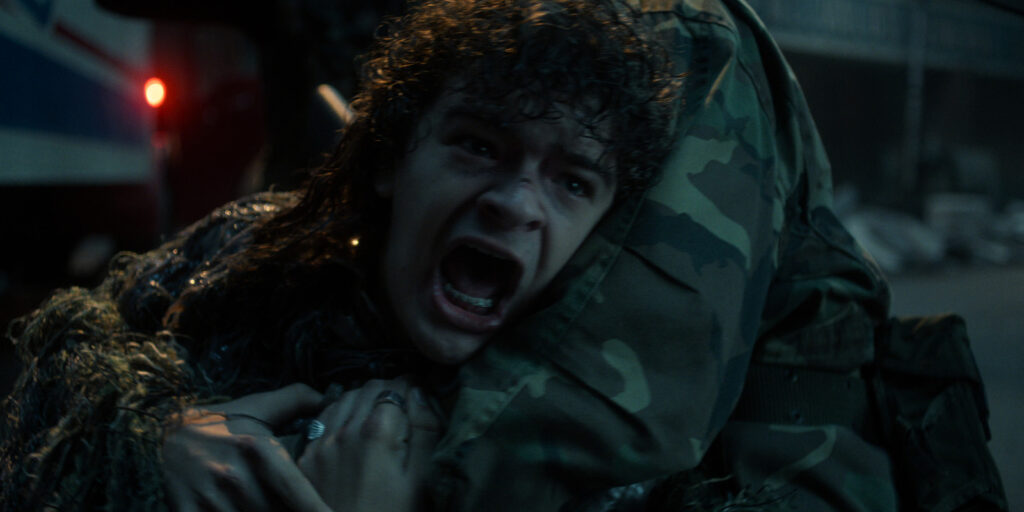
With all these bright sources flickering in frame here and throughout the season, I didn’t want the flares to become too distracting, and the S4s gave us the right amount of flare control with a subtle character and beautiful skin tones. They have such a great range of focal lengths in the set and often we were shooting in the 24-40mm range, often gravitating to the 27mm. We also carried Masterbuilt Classics for low light work when we needed the T1.4 stop and when we wanted more dramatic flares. I would often use a Hollywood Black Magic ⅛, and sometimes switch to a Black Satin to avoid the dotted bokeh of the HBM.
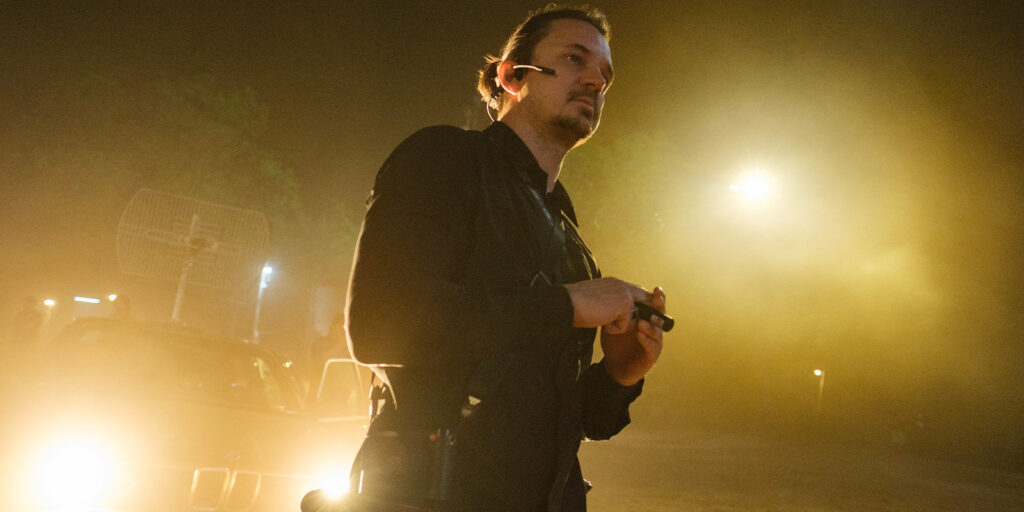
There’s a oner (actually broken up into four pieces because of stunt rigging) following Mike, Joyce and the kids through the Mac-Z as they navigate an escape route amidst total mayhem. We used the Zeegee operated by A camera/Steadi operator Nick Muller. The Zeegee gave us the visceral and immersive reportage style we wanted for this shot while allowing Nick to run around following the action without the footsteps becoming overly distracting. We could dial the level of handheld feel up or down.
We do as much in camera as we can practically and safely. For example, in the oner, those are all real stunt performers, about 60 of them. Jamie Bower plays Vecna and there’s such great SFX makeup that goes into his costume. When we shot demogorgons, we had a textured demogorgon head that we could view in the lighting to see how it would read and make sure that we were getting the right mix of soft and specular lighting.
For safety purposes, the interactive lighting from the muzzle flashes and explosion in this sequence were all done with LED lighting, using Vortex V-8s for the propane tank explosion. After the tank explodes, there are fires burning everywhere, and this was done through a combination of flame bars provided by SFX and supplemented with our lighting.
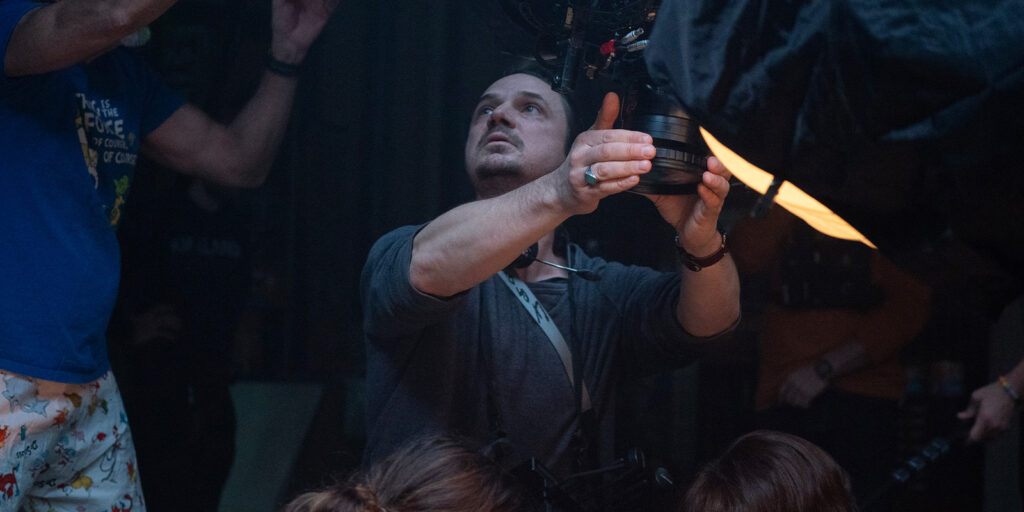
Through each season the Duffers have embraced an evolution of the look, and indeed each season has been shot on a different sensor. The first three seasons were Red Cameras, season 4 we moved to the Alexa LF and LF Mini, and season 5 was Alexa 35. Having the extra latitude in the highlights enabled me to be bolder with high contrast lighting, and occasionally use the 3200 ES mode when we needed more depth of field. We also got to work with a great drone operator for this sequence, Blake Sams from Lightcraft, who was able to simulate the galloping movement of the demogorgon while bobbing and weaving through the set at 30mph, which was thrilling to watch.