
CULINARY CONSISTENCY
Lauded as one of this generation’s most beloved shows, Andrew Wehde fills us in on how he has cultivated The Bear’s distinct visual style over four seasons.
As the FX juggernaut airs its fourth instalment, Andrew Wehde has had the somewhat rare privilege of being the cinematographer for nigh-on every episode of The Bear. Besides the pilot and shared credits on two other episodes (with Adam Newport-Berra and Chloe Weaver separately), Wehde has been able to firmly establish his imprint on the Chicago-shot series, created by Christopher Storer, which follows the transformation of a humble sandwich shop to a fully-fledged haute cuisine restaurant.
Admired for its in-depth character studies and beautiful, yet sometimes unflinching, portrayal of a professional kitchen, The Bear has been able to maintain a visual flair that has remained consistent from season one whilst also developing as the restaurant, and characters within it, progress on their individual journeys. Season four sees The Bear restaurant operating more as a well-oiled machine, compared to the more manic early phase of season three, whilst the clock ticks down on how long the eatery can remain financially viable.
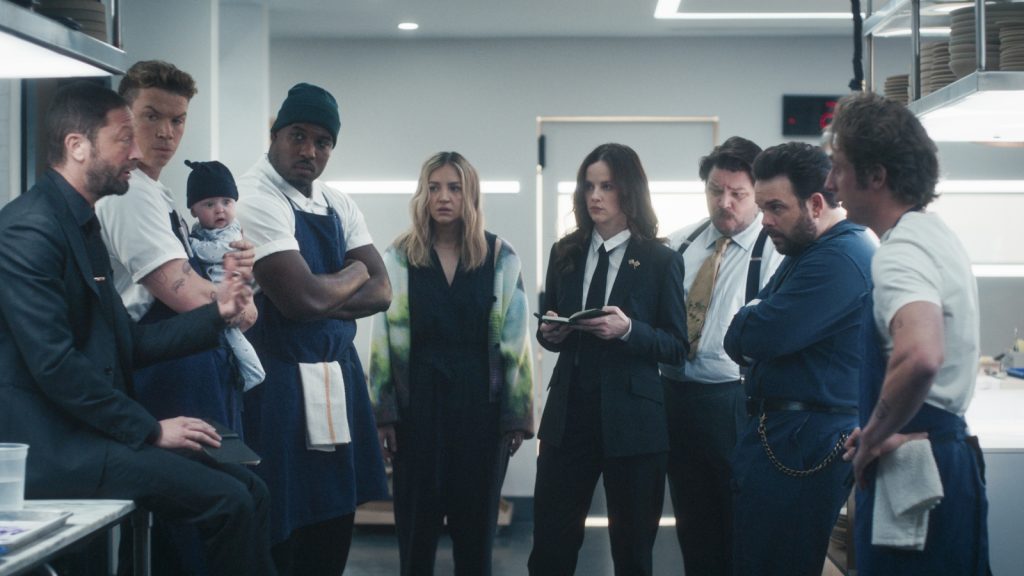
Having such cinematographic autonomy over the entire series has allowed Andrew Wehde to be precise about maintaining the look, but making changes to reflect the overarching themes of the individual seasons. “It’s been an amazing experience that I’ve learnt through and grown in that time since season one. Not just growing and evolving the show, but also myself as an artist. This is a show where the characters grow and evolve so dramatically each season. So, our show also needs to grow and change in the same way with that.”
One major development in the show is the opening of The Bear restaurant in the finale of season two, which becomes the key setting of season three and beyond. Wehde had an integral role in designing this set with production designer Merje Veski, with Wehde recalling: “I was going to the production office every day and felt like an architect in some sense as we’d spend all day with blueprints and lighting diagrams, thinking about every specific light.”
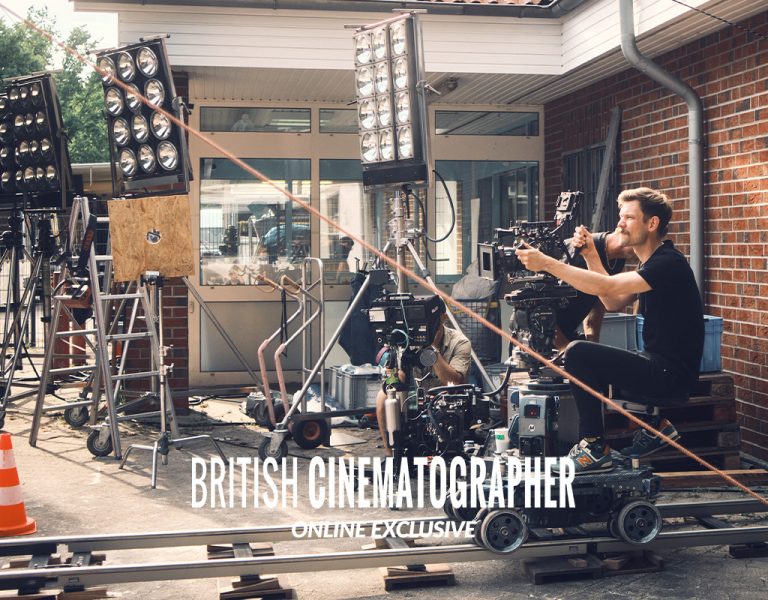
It was important for Wehde to a 360-degree operational space for the actors and chefs, “without having to bring in ‘movie lights’”. Everything was controlled through a rigging board with high CRI and colour adjustable, LED based lights, “it is truly the most adjustable set I’ve ever been on and that’s only possible through an incredible electric and rigging team.”
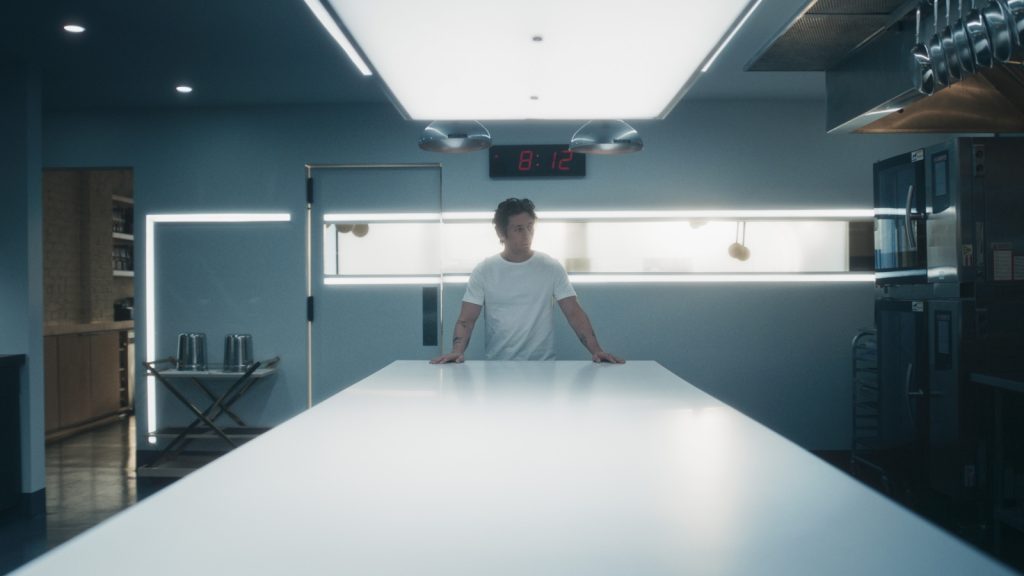
In order to show the change in the functionality of the kitchen in season four, Wehde was keen to bring more contrast and calmness into the lighting. “I wanted to do that by bringing my lighting values down, we had these hanging light fixtures hanging over the passes and these were designed to be practical for our chefs and actors to be able to do their cooking in perfect lighting conditions. So, by bringing those levels up and all the levels around it down, we really started stretching that ratio and that way I had much darker corners and much darker walls.” Juxtaposing beautiful, intimate moments between characters in the typically cold, blue tone of a kitchen is a key visual motif in The Bear and shows how central the setting is to the lives of the characters.
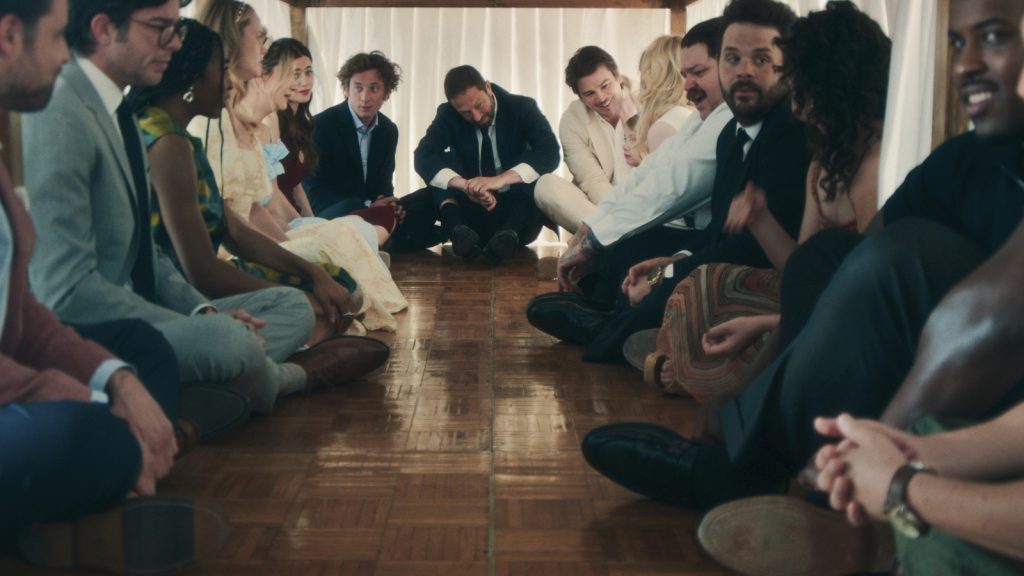
Wehde surmised: “It felt as if the characters knew that the important places in the space were bright, and those not as important spaces were a little darker. That for me was the big evolution in the kitchen in season four. It’s the way we connected the spaces and let the actors go in and out of darkness.” This culminates in a slightly more tranquil tone in the kitchen compared to the more high-energy scenes of season one where “we’re being Tony Scott”. Wehde cites Scott, Scorsese and Soderbergh as key influences on The Bear’s initial look, but looks inwards when it comes to developing the look on a season-to-season basis.
“We always had the same throughline of inspiration of how to capture and tell the story visually, but every season was a challenge upon myself of how to grow the lighting or grow the framing. That for me was the biggest accomplishment for season four, is that The Bear restaurant itself felt and looked very different. It felt very rich and more mature, that was reflective of the group maturing in this space.”
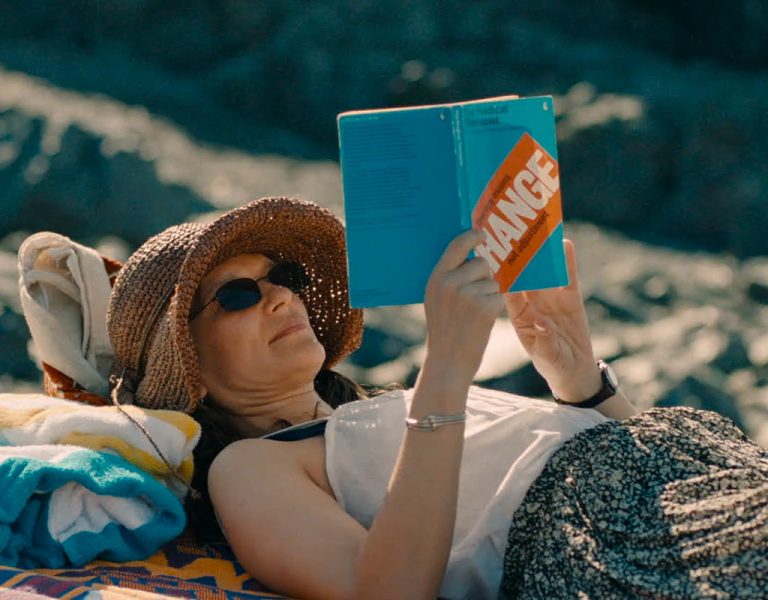
The Bear’s look extends beyond the four chic walls of the restaurant however, with Wehde keen for the lighting in all scenes to reflect the reality of the Chicago setting. “You have to think about the way sun hits and sun isn’t directional in an urban city, its reflective. Its hitting glass and metal things and beaming itself back in.” For season four the DP introduced 10 and 20k Molebeams to project a realistic, but warm tungsten sun.
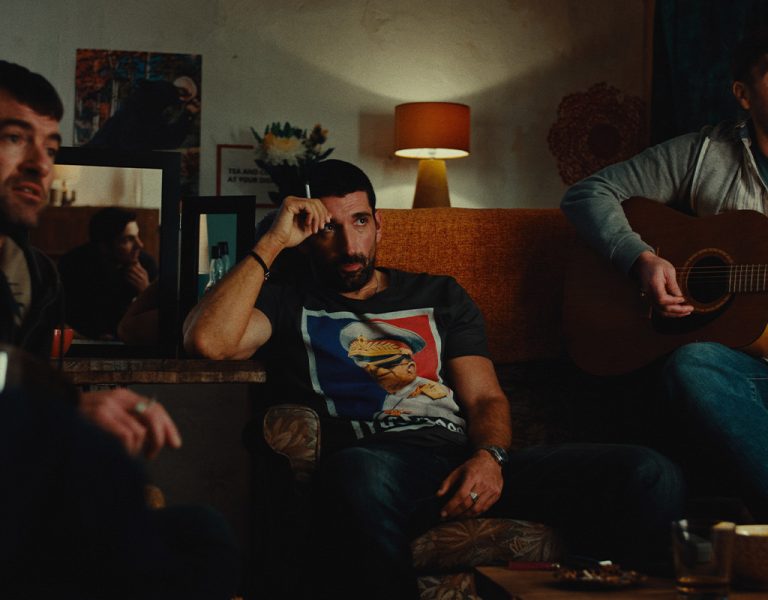
This allows for a lovely contrast between the tungsten, and the cooler look of the kitchen, which is an essential mantra of Wehde’s, “to me, every scene needs to have some sort of contrast. If I’m working off of cool lights I need to have something warm in there too and vice versa. Or else the wash in this world becomes unrealistic and The Bear needs to feel realistic.”
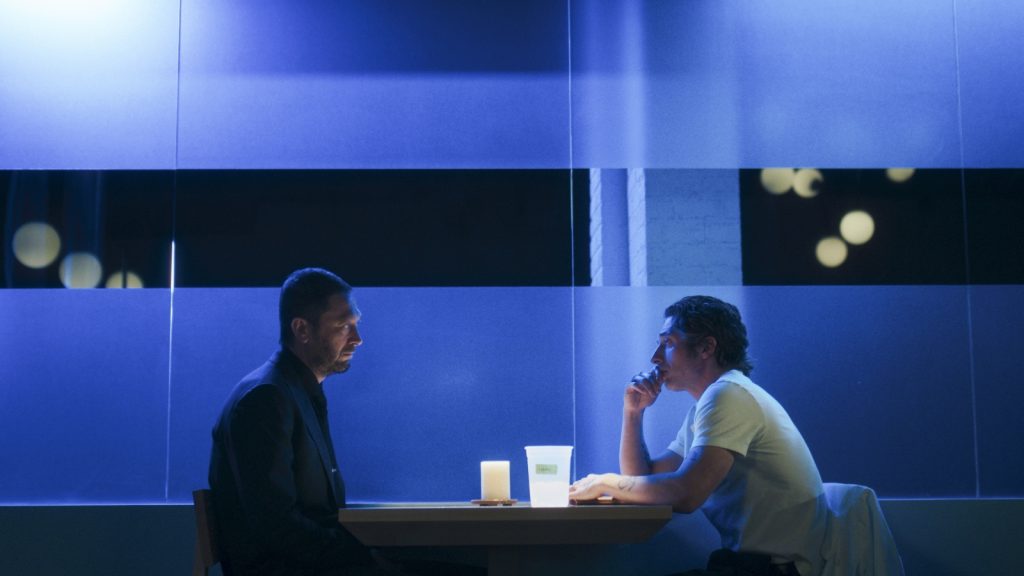
This well-crafted visual language means that when the rules are broken, hugely impactful scenes are normally afoot, “if there’s a colour wash you know something is going on because we never do them except in very specific moments and that’s a fun adjustment to make.” Said colour washes occur in season four within pivotal scenes between Carmy (Jeremy Allen White) and Richie (Ebon Moss-Bachrach).
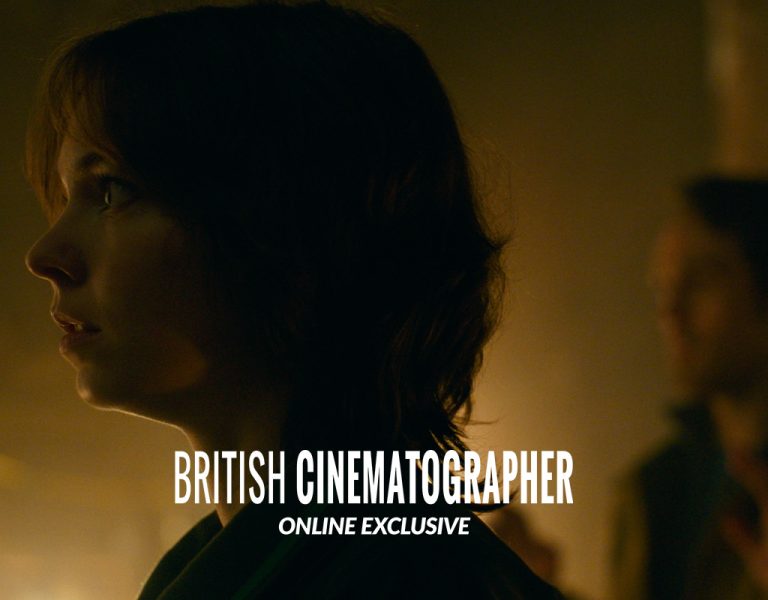
Since season two’s “Fishes” episode, The Bear has garnered a reputation for creating these stunning, more cinematic episodes that deviate from the established look of the show. In this season there are a couple of examples, with “Worms”, an episode centred around Sydney’s (Ayo Edibiri) big career decision, being Andrew Wehde’s personal favourite. “It has a whole different colour scheme to it. She takes us to a new part of Chicago we haven’t really seen yet and because of that it’s important to embrace the way light works, the way the buildings reflect light, the colours inside of it.” Wehde was keen to reflect the softness of Ayo and Sydney by adding a delicate hue of pink to the episode.
Despite these different styles, Wehde keeps the episodes grounded in the language of The Bear by using the same camera and lens package he’s been using since season one. This includes the ARRI ALEXA LF and Panavision H-series lenses, “it always comes back to still feeling like The Bear, the episodes still have that throughline that connects it, whether that’s the lenses or the way the camera moves and there’s something really beautiful about that.” Wehde first used the LF sensor on episode two of season one and has used it ever since, similarly the Panavision H-series has been a stalwart due to the vintage optics being “incredibly fast.” Wehde prefers to add and expand his lighting gear, whilst keeping the camera package consistent.
This is born out of a general frustration with television where Wehde feels a large mix of directors and DPs caters to a busy schedule, and not in service of the show. Therefore, Wehde and longtime collaborator Christopher Storer opt to shoot the series as if it were a feature: “the director is in charge of everything and there’s one DP who’s in charge of everything, we approach The Bear in the same way. Which is how the consistency still remains in these longer standalone episodes. That was a massive draw for me to continue with the show, I knew it was all mine, and no one was going to come in and mess with it!”
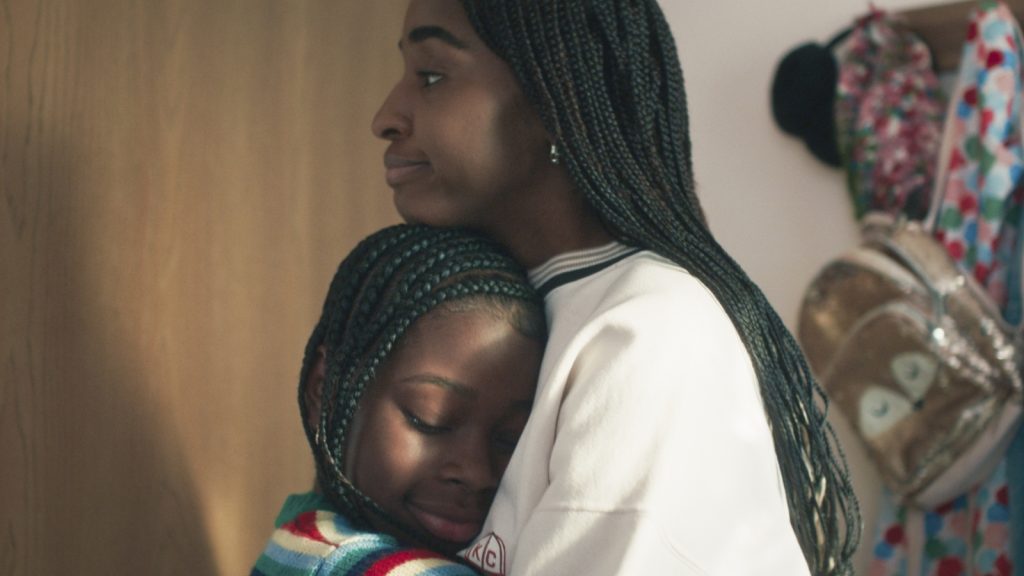
As The Bear centres around transition and development of both characters and physical spaces, it’s no wonder montage is used to such stunning effect. Wehde rightfully refers to these sequences as “beautiful”, referring to building up a library of usable scenes as “content acquisition”. With no second unit, Wehde is proud to say that everything is captured by his core team, “we’ve built libraries so when it goes to editorial they have an immense amount of amazing content. I do think our montages are gorgeous, our city montages are beautiful and everything is done by us.” With a lot of the crew being Chicago-born, including Wehde, a real intimacy towards the city permeates through the lens, “we live here and know the city and how it looks and feels, it’s a true love letter to the city.”
Another stylistic choice that has become synonymous with The Bear is zooms. Wehde noted the change in style of zooms over the four seasons, “in season one there’s a lot of crash zooms and now its evolved to really slow zooms in on faces and moments and it’s such a great exclamation point to situations, you as a viewer feel like you’re getting sucked in.” The DP is always keen to avoid using technique as a gimmick and always wishes to serve story, opting not to use zooms as variable primes, only using a zoom lens when there is a clear purpose.
This attitude of purposeful storytelling extends further to Storer and Wehde’s overall approach to The Bear, “our mantra is always to keep it simple. We do really cool looking stuff in the simplest way possible.”
–
FX’s The Bear seasons 1-4 are streaming on Disney+ now.