

GETTING THINGS RIGHT
When Gary (Zach Cherry) and Ell (Maria Bakalova)’s meet-up at a motel goes sideways, the pair find themselves on a chaotic road trip through British Columbia in the SXSW London-premiering All Night Wrong. DP Byron Kopman and director Jason James explain how location, lighting and a love of genre shaped this chaotic cinematic experience…
Starting with the obvious question, how did you both get involved in this project and what was it about the script that appealed to you?
Jason James: The script came to me from a writer that I’ve collaborated with quite a bit named Jason Filiatrault, and it was just a mashup of my two favourite things – neo-noir and rom-com. If I could pick my two favourite films, it’d be Alfred Hitchcock’s North by Northwest and Billy Wilder’s The Apartment. So I was super excited to mix these genres and mash them up and create something exciting and new.
Visually, I knew there was a lot to play with here. And emotionally, I’ve made a lot of romantic comedies and I’m always looking for ways to subvert and play with the genre. What I loved about this film is that it is sort of an anti-romantic comedy in that there are these two people that are coming together for the wrong reasons – they shouldn’t be together, but they form this unlikely friendship or bond over the course of this one insane night.
Byron Kopman: I’m normally a commercial DP. I’ve done a handful of movies, but I’ve learnt the hard way that I need to love the script to do a narrative piece and put it all in there. When I read this script for the first time, I could see the visuals and I just couldn’t put it down. So I knew that it was the right one for me to at least interview for – I chatted with Jason and I didn’t look back from there.
What was your visual philosophy for the film, and how did you work together on developing the visual language?
JJ: I was really eager to bring Byron on board because I love his visuals. I knew early on that this would be a very physical movie, I wanted to move the camera around and be really bold and brave in how we did so. There were a lot of technical elements to consider, a lot of car-to-car work, a lot of stunts, a lot of physically demanding work, and Byron’s had such a variety of different shows and productions where you see that in his work. It was definitely a step up for me in that way. It’s not just people talking in rooms now, it’s people getting hit by cars and all that fun stuff that comes with this blending of genres.
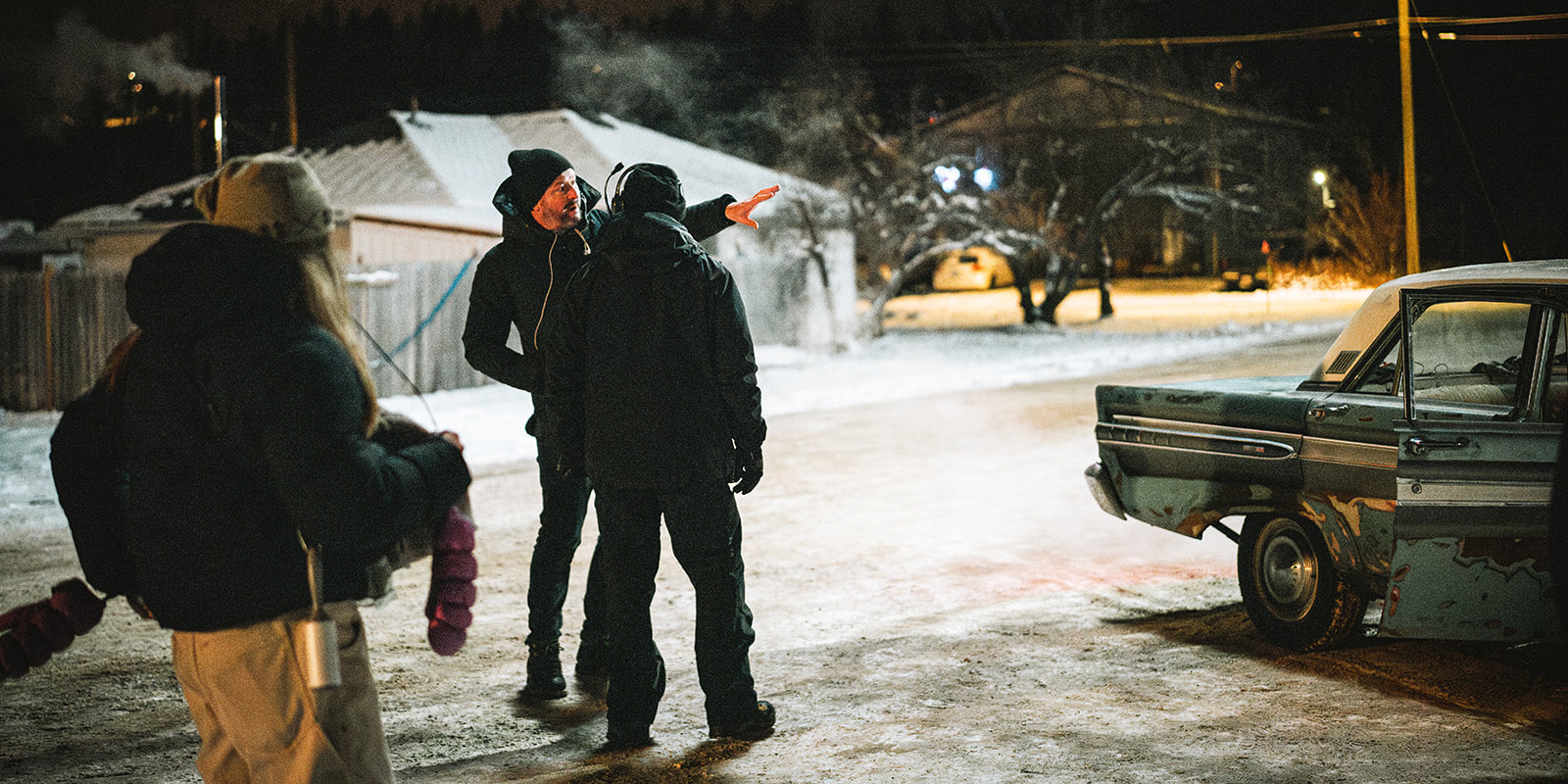
In terms of the visual language, I’m a big over-preparer. I like to do shotlists and overheads. It all started with ShotDeck, sharing references, going through other movies, looking at old noirs, neo-noirs, rom-coms, and really just getting a palette and a sense of what we both liked and responded to whilst we were reading the script. For me, I wanted it to be a stark, grimy, monochromatic world. But at the same time there’s a warm beating heart to this movie where these characters are discovering themselves, discovering this idea that they are worthy of love in whatever way, shape or form they deserve it. So you also have these hits of colour. We talked about having little washes of neon or moving lights that were almost like beating hearts, so you’ll see lights that move into certain scenes and you’ll see pops of colour within this darker, grimy world.
We were also both aware that when you’re making independent films, you don’t have the luxury of just building whatever you dream up. We’re not a huge Hollywood production, so we would also go out to shoot and be inspired by the real world. There’s a sense of discovery in that – going out and finding these motels, finding these diners, finding these houses, and then rewriting the script to what you find.
What was your main tech setup for this shoot? What cameras, lenses and lighting products came in most handy?
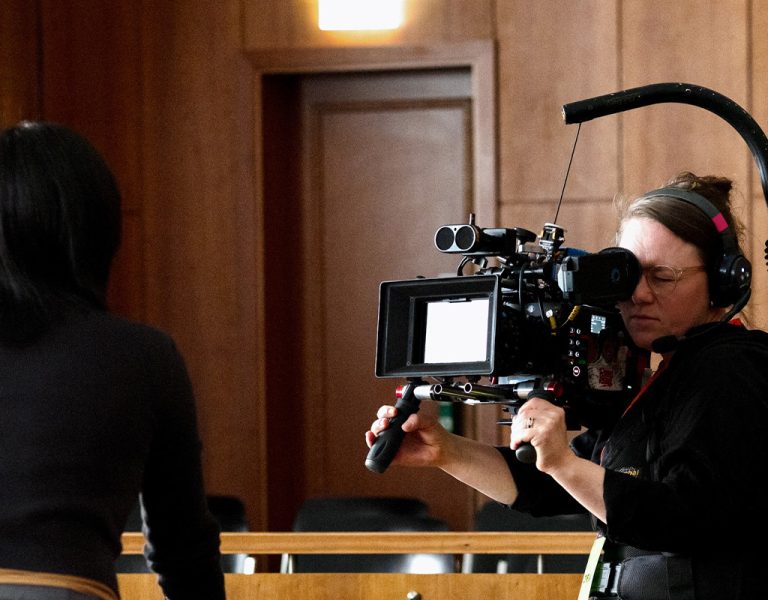
BK: We went with two Sony Venice 2s, chosen specifically for low light, as we shot basically all night every night in forests and locations with little lighting, and we paired those with Cooke 2x anamorphics. We windowed down the image to make the non-full-frame lenses work on the full-frame sensor. For lighting, we predominantly did LEDs – we had ARRI S360-Cs and Nanlux 5000s all controlled on the iPad, so we could always adjust to taste.
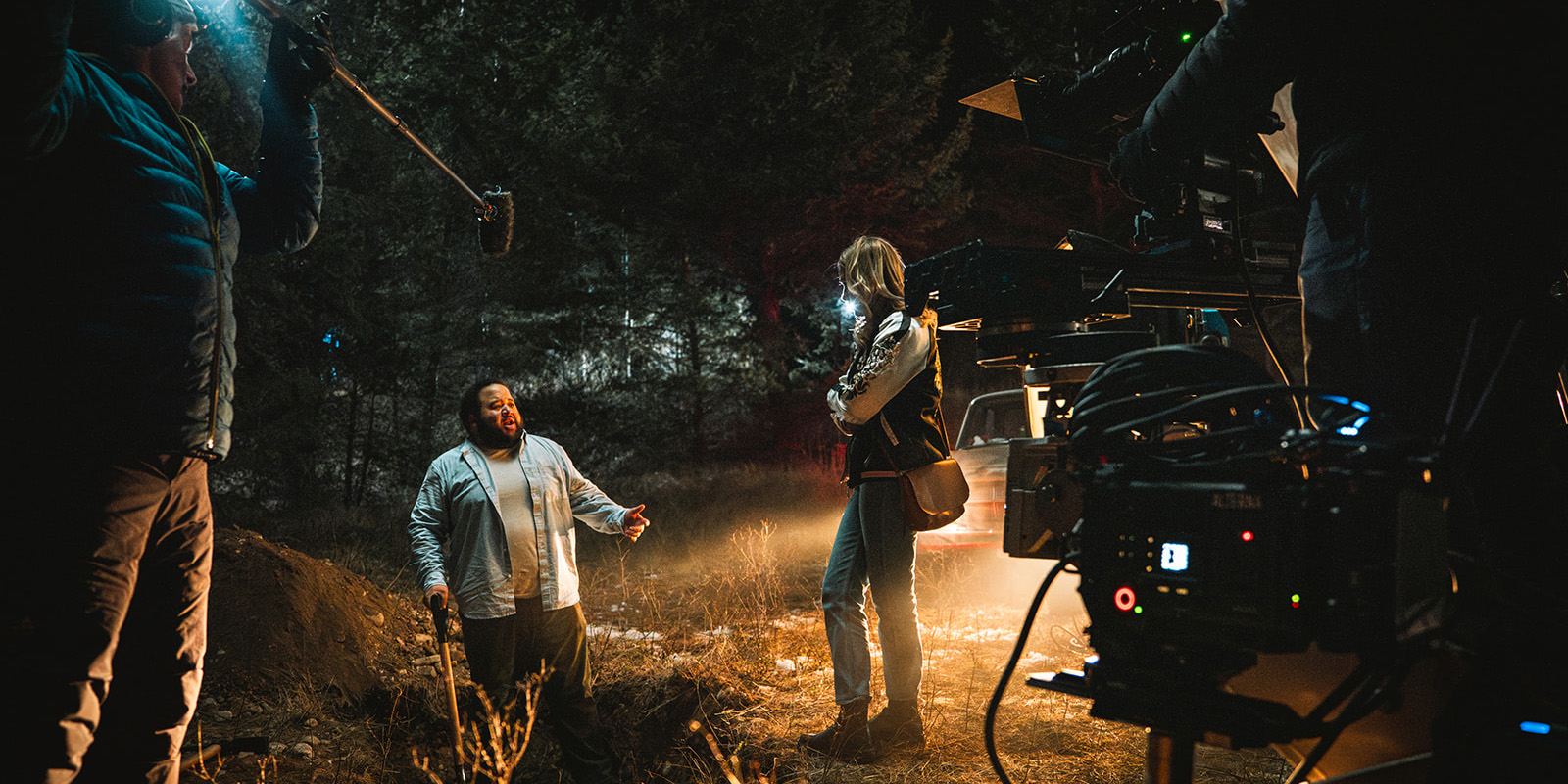
JJ: I remember there was this one moment we were shooting in a small town, and there was basically no ambient light. We were standing on set, thinking it looks great, we’d got lights in the background, and Byron’s like, ‘Let me just show you how much ambient light is around here right now.’ He presses a button, all our movie lights go down, and we’re just in complete darkness. So much of the movie is lit by us, because we were often in the middle of nowhere.
BK: Yeah, I remember our gaffer telling me we used 86 lights for this one scene, because there was just nothing coming from the surroundings!
The motel setting is one that we’ve seen a lot on screen over the years, but it feels unique and memorable in its own way in All Night Wrong – how did you go about building those scenes?
JJ: Going to these smaller towns and choosing these unique locations, I love leaning into the specificity of each place. What story can we tell? How do we make the most of these interesting locations that you could just never dream up? You have to embrace them and you build on what’s already there. I saw the town as this sort of liminal space, a harsh, deceptive world where bad shit happens. It’s all about isolation and loneliness and coldness. You don’t see a lot of background, you don’t see a lot of other people, the audience is discovering it and figuring it all out with these characters.
On the motel specifically, this one area weirdly had a lot of 1950s, 1960s motels all close by, so we had plenty to choose from. But there was something special about the one we landed on. I really loved the cabins in it. Working with our production designer, Tiana P. Gordon, and Byron, we then brought a love motel aesthetic into it. In our heads, we had this whole story about people that used to go there off the highway and meet in this weird, quirky love motel. So we just embraced that and built on that.
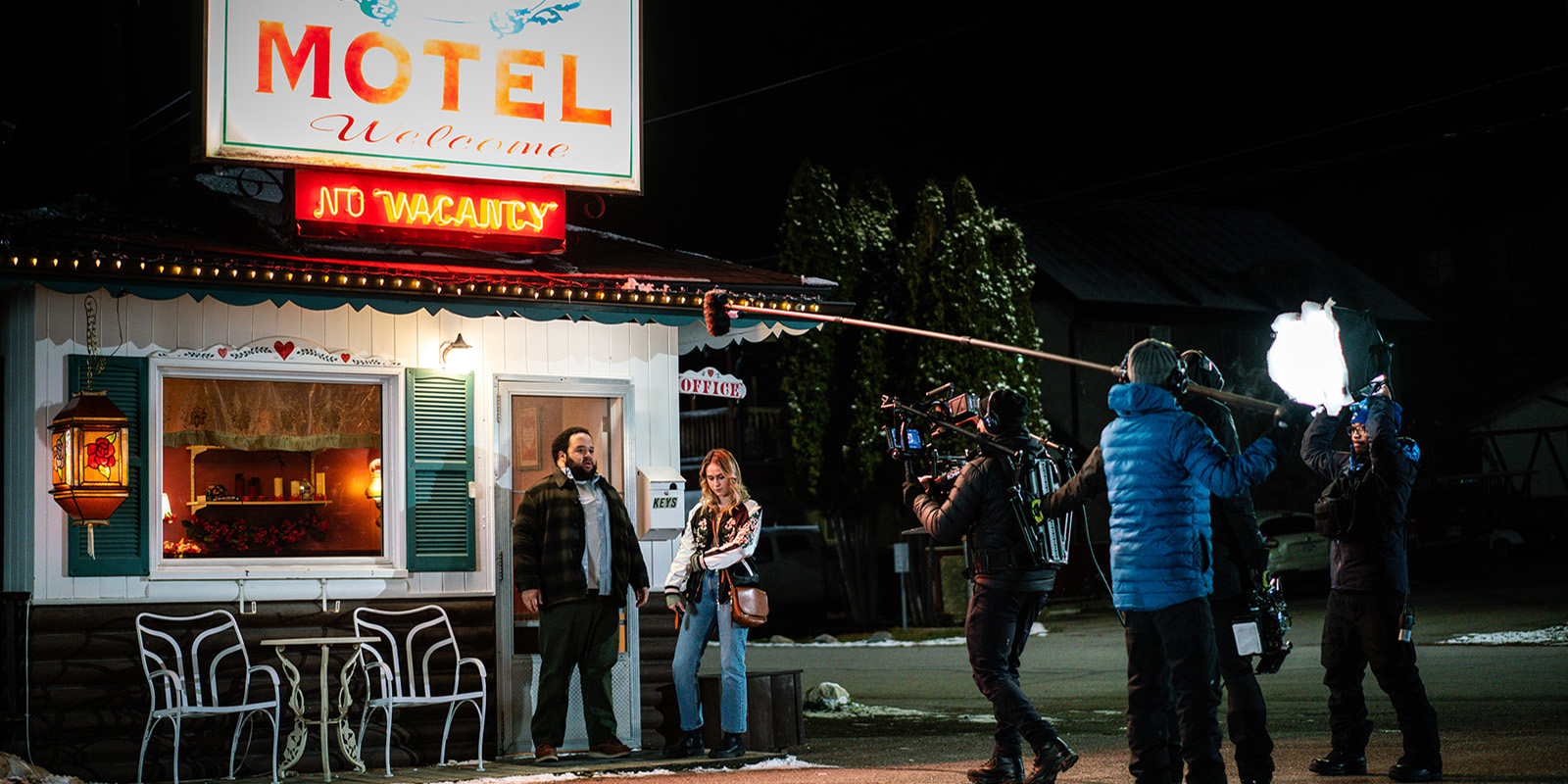
BK: I think there was one other motel we were initially leaning towards – it had a better sized lobby. The lobby in this one was about two-and-a-half metres squared, so we couldn’t do much of our own lighting in there. But despite some negatives, it worked really well in the end. I added Astera Titan Tubes to every door to ensure it didn’t feel like a dark hole, our production designer added red wallpaper and carpets to build out the love motel aesthetic. So it ended up looking really great.
The film descends into a chaotic road trip through snowy Canada – how was that to shoot?
JJ: We shot this movie in British Columbia, in the mountains, in the winter, in -10 degrees, in snow, and all at night. The cool thing about shooting in small towns, though, is that it enhances your budget, in a way. You don’t have to worry about curfew like you do in the cities, for example. We were shooting a movie that takes place all in one night, so we were shooting a month of nights, but we were able to work from 7pm till 7am every shift – when you’re filming in cities, you often have to shut production down at midnight. We could also block off streets and do stunts in the middle of the highway. So that was really helpful.
The crew went full vampire mode. It was a very physically demanding shoot condensed into a short amount of time. It involved a lot of big shots and a lot of aggressive moves, so I think it was quite taxing on the crew. In a way, that’s part of the fun of independent filmmaking, and I think everyone rose to it, but it was exhausting.
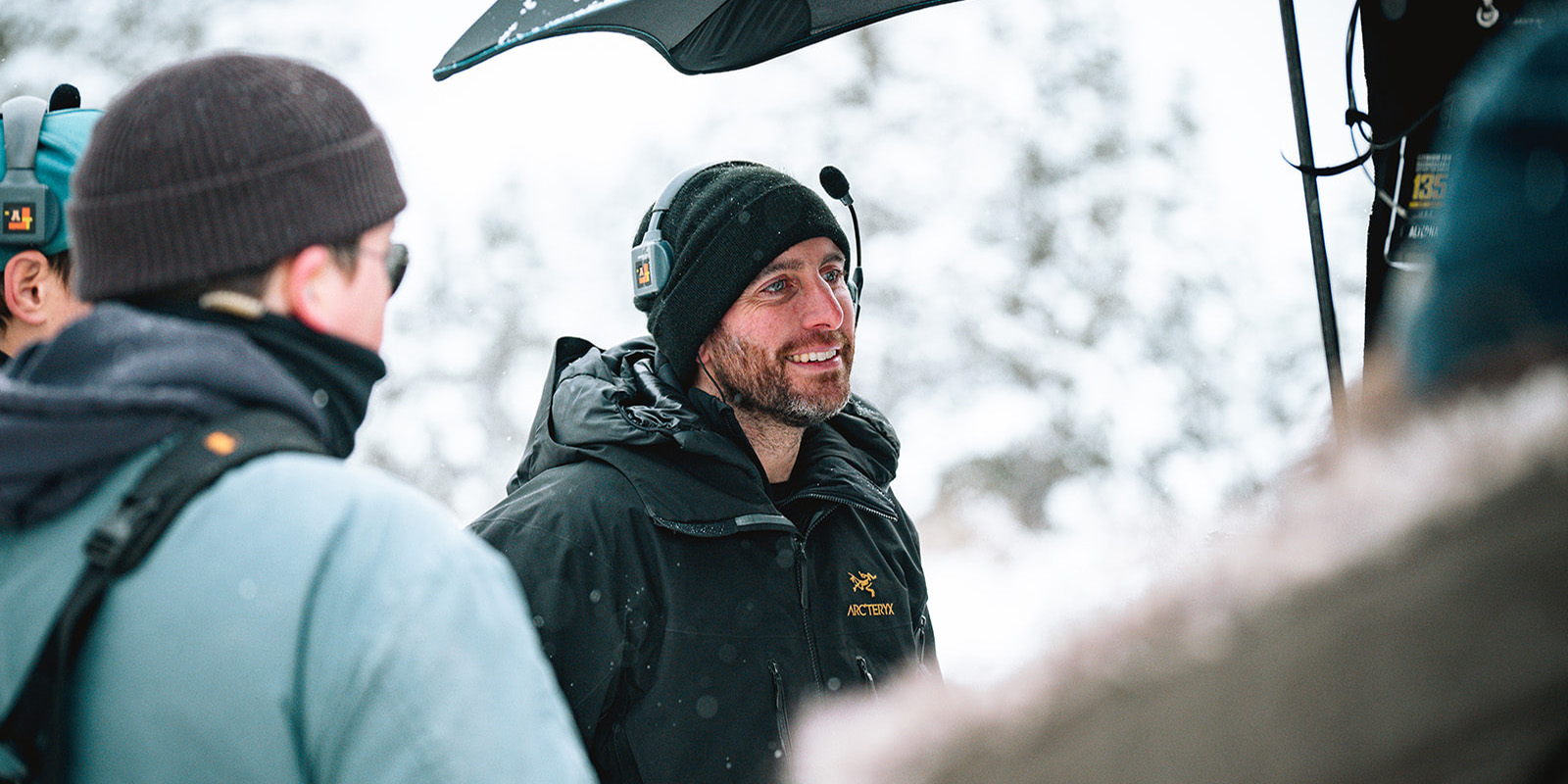
BK: That was one of my biggest draws to the film – getting to work on location. I knew I would get to work from scratch, on a blank canvas. I really embraced that challenge.
JJ: I shoot a lot of films on location and in small towns, and you just can’t beat the textures and the frayed palette and the surprises that you find on location. We’d find old houses with rusting cars on the front lawn and go out to an old gravel pit with sodium vapour lighting – you can’t find that in a lot of major urban centres anymore. They’re quite shiny and new. So I love to embrace the character of these locations.
BK: Yeah, that character really comes through in the gas station scene. That required very little lighting in the interior or exterior shots. It looked so nice and raw and rough on its own. You don’t find that without going out to these interesting locations and discovering what they have to offer.