

Mark London Williams reports back from this year’s Cine Gear, as leading cinematographers discuss light, lenses, and securing legendary status. Plus, with Emmy voting now open, he takes a look at a few of the productions that could be in the running for prizes…
“You still have to have light that tells the story.” That’s another terrific distillation of the cinematographers’ art, this coming from Jeff Cronenweth ASC on one of the ASC’s many panels that were laced throughout this year’s Cine Gear show.
One assumes that includes the absence of light as well – those shadows and “pure blacks” also beloved by DPs – and this year’s expo, whose slogan was “where storytelling meets magic”, was also an exercise in trying to determine which one was winning out (it was, after all, also the return of “Bleak Week” at the American Cinematheque, with films running at their venues around town during Cine Gear’s pre, concurrent, and post-events) – both in the industry, in general, and the world at large.
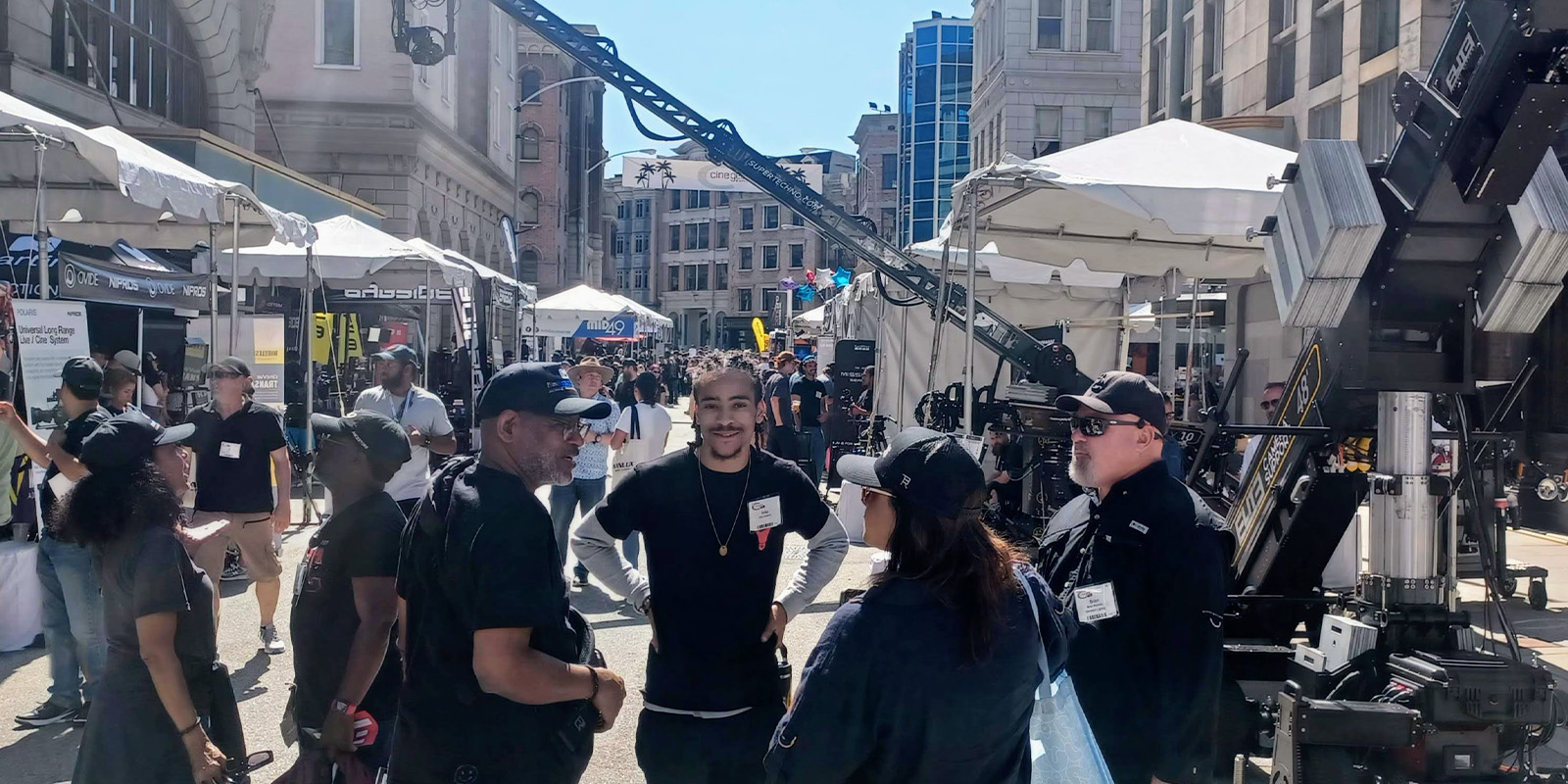
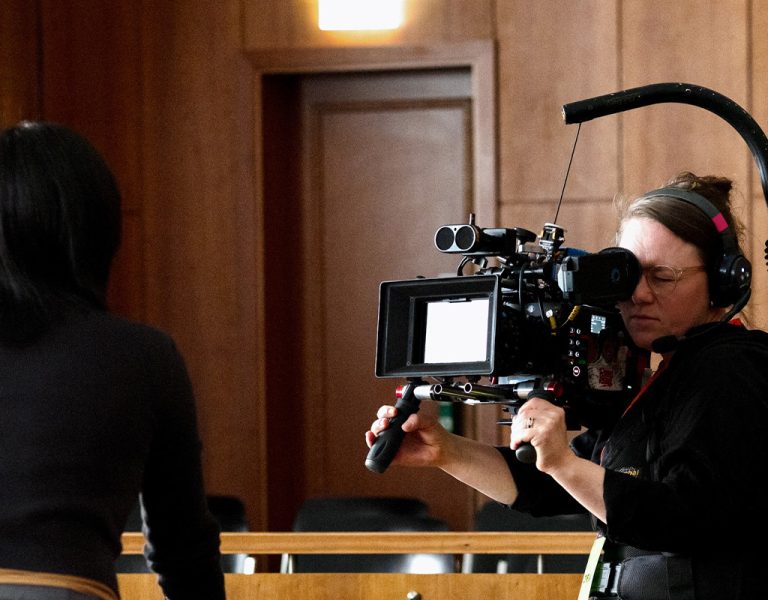
The actual weather for the event wasn’t bleak at all – the entire weekend, held once again at Universal Studios, played out in the kind of bright desert-flecked LA light that the late, great David Hockney – who left us as we were still laying out this column – liked to paint, but the question was more one of how the still-seemingly beleaguered entertainment industry – between AI, consolidation, and the overall shape of the economy – was faring. Cine Gear itself, for example, started charging a modest entry fee for tickets (as opposed to keeping admission free until the very last minute, as in years past), which did seem to streamline the crowds somewhat (though panels were certainly all “sold out”), including, thankfully, the formerly infamous Friday morning registration wait, that kicked off the two-day event.
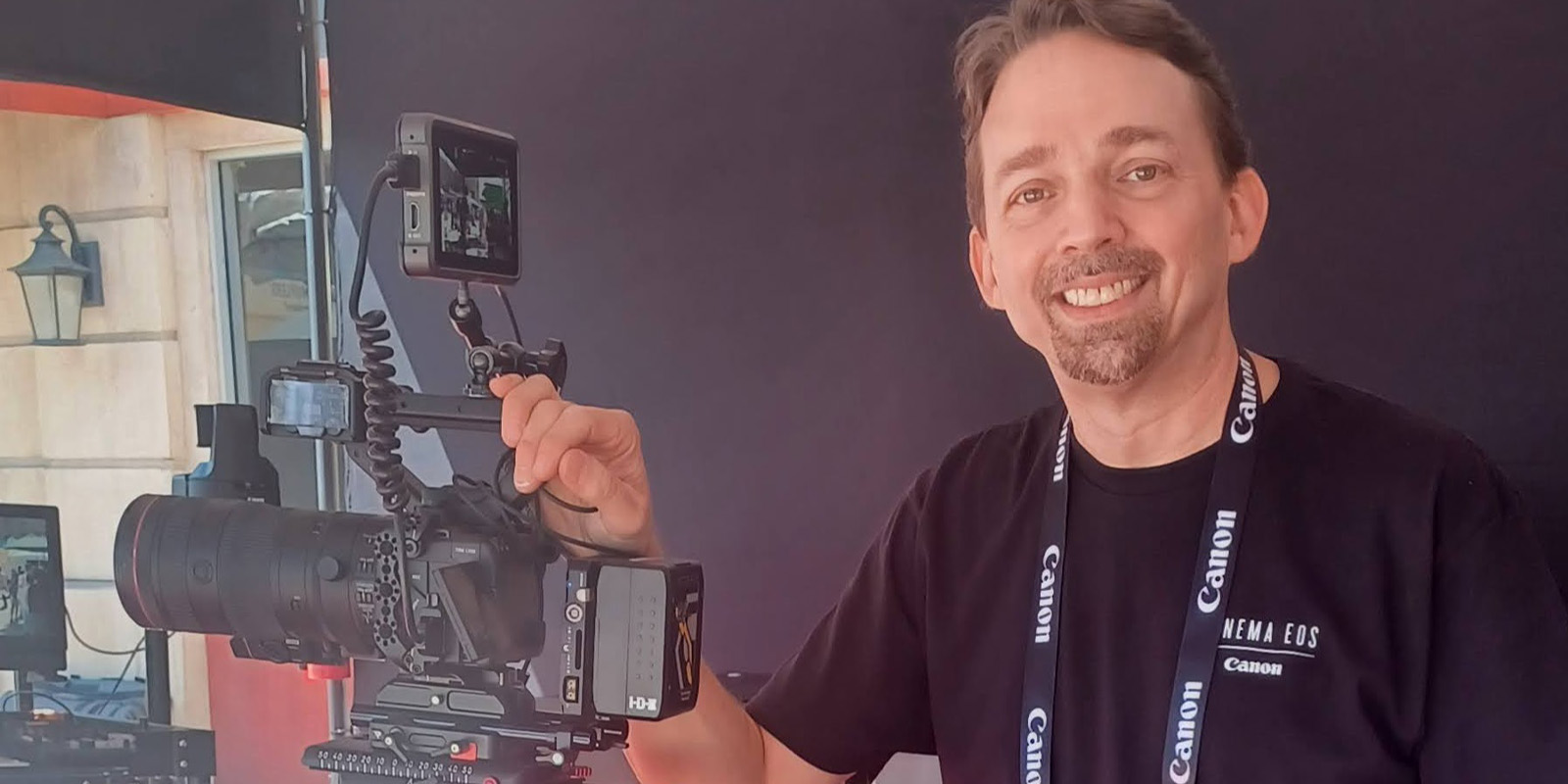
What then would the pulse of the biz be, among vendors and programme participants? Pronouncements seemed to be mixed. At the Canon Booth, Cine Gear regular and senior technical specialist Matthew Irving said there was “much better energy” this year, a contrast, he noted, from last time, when visitors would say, “I’m out of work, but tell me about your cameras,” to, “I have a show starting – tell me about your cameras!”
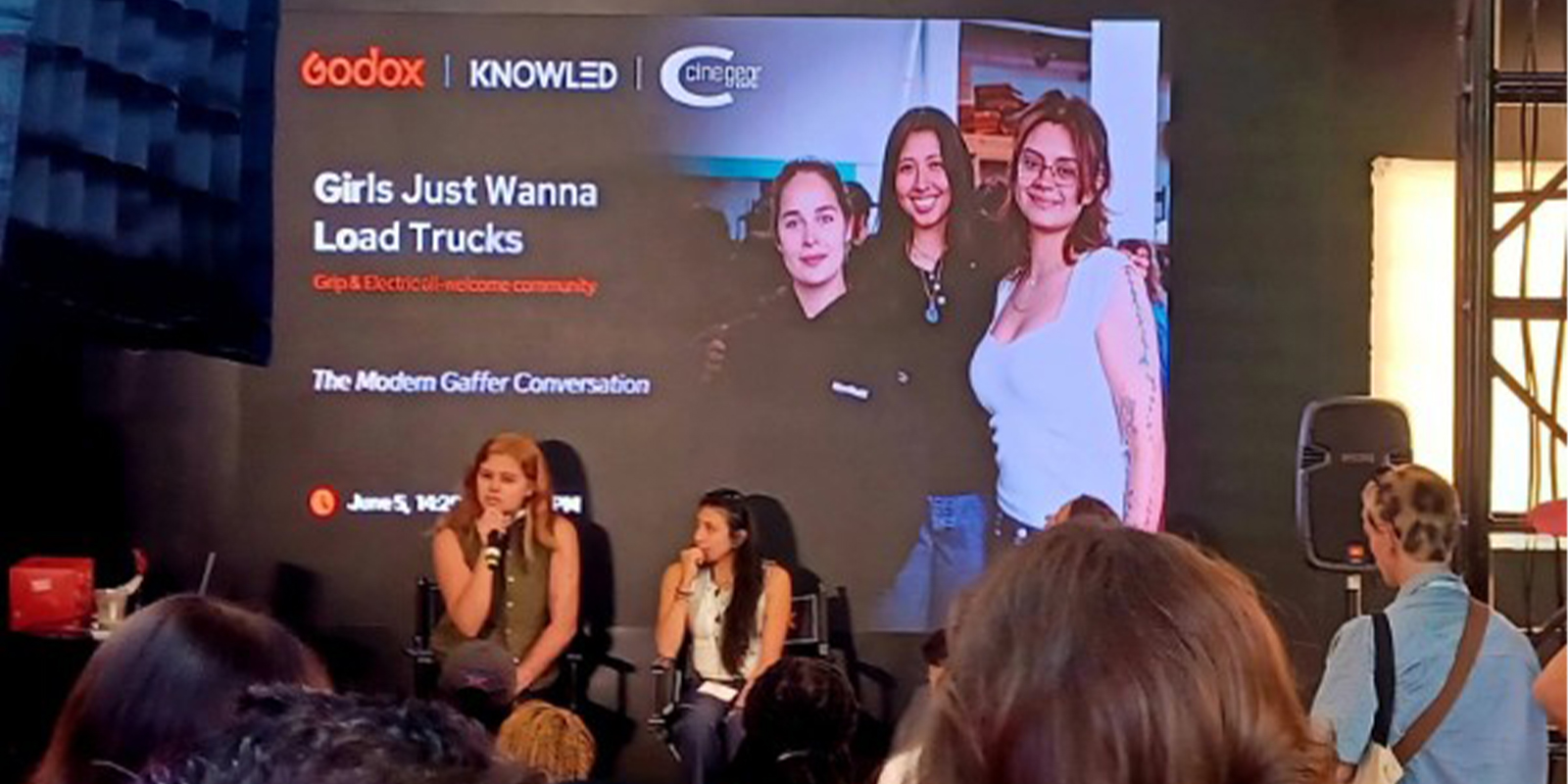
Earlier, the Godox/Knowled lighting booth hosted a panel with NY-based Girls Just Wanna Load Trucks, a group dedicated to training, and representing, gal gaffers n’ grips. There, group co-founder Lulu Lopez mentioned – on a theme similar to the one Cronenweth would touch on the next day – that “gaffing work is almost like being a sculptural artist (or) like a chef” in terms of how one mixes, or blends, light. But how much mixing/blending work is there now?
The panel talked about doing commercials and a lot of corporate work in their native New York, along with verticals. Lots and lots of verticals, evidently, which was also borne out back on this coast, at the Canon booth, where Irving reported lots of interest in their newish EOS C-50, which comes with “extra vertical resolution” and an easily-flipped monitor when you’re toggling between formats (or cropping automatically when shooting in DCI or UHD 4K). This, along with their R6V / MKII, at an even lower price point, is attractive for, as Irving put it, “content creators”.
What is content?
But the question remains, of course, what is meant by “content” anymore? And not only with verticals – as Disney, Google, Peacock and more have announced initiatives for that same format, where oblongs meet brevity. Across country that same weekend, the Tribeca Film Festival was launching, and there was considerable consternated buzz at Cine Gear about the festival being the first major one to welcome an all-AI generated film – or is that “film” in quotes? – on its programme. While here in LA, votes were still being counted in our primary election for mayor (and California governor), where AP News noted, among the campaign’s key, tenacious issues, “Hollywood jobs [which] have been decamping for years”.
Which certainly seemed to be the case for at least one storied ASC member, who mentioned to us at Saturday night’s Awards reception that the studio they worked for was indeed taking their particular television division and “decamping” for parts north.
Still, the overall mood was convivial – after all, many of the soundstages at Universal which last year were used for exhibits were now busy with production (resulting in a much more dispersed expo), and that conviviality included the evening’s honourees M. David Mullen ASC, Caleb Deschanel ASC, and Ed Lachman ASC.
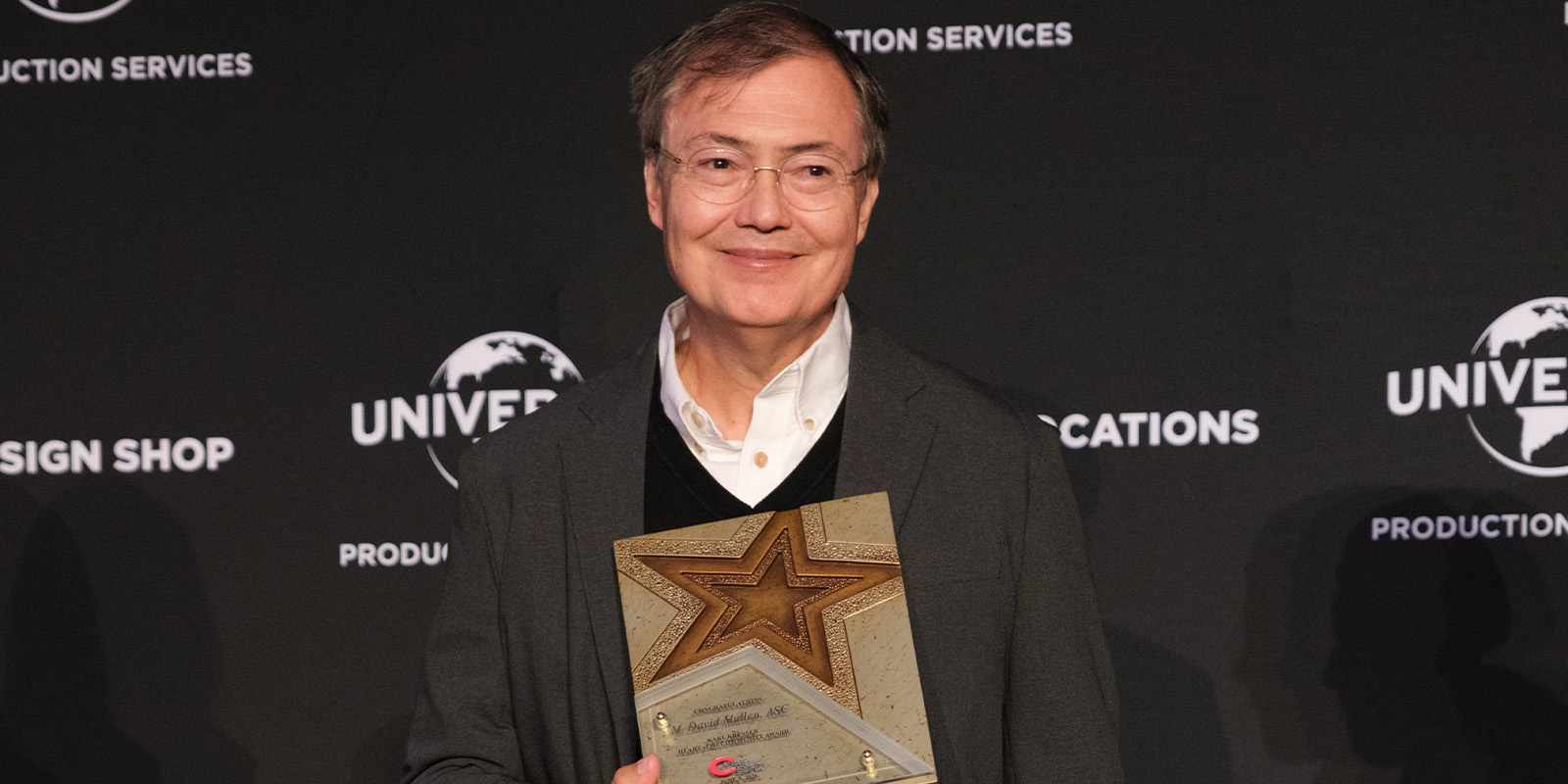
Mullen received the Karl Kresser Heart of the Community Award, named for the event’s late co-founder (along with his wife, Juliane Grosso, who once again was in full force during the awards). True to that spirit, Mullen thanked all the vendors there, whose product development, and sandboxes to test equipment in, have supported his own considerable, Emmy-laden career.
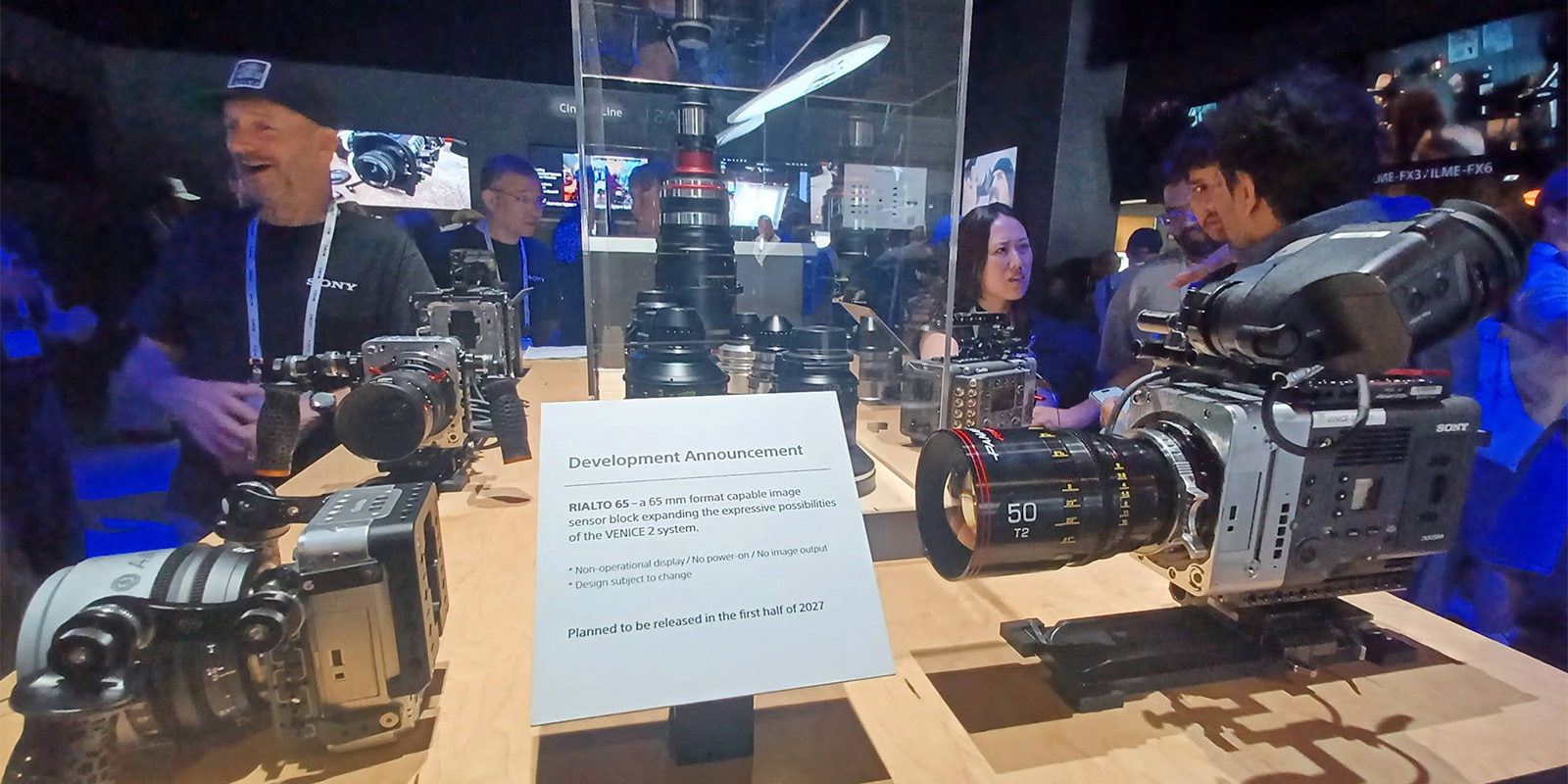
And most of those vendors extend Cine Gear “week” with events of their own. Sony, for example, had an earlier luncheon at the ASC Clubhouse to tout its 2027 release of the Rialto 65, their large format sensor block for the Venice 2. There was a brief presentation, a hands-on model of the anticipated extender, and comments from recently “reduxed” ASC president Shelly Johnson ASC on the group’s partnership with the manufacturer, echoing Mullen on vendor support, as he harkened back to them coming in to solicit input when they were originally designing the Venice.
And at the same time as the awards (alas?) ARRI was having its annual dinner, with DPs from around the globe – sans press, so no reportage (but hey, the pics we saw from ARRI later clearly showed its world class roster of cinematographers having a swell time indeed at this always-anticipated gathering).
Awards night
As for the awards, held once again at Universal’s iconic Courthouse Square, it wasn’t merely a communal relationship with the vendors and manufacturers that made Mullen particularly suited for this honour, but also his own give-backs to the community, in the form of his ubiquitous on and offline presence as a historian and teacher of cinematographic arts, and his general accessibility for those coming up in this particular craft-cum-art.
That sense of generosity was continued by Deschanel, receiving the Legacy Lifetime Award, who was introduced by his Lion King collaborator, Rob Legato ASC. That’d be Disney’s “live-action” version – which really meant rendered CG jungles and animals together with human actors. Deschanel recounted being in Africa on a scout, for reference and plate footage for terrain, animals, etc., but noted that however much iconic imagery one might get credit for – this from the director of The Black Stallion, who recounted both sunrise and moon shots in Lion King he was particularly proud of – also comes as a result of crew suggestions, actor performances, and many contributions out of one’s particular control.
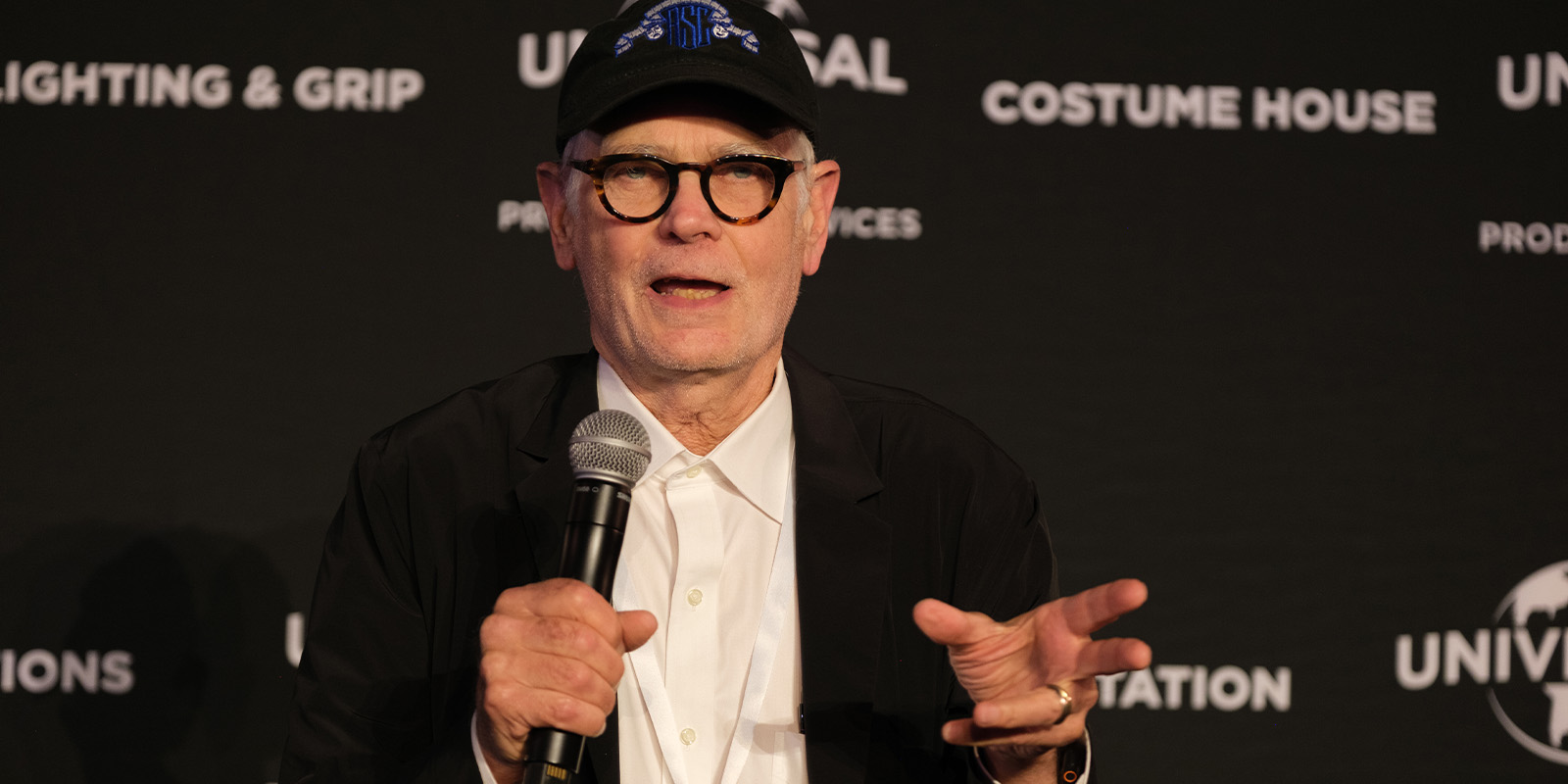
Those themes were distilled by Lachman, who was bestowed the evening’s culminating Cinematography Legend Award, who noted simply that being termed a “legend” inferred a certain amount of respect, both for a person, and their works. And in looking out at the crowd, said “hopefully you all become legends, too”.
Award evening came at the end of a busy Friday, whose earlier panels included the aforementioned Mr. Lachman in conversation with Nancy Schreiber ASC, part of a rich schedule where each of the day’s panels would be worthy of its own column-wide summary. Since we’re still in the “round-up” half here – never mind the Emmy FYC section a few paragraphs ahead – if you like serials, continuations, and multi-part narratives, these are the summer and fall columns for you, as we’ll be revisiting some of these highlights and conversations in future installments.
As for Ed’s conversation with Nancy, though, he did mention that – having started with docs – even narratives “have never left the documentary world”, given that lighting, performances, etc., are always evanescent, shifting, even between controlled takes. Even “the way this room is lit now gives me ideas”, he said, looking around the theatre.
He also opined that in the ongoing tug-of-aesthetics between film and digits, he thought “there’s a place for both”, though he was glad “they’re holding on to film – grain is anthropomorphic,” whereas with digital, “everything is pixel-fixated.”
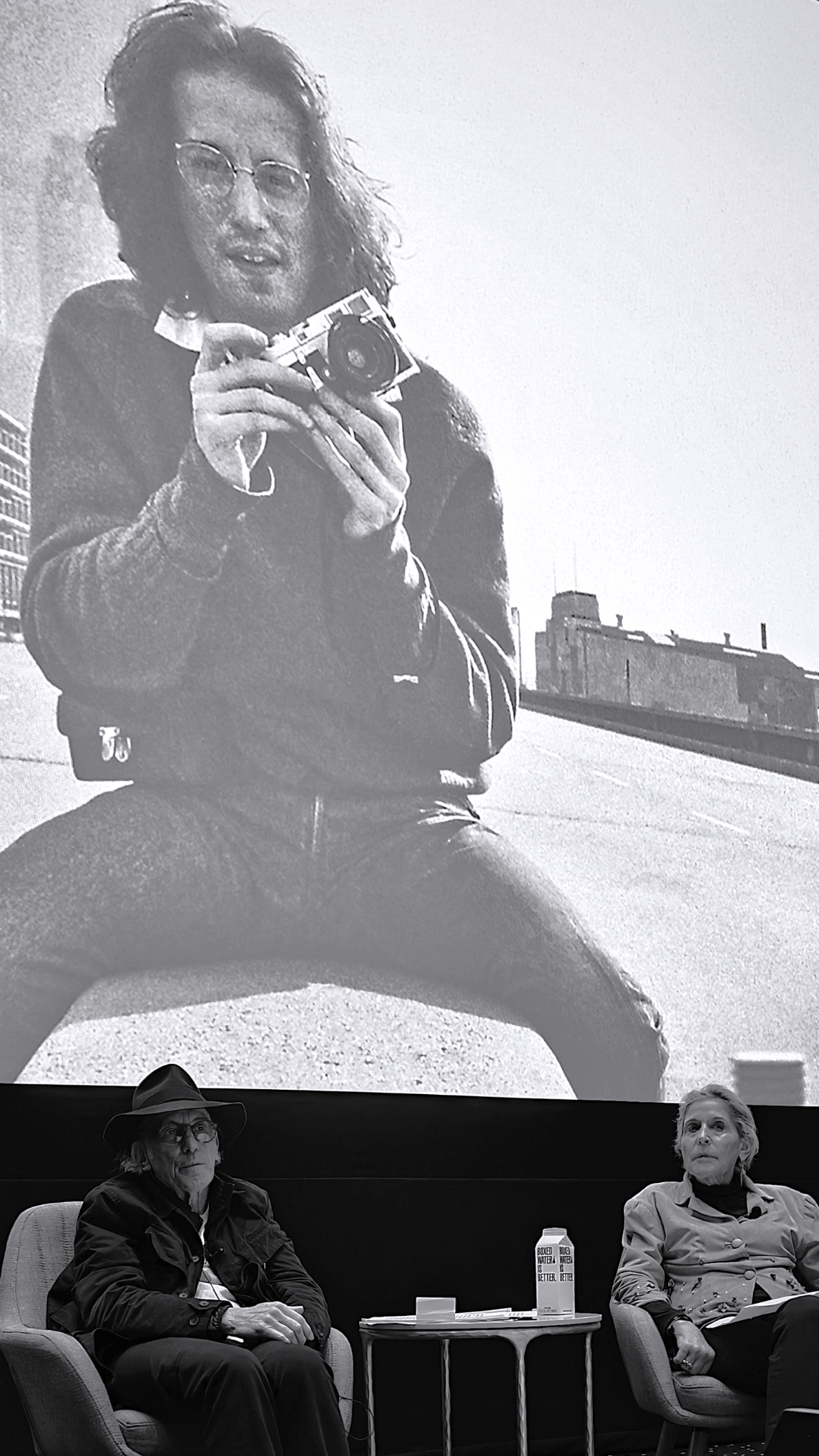
Clearly, Lachman also has a gift for a turn of phrase, as well as simile, as he also said that film negatives were akin to oil paint, and digital was “more like water colour”.
Cinematic wizardry
Similes, metaphors, and simple observations flew at the day’s other panels, too.
One came from Kaytetye filmmaker Warwick Thornton, in town from his native Australia, with a film retrospective running for the aforementioned Bleak Week (allowing your correspondent to see his minimalist yet consistently riveting Samson and Delilah, for the first time).
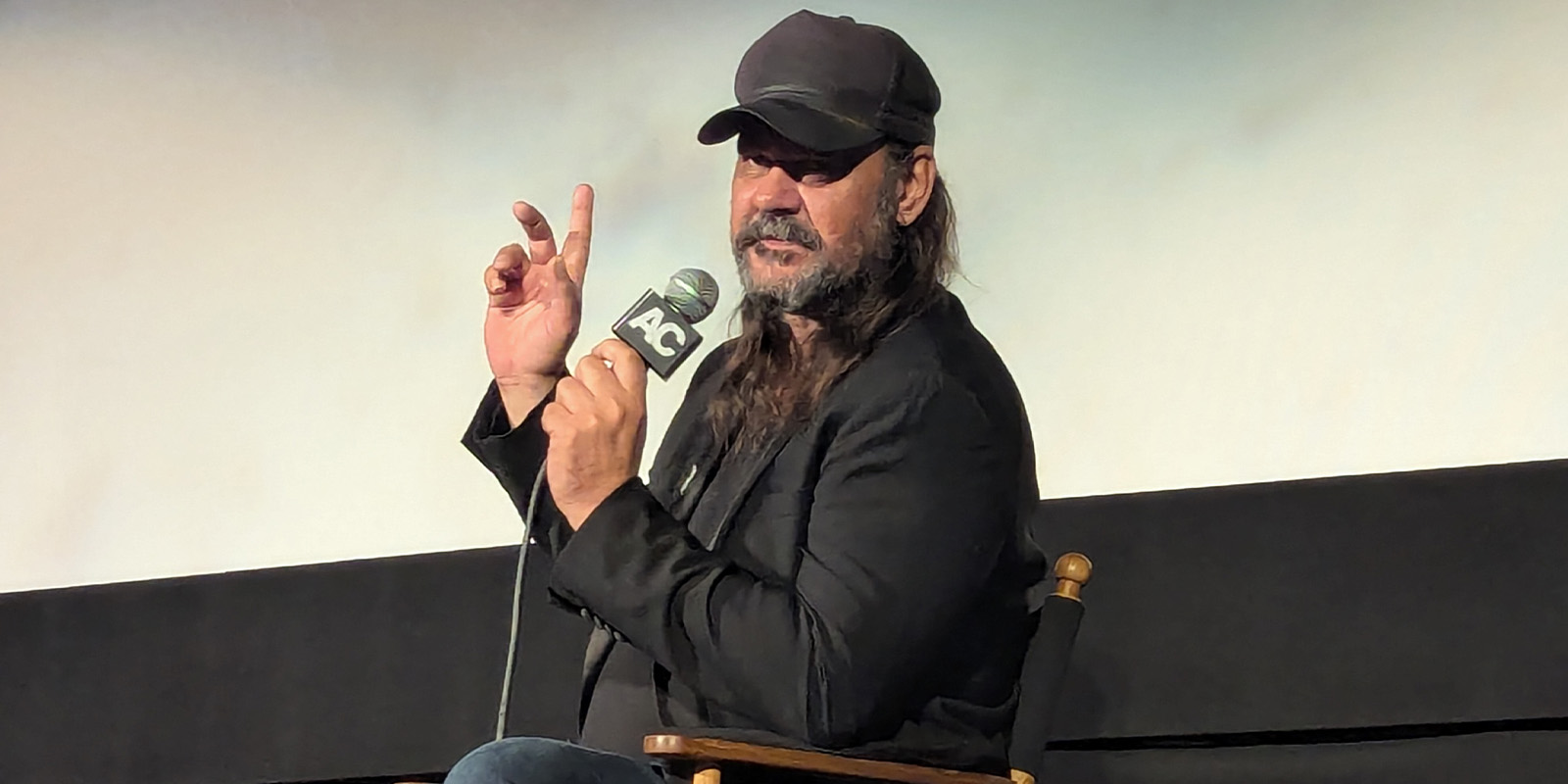
“I don’t miss film,” he declared at a Saturday panel, sponsored by RED, on the craft of independent filmmaking, overseen by Naida Albright, their senior director for global strategic relations. “It takes six days to get a negative report, where I live,” and anyway, he continued, “the sensor is a film stock,” in how he views his choices in colour range and texture. Thornton came up through the DP ranks himself, and has shot nearly all of his own work. “I love alchemy,” he says about the craft, “and I think we’re all wizards. And w*****s.”
That particular yin/yang contrast aside, the indie filmmaking panel was followed by another “sold-out” crowd – all seats spoken for about an hour before the event – from Team Deakins, as Sir Roger, CBE ASC BSC, recounted the need for another kind of “wizardry”, the ability for DPs “to create an image in (their) head” when reading a script. “That’s the most important thing, I think,” so that it’s not left solely to storyboards or, heaven forfend, AI. “Directors” need the same ability, he averred, but not all can “read a space”.
Adam Bricker ASC moderated and talked about “developing a language” with directors you can keep referring to – something he’s been able to do over five seasons of the award-winning Hacks, whose recent conclusion he said he was still mourning.
Bricker added that in film school “they don’t teach that so much of cinematography is (actually) producing”, which is to say convincing a team to share a particular vision. As for Team Deakins, Roger and James also recounted their first date in North Dakota, while meeting on Michael Apted’s Thunderheart – where they had decidedly different different visions, as James apologised to her husband that she never considered the initial dinner and movie outing an actual “date”.
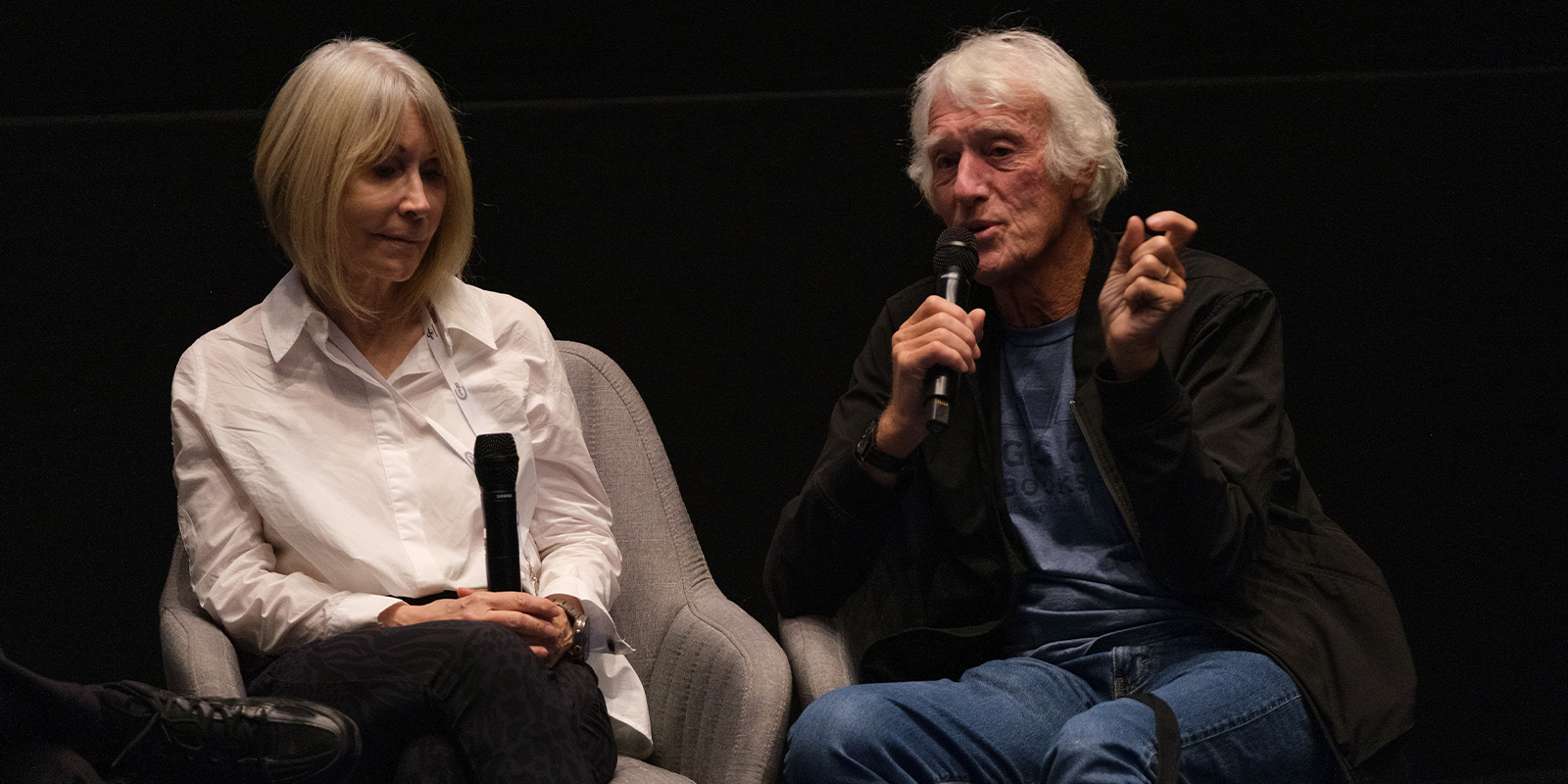
“I was never very good at that sort of thing,” Sir Roger allowed.
But happily, the celebration of all the things that he – and his colleagues – are considerably good at continued the next day, right through the ASC’s annual BBQ, held at their Clubhouse (as seen in our header!). The gathering can no longer be thought of as the show’s “concluding” event, though, as the Sunday after Cine Gear now has panels and exhibits at various vendor houses – mostly centred around North Hollywood and Burbank – constituting what has essentially become, for all intents and purposes, a “third day” of the show.
It began with Women in Media’s annual Altitude Awards, not only to “celebrate the extraordinary achievements of women and gender non-conforming cinematographers, gaffers, and camera operators,” but also to “spotlight established professionals and rising voices.” Held recently as a kickoff to Tiffen Tech Day, with whom WiM shared office space, the event now found itself in the ARRI Theater in Burbank. Namely because Tiffen has moved since Cine Gear last, and now shares space with the venerable camera and glass maker. Meaning, should you find, say, an Alexa Mini in your hands, you don’t have far to walk to also find evocative filters, or Steadicam rigging, to go with it.
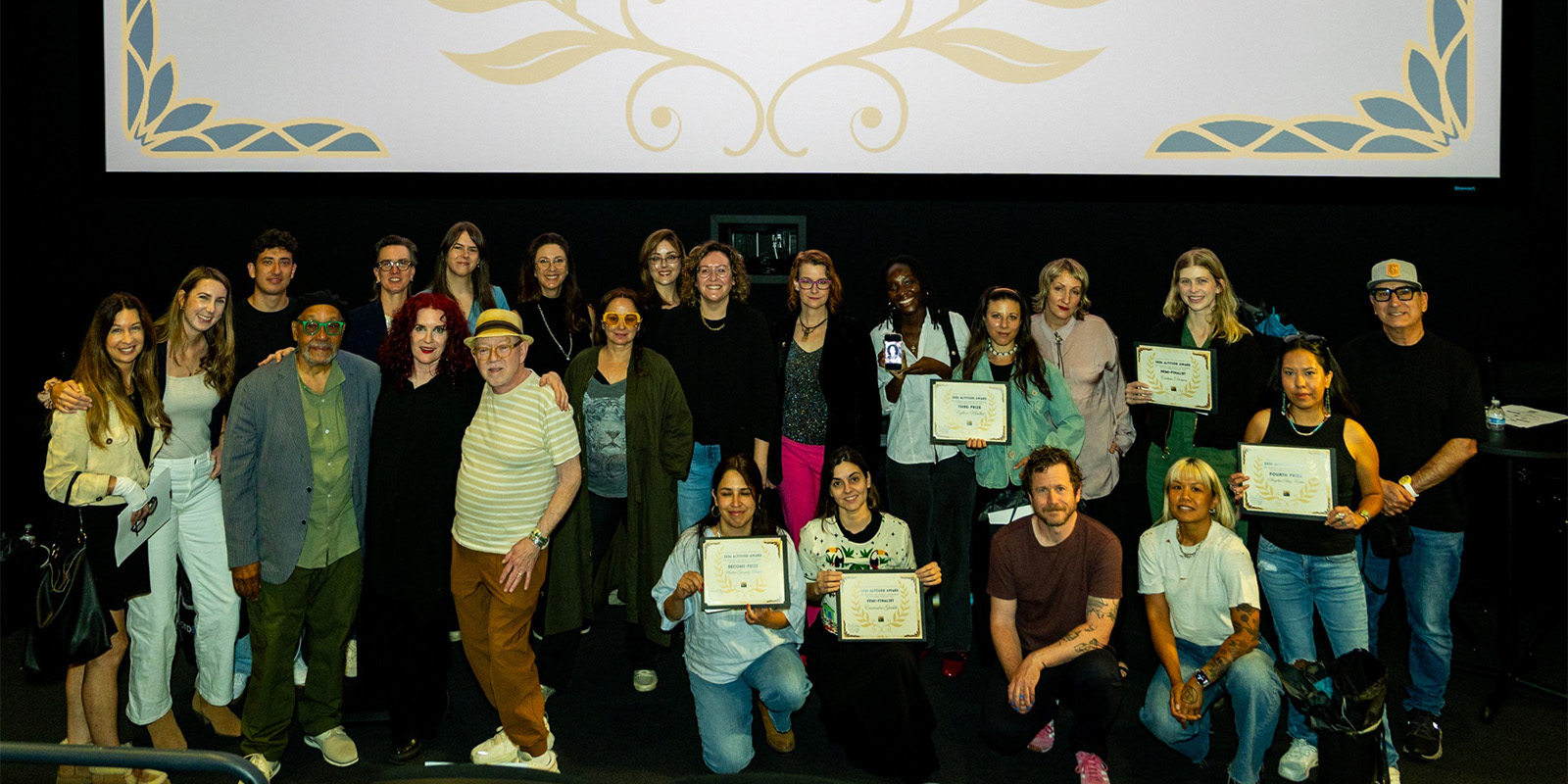
In her opening welcome, WiM’s executive director Tema Staig not only thanked Andrew Tiffen for the support, but went on to say that, in times such as these, “making art is radical – especially lately, when the world can feel a bit combative.” Which risks, perhaps, even understating things, but she emphasised that the world’s straits made it that much more important to “have friends that have your back”.
A feeling the weekend also evoked pretty consistently, despite, or really because of, all the other uncertainty.
The awards then yielded to Tech Day, around noontime, where panels also commenced in that same ARRI Theater, the first of those being a rather terrific look at “How I Got That Shot”, moderated by Emily in Paris DP (and previous Altitude winner!) Jendra Jarnagin, with The Pitt’s Johanna Coelho AFC, Alicia Robbins ASC, and documentarian Eve M. Cohen breaking down some of her work in the current The Brittney Griner Story.
As for Robbins, this time of year brings not only Cine Gear, but also our recurring chat on shooting Bridgerton, and everything else she’s up to.
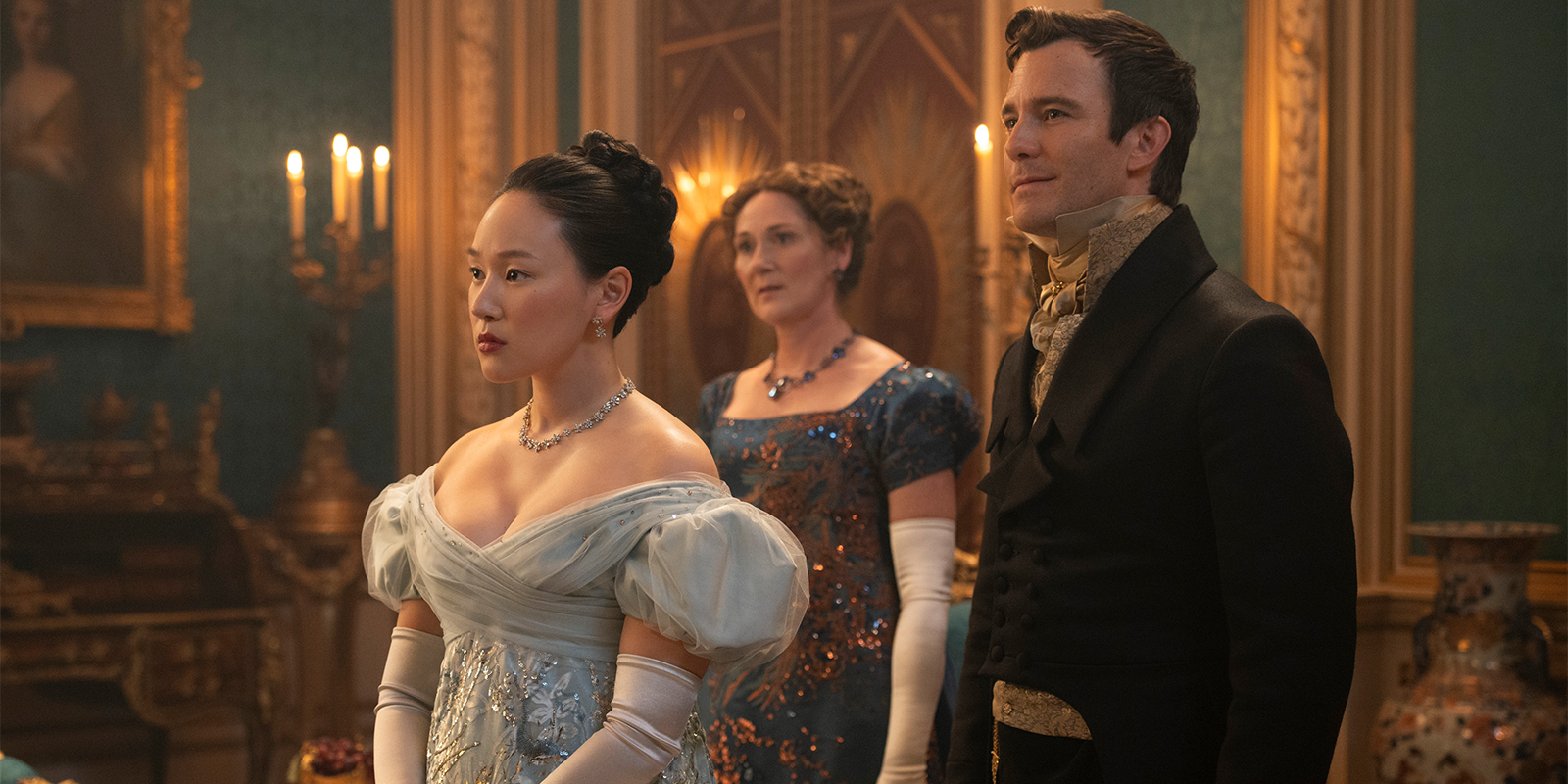
And while she indeed returned for the Regency romance’s fourth season, when we talked she was actually busy with the revival of the far more locally set Baywatch, whose showrunners, she recounted, told her they wanted “Bridgerton on the beach” when she interviewed.
Though boy howdy, that would make for a lot of soggy ball gowns.
Robbins said the Baywatch folks were actually “looking for that glossy aesthetic”, though in a way, this season of Bridgerton, a show which has already successfully challenged perceptions of race, peels back some of that gloss to tackle something at least as intractable: class, and economic determinism, in what Robbins describes as a much more “upstairs, downstairs” season.
That latter comes primarily through the character of new maid Sophie Baek, who finds romance kindled with Luke Thompson’s very upstairs-ish Benedict Bridgerton. Cinderella-style, however (spoiler alert!), Baek is actually fairly upstairs-ish herself, having been cheated out of an inheritance by – who else? – a plotting stepmum, and a stepsister or two.
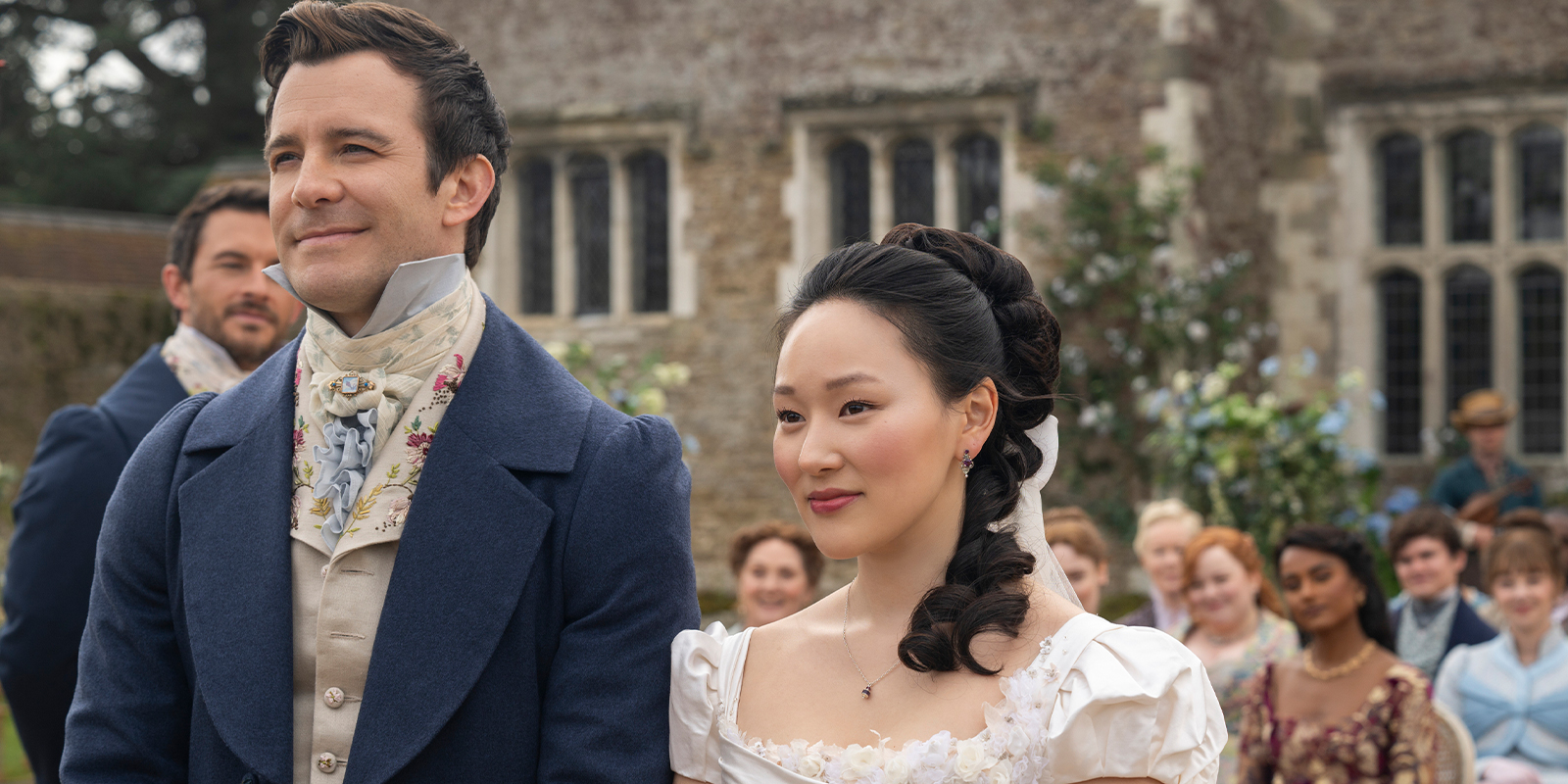
This roiling attraction between Baek and Bridgerton led, in finest series tradition, to needing the services once again of an intimacy coordinator, something to which Robbins is no stranger to shooting, except this time there were two such occasions – the latter, in the concluding episode, taking place in a bathtub, and, perhaps anticipating Baywatch, leaving her “dealing with water all day long”.
The earlier, more complex encounter occurs “in that massive stairwell we built for episode four – we couldn’t put lights anywhere. We were shooting 3:16 going up and down on a cable cam (and I was) using practical candles in the space. […] It was actually pretty complicated [with] Sophie coming up the stairs, Benedict coming down [and] how they finally collide in the middle. They’ve met on level ground – all these metaphors we’ve played with throughout the season.”
To bring those metaphors to life, they once again relied on a Sony Venice 2, with a full sensor and a “2:1 crop – a Netflix look, which I like, as it gives you a little more of that scope.” That was matched up with ARRI Signature primes, and “Petzval lenses for all the flashback sequences”. Previously, they’d done those effects in post but “I wanted to do something more in-camera”.
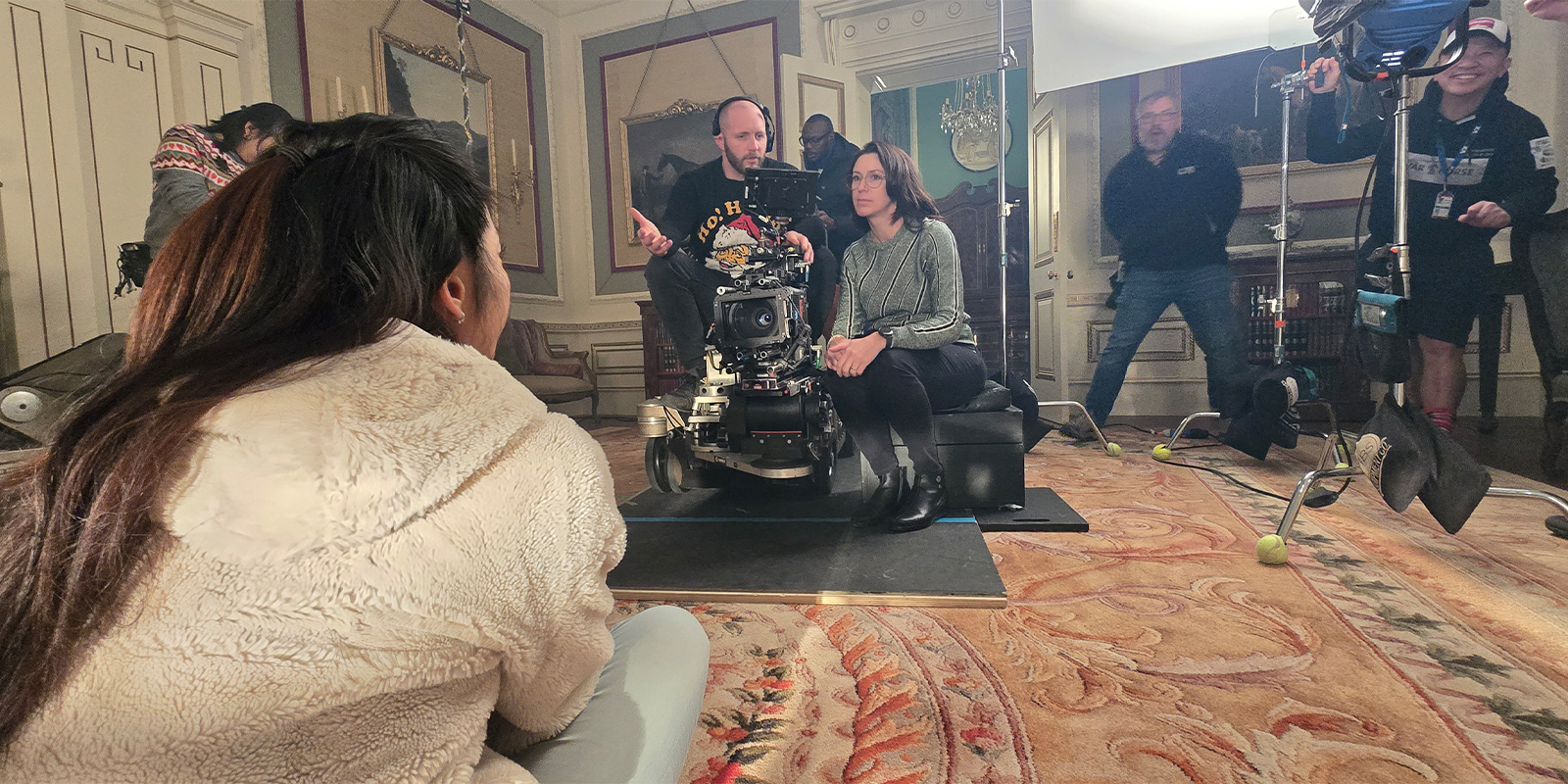
Robbins likes that “the ARRI sig Primes are a really clean lens [but] they’re not so crisp you’re having to diffuse them in a crazy way. But for these flashback sequences – I wanted to feel more character at the edges of the frame. That’s what Petzvals are known for. Bridgerton is not a centre-punch show – we frame however it feels necessary for the space.”
Crafting a love story
Another show in the swirl of Emmy conversation, also evoking romance from a past era, is Love Story – though the era, and the (ultimately tragic) love story in question, are both very specific, as the Ryan Murphy-produced series recounts the love affair between John Kennedy. Jr. and Carolyn Bessette.
Cinematographer Pepe Avila del Pino worked on episodes recounting an entirely different dynasty in House of the Dragon, and here worked on five of Love Story’s instalments, including its award-bruited “The Wedding” episode.
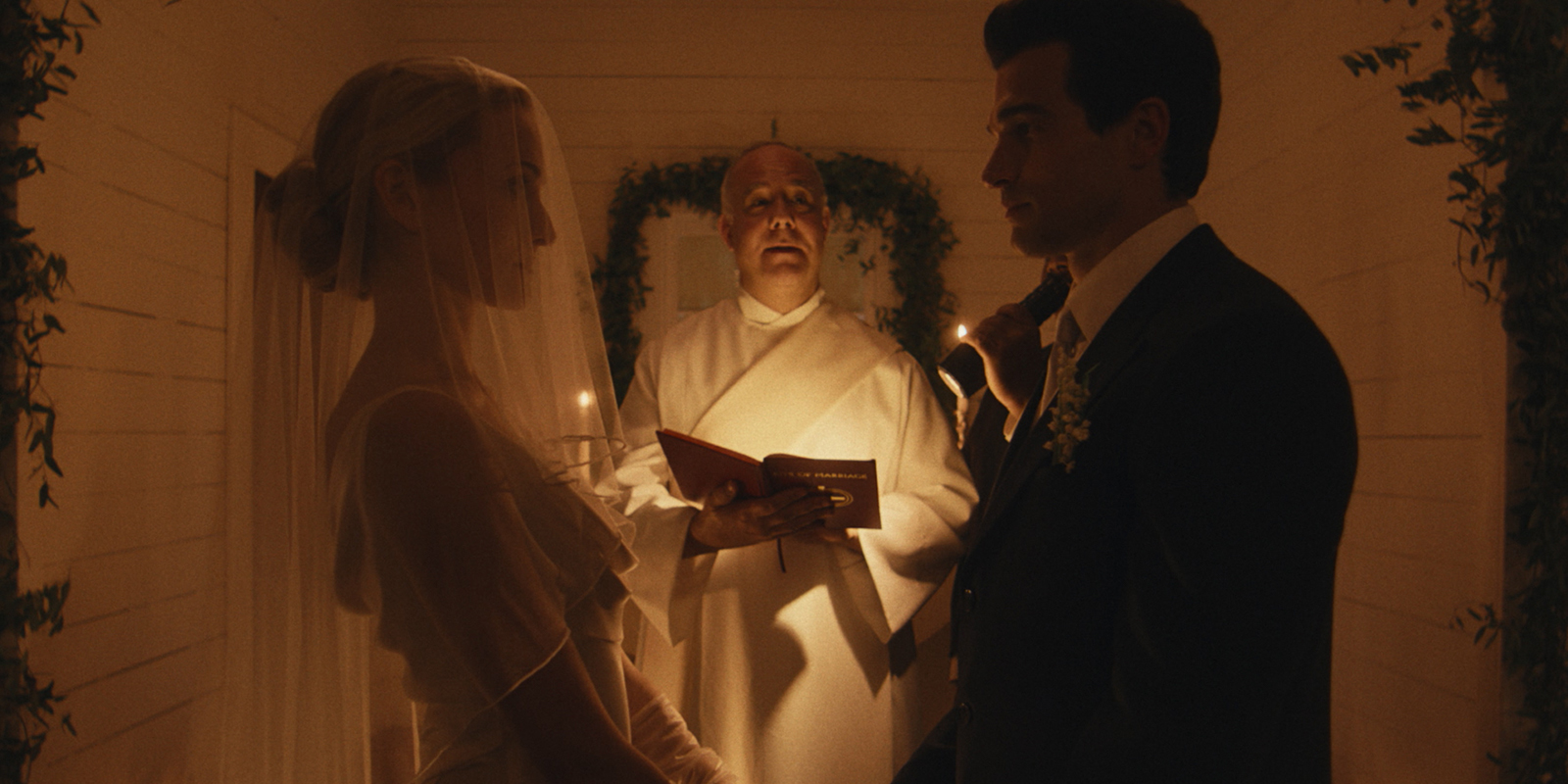
As we were heading off to Cine Gear, we emailed him asking how he approaches recreating events, and capturing a family that has been so widely, and iconically photographed and imprinted on the collective subconscious, over several generations.
His long and thoughtful reply could itself constitute its own column, so we must do it some injustice, alas, by merely excerpting it.
“Our team’s main inspiration for the visual language,” he wrote, did come “directly from the research and photos we have access to from the era; ‘90s New York, the streets, the architecture, the fashion, the cigarette smoke hanging in the air, and, of course, the public presence of our two main characters whose lives unfolded under extraordinary public scrutiny.
“Equally influential was the production design of Alex DiGerlando. It was never about recreating locations with historical accuracy, but instead distilling them into something more essential, minimal and stylised. John Kennedy Jr.’s apartment is a great example. Although the architecture closely replicated his famous Tribeca loft, the interiors were intentionally simplified: sparse furniture, clean white walls, carefully selected practical fixtures and restrained decoration.”
In prep, he and episode director Gillian Robespierre “knew the wedding needed to feel fundamentally different visually from anything that preceded it. Throughout much of the show, the characters are viewed through layers of public attention and observation. Here, for perhaps the only time in the story, the outside world disappears completely. The audience is invited into a private moment.”
As for just how private, “our research revealed an interesting detail about the real wedding ceremony that became significant: [it] was originally intended to take place during daylight hours, but Carolyn experienced issues with her wedding dress, which had to be sewn onto her and took several hours to complete. By the time the ceremony began, the sun had set. The chapel had no electricity, forcing guests to rely on candles, flashlights, and even cigarette lighters to illuminate the space. This remarkable detail provided a natural foundation for the lighting design and became a defining visual element of the sequence.”
To capture those elements, “we embraced much wider focal lengths than those used elsewhere in the series. The episode relied heavily on 17mm, 20.7mm and 27mm lenses. The series was photographed on the ARRI Alexa 35 paired primarily with Tribe7 Blackwing7 lenses.
“The wider lenses allowed us to move physically closer to the actors while maintaining a strong sense of environment. Rather than observing from a distance, the camera becomes immersed in the celebration itself. The audience experiences the wedding alongside the characters. Movement became increasingly fluid. The goal was to create a sense of participation rather than observation.”
Beefing things up
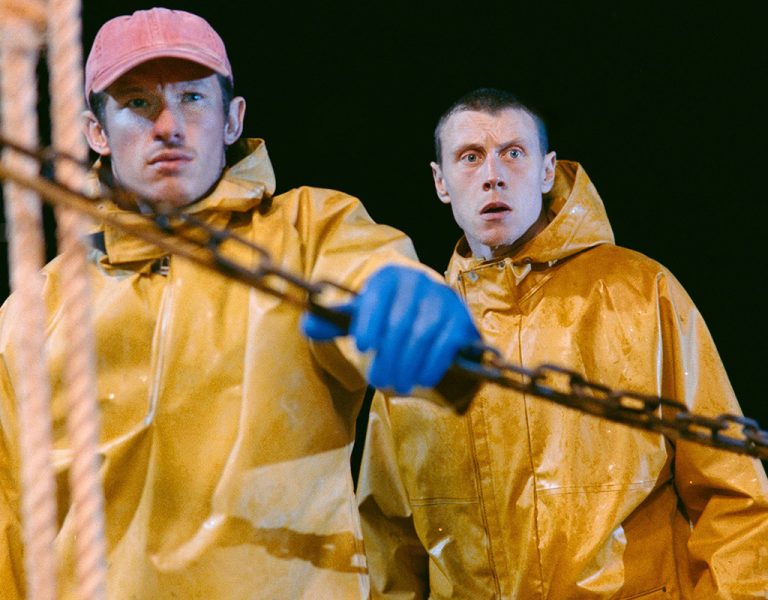
The second season of Beef also has a bit of pull between participation and observation – at least among its sets of characters, principally country-club execs Joshua Crane and Lindsay Martin-Crane (Oliver Isaac and Carey Mulligan) versus, as the “beef” has it, club employee Ashley Miller, and her well-intentioned yet often hapless boyfriend, Austin Davis (Charles Melton, reprising some of the “belated realisation” arc he had in the also-Netflix May December).
The series mines White Lotus-adjacent territory, providing an unrelenting look at the rich and their gathering spots, in this case the Monte Vista Point Country Club, set in a fictive Montecito/Santa Barbara-like setting, actually pulled together from locales ranging from L.A., through Ventura county to, well, Santa Barbara. And it has a thing or two to say about economic barriers, too.
Happily, though, there was little barrier in replacing one talented director of photography, as season one’s Larkin Seiple, himself an Emmy nominee for Gaslit, remains busy in the wake of feature film work like Everything Everywhere All At Once and Weapons, with another. Enter James Laxton ASC.
A frequent collaborator with producer/director Barry Jenkins, Laxton has some impressive credits of his own, including the Prime series The Underground Railroad, and features like the Oscar-winning Moonlight and If Beale Street Could Talk.
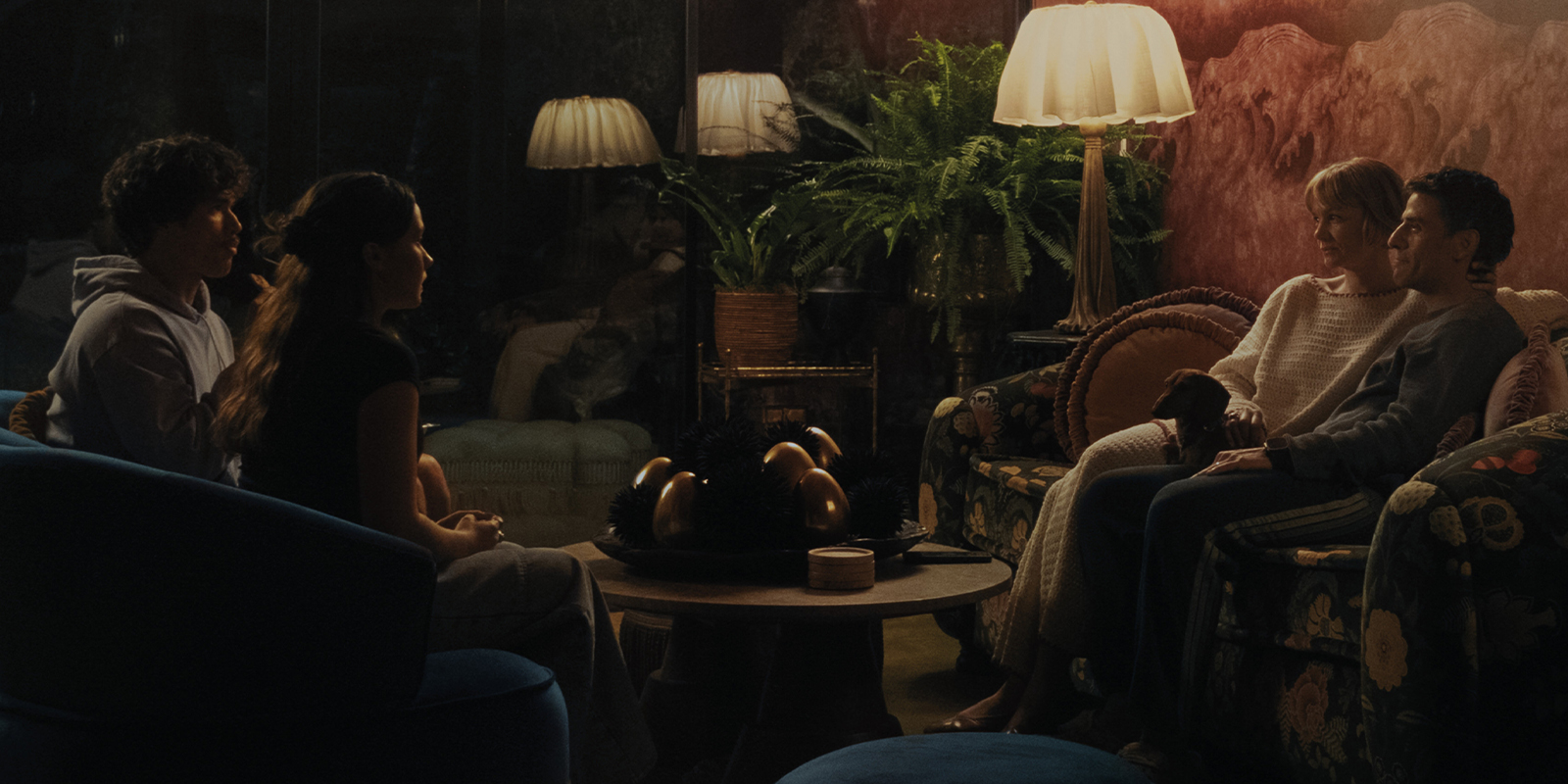
In talking with series creator Lee Sung Jin, Laxton mentioned that “the idea of generations was so important for him. When I thought about ‘generations’ – a word that had such gravitas and scope to it, it’s wanting to speak to what happens to us in our formative years [and] our elderly years.”
It’s a lattice work that structures the series, as characters worry about, variously, being able to start a legacy of any sort, midlife crises, and, finally, what they’re going to leave behind.
Laxton said he wanted to try and create images with “a certain grandness and power within them” to speak to those subtexts and throughlines. In finding them, he’s “not one to be too rigid about what tools I use to get the right result. I do tend to blend them to get the thing I’m searching for.”
In this case, that blend included the ARRI 265 – their smaller form factor 65mm camera. “We were the first show to shoot on it,” Laxton said, though of course the “65mm sensor had been around a long time – a decade or so.”
The compactness was a draw, given “the spaces [we were] shooting within. I was worried about how large these cameras would be. We were conscious of how we were going to frame that information in the scene, otherwise.”
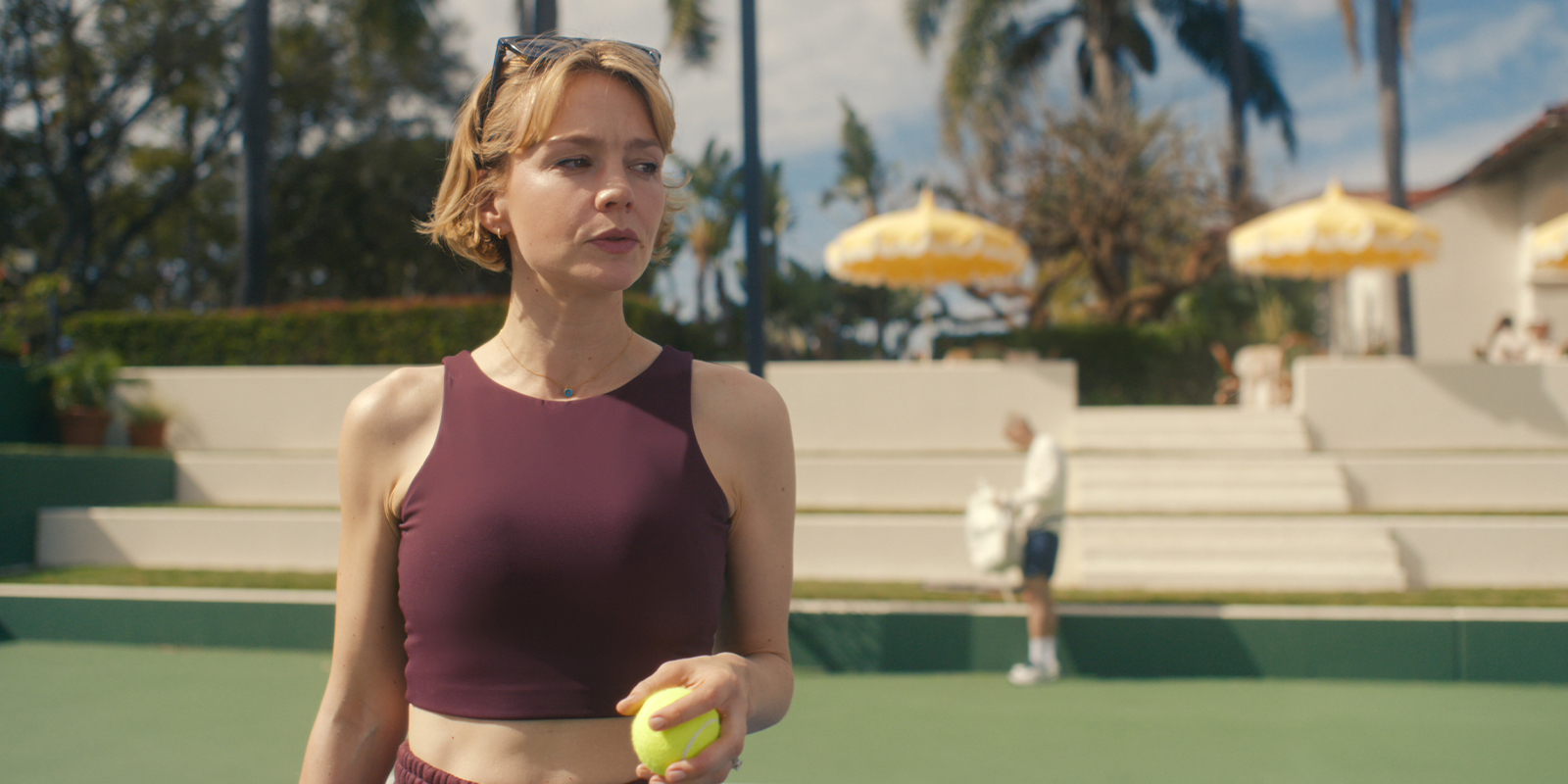
Inside or out, the framing was further sculpted through the use of ARRI DNAs, glass that creates bridges to pre-digital imagery, though Laxton said “the digitalness wasn’t a concern for us – [this was] a modern story, a modern telling.”
Instead, “the big thing for me within all that was to provide the kind of light – [a] California summertime-everything’s-glorious sort of look.” And yet, as nearly any Joan Didion essay could tell you, “a world where people are unhappy, dissatisfied with their lives.”
Lee, he says, “likes to play with a lot of different genres. In one episode we might be doing something thriller-y, or horror-y… then back to comedy.”
It was deliberately “a little trope-y”. Mulligan’s character, in particular, has a suddenly horrific encounter in the moonlight, though Laxton also says “moonlight scenes are some of my favourites to do,” especially as he finds that “so many people light moonlight differently,” something he still cherishes, after wrapping.
“It was a huge honour to take the cinematography reins on a show like this,” he says. “You get to play in so many sandboxes.”
And we still haven’t explored all the sandboxes left from Cine Gear weekend, such as the pronounced disagreement on the sprawling ASC panel we opened with, on whether AI is ultimately friend or foe, or Creamsource’s concluding Sunday panel on the filming and VFXing of Boots Riley’s I Love Boosters (also screened at the expo!). Both involved Booster’s DP Natasha Braier ASC, who also coined the term “optical chorizo” for one of the techniques used on the film.
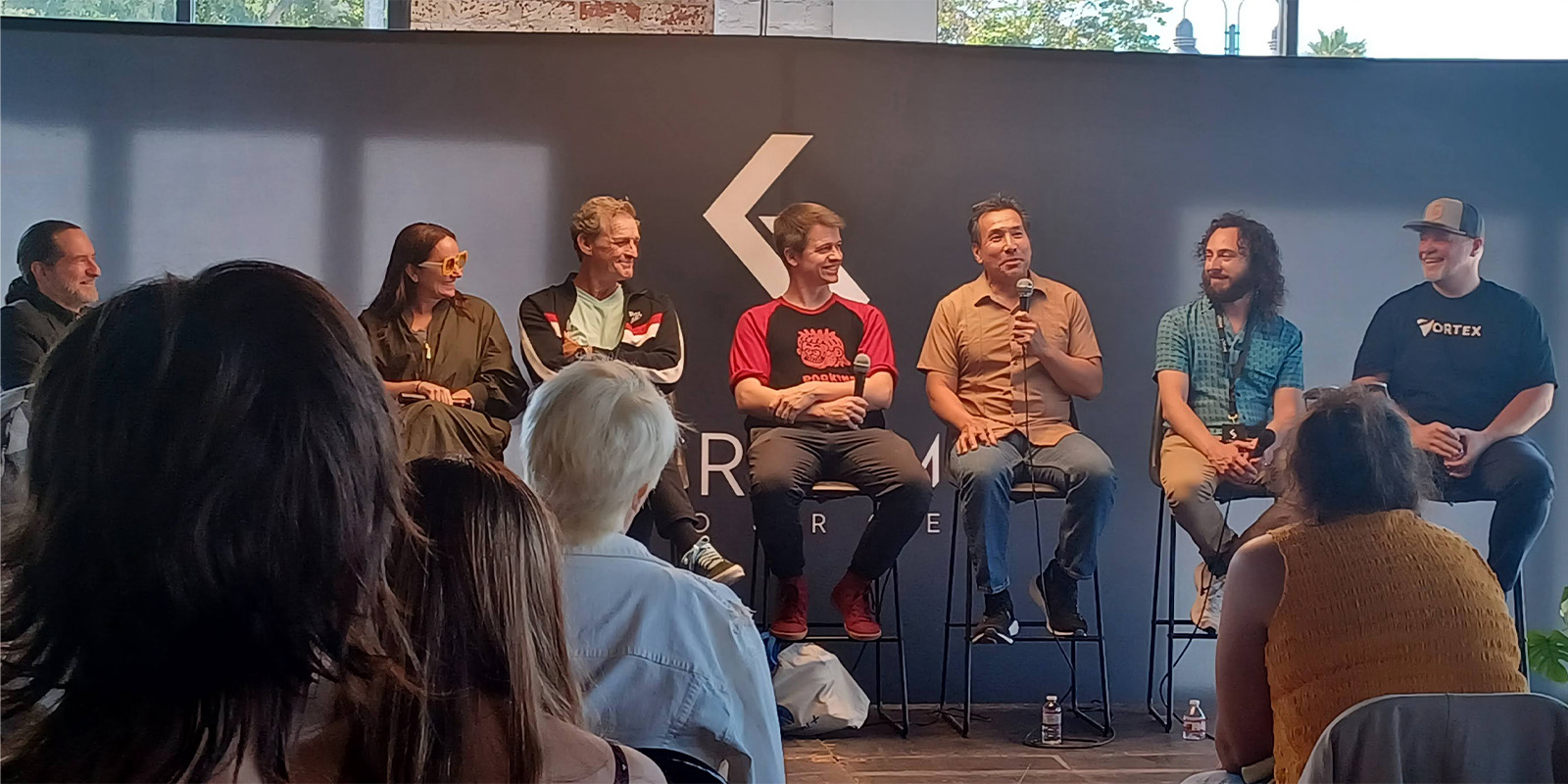
On which note, we leave you until next time, with the promise of more tasty tales to come.
@TricksterInk / [email protected]