

FOCUS GROUP
As digital pushes cinematographers toward retro lens choices, film continues to offer unmatched depth, texture, and surprise — shifting how creatives see, shoot and select glass.
Affordable digital cameras with Super 35mm-sized sensors have provoked the development of a bewildering variety of lenses. Many of them have been built to create effects reminiscent of classic designs, perhaps to flatter the almost ascetic cleanliness of digital origination. Shooting film changes the game.
William Rexer ASC sums up the modern fascination with lenses succinctly. “With digital, you have this very flat image and everyone’s looking for a way to make it look more quote-unquote cinematic, so they’re throwing in whatever lens they can to get away from that flat thing. But a film emulsion has three layers – you’re automatically getting an interesting depth.”
Rexer’s recent work includes a production with a workflow which might have been designed to test optics and film stocks. “On The Testament of Ann Lee we shot three-perf 35mm knowing we were going to be blowing up to 70mm. The team were people who’d always use Cooke S4. They loved the look and that was their desire. I had certainly shot on S4s and knew their strengths and weaknesses.”
“We looked at 13 sets of lenses,” Rexer recalls, “shot, on film, eight sets of lenses – testing how they handle flares, what they look like in terms of contrast, at various focal length at different exposures to see what the portraiture would look like. I did it as a blind study, and completely to our surprise the Sigma cine lenses won.”
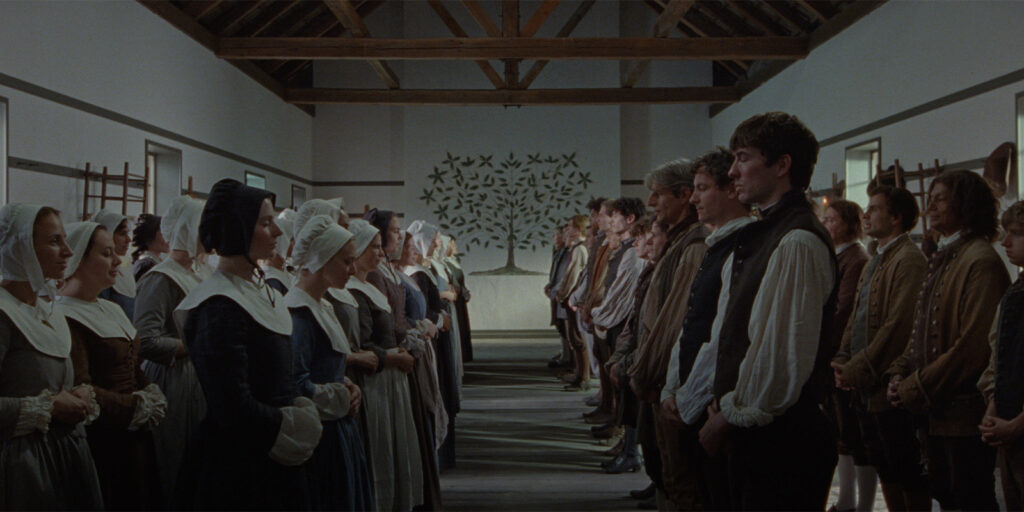
This kind of surprise emerges from long experience of more modest blow-ups. “When I shot Super 16mm films at the beginning of my career,” Rexer recalls, “I always did 100 ISO film. We shot with Super Speeds or Standard Speeds, going for that contrast and sharpness because we knew we were going to lose some of that sharpness in the blow-up. [But] when we looked at the 50 ISO daylight stock for our tests we said ‘no, it’s too clean, why are we doing this? It almost looks digital!’ There was resistance immediately and I understood it. We’re in a different space now than we were 20 or 30 years ago.”
Supporting celluloid
More recent entrants are often just as keen to experience all those tools, and cinematographer Nelisa Alcalde chose carefully: “I studied filmmaking at Edinburgh College of Art. I was working as an assistant in small-budget projects and decided to do my master’s in Prague because I knew we would be filming on 35mm – all our exercises were on film.”
At the same time, the privations of student film impose a more straightforward approach to choosing glass. “Because my projects on film were student budget, I couldn’t test the lenses the same way I test with digital,” Alcalde points out. “I was very lucky – one of my short films we shot on the Panavision Primo. My other one was Master Primes and I have to say, I like the Primo. The skintone of those are just… I don’t think I have shot anything else like that.”
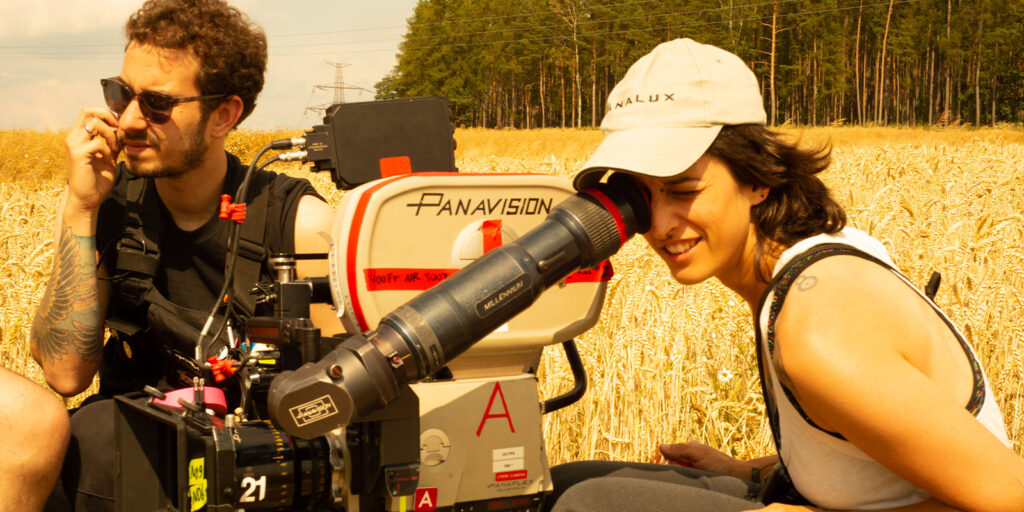
Alcalde’s thoughts turn to the rendering of people, and the interaction between lenses and the technology behind them. “When you shoot on film and you see skin tones – I don’t want to say organic, but it reproduces differently. On digital I shot on [Alexa] with [Primos] but it’s just different.”
It is still perhaps instinctive to choose sharper lenses to complement the organic rendering of film, although Alcalde is cautious about that sort of received technique. “That’s not my habit in general – to think ‘okay, because it’s digital I’ll shoot like this’. Everyone is using old lenses just to be soft, but there are some films that don’t ask for softness. I’m more interested in sharpness, I’m sometimes very contrasty.”
One unifying thread at every level is a general willingness from the industry to support people shooting film. “If I’m honest,” Alcalde concludes, “because of the budget I was filming with what I have. I was lucky enough that I could shoot with the Millennium and the Primos – Panavision Prague was very good to me. It was fun.”
Words: Phil Rhodes