

FROM BACKLOT TO FUTURE FRONTIERS
Back at Universal after 20 years, Cine Gear 2025 wrestled with AI, image-making and a fast-changing industry landscape.
The last time Cine Gear was on the Universal lot, Barack Obama hadn’t even become president and “AI” was just a plot device.
But a lot can change over 20 years, during which Cine Gear covered different parts of the LA map, from Paramount studios to downtown’s Convention Center, to last year’s show at Warner Bros.
Whether Universal represents a homecoming of sorts, or another stop in an increasingly unsettled century, remains to be seen. But there was some comfort in gathering just yards away from a mural featuring Universal’s iconic monsters updated with psychedelic colours – Elsa Lanchester’s Bride of Frankenstein hair being especially noteworthy – a reminder that studio IPs, at least, can survive world wars, earthquakes, and economic meltdowns, awaiting their next incarnation. (As the host studio’s spotlight on their own return to Oz, in Wicked: For Good underscored.)
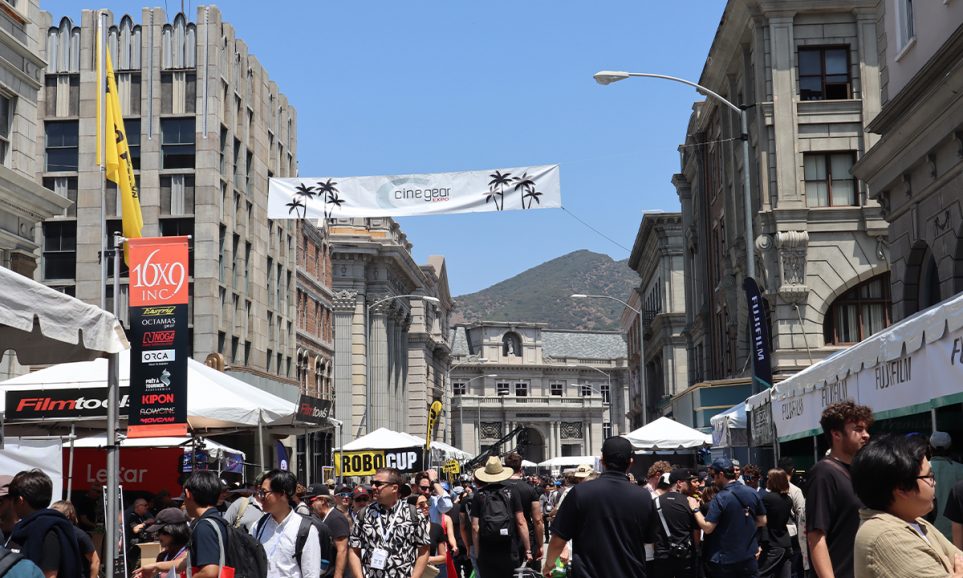
But the event was not without its existential questions: AI was now the subject of an ASC panel on how to work with a technology arriving like a tsunami, something that also came up at the ASC’s traditional “Dialogue with ASC Cinematographers” panel, which seems to grow in scope each year. Moderated once again by Emmy-winning George Mooradian ASC, during the Q&A at the end, one camera operator said they were “terrified” of AI and “wondered if there’ll be an industry” when they’d finished training for Steadicam.
Some of the respondents, like Markus Förderer ASC BVK said to “embrace it where it makes sense,” noting AI was “a form of cheaper visual effects in a way… but I don’t think it’s the end of cinema,” as audiences still “want to feel something human,” technology notwithstanding.
Game time
Much like this latest edition of Cine Gear, with its streets and stages of vendors, and where perhaps the best visualisation of generational overlap came during a stroll with The Last of Us DP Ksenia Sereda, one of many cinematographers kind enough to come by the BC booth and say howdy, as the regional parlance would have it.
In originating the series’ visuals, Sereda talked about wanting to maintain the iconic look of both the game, and show’s first season, while pushing things further for season two – including its award-tendered sixth episode, “The Price,” involving a string of post-apocalyptic birthdays for lead character Ellie Williams, played by Bella Ramsey.
With its June arrival, Cine Gear often coincides with Emmy-season conversations. That same afternoon brought us Sereda – who spoke of using ARRI 35s with new iris elements and Cooke S4s to highlight the show’s strong female leads and its “magical realism” – as well as Christopher Ross BSC, surprisingly chipper despite a predawn Zoom as BSC president. Nearby, Sony’s stand honoured their Venice-shot Shōgun, for which Ross and Sam McCurdy ASC BSC earned Emmy, BAFTA, ASC and BSC accolades.
This time we spoke about The Day of the Jackal – where Ross, like Sereda, helped establish the series’ tone, shooting on a Venice 2 with an ARRI lens. He joked about still waiting to hear when season two might start – possibly just before next year’s Cine Gear.
Filmmaking journeys
Back to the Future indeed, and that was the juncture of film histories we found ourselves at with Sereda, as we paused our walk at Universal’s storied Courthouse Square, that iconic piece of backlot real estate where Dean Cundey ASC CSC filmed Back to the Future for director Robert Zemeckis.
Cundey, along with Alice Brooks ASC, had back-to-back Q&As in one of the adjoining pavilions. He announced if you were there to learn about F stops, you’d come to the wrong place and then proceeded to launch into a history of his own journey into the film biz, and how that biz wound up in sunny Southern California – a tale involving fleeing Thomas Edison’s East Coast patent enforcers over those newfangled moving picture cameras (speaking of technology shifts).
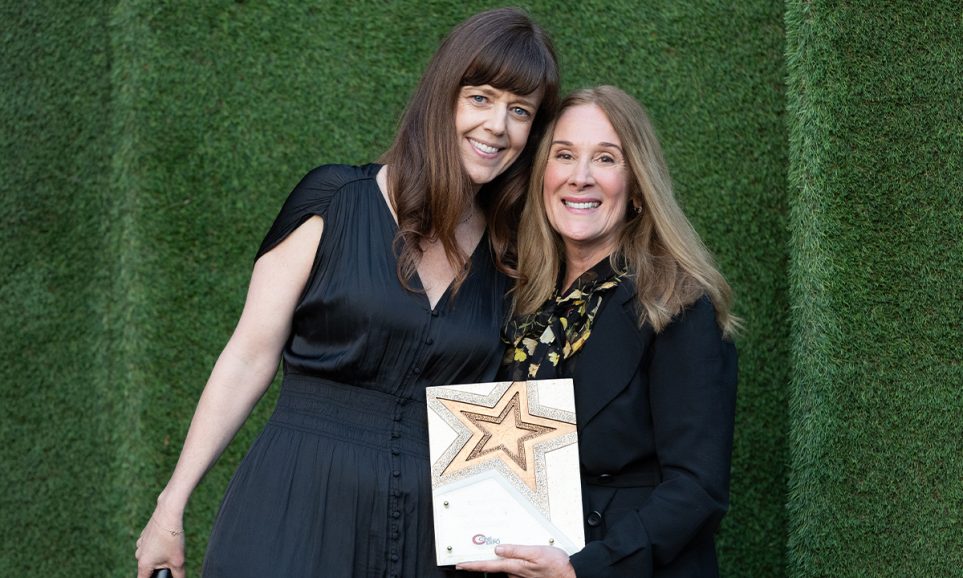
Brooks spoke of the loyalty of Wicked director Jon Chu, a friend since they were at USC film school, being on the film’s “magic” set, and of her own journey, raised in a somewhat bohemian family with artist parents, where she and a sister had become child actresses to help with expenses. An eventual move to LA sparked its own magic, as she “fell in love with soundstages, lighting,” camera crews and everything that went with them. “Never for a moment do I take for granted how incredibly lucky I am.”
Later, Henry Braham BSC was in conversation with RED’s senior director, global strategic relations, Naida Albright, about his upcoming work on James Gunn’s Superman, and when replying to a question about the job of a DP, said “the real answer is the DP is responsible for putting the director’s vision on screen”.
He talked about Gunn’s Hitchcock-like approach to that vision, as an “assiduous” storyboarder, and also the various generations of technological change he’s seen, like “small cameras with large formats,” bringing a reduction in footprint size that increasingly allows the camera to be a “participant” in scenes.
During a session on Sinners, featuring Autumn Durald Arkapaw ASC, one of first AC Ethan McDonald’s comments on the IMAX cameras – used alongside Panavision 65mm – helped sum up the show. He called them “the greatest image making machines anyone has ever made.” This year’s Cine Gear showed many still want to be part of that image-making, despite industry uncertainty.