IN THE SPOTLIGHT
As LED lighting continues to grow in prominence, DPs and gaffers discuss how the evolving technology influences their work – and what the future may have in store.
The last decade has seen LED lighting go from innovative upstart to mainstream workhorse. As better designs have gradually become the equal of more and more traditional tools, though, techniques have expanded beyond just replacing the old with the new.
Gaffer James Bridger suggests that both the benefits and drawbacks are now well understood. “The two productions I’ve just done are VisionQuest for Marvel and series two of Black Doves for Netflix. VisionQuest is at Pinewood and we had a couple of stages there plus a backlot. There were houses, planes – we built a huge modern cityscape outside on the backlot. [They were] 90% LED. The power is cheaper and the manpower is cheaper but the units themselves cost a lot of money.”
The scalability of LED – from individual emitters to multi-kilowatt monsters – has seen Bridger become involved in an ever-broadening range of production concerns. “In VisionQuest there were quite a lot of things that lit up – cars, weapons, costumes – it was a fantastic experience for experimenting with that kind of stuff and I found that really exciting.” That demand for innovation arises at larger scales, too. “On House of the Dragon,” he recalls, “we were trying to light these big spaces and get as much daylight as we could, and we stumbled on a concept of using some stadium lights – the concept was to develop some of these myself, a Wendy we called the Luminor.
“We used a lot of moving lights as well, Ayrton Dominos, instead of big heavy backlights so we could change colour very quickly… a lot of Asteras, the Titans, and all the bulbs in the houses were the LunaBulbs. We’d also use Creamsource, the Vortexes. On VisionQuest I really enjoyed, from Aputure, the 1200Xs which are bicolour.”
Battery power has both ecological and convenience benefits, as Bridger says. “There’s a lot of sustainability bandied around from the production companies. They’ve got their own officers who are really intrigued by what you’re using. And when you’re going into a lot of the sets, they don’t like you to run a huge amount of cables. You get that from the designers a lot. It’s nice if it’s autonomous, a satellite light that all comes on one stand. I do like that.”
A similar transformation has taken place in education, as Oliver Stapleton BSC describes. “For the last four years I haven’t been shooting, I’ve been teaching at NFTS, and I saw a transformation at the school three or four years ago – we got the tiny Nanlux eyelights. They’re brilliant for the students, it’s fantastic and you can’t replicate that with tungsten.”
Since then, the school has benefitted from a lot more LED lighting equipment, but Stapleton sounds a note of caution. “People think, ‘Oh, you can do everything with LED – you don’t need tungsten anymore.’ It’s horses for courses and it might be it’s all LED, it’s all great. But it might also be that I need an 18K outside that window.”
Stapleton echoes the common view that LED is not yet quite a won war. “I would hope in 10 years’ time we have all the functionality of LED lights and the simplicity of tungsten. The control systems are what we love. Stick it on your iPad – but those very same control systems can be quite fragile. If there’s a panel on the back of the light and that light gets knocked in the truck, end of panel – and that’s quite expensive. If the head itself can fall on the ground and not break, that would be a good thing.”
Richard Crudo ASC, six-term president of the ASC, spoke just after finishing a long week of nights on a shoot in Arizona, and echoes both the enthusiasms and the concerns of other commentators. “Like everything else, LEDs have their pluses and minuses. It’s almost like we’re going through a period similar to when carbon arcs had been standard for so long. Tungsten came along and changed the game a little bit – now tungsten units are starting to be less the primary as LEDs take over. They meet my three criteria: they help us do our jobs more quickly, efficiently and creatively. They run less power consumption, they run cooler, they take up less space.”
That lower power consumption, Crudo reflects, makes for conveniences beyond the reduced environmental footprint. “We used batteries on this job and they were very handy. Just pick it up, put it down, plug it in, and go. They were quiet, they lasted a long time. That’s a huge plus. And they did the lion’s share of the work on this job… the pace of production today – you’ve got to move quick, you have to be fast. Regardless the size of the production everything’s about time and efficiency and speed and getting to action as quickly as possible.”
Gaining power
Recent developments of LEDs in the five-kilowatt range have come from more than one manufacturer, and as power levels creep up, the technology increasingly usurps incumbents. Caroline Bridges spoke a few days after finishing Ting, a feature which shot for five and a half weeks without once going anywhere near a sound stage.
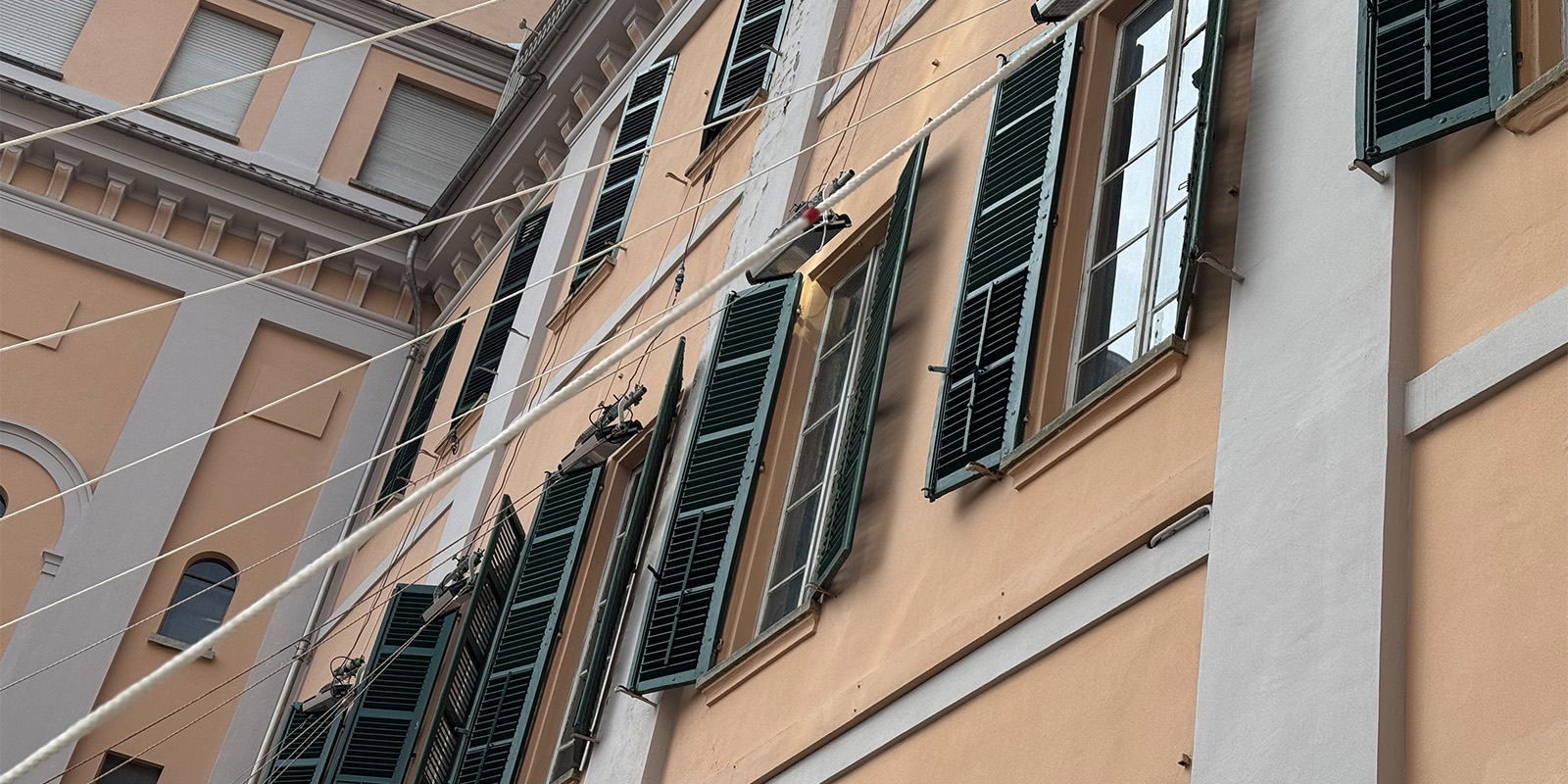
Battery power and LED lighting might be separate technologies, but, as Bridges suggests, the two have become somewhat symbiotic. “None of it was studio based,” she points out, “and occasionally we wouldn’t even have access anywhere near to get a generator, so we were using batteries. For the interiors on location, it was easy to just use the batteries and move them around with the heads rather than laying a whole load of cable.”
Occasionally, Bridges says, the generator had to come out – “run on vegetable fuel, but we [sometimes] had to run from generators. We wanted 18Ks, and we couldn’t afford them – but we didn’t need them. We had two Evoke 5000B, two Evoke 2400B, a lot of Vortex8s and about five Vortex4s. And that was pretty much the whole film. We could match them even though they’re different brands. And when we were on recess there was 30cm of snow – when we were filming there was no snow, but we couldn’t risk being out on location with gear that wasn’t waterproof.
“On another side of the building there was a road, but we weren’t allowed to shut the road and the buildings opposite were only about two metres from the windows. We bounced Nanlux Evoke 5000Bs off mirrors and back through the windows so we had a hard source for the foyer area. The orphanage was the one that tested us the most on how we were going to rig this and light it effectively, and it was our first week of filming so we didn’t have as much lead-up time to think about it. But I think it was very successful.”
Seeing the light of day
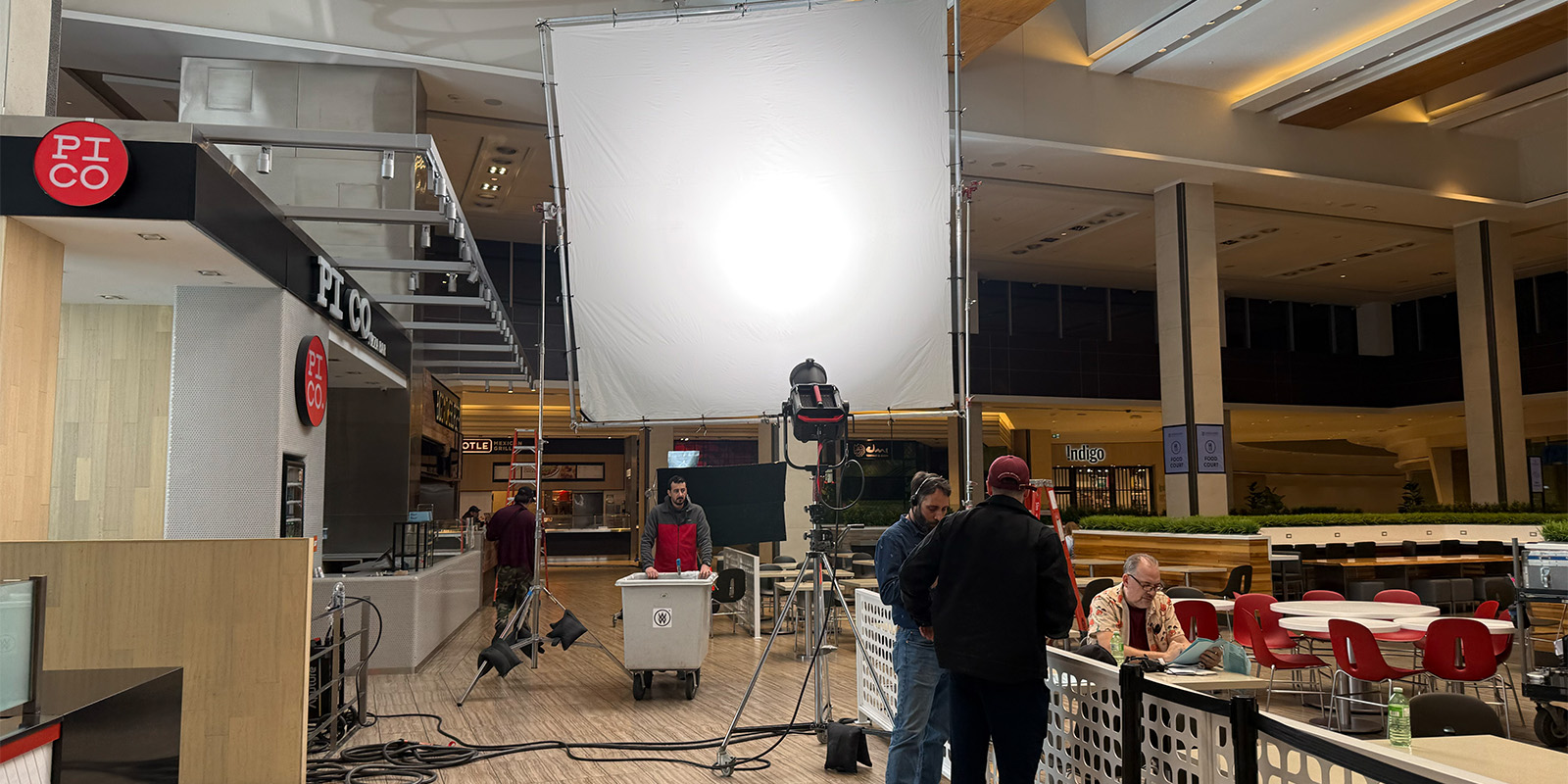
Recreating daylight over large areas is among the most testing applications for lighting. Karim Hussain CSC encountered exactly that on Forbidden Fruit, requiring a daytime look at night over the vast interior of a shopping mall. “We were only allowed outside our fake store at 9pm and everything had to be gone by 10am,” Hussain says, “so it was a very short window to run cables, set up lights. These were complicated setups.
“We were shooting in a shopping mall in Toronto, entirely at night, and we didn’t have a lot of power sources. The max we could do was one HMI 9K. We had to constantly simulate daylight coming from very large skylights and what we did was we used a lot of Aputure Electro Storm XT26, a very powerful bicolour light which you could bounce off the ceiling. It was really, really successful at simulating daylight coming from these skylights.
“Rental houses are renting out these bright LED lamps for a large rate comparable to the price of HMI, but you have to look at the time you’re going to save on set and we all know time is money.”
The controllability of LED, Hussain points out, allowed for some carefully considered exposure decisions. “What was funny is if a window is too well balanced, it feels like a CGI comp. When you see the perspective from outside the store into the ‘daylight’ atrium, we bounced the ARRI M90 and as many XT26s as we could onto the ceiling. I was able to get an overexposed atrium outside the store to give the illusion of daylight.”
On Los Delincuentes (The Delinquents), cinematographer Alejo Maglio faced a similar need to light an extensively glazed interior location to simulate a normal working day. “There was a place where I used all LED – in the bank. In the morning the building worked as a bank for real, and when they stopped at two in the afternoon we went inside the bank and started to shoot, so we had to make it night for day, and we had to rebuild the light. The bank has a rooftop with glass and we put several sources on the rooftop from the next building, and we changed all the fluorescent tubes to Asteras.”
Beyond the sheer practicalities, though, Maglio’s approach made good use of the LED option to carefully tune colour. “I tried to create a slightly oppressive atmosphere, like time is suspended in the entire environment. The light is uniform and without strong shadows. In Spanish we say cafe con leche… coffee with milk, that brown colour. Years before you had to think about changing colour – to change the brightness you had to use analogue things, gels or whatever. Now you have, in the palm of your hand, a tablet.”
Maglio reflects on how LED has changed how the real world looks, and how cinematographers must occasionally wrestle with it. “What is happening with LED at night, in the civil life, with governments changing the source of light in the street? The level of the light at night is rising a lot. We are losing the chiaroscuro, now it’s like sometimes you don’t know if it’s day or night! And that is due to LEDs, I think, because you don’t need a lot of power to have a lot of light.”
Virtual realities
Creating a convincing illusion of reality is particularly facilitated by techniques such as image-based lighting, associated almost solely with LED – and not only on virtual production stages. Cinematographer Greta Zozula found a fast way to achieve convincing results on Josephine: “We did a dance sequence with projection and choreography. For closeups of the audience, and to sync up everything we designed for the stage and the dance itself, my gaffer came up with this idea of building a 4×4 of LED tubes and we used the projected image itself in the programming.
“It’s fascinating when you think how you can incorporate that into a volume stage. You can take the images and put that into your LED tubes and create very interactive, very real light you can put anywhere on your subjects’ faces or the car. It’s a really fast way to sync up very specific colours and hues… We didn’t have a lot of planning. We literally plugged in the programme we were doing for this entire setup on stage into these
LEDs. It was minutes to set up.”
Opportunities to make more use of the same technique, Zozula confirms, have already arisen. “I did this TV series last year and I used the same idea… Initially the gaffer wanted to recreate it with his own programming but I convinced him and the board op to ingest the footage. We were toward the end of the shoot and we didn’t have a lot of testing time, but I could give it to the board op a few days prior to test. It was really effective and it really worked.”
With that pressure to move fast always intense, Denver-based gaffer Tyler Kaschke found innovative ways to deploy LEDs that might have been difficult or impossible with any other technology. “On a commercial we did for North Face in January, we rigged an array of Astera Titan Tubes onto an electric condor to swing as an overhead soft box between sets. The DP had requested pixel control, setting certain banks on or off, and so on. Rather than having rental for three sets lit, we were able to move the lighting from set to set by swinging this thing around.”
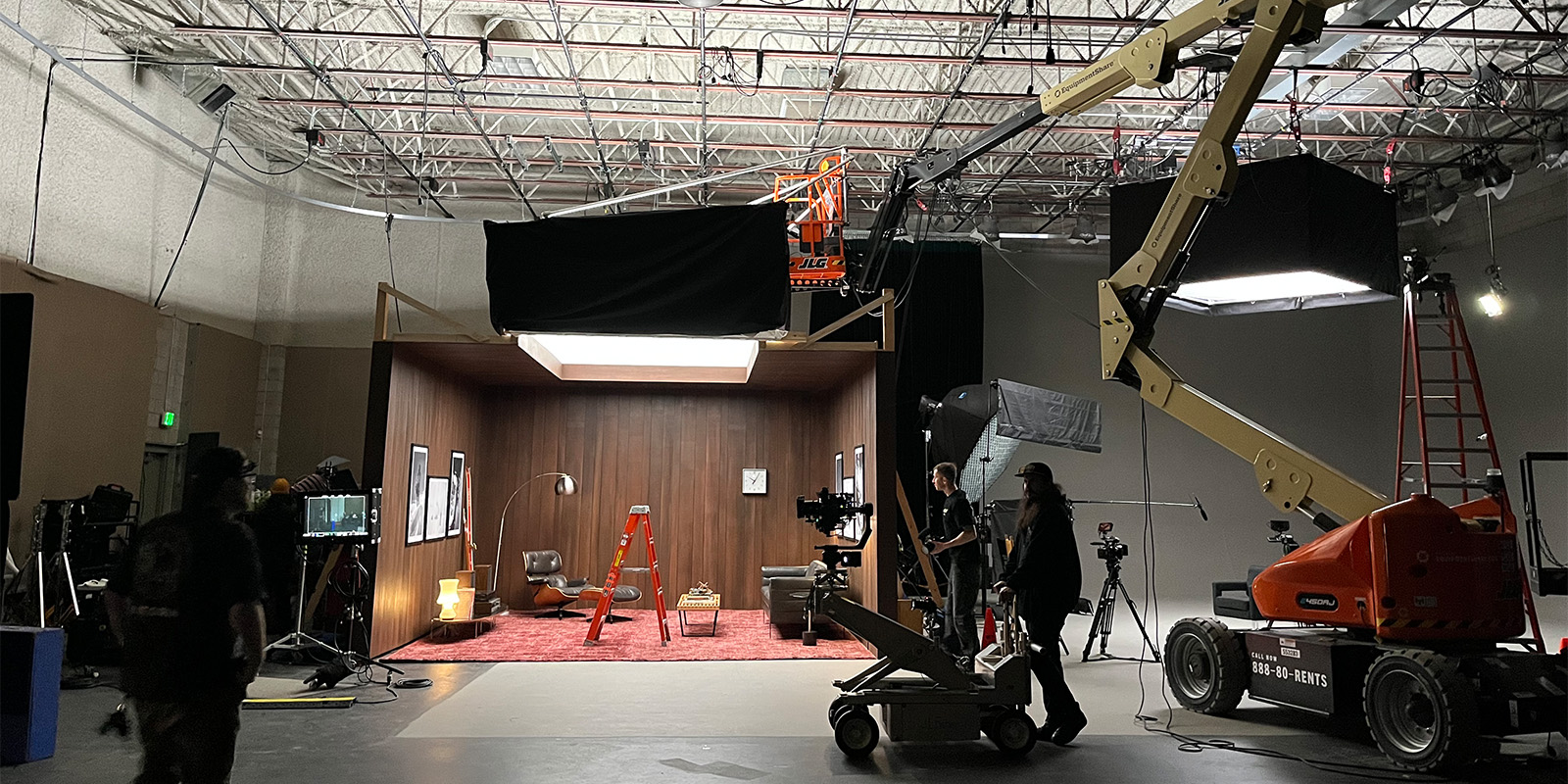
Kaschke took care to verify the idea mathematically before building it. “I put it all into LiteCalc, the app, and was able to calculate the distance the lights would be, through what diffusion, and what the T-stop would be for the subject. We decided that 24 Astera tubes would get us there.”
“It was a cool solution,” Kaschke says. “Where you’re hamstrung by budget or time, you have to come up with creative solutions and LED allows you to be a bit more creative. It saved us time in the prelight and saved us building an array.”
Mirror equation
That sort of pressure is equally familiar to Bani Mendy, cinematographer on Death in Paradise. “I started on it in season 13. Subsequently I’ve shot half the season one year and half the other. This year I’m doing block one and block three.”
Mendy spoke during the preparatory phase before equipment is shipped to the Caribbean island. “The gaffer and sparks and the best boy are at Panalux now,” he says. “They’re testing all the lighting and it’s being shipped. We shoot on beaches, in places where there’s no power. I’m constantly asked by unit: ‘Do you really need the big genny? There’s nowhere to park it.’ So how much electricity I need per setup or per location becomes a much bigger conversation than it normally would be.”
The approach, Mendy says, leverages the recent popularity of reflectors as much as LED. “In Guadeloupe I like to use mirrors a lot, with [Aputure’s] new Storm XT52 light. Because we’re on a tiny island we can’t ship over big lifts and stuff. Mirrors save me all the time because I can get them to a height where I can’t get light any other way. You’re talking about a 4x4ft mirror which can give me the equivalent of a lot of HMI. I think they’re one of the best things that’ve happened to this industry – so simple, but so innovative.”
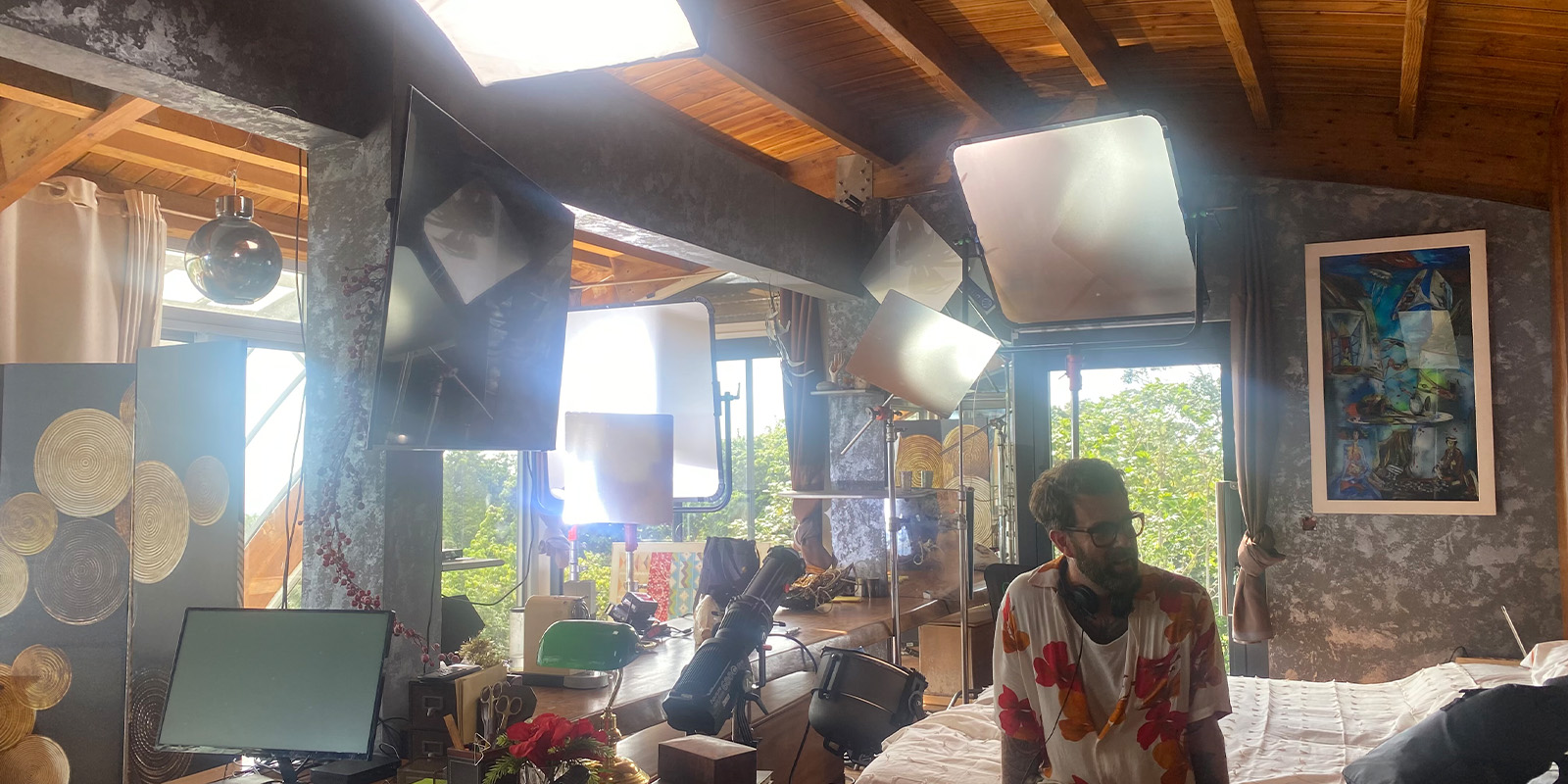
At the same time, Mendy has been careful not to allow the conveniences of LED to distract from longstanding concerns about colour quality. “I was always scared to [substitute] LED for tungsten. For daylight it’s been reasonable. It wasn’t until the last couple of years at BSC Expo I spoke to a few gaffers, and Tim Kang from Aputure, the guy [most responsible for] the BLAIR tech. Not only was he passionate, but everything he said scientifically lined up.”
Finding the right recipe
The gradual advancement of LED into a mainstream option is something that Checco Varese ASC has been well-placed to observe. “I’m not a techno freak,” he begins, “but I started using LED probably 12 years ago, and it has developed in exponential ways.”
Varese describes the results of that development with a careful analogy. “I always compare cinematography to cuisine because I like to cook. My mother used to cook with olive oil… if you go to any supermarket you see a hundred kinds of olive oil with lemon, truffle… do I need a thousand different olive oils? Not really. It’s good to have a couple. LEDs are a little bit like that.”
The practical upshot of that, Varese warns, can reveal the inevitable association between flexibility and complication. “You could tweak your sensor to acquire, say, 4755K and suddenly none of your lights make sense. You start adding and compounding decisions that make your brain explode. A less seasoned cinematographer may find themselves going back and forth between adding and subtracting endlessly. One of the beauties of LED lighting is that you have all these choices. One of the drawbacks is that… you have all these choices. Constantly. At the flip of a switch.”
Conversely, Varese suggests, the character of light can be harder to control. “There’s [still] nothing like a good tungsten fresnel in terms of creating a sharp shadow or a gentle shadow. It has become much better – Nanlux has these fresnels you add to the front of the unit which are quite remarkable compared to last year’s or six months ago.” As with so many observers, though, Varese’s belief is simple: “Are they better than an old ARRI or Mole Richardson? No.”
“And believe me,” Varese concludes, “I’m not a romantic. I’m not vintage for the sake of vintage. I don’t want to use a carbon arc light because it looks great, I want to use carbon arc light because it’s the only thing that delivers. I get tactile with high-end technology. That’s what makes me happy.”