A SUPER SHORT
DP Moritz Moessinger reveals how a fantastic team effort helped to bring stunning surreal visuals to short film Superbuhei.
When I first read the script for Superbuhei, I was immediately drawn to it. The surreal tonality, settings, and hints of genre, mixed with the dramatic underlying tone of a lost protagonist fighting for his purpose and individualism, immediately drew me in. With a backbone in commercials and arthouse drama, this felt like a unique opportunity to fully create a world from scratch and get involved in developing the creative vision from early on.
My enthusiasm was further sparked when I sat down for a coffee with production designer-turned director Josef Brandl. With years of experience working on projects from Steven Spielberg to Wes Anderson, he immediately presented his vision of the film world to me, which I couldn’t wait to immerse myself in. The only concern that kept challenging me throughout the project was the constant knowledge of the tight budget we had to be working with, which had to accommodate extensive production design, set builds, complex technical set-ups and more than 200 VFX shots.
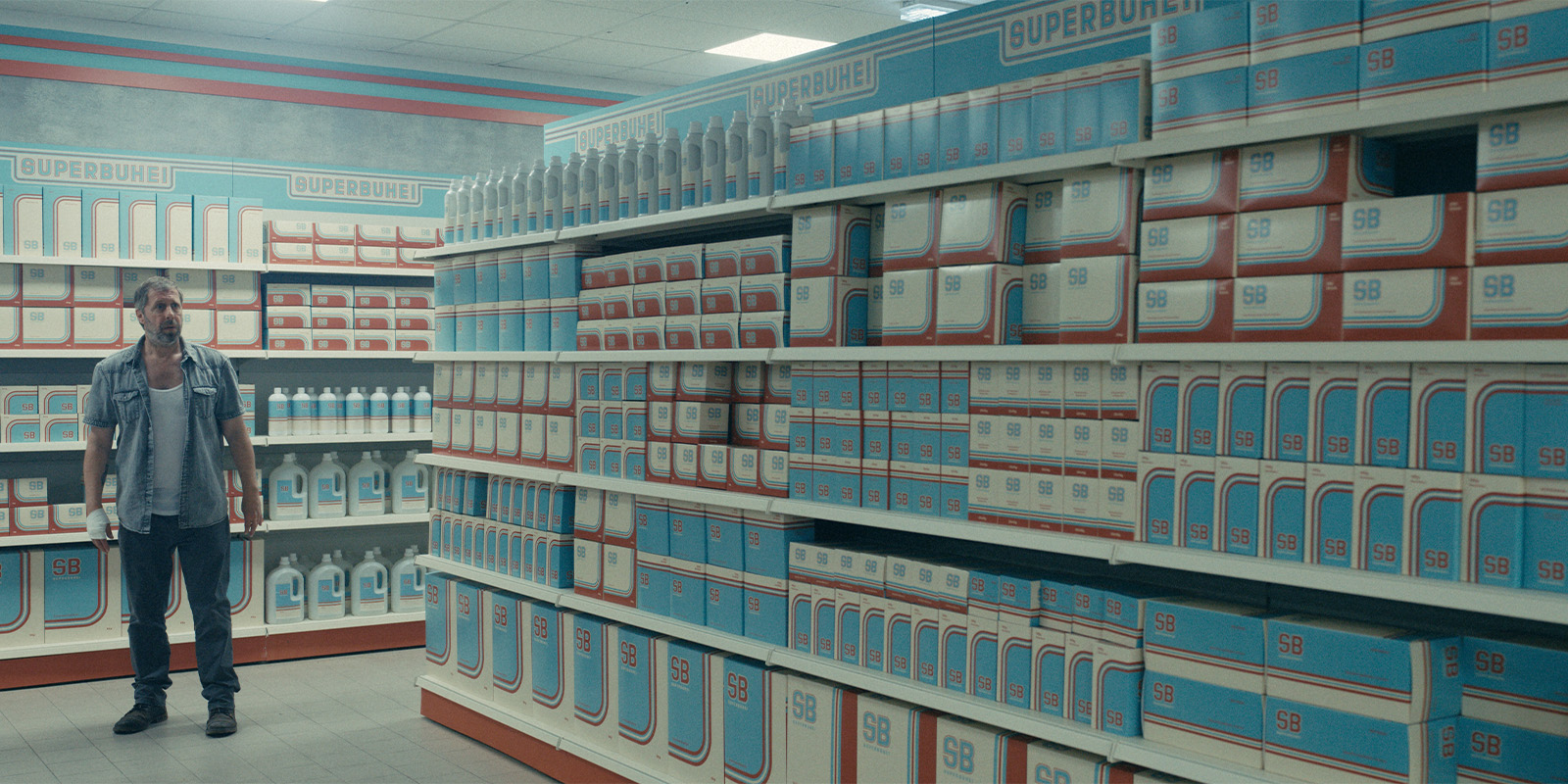
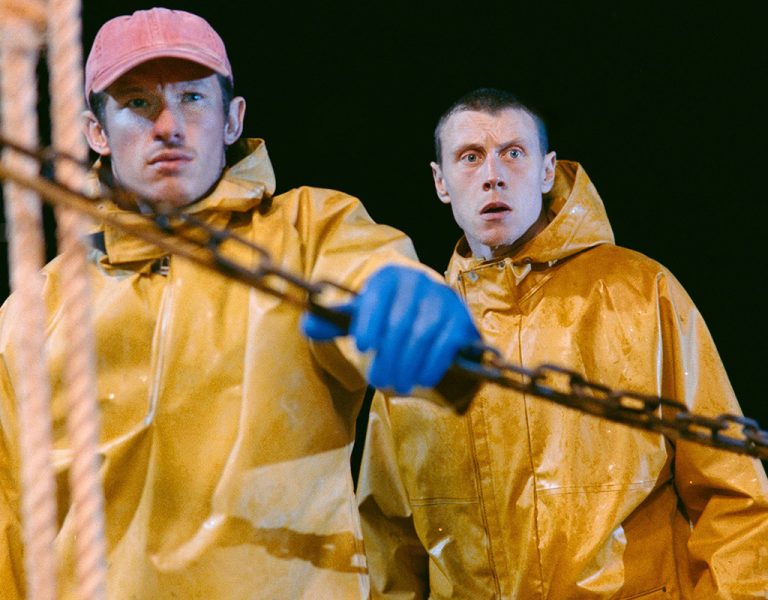
To visualise the film – which is part psychological thriller, part dark comedy and tells the story of the alcoholic pub landlord Jesse who becomes convinced that his twin brother intends to steal his identity – Josef and I looked at photography by Gregory Crewdson and paintings by Edward Hopper, among others. We wanted to create a world which mirrors the inner life of the protagonist and plays with surreal sets as well as unusual perspectives and camera movements.
Passing the test
After doing extensive camera and lens tests, looking at the ARRI Alexa 35 as well as the Sony Venice 2 in combination with vintage Canon K35, Tribe7 and Signature Prime lenses, we eventually opted for the Venice 2 and Signature Prime combination. We loved the versatility the dual ISO gave us, the Full Frame sensor and Rialto System for our small sets, and the look of ARRI’s Signature Primes. Their sharpness and fast focus falloff seemed like the perfect pick for the project.
The Venice 2 also turned out to be the perfect choice for one of the most challenging locations of the shoot – a fight scene in a corn field set at night. Not only was the vastness of the field daunting for a night shoot, but the super short summer nights added another layer of difficulty.
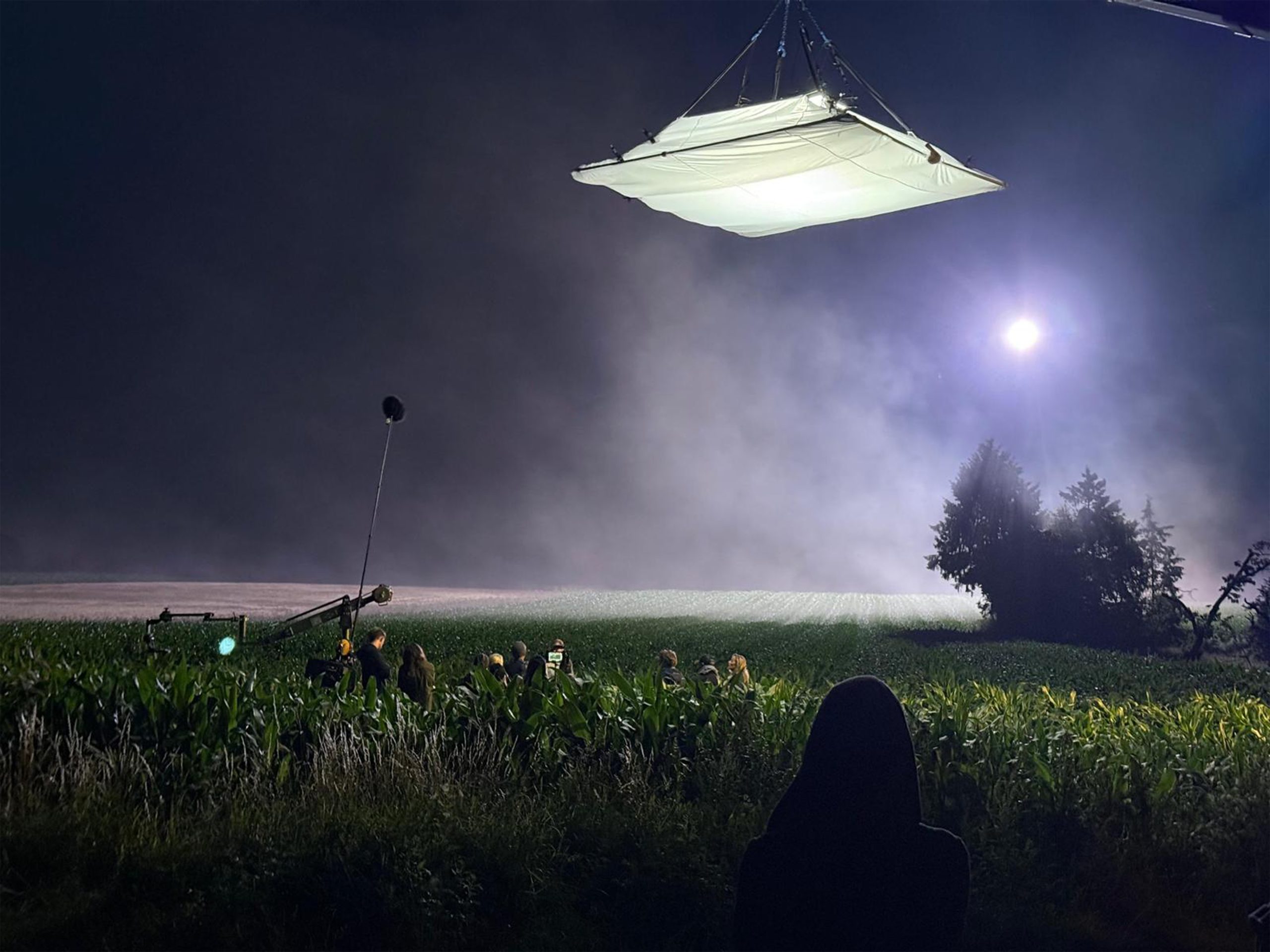
I spent days walking around the location with my longtime gaffer Peter Assmann, trying to figure out how to deal with the challenge. Eventually, we came up with an idea: with a background as an event lighting technician, Peter had come across a light unit intended for concert stage work at a trade show: the STRIKE Array LED units from Chauvet. The lamp heads come in pairs and can be stacked into arrays of any size and shape. With that in mind, we decided to build a moon shaped source out of 80 Array units with a total power of 22kW. Rigged on a cherry picker, 30m up in the air and on the only solid road 500m away, they could be remotely controlled and panned wherever we needed it. Combined with a 12×12 top light, illuminated by a simple Carpetlight Prisma prototype and a bunch of Vortex8 as well as Astera QuickPunch LEDs, we could adjust the lighting on the spot and move fast through the short nights with about 3h of darkness. This gave us full creative control and gave Josef the freedom to direct the actors within the lit space.
Across the production, we relied heavily on the Blackout App, which allowed Peter and myself to load accurate floor plans of each set and position every fixture precisely within that map. On my iPad I could see in real time what every unit was doing: colour temperature, intensity, position relative to the set. This allowed for a more precise communication: rather than ‘a little warmer’, I could give an exact Kelvin target or identify precisely which unit needed adjustment. Across a shoot where we were covering multiple distinct lighting environments in a single day, from warm domestic scenes, to horror adjacent moments, and back again, being able to recall saved states rather than rebuild from scratch was what made our tight schedule achievable.
To the pub!
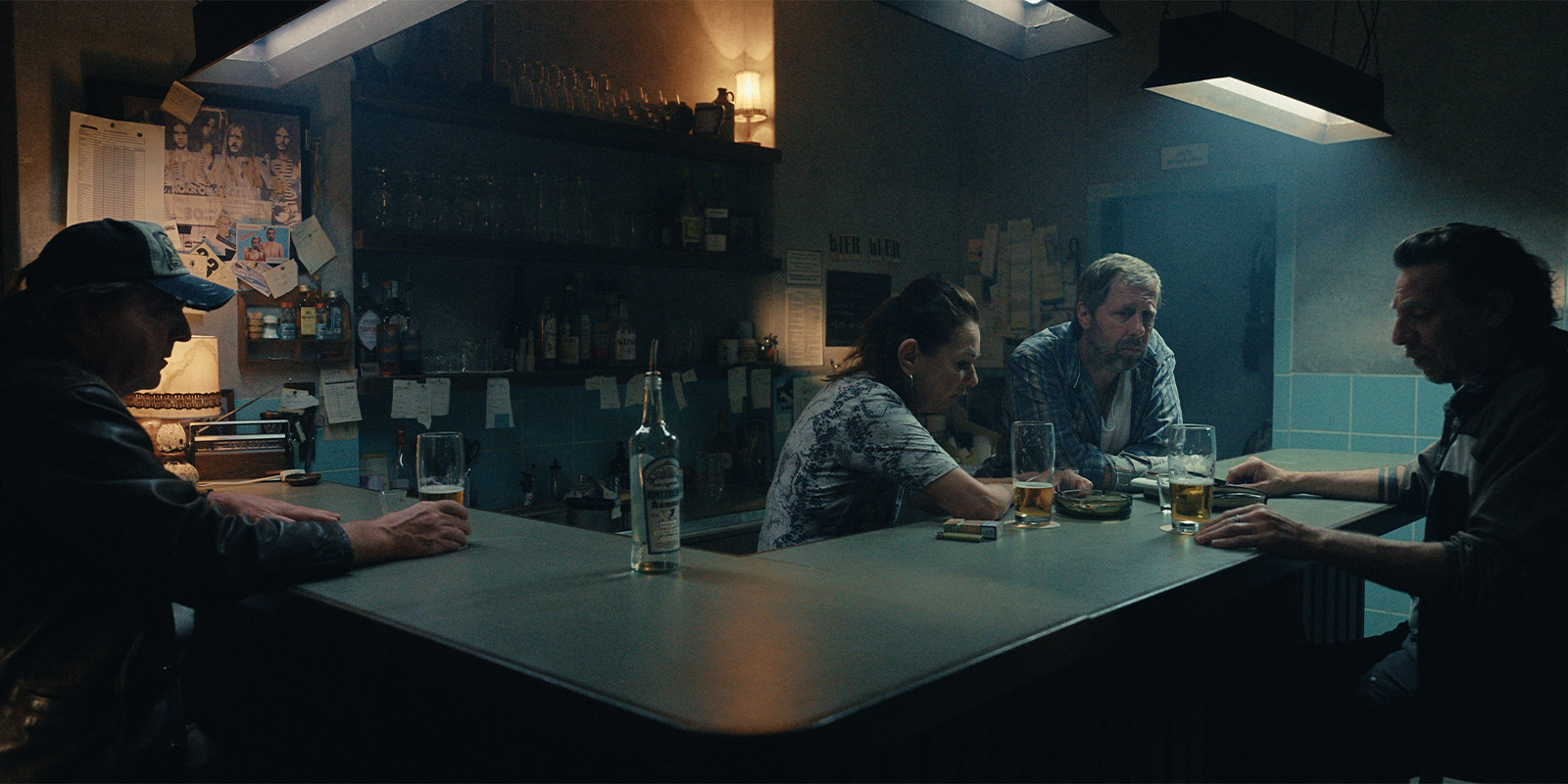
Another set where the Blackout App came in handy was the pub, which the protagonist owns and often resides in. The set was built into an unused part of our titular supermarket location (Superbuhei). With narrow, 4m tall ceilings and a 30m white screen for future VFX replacements of the exterior, we had to find a lighting set up which allowed for a maximum of flexibility. Luckily, our VFX team suggested white instead of green for less spill and fewer problematic reflections in beer glasses and bottles, so we eventually decided to use the white screen as a diffusion and shot a series of Creamsource Vortex SpaceX through it. Nanlux Evoke 5000 created rays of sunlight whenever needed, and all of our units could be controlled in seconds from our iPads. This way, we could change directions in seconds and work with a minimal team, while the others were prepping the next locations.
One important lesson I learned during the project was that a small budget can partially be compensated by an extensive pre-production and early involvement of the post-production. We used LiDAR scans of all key locations to plan lighting positions before we arrived on set. Our post-production partners LUMATIC were brought in early enough that during the shoot I could send first takes of any VFX-relevant shot directly to them for clearance via a quick message to our DIT. With over 200 VFX shots, shooting without a feedback loop would have been guesswork. We also ran a small pre-rigging team throughout, preparing the next set while principal photography was still running on the current one.
It was a great experience and the entire endeavour wouldn’t have been possible without my amazing team: Ivan Reis Oliveira (1st AC), Jean Luc Lineé (2nd AC), Peter Assmann (gaffer), Lenz Mack (key grip), and Patrick Locher (DIT) as well as their team and the incredible production design department, location unit and the tireless work of the producers Janina Sara Hennemann and Jan-Philip Lange (JuniFilm).