PLANET OF THE ADDICTS
Cinematographer James Whitaker ASC on shooting Good Luck, Have Fun, Don’t Die — the most technically demanding project of his career and the sequence that kept him testing and guessing until the very last week.
We are already living inside the crisis this film depicts. AI companions are forming what experts describe as echo-chamber friendships with lonely teenagers. Researchers are working to classify excessive AI dependency as a recognised behavioural disorder. The line between the virtual world and the real one is dissolving — not in some distant future, but right now.
Good Luck, Have Fun, Don’t Die, a science fiction comedy directed by Gore Verbinski and written by Matthew Robinson, starring Sam Rockwell, Haley Lu Richardson and Juno Temple, takes that anxiety and runs it to its logical, terrifying conclusion. A man from the future walks into a Los Angeles diner at 10:10pm. It’s his 117th attempt to save the world. He recruits a handful of reluctant strangers — teachers, a grieving mother, a woman allergic to Wi-Fi — and sends them on a desperate mission through a single dangerous night to stop a nine-year-old boy from creating an AI that will consume humanity whole.
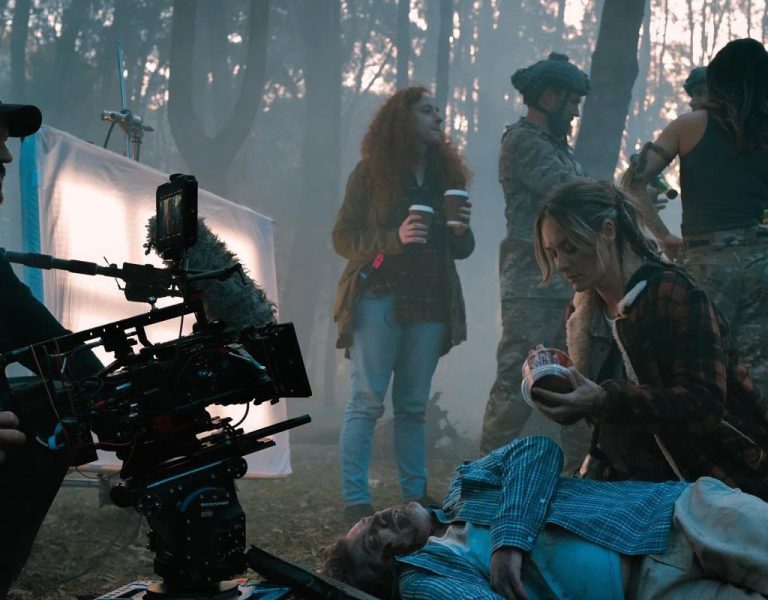
We explored the Alexa 65 first, because we were looking at the largest of formats. Gore was drawn to the beautiful focus fall-off you get with the 65mm sensor — and the funkiness those large format lenses bring to the edges felt like it could be really interesting for the film. But just before we left for South Africa, after testing for about a month, both of us arrived at the same decision at roughly the same time: that makes a lot of sense for a film isolating characters, but ours was much more about a group of people on a mission often sharing the frame together, sometimes at staggered depths. We didn’t want to struggle with shooting at a T5.6 or T8 at night when we were trying to move fast and get 40 setups a day. We eventually chose the Alexa Mini LF, which still has some nice shallow depth. The Panavision Panaspeeds came from Gore being a Panavision devotee — the Primo lenses were what he’d used on previous films and Panaspeeds are basically full frame Primos.
This film’s distinctive visual world was shaped by its setting — a single desperate night in Los Angeles — and this camera/lens combination helped me render a city in a way that is both viscerally urgent and hauntingly familiar.
Leaving the end until the end
The end of the film was the most challenging section to light because that space simply doesn’t exist in real life. It came entirely from our imaginations. We started with one anchor: a rectangular 40’ wide by 50’ tall LED wall with a large triangle of light in the centre of the screen, at the end of the room which gave us a source.
The Man from the Future (Rockwell) has been leading five or six people out of a Norms diner through the back alleys of Los Angeles on a mission to find an AI boy who’s coding the final piece of quantum code that will empower AI to destroy the planet. It leads them to a house where they have no idea what they’re walking into. They overcome a couple posing as the boy’s parents, go through a wall, down some stairs and into this gigantic space.
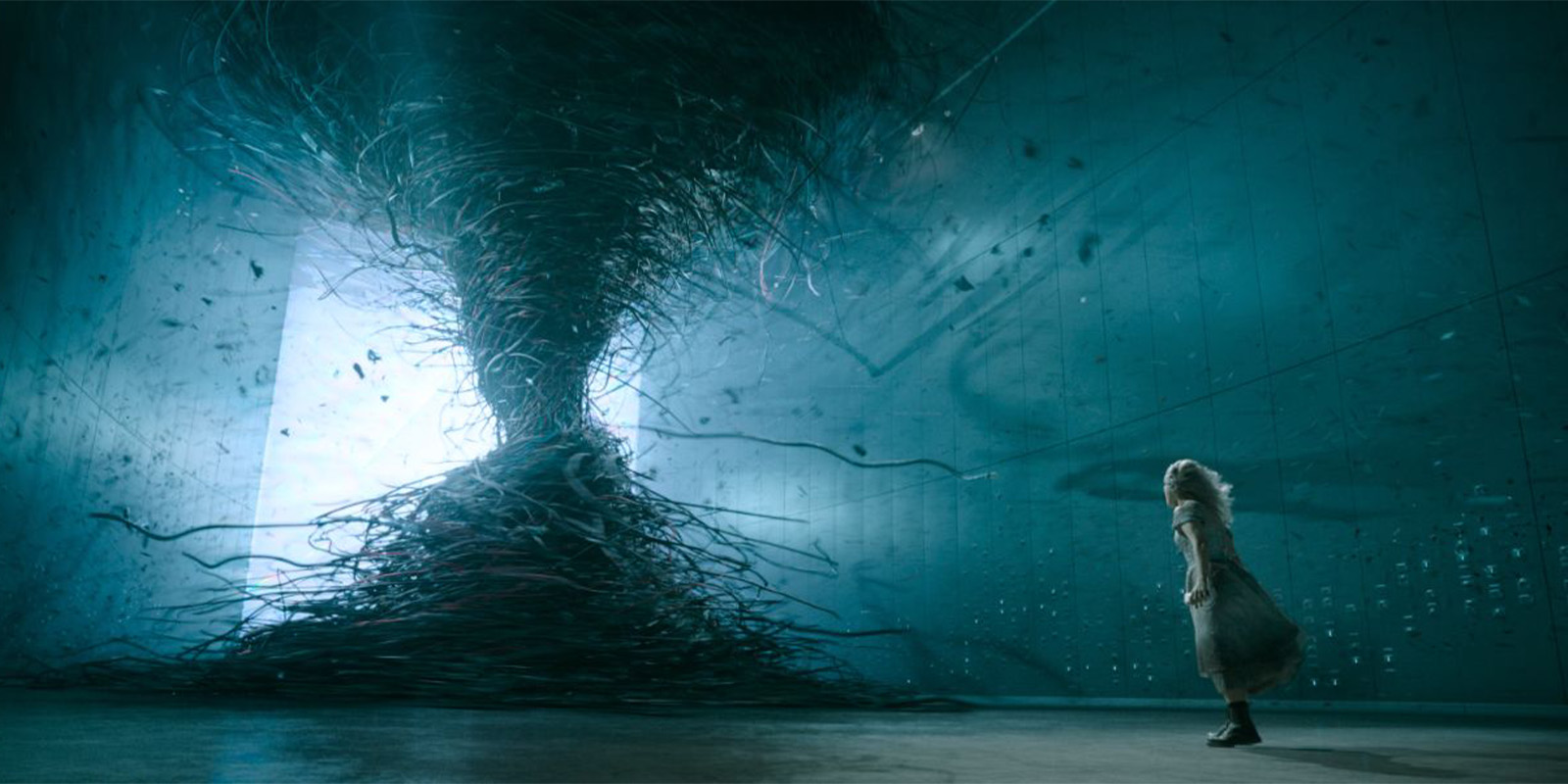
When I read the script, it was written as a boy’s bedroom — maybe slightly oversized, a kid at his desk surrounded by computer towers, cables and robots. But this was where Gore really wanted to blow up the scale of the film and deliver a set piece that was massive, beautiful and sold the sci-fi in a way nothing else had. The problem was we had no idea how to get there.
From the beginning we pushed this sequence to the end of the shoot, knowing we needed maximum time — to build the set, let VFX deliver the assets for the wall, and figure out how to light a space that had never existed before.
We were testing right up until the week before we got there, trying to keep up with the shoot while thinking ahead. As the art department was building their models, I asked one of the art directors, Eli Otto, if I could sit with him in Blender — a programme with a powerful lighting simulation tool. You can physically place a 10k or 20k inside that virtual space, build soft boxes, add diffusions and get a real sense of what a single triangular source, maybe eight feet across, would actually look like before you’ve built a thing.
The key question was whether the light source that we would use that would push light onto the boy sitting on top of the triangle would wash the back wall too much, or whether we could make it feel hard and directional enough to seem like it was genuinely emanating from the triangle itself. We eventually landed on the simplest possible solution which was a scissor lift carrying a couple of highly focusable Vari-Lite VLZ moving heads, pointed exactly where we needed them, tight to the boy or any part of the triangle, with no unwanted spill.
They’re there to confront the AI boy — and then all hell breaks loose. As Gore puts it, this is the Akira part of the film.
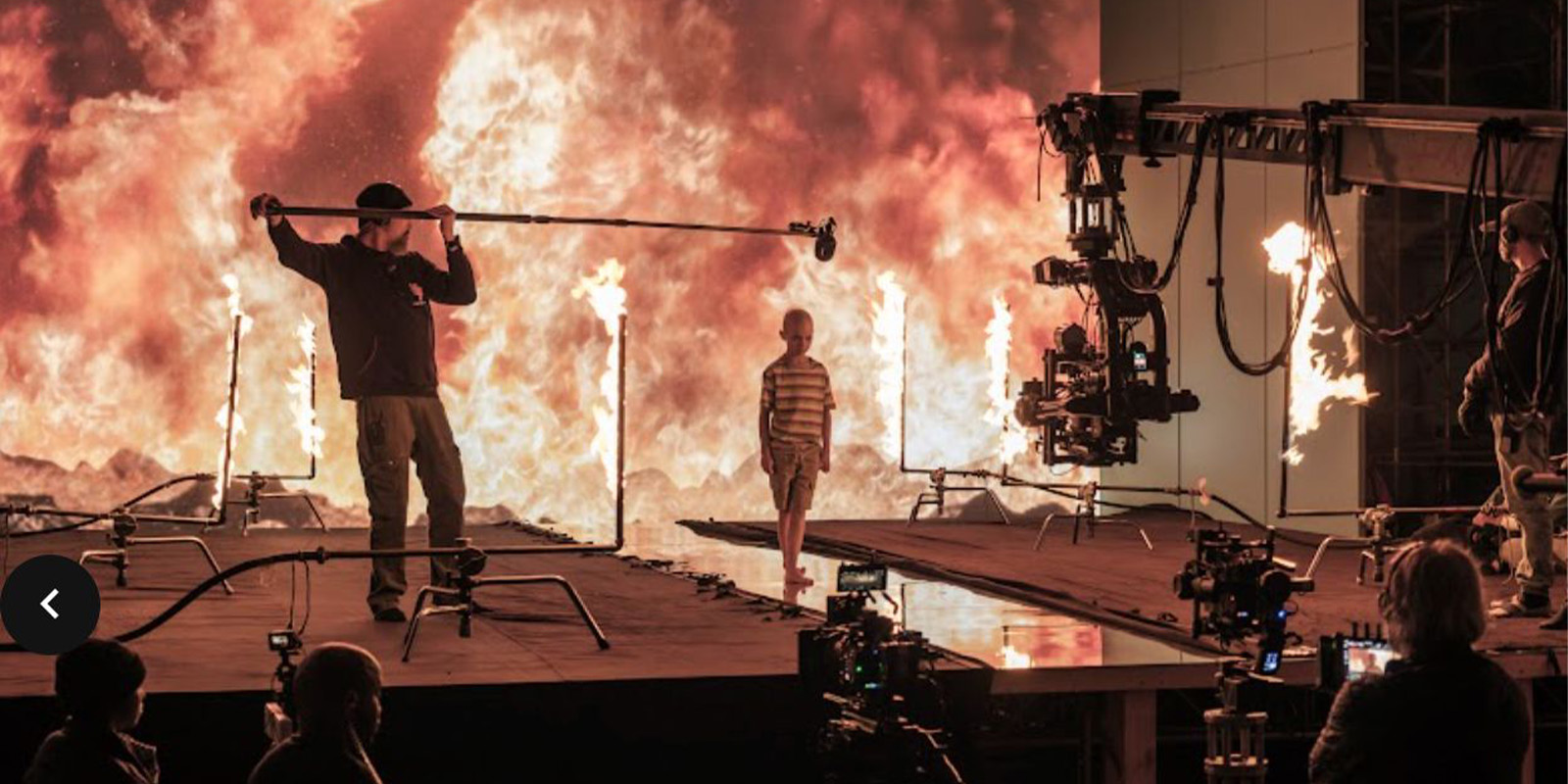
Above the set, an 80-foot ceiling opening held two 20×20 soft boxes fitted with Aurora 400 panels from Film Gear, providing both ambience and interactive light. The LED wall exposed around T8.5–T11 and couldn’t be dimmed without breaking the image, so we had to build ambient light carefully to preserve detail across the pyramid, cables, and structures.
To complete the look, we layered additional Aurora panels, atomic strobes, more Vari-Lite VLZs, and Robe Spiiders — wash-beam fixtures critical for generating the interactive, dynamic lighting driven by the screen itself.
Lighting the storm
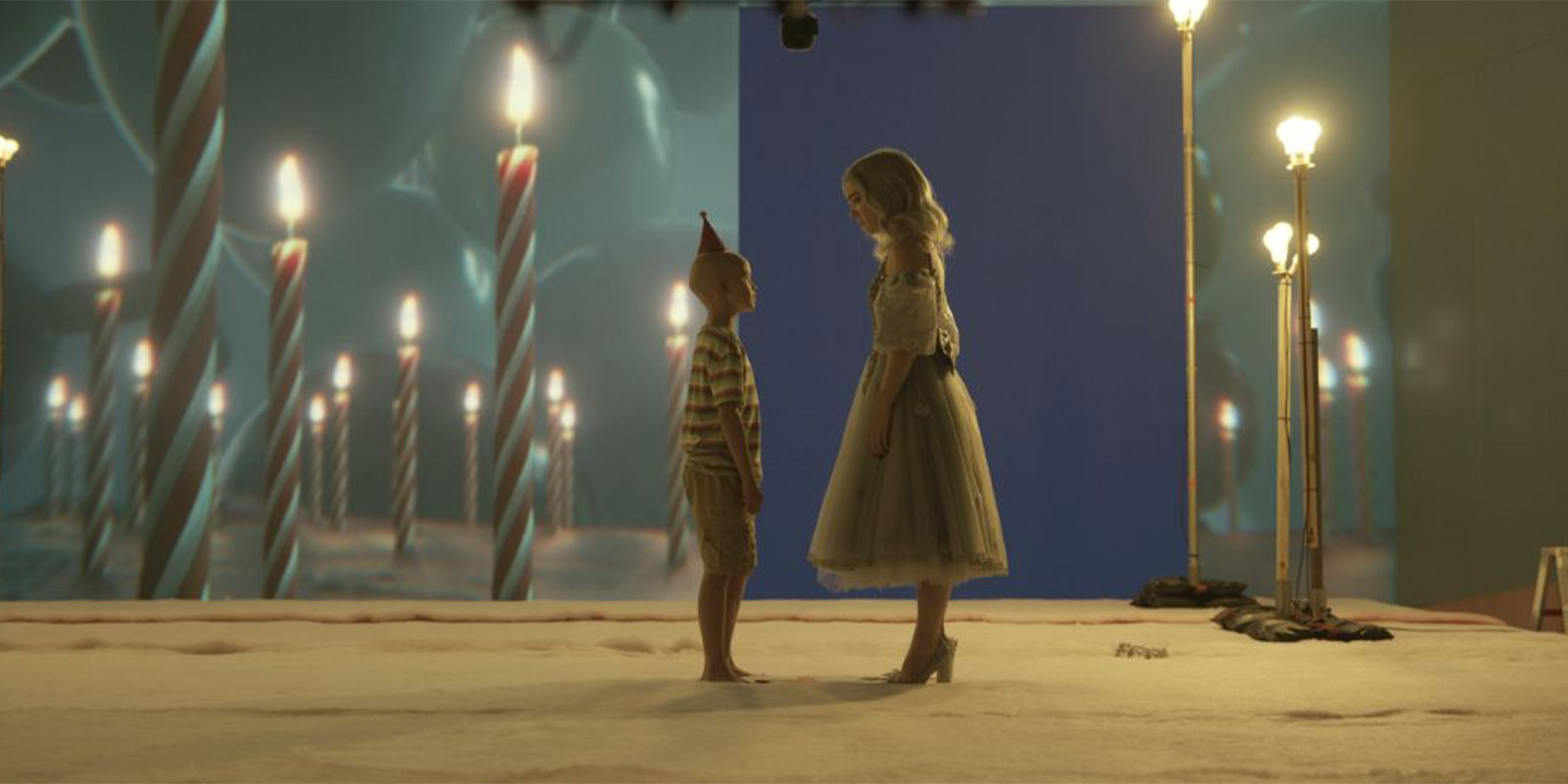
We were also testing projectors throughout the shoot — grabbing a corner of whatever location we were on to try things out. The sequence required actual projection onto the actors’ faces. The LED wall carried tornado content with interactive flashing and strobing, which looked incredible when you faced the screen, but a solid wall was never going to throw hard shadows onto the actors when we turned around away from the wall. So we projected that same tornado content — just a sliver of it, the most violent edge — directly onto their faces. On Haley’s face, for example, it cast strong, hard shadows. To push those shadows even further, we shook cables, foam cables and pool noodles in front of the projectors. Combined with wind, atomic strobes and the Aurora panels and Robe Spiiders synced to flash in time with the screen, the interactive light in that room became something really powerful. We shot in that space for 10 days, working through around 600 storyboards — which covered not only the tornado sequence but also the memory timeline, where the AI boy takes Ingrid through her entire life. VFX provided rough content for the screen — a birthday cake, a womb, a solar nebula, fire — and again we tied our off-camera lights into whatever was playing on the wall.
It was a challenging production, but one grounded in a very strong sense of collaboration. At that scale and pace, you rely on the crew’s skill and instinct to keep everything moving, and trust them — and your own instincts — to carry the work forward.
Gore had originally planned for 73 days, but we shot it in 60. What stayed with me was how committed he was to the material, he never compromised the script or cut corners, which meant we all had to rise to that level.
The biggest takeaway for me was trust. There were days where we were shooting 50 to 70 setups, lighting in minutes and moving on quickly.
Working with someone like Gore Verbinski makes that instinctive. But it’s a mindset that holds regardless, you commit, you trust the people around you, and you keep moving.