

FINDING SOLUTIONS
Investigating the condition of the state’s prison system, The Alabama Solution uses footage from real inmates – as well as unique original photography – to tell its urgent story. Directors Andrew Jarecki and Charlotte Kaufman explain how.
The Alabama Solution is largely centred around footage from inmates themselves – how did you coordinate that, if at all?
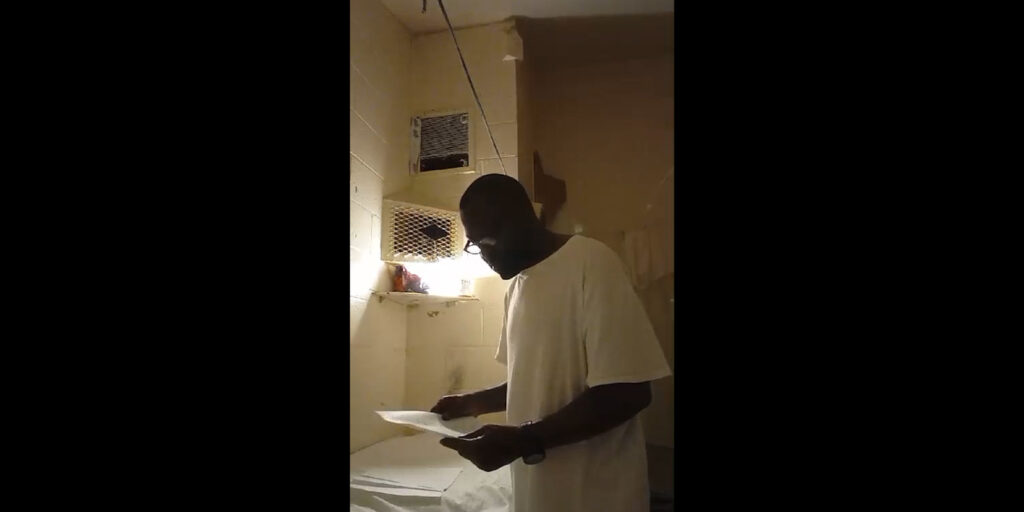
CK: The men inside Alabama’s prisons have been documenting their circumstances for over a decade. They started around 2013, so it wasn’t a case of us coming in and having the brilliant idea to be like, “Oh, you could film your environment.” They had realised previously what a tool phones are for resisting. So we were able to tap into a network of people that were already documenting, commenting and recording – we had all of this material to call from.
But what we did was our interviews. We did several over six years. We had the privilege and the opportunity to go back to those three men in the prison and interview them across years and across many different stages and experiences. That’s where you can really mutually explore and shape the story in terms of what topics to focus on, whose lives to focus on.
I think our interview process was the Socratic method of just asking questions and exploring. Trying to learn as much as possible from these men. That then became, I think, the backbone of the film. We made a decision early on that we didn’t want to have any ‘experts’ in our movie. We didn’t want to have talking heads with lots of lawyers or academics or activists. We wanted it to be about the people who are living the circumstances, and luckily we were able to do that.
We’re living in an era of flashy documentaries with polished visuals – this, for obvious reasons, largely can’t take the same route. You lean into that with having a very simple approach to the footage used. How did you decide on this approach and how did you go about keeping the documentary visually stimulating within those constraints?
CK: The film is about 30% cell phone footage, and the rest is original photography, shot on the other side of the wall. We made the decision that the rest of the footage would feel very stripped down and very immediate and reduce the fingerprints of the filmmakers as much as possible. We thought the audience would trust cell phone footage more than cinema lenses and beautifully lit scenes. The most important thing was avoiding taking the audience out of the film. We didn’t want there to ever be a question about the truth of what you’re seeing.
AJ: I was worried that if we used a lot of cell phone footage, would it be tiresome for the audience? Would we be able to tell that story in such a lo-fi manner? Most of it is also vertical, which isn’t usually how documentaries are made.
But now it all seems completely organic, because not only were we able to get enough footage to tell the story, but the restriction on the frame is kind of a metaphor for the restriction that we’re filming. You, the audience, are hemmed in, which is a really disturbing feeling to be having. When you’re going through the story, you’re constantly reminded that you’re only allowed through this little tear in the fabric, this little window that’s not even the full size of a movie screen or a horizontal image.
How did you go about gathering your own photography?
AJ: Charlotte is a very good shooter. Not just good technically – knowing where to put the camera – but also in how to be in a place like Sandy Ray’s house, where they’re grieving the death of Steven Davis, and have a very low profile. I think Charlotte has a really unique eye for that – she’s incredible, adaptable, and will use the tiniest camera or whatever she needs to use. She’s very guerilla from that standpoint, so I was really lucky with that.
And then Nick Kraus, who’s the other main cinematographer who worked with us, is just a fearless shooter. Charlotte had told me about him because he shot a number of pieces about drugs and gangs, and I watched some of that footage and it was just so, so raw. It was clear he basically had no self-preservation instinct, so he would just walk into situations and gather a lot of interesting photography.
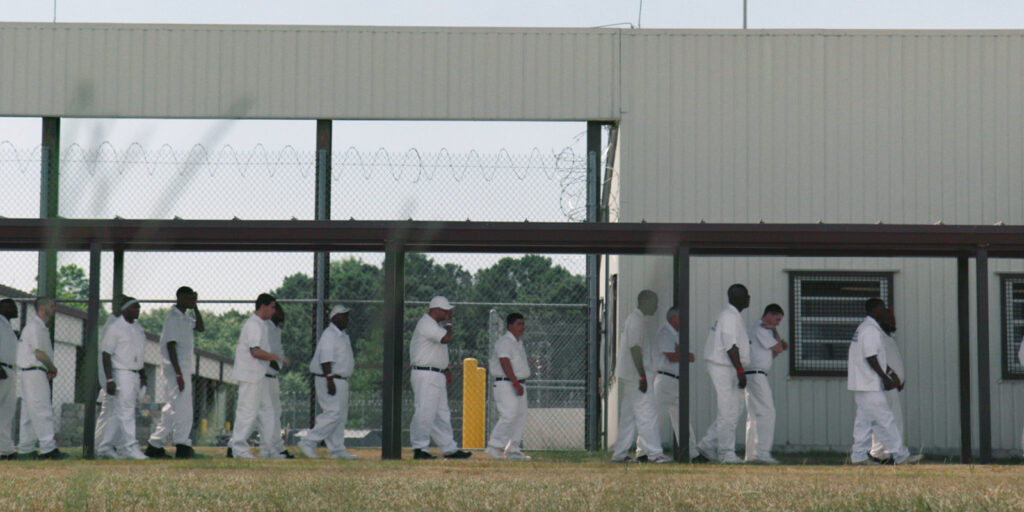
You’d think it would be relatively easy to get exterior shots of the prisons, even if they didn’t want to let us in, but that was in some ways equally difficult, because Charlotte and I would pull up to a prison, sitting on state land that was not part of the prison, we were legitimately there, and then we would take out a camera and immediately we would be told we’re not allowed to do that.
CK: I think one thing we wanted to feel was the limit of where you can get to from the outside. You can use a really great zoom lens, but there’s going to be a limit. Nick advised that we rent this huge zoom Canon cinema lens that was three feet wide, which we had to strap into the back of a white van. And then, as Andrew was saying, we really studied the state lines to know exactly where we were allowed to be and where we weren’t, and then we would just drive up on the highway, pull up and open the van door and shoot for as long as we could, until some guard would see us or until we would get in trouble.
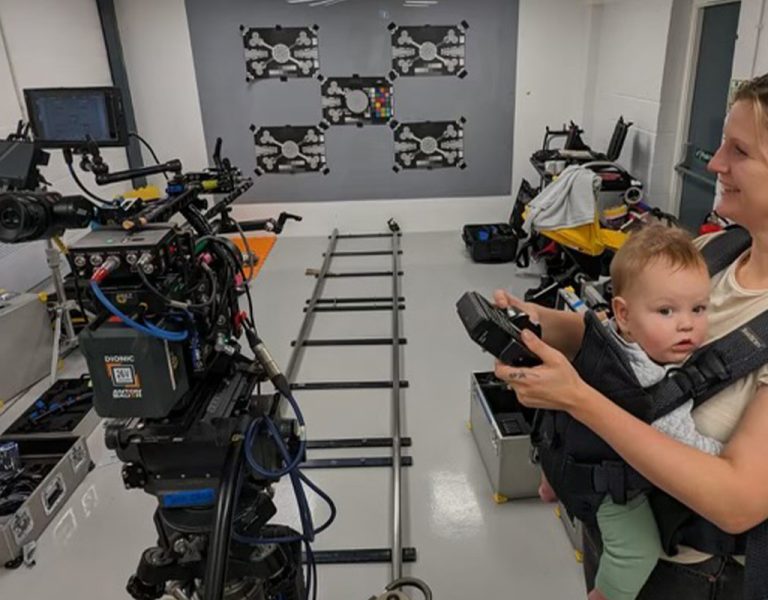
The main camera that I used for most of the vérité was a Canon C300 Mark II, because we started in 2019. That was the workhorse, basically, through everything. Once you learn a camera, it’s such a part of you that you don’t want to give it up, even if there are better models out there. And so we used that for much of it. Then for certain exteriors with the zoom lens, we used a C500 Mark III.
Through the huge zoom lens, you can feel all of the kinetic energy that’s trapped inside these big buildings, but there’s a limit that you reach at the end. You can’t go any further. And that’s where we’d pick it up with the cell phone footage.
You must have had so much footage to work with, as is the case with any documentary. How did you decide on what to use?
AJ: We come into these projects without a very concrete view of what the story is going to be. We work from the material. We just sort of wander around and look under every rock that we think might be interesting, and we’re willing to go down so many blind alleys, and they’re always interesting, whether they end up in the film or not. They’re informing us all the time. In some ways, you’re never done looking into all those corners.
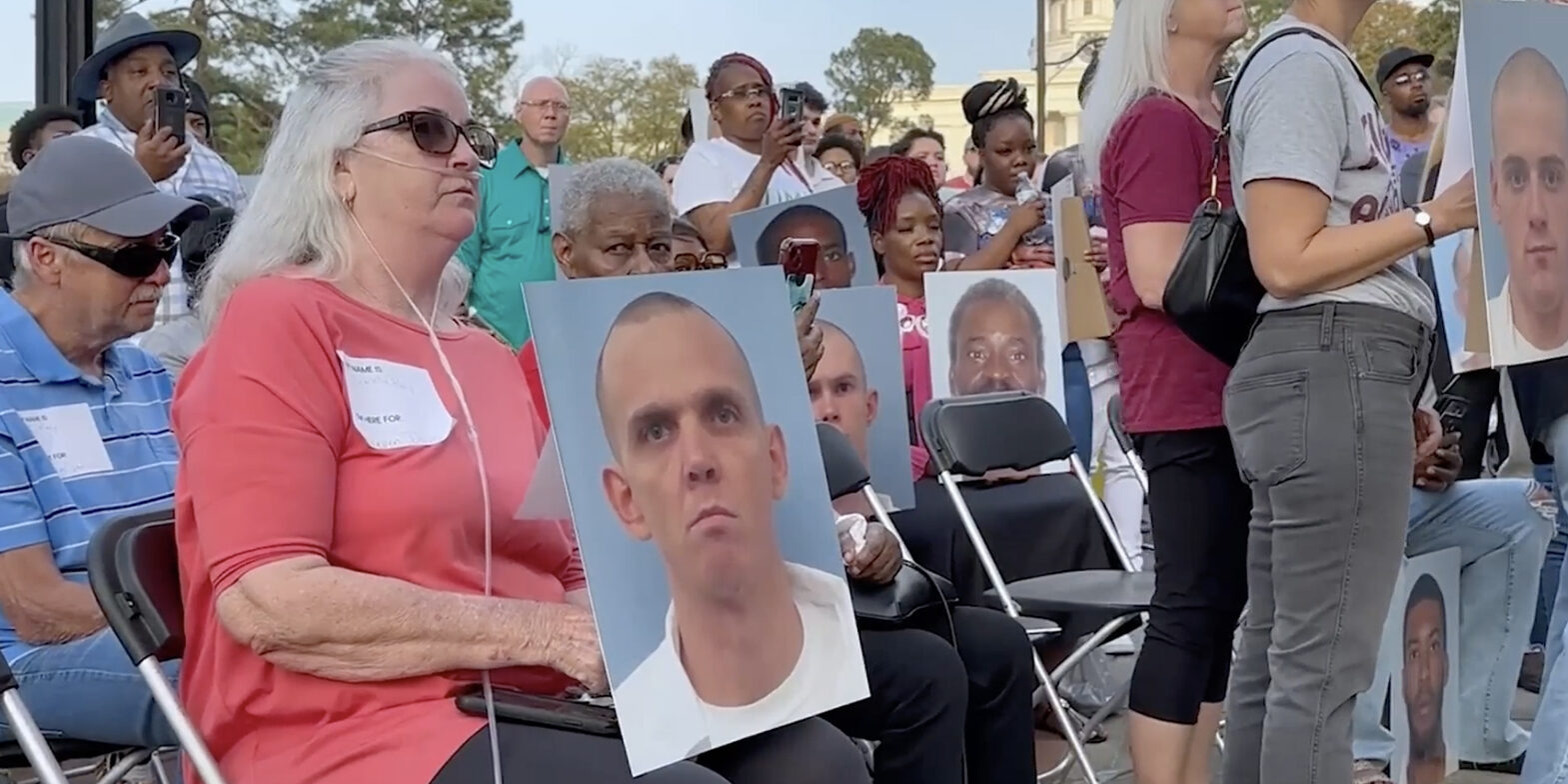
CK: Our investigation spanned six years, and we investigated so much more than what’s actually in the film. But, partly because we were not making editorial decisions as we were shooting, we were at the service of the truth and the full truth. When things arose, and we felt that it was important history, we knew we needed to film it, whether it ended up in the final film or not.
Obviously, we have to narrow down a lot of what goes into the film. We investigated other deaths to the same extent as we did Steven Davis and James Sales, and while you don’t see all of that detail, because it’s just too much for an audience to take in in one sitting, it is definitely still below the surface. We’ve put a lot of our additional investigation onto our website. We have a full database of all the people who have died in Alabama’s prisons, which we tracked since 2019, and one of the reasons we did that was because we felt like this is material that belongs in the public domain – we cannot be gatekeepers.
Filmmakers can often draw a line under a project and move on once they wrap – but with documentary filmmaking as heavy-hitting as this, it can follow you around long after that. How do you navigate that and why is it important for you to take that on your shoulders as investigative filmmakers?
CK: That’s something that Andrew is so, so adamant about, which I think is unique in some ways. Obviously, working with him over these years, I’ve learned so much from him and how he approaches people and projects, and the intensity with which he approaches them and the unrelenting curiosity. He has the approach to keep going for as long as the story takes, and we’re going to follow every path to do it right.
The other side of that is that, even once we’re done filming, the work doesn’t stop. This is an evolving, living, breathing organism for the rest of our lives. With how it interacts with the world and the alchemy that’s going to happen now, the project takes on its own life, and that’s a responsibility that we’re going to have forever. When the stakes are so high, it’s almost like the real work starts now.
AJ: Going forward, it’s not like we’re not going to not talk to the people in the film for six months because we forgot or we’ve moved on. We’re in close contact with them, their families. We’ve been doing grassroots screenings in Alabama, the families have put on screenings in their living rooms and in community centres. We want to keep doing that, to keep it on the radar constantly and keep the pressure on to bring about change.