


FRAMING THE FUTURE
In the third instalment of British Cinematographer’s Agents for Change feature we explore more initiatives, individuals and events transforming the industry. From mental health and representation to access and sustainability, find out who is helping create a fairer, more inclusive and liberating creative community.
THE FILM AND TV CHARITY’S LOOKING GLASS SURVEY
The Film and TV Charity’s Looking Glass survey provides the largest dataset on mental health and wellbeing among the behindthescenes workforce in film, TV and cinema. First launched in 2019, it has consistently shown that mental wellbeing in the sector is worse than national averages, providing robust evidence that the industry cannot ignore.
For instance, the 2024 report found that 35% of respondents rated their mental health as poor; 63% said working in the industry negatively affects their mental health; and 30% often felt lonely.
“Findings from the research haven’t just sat on a shelf, they have helped drive practical interventions. As an example, insights from Looking Glass spurred the creation of the Charity’s Whole Picture Toolkit and the recently launched Principles for Mentally Healthy Productions, giving productions templates and guidance to embed mentally healthy working practices,” says Mark Tweddle, research and insight manager, Film and TV Charity.
“The research has also inspired wider action, with initiatives such as ITV’s Green Room – a pilot scheme to create a peer support network of freelancers between roles – seeking to address, at least in part, the issue of social disconnection and loneliness highlighted in in our research.”
filmtvcharity.org.uk
OSKA BRIGHT FILM FESTIVAL
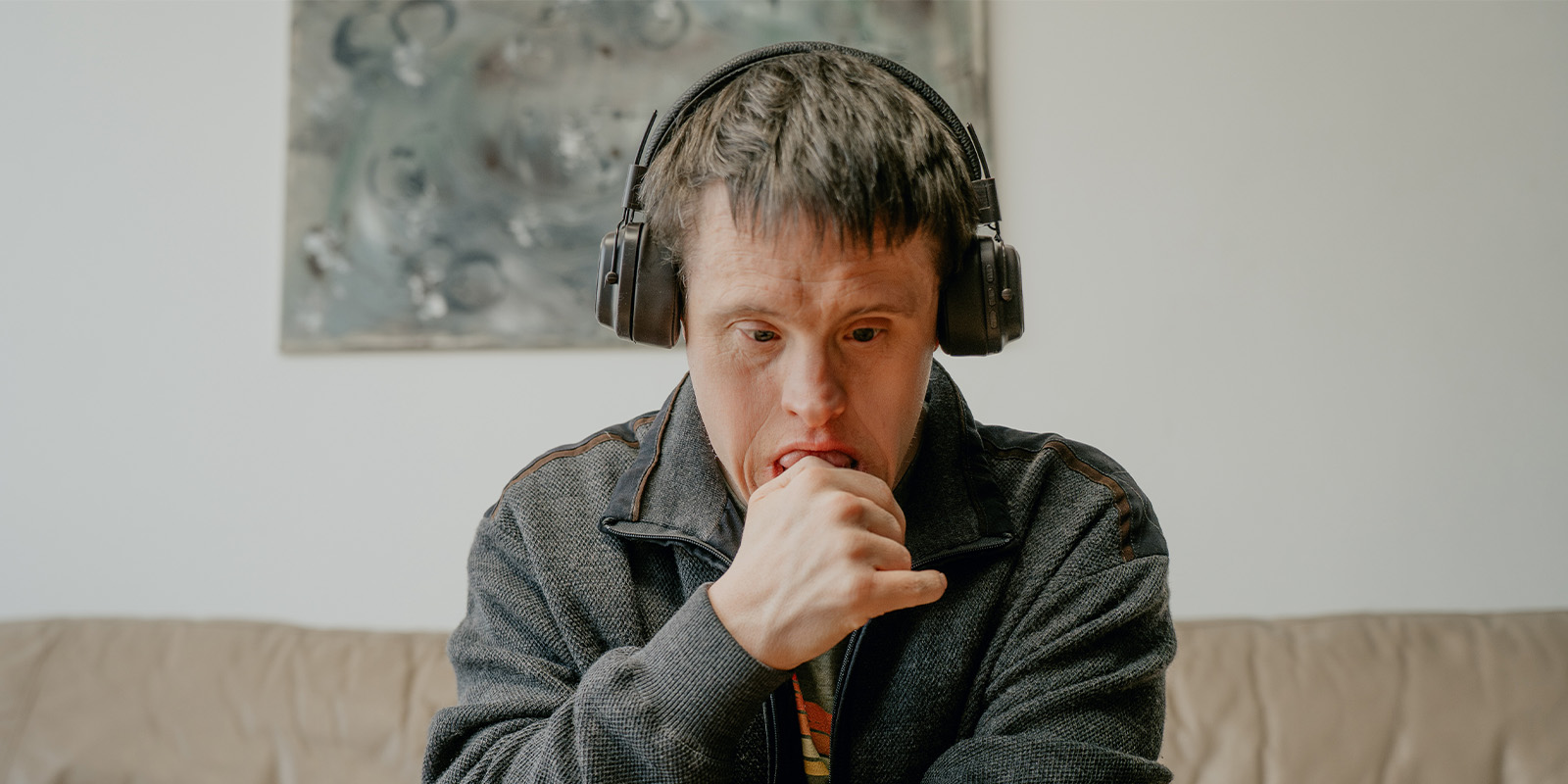
Oska Bright is the world’s leading festival for films made by or featuring learning disabled or autistic people. What started in 2004 as a one-day celebration now runs over several days every two years, showing films from around the world.
Oska Bright is delivered by a team of learning disabled artists, supported by Carousel, a disability-led arts organisation,registered charity and Arts Council England National Portfolio organisation. Oska Bright is a BAFTA and BIFA-qualifying festival, funded by the BFI.
“We put learning disabled and autistic people exactly where they should be, in front and in centre and on the big screen,” says Matthew Hellett, head programmer.
The 2026 festival showed more than 120 films over six days across five venues in Brighton. In non-festival years, Oska Bright tours the UK and abroad, sharing award-winning films and features, running workshops and hosting seminars.
www.oskabright.org
PRIMETIME’S RE:PRESENT
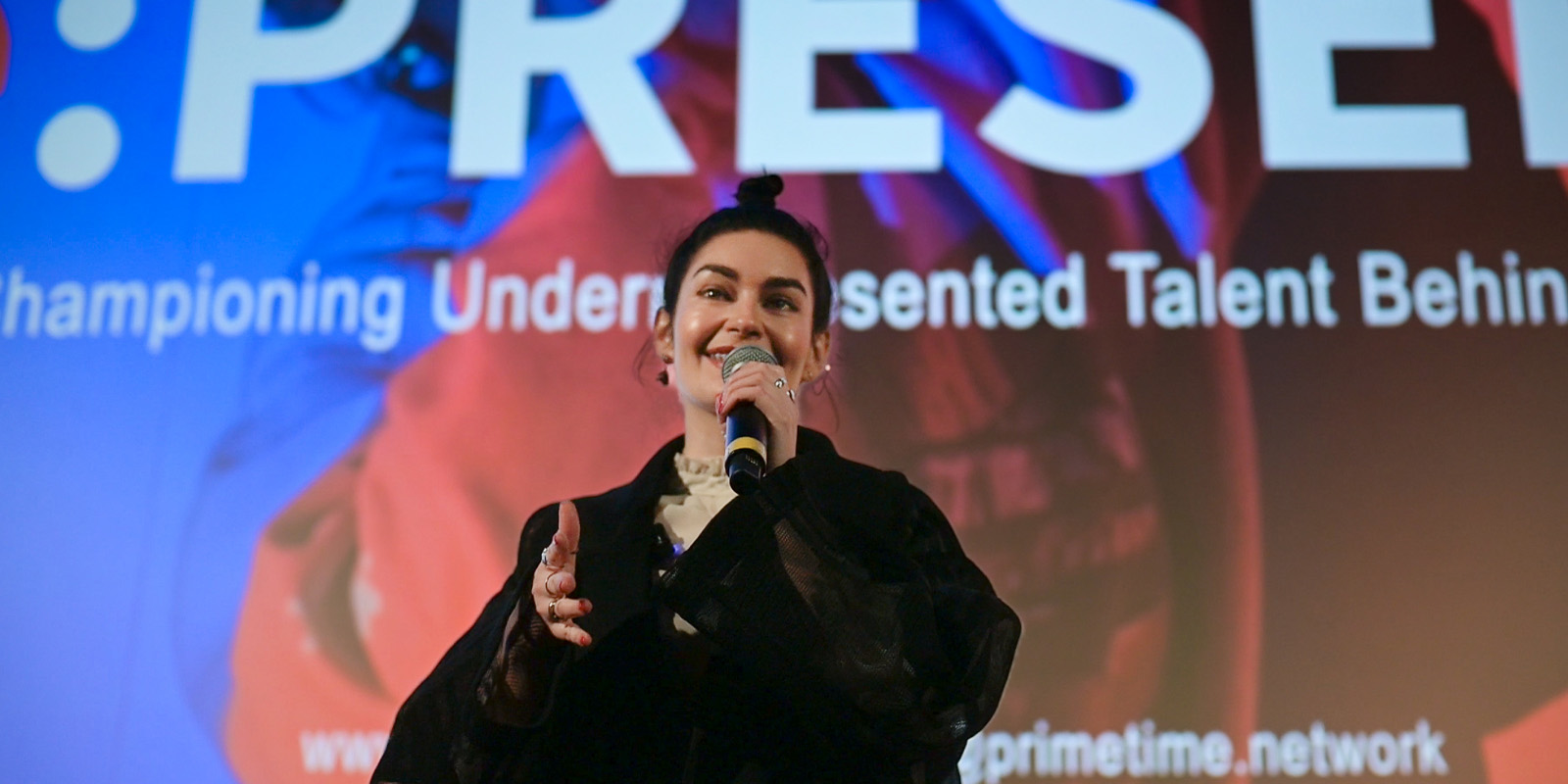
Primetime’s inaugural re:PRESENT event in partnership with Picturehouse Central launched in January with the aim of uniting underrepresented filmmakers and their work with top UK talent agents. With eight films selected to screen at Picturehouse’s flagship cinema, 10 further filmmakers were part of the online digital catalogue which was distributed to participating agents.
Thirty agents joining from the top agencies included Casarotto; Curtis Brown; Dench Arnold; Haworth Agency; Independent; Loop Talent; Lou Coulson; Revolution Talent; Sara Putt Associates; Sayle Screen; Wizzo & Co.; WPA; United Agents; and 42, with filmmakers securing multiple meetings in the weeks which followed the event.
“After years in the industry trying to get my work in front of agents without support, this opportunity was priceless. I have never spoken to so many agents so quickly and am already following up with meetings in place. Not only that, I have now found new collaborators and a network of peers to continue the filmmaking journey with,” says director Naomi Waring.
Primetime’s founder and re:PRESENT creator, actor-producer Victoria Emslie says: “The ask was simple: give us a couple of hours of your time, and we will introduce you to some of the most exciting unrepresented voices working in film today. With many barriers facing underrepresented talent, action-based initiatives like re:PRESENT can change this.”
primetime.network
RECLAIM THE FRAME
Born out of the Birds’ Eye View Film Festival in 2005, Reclaim The Frame has grown into an award-winning, UK-wide charity championing authorship, lived experience and equitable access in film. Working year-round, it connects filmmakers with audiences and training opportunities, supports inclusive exhibition, and collaborates across the industry to drive systemic change.
In 2025, the organisation supported 18 new releases by women and gender-expansive filmmakers, contributing to 1.3 million UK cinema admissions. Events welcomed 33% new audiences, with 96% reporting a sense of inclusion, while outreach engaged Deaf, disabled, global majority, LGBTQIA+, low-income and underserved communities. Over 1,000 filmmakers were supported through panels, mentoring and workshops.
Yet progress remains fragile: just 16% of UK and Ireland theatrical releases in 2025 were directed or co-directed by women or non-binary filmmakers, and only 7% by women of colour. Reclaim The Frame’s work ensures diverse authorship shapes the stories told, the careers sustained, and who feels welcome in film culture. Learn more about their work and upcoming events on their website.
reclaimtheframe.org
REFRAME VP
Reframe VP is a research project bringing together workers, employers, and experts to co-produce interventions that transform how diversity, equity and inclusion (DEI) are practised in the UK’s film and television industry.
Researchers at the University of York are working with leading industry organisations to explore how virtual production might be a catalyst for new ways of working that address some of the structural inequalities in the industry.
Dr Jon Swords, who leads the project, says, “The film and TV industries produce great content, but it is a sector which must address exploitation and discrimination faced by too many workers.”
“So much DEI work tries to change people rather than change systems. What I appreciate about this project is that it starts with the industry and works backwards. That’s where the real leverage is,” adds Sam Fray, Reframe VP Advisory Board Chair, and CEO, Black People in Sports Broadcasting.
The four year project is funded by the Arts and Humanities Research Council.
reframevp.hosted.york.ac.uk/
THE DISPLACEMENT FILM FUND
The Displacement Film Fund was established to champion and fund the work of displaced filmmakers, or filmmakers with a proven track record in creating authentic storytelling on the experiences of displaced people.
Announced at International Film Festival Rotterdam (IFFR) 2025, the pilot scheme awarded five short film production grants of €100,000 each to Maryna Er Gorbach (Ukraine), Mo Harawe (Somalia-Austria), Hasan Kattan (Syria), Mohammad Rasoulof (Iran) and Shahrbanoo Sadat (Afghanistan). The resulting films world premiered at IFFR 2026 and received a five-star review from Peter Bradshaw in The Guardian: “By turns shocking, funny, confessional and deeply mysterious, this is a tremendous collection.”
The fund is spearheaded by actor, producer and UNHCR Global Goodwill Ambassador Cate Blanchett. With a second edition of the fund now confirmed, IFFR’s Hubert Bals Fund remains as management partner, Amahoro Coalition, Master Mind, the Tamer Family Foundation and UNIQLO return as founding partners, and UNHCR – the UN Refugee Agency – remains strategic partner. The SP Lohia Foundation joins as a new major partner.
iffr.com/en/hubert-bals-fund/funding-schemes/displacement-film-fund
WFTV FESTIVAL
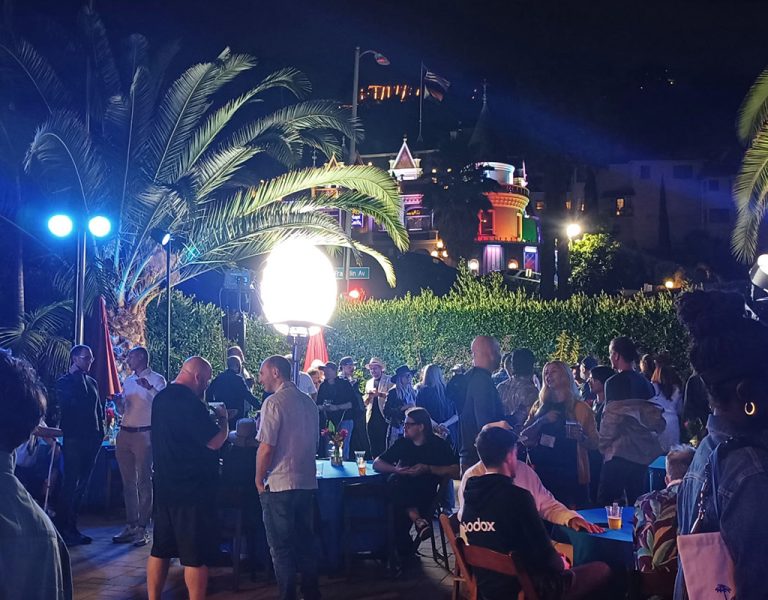
In celebration of International Women’s Day in March, Women in Film & Television hosted the WFTV Festival, showcasing the incredible work of its members across the industry. The series of events, which took place in London, Manchester, Belfast, Cardiff, and Glasgow, highlighted the creativity of WFTV members, allowing them to showcase their projects on the big screen
Following a successful inaugural year, the festival returned with a strong programme of screenings, panel discussions and networking opportunities. Highlights included Wuthering Heights, Pillion, My Father’s Shadow and The Pearl Comb, among others—an unmissable event created by members, for members.
WFTV (UK) is dedicated to supporting and celebrating women in film, television and digital media at every career stage. Through year-round events, mentoring schemes, and professional development programmes, it helps advance members’ skills and careers. Applications will open in July for one such initiative via the WFTV website, the 2027 Four Nations Mentor Scheme, a six-month scheme open to mid-career women across the industry, offering one-to-one mentoring with senior industry professionals, peer-to-peer training, and bespoke career development workshops.
www.wftv.org.uk
WOMEN AND THE WORLD INTERNATIONAL FILM FESTIVAL

Where global women’s voices meet cinema, culture and international dialogue.
The Women and the World International Film Festival (IFFWW) is a London-based international festival advocating for stronger representation of women in global cinema and greater visibility for stories shaped by conflict, displacement and social change. Founded in 2024 by Ukrainian producers and organised by Talented U Limited and Wow Oscar Studio, the festival creates a platform for filmmakers exploring resilience, human rights and the role of women in shaping contemporary societies.
In its second edition, IFFWW presented 34 films from over 40 countries alongside 25 public and industry events across London, bringing together filmmakers, journalists, diplomats and cultural leaders. The opening gala at the Prince Charles Cinema was attended by Lady Sophie Windsor, patron of the festival, together with international guests from the film and cultural sectors.
The festival closed with the UK Gala Premiere of Eleanor the Great, Scarlett Johansson’s directorial debut, lensed by Hélène Louvart AFC. The third edition will return to London from 5–12 November, continuing to champion inclusive storytelling and international creative exchange.
Submit your film at https://filmfreeway.com/womenandtheworldfilmfestival.
www.iffww.com
WBD ACCESS
Warner Bros. Discovery Access (WBD Access) serves as a powerful conduit connecting emerging talent and bringing different perspectives, backgrounds, and experiences to WBD content and brands.
WBD Access has just launched its new Production Incubator programme, designed to offer emerging and mid-tier UK production companies the opportunity to work with WBD to develop a new concept for Food Network and discovery+.
Previously, WBD Access has run several pipeline programmes for creatives based in the UK, includingBlack Britain Unspoken, which aimed to discover new talent and amplify stories about Black British lives, and Reframe the Game, developed to give filmmakers the platform to tell unique stories from across women’s sport.
Programmes also include opportunities for directors to shadow on HBO Original productions based in the UK, from House of the Dragon to The Franchise, as well as its Waterloo Road Directors Programme in partnership with the BBC, Rope Ladder Fiction and Wall to Wall North.
For further updates on WBD Access programmes, follow them on Instagram and LinkedIn.
www.instagram.com/wbdaccessinternational
www.linkedin.com/company/warner-bros-discovery-access-programs-international/
BFI INCLUSION TEAM AND INTERNATIONAL FILM FESTIVAL ROTTERDAM COLLABORATION
“Building a more inclusive and representative industry relies on partnerships, accountability and collaboration, so when conversations with colleagues at the International Film Festival Rotterdam began, we were motivated by their willingness to work together to address barriers for Disabled filmmakers,” says Bhavini Goyate, BFI inclusion manager.
“Those conversations led to us support one of the first delegations of its kind, to bring four Disabled filmmakers – Ella Glendining, Anna Keeley, Sarah Leigh and Cristián Saavedra – to attend and participate in IFFR Pro in February 2025. So many film festivals are unattainable for Disabled talent due to lack of access provision, so we wanted to provide a space that felt welcoming and inclusive to those normally left out of these spaces.
“With financial backing thanks to BFI National Lottery funding, it took commitment to disrupting existing ways of working and building a process that put access first. From our point of view, the biggest measure of success was that the delegation could just show up and do what they do best.”
www.bfi.org.uk
SYSTEMS MAPS FOR SOCIAL & ENVIRONMENTAL SYSTEMIC CHANGE IN THE UK FILM & TV INDUSTRIES
Across four systems maps, production buyer Mairi Claire Bowser’s work visualises practical pathways for change across the UK film and TV landscapes in both social and environmental sustainability.
The Accessibility Resource Map connects crew with organisations, toolkits and information about their own rights to access work within the film and TV industry. It also highlights organisations and training available to help productions to embed inclusive practice throughout the production process.
The Material Redistribution and Second-Hand Sourcing Map traces UK wide circular supply chains—linking second hand material suppliers, salvage networks, charities and peer-to-peer exchanges—to reduce waste, carbon impact and production spend.
The Sustainable Set Design Map highlights low-impact materials, skills, knowledge and regenerative approaches, supporting art and construction departments to design with materiality, human health and reuse in mind.
Finally, the Sustainability Resource Map brings together existing research, organisations, consultants, international models and measurement tools, enabling productions to implement infrastructure, policy and action from the top down.
Collectively, the maps turn fragmented knowledge into shared infrastructure from ground level change to production and industry wide solutions: supporting better decisions, stronger collaboration and a shift from intention to implementation across the industry. For additional recommendations of resources to be added, please get in touch with Mairi Claire via her contact page.
www.mcbowser.com