

SEEING THE LIGHT
Do cinematographers light differently for film versus digital?
“I tend to light film and digital in a very similar way, with film being more flattering, so I tend to diffuse the light less,” says DP Lorene Desportes. “I would also try to stick to tungsten if possible, to be extra-safe with skin tones, although I haven’t had any issues with daylight LED so far either. The direction and shaping usually don’t change much between the two formats.”
“My understanding of lighting varies between working with film and digital cameras,” remarks Meryem Yavuz GYD. “Each camera and film type has different light-sensing capabilities. As texture becomes more pronounced on film, the atmosphere can change slightly. Alternatively, as digital technology offers sharper colour transitions and sharper images, a more layered lighting design can yield better results.”
Jermaine Edwards learnt to shoot and light on film at NFTS. “I think with film, you have to shape the light a lot more, and be more aware of your craft,” he reflects. “Saying that, there’s an opposite, where the film is more forgiving, and you can make a lot more mistakes, and it’d be like, ‘Okay, I’m not going to show you up,’ whereas digital will just kick you in the teeth a little bit more.” He does note that flickering lights are much easier to spot with digital capture though.
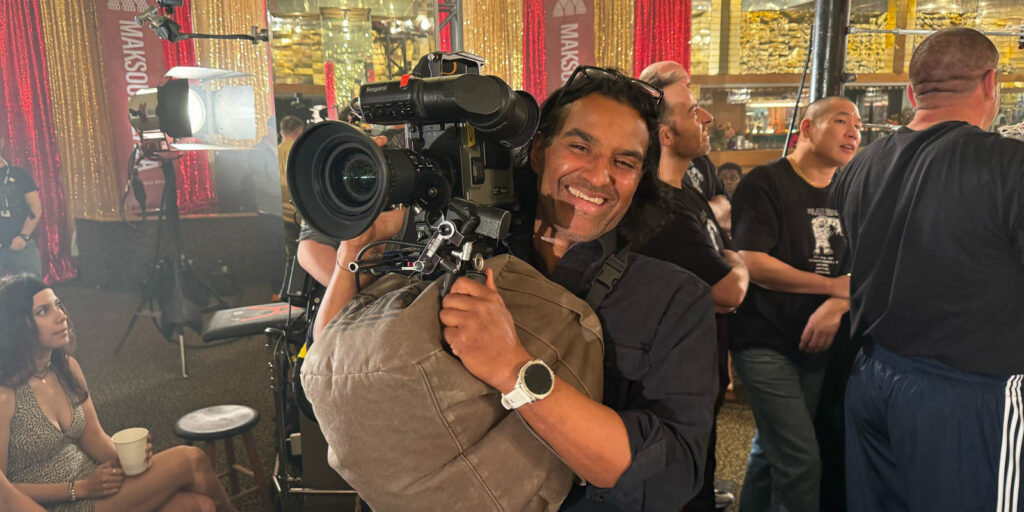
“With digital, it’s almost about the absence of light, and taking light away, and trying to create darker areas, or at least that’s the way I think about it,” offers Maceo Bishop. “And then with film, film loves light.”
Bishop strove to keep his lighting authentic on the 16mm feature The Smashing Machine, not aiming for any particular contrast ratios but embracing fluidity. “Of course, there were more lights and stronger lights than you need if you’re shooting an Alexa that you can shoot at 1600 ASA… With film you have to just be more cautious to make sure that your subjects have enough light.”
Illuminating influence
Sean Ellis BSC prefers tungsten lighting for film wherever possible: “I don’t love LED lighting on film stock. I think it has a strange colour spike to it, which I’m not a fan of, and I’m constantly trying to get rid of it in the grade.”
Ellis also rates Kino Flo KF55s, the daylight-balanced fluorescent tubes. “On film, there’s something about the look,” he says. “I think it comes from that era of the nineties, where Darius Khondji [ASC AFC], for instance, was lighting with Type 55 Kino Flo lamps on film, and then doing a sort of bleach bypass… It’s influenced thousands of DPs ever since, even to this day.
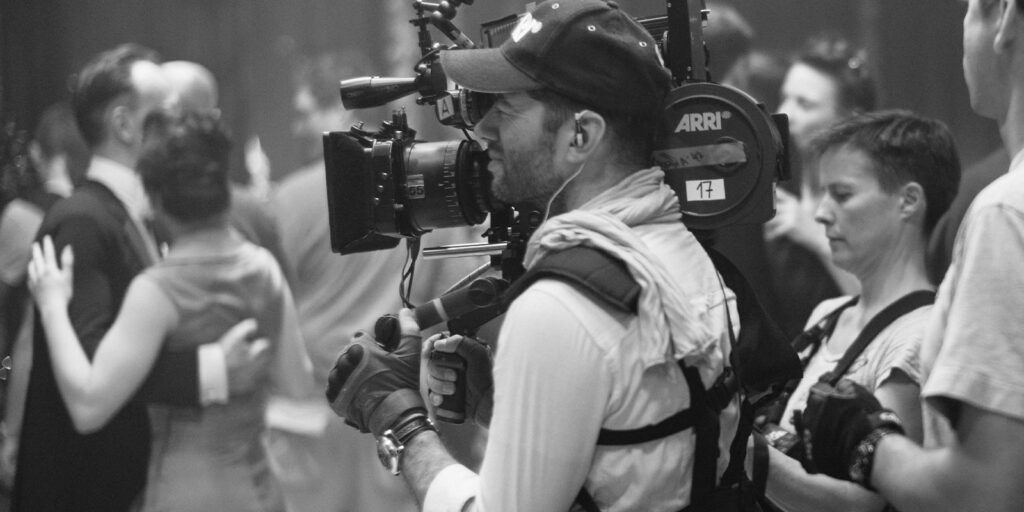
“It’s funny,” Ellis continues. “There’s always that myth that digital is better in dark situations or low-light situations, and it is true to a certain extent… but I’ve always been shocked that, actually, if you can set up a couple of lights, you don’t need a huge amount of light to get a really interesting image out of celluloid.
“I remember when we shot Anthropoid, and we were in the crypt. The crypt only had this one little slit of light… With the candlelight and a little bit of orange light that we’d managed to tuck in and hide somewhere, and with that strip, I think we were only getting T1.2 or T1.4 on the light meter, and the lenses were T2.2, so I was worried that we were going to be underexposing everything by a stop… There were a couple of sleepless nights until we got the rushes back, but that 500T, it literally saw into the dark, and it was amazing, and it wasn’t underexposed.”
Words: Neil Oseman
Sponsored by Nanlux