
SWEET 16
First introduced in 1923 and aimed at amateurs, the 16mm film gauge developed into a professional and popular format in TV, documentaries, music promos and independent film. In recent years it has had something of a renaissance.
“I think 35mm can feel too clean sometimes,” remarks cinematographer Sheldon Chau. When prepping the Alaskan short film Two Old Women, he showed 35mm examples to his director. “She commented that it feels too similar to digital. This is where 16mm shines. The grain and texture are very difficult to achieve with digital in post. There is a way that 16mm film reacts to light that renders it truly unique and special. The feeling of seeing the image for the first time after the lab is always a wondrous experience.”
Another of Chau’s shorts centres around “the rise of Asian hate in New York after the pandemic” and is entitled Roots that Reach Toward the Sky. “We decided to shoot 16mm to emphasise the grit and textures of this intergenerational story,” he says. “We wanted viewers to feel like this struggle versus racism and systemic injustice has been centuries in the making and the grain lends itself perfectly to this gritty yet healing New York story.”
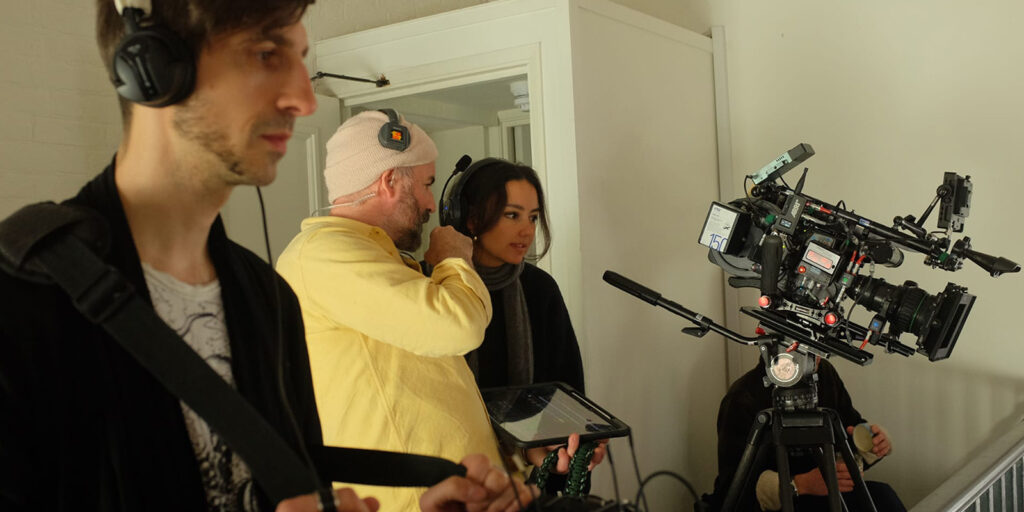
“A few years ago, I shot a film on Super 16,” recalls Lorene Desportes. “The story was very personal to the directors. It was quite an emotional film, set entirely in one house, exploring themes of friendship, support and trauma. They asked to shoot on film from the start primarily for the look. After reading the script, I realised that the level of intimacy we needed to convey would really suit 16mm… I think the softness of 16mm submerges the audience in the world of the film. It’s a break from reality, inside a different reality.”
Emotional impact
“On an emotional level, [16mm] really gives you something,” says Sean Ellis BSC, “because it’s got a very particular look to it. You have to be quite careful shooting it, because it’s very small. It reminds me a little bit of shooting on the old [Canon] 5Ds when digital first came out… There just wasn’t enough info in there for you to pull it about in the grade, so you were shooting it exactly how you needed it and I think Super 16’s a bit like that. You really have to shoot it knowing that you’re not going to have that much push and pull in post.”
Ellis notes that although Super 16 is mostly shot open-gate, anamorphic is also an option, “but then you’ve got to be careful about how much of the negative you’re losing when you shoot anamorphically. 1.33x or 1.5x is okay because you don’t lose too much of the negative and you still get a 2.35:1 ratio crop, which is nice.”
The Smashing Machine, directed by Benny Safdie and photographed by Maceo Bishop, is the first 16mm film to be released on IMAX screens. “Benny had a strong desire for the film to be presented in IMAX,” explains Bishop. The initial response from IMAX was not positive, however. “They said, ‘No thank you. The camera moves too much, the grain structure is too intense for IMAX and we just don’t think it’ll work.’”
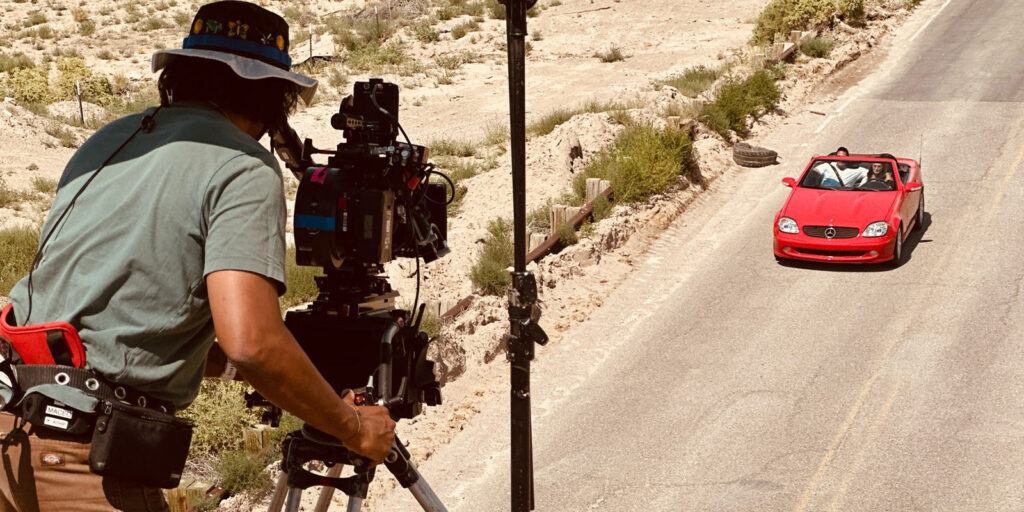
But Safdie persisted and the IMAX Corporation eventually agreed to view tests. “I really beat that test footage up,” Bishop continues. “I was looking to see how far I could push that 16mm, so I was pushing two stops, and pulling two stops, and underexposing, and overexposing, and just playing, as you do in the test process.” IMAX applied proprietary degraining software to the footage. “We watched our film go from – they were right – a very grainy-looking thing blown up so big, to something that just had a quality and a softness that we really appreciated.”
The Smashing Machine ultimately premiered at the Venice Film Festival, where it won the Silver Lion.
Words: Neil Oseman