

PAINTING WITH LED LIGHT
Nestled in the heart of Soho, the V Studio at Film Soho is a space where creativity leads and the technology quietly enables the creation of gorgeous images by being able to control both the light and the location, as evidenced in the production of new short film Hindsight.
By now most filmmakers are aware that virtual production can solve the perennial logistical issues that productions face: location accessibility, costs, and control over environmental factors like weather, light and time of day.
However, it’s also clear that many cinematographers have persistent concerns about whether those benefits come with creative trade-offs. The team at Film Soho’s V Studio believe convenience and savings should not compromise the creation of cinematic images that support the narrative.
“When done correctly, virtual production not only solves logistical problems, but also provides a more liberated canvas on which to paint with light and to craft gorgeous cinematic images,” says V Studio VP supervisor and head of studio Kate Phibbs. “LED volume technology, in addition to creating an immersive, photorealistic environment, is a really useful lighting tool that yields interactive lighting and reflections in real time.”
A recent BFI Network backed short film Hindsight, which was filmed in the V Studio, illustrates this perfectly. Directed by Remi Moses and shot by Fola Abatan, the film is told entirely from one perspective – through the front windshield of a car. Demands on the time of lead actor Josh Tedeku (Supacell) gave the production a very short window in which to shoot, making it an ideal project for virtual production and the creative team at V Studio.
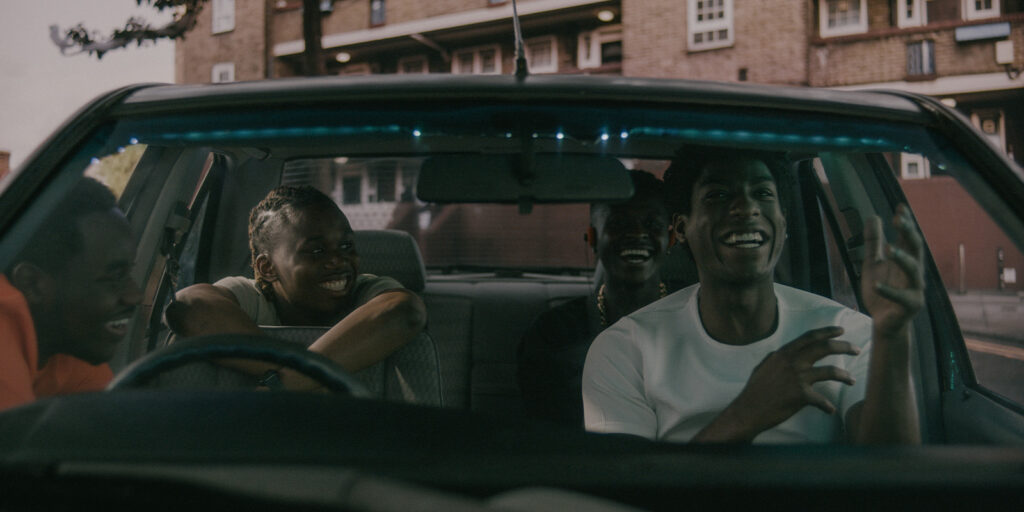
Abatan explains, “Because everything was shot through the front of the car, it would have been a thousand times harder to shoot on real locations—especially with repeat takes, rehearsals, and logistics. We wanted the car to be moving, and doing that practically would have been far too difficult, if not impossible on a low loader, given the number of scenes.
“There are around 30 to 35 London locations that the car passes through during the journey. In total, the production had about 25 different plates, so had to reuse some of them where they worked within the context of the script.
“Even when reusing plates, we were able to tweak them—almost like doing a live grade on set. Thanks to the Mimik image-based lighting system at Film Soho, we could adjust elements such as time of day. Even though the sun stayed in the same position, we could create the illusion of a time shift to make each scene feel distinct.”
The light generated by V Studio’s LED wall with their image-based lighting set-up helps DPs to create realistic ambient and reflected light on actors and objects. It eliminates most of the lighting problems faced in a green screen environment and is designed to be much faster than traditional set lighting.
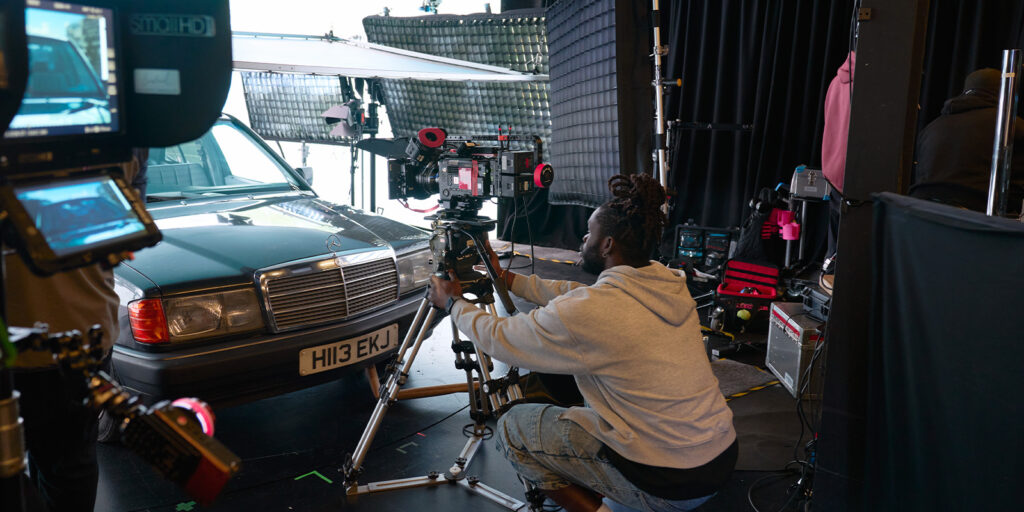
“‘Fola made amazing use of the reflection screens at V Studio, our motorised LED ceiling threw reflections in bodywork and we rigged a projector for sharp and moiré -free reflections in the windscreen. A polariser on camera gave the cinematographer full artistic control of reflections, to tailor for story and for realism,” adds Film Soho VP supervisor, Chris Bouchard.
Prep makes perfect
Road plates, sky plates, and reflections were obviously essential. “For the plates, we were advised to shoot in 8K to capture as wide an image as possible without distortion.
“In production, I added a small amount of blur to soften sharp edges and opened the lens slightly to create more believable depth. On set, we shot on a Sony Venice with Cooke lenses. During pre-production, we aimed to get everything perfect. Before the shoot—especially during the final tech recce—we loaded in all the plates and adjusted colour temp, contrast, and other details. The virtual production setup gave us the ability to experiment on the fly.”
“I felt very privileged because it allowed me to bring post-production into the shoot itself. It took a moment to realise how much control I actually had.”
This was also Abatan’s first experience shooting fully in a volume. “I’d worked on projects with LED screens before, but nothing this technical,” he says. “It felt like having the whole world to play with, especially with the in-house team guiding me and offering advice.
“The workflow with Kate and VP supervisor Chris Bouchard, and the whole team was great. They really laid everything out for us and made the process as easy as possible.
“We didn’t have the budget or time to make everything completely ideal, but within the footage we had, we were able to find a perfect middle ground that made the visuals feel believable. Without their support, we wouldn’t have been able to make the film, and I can’t thank them enough.”
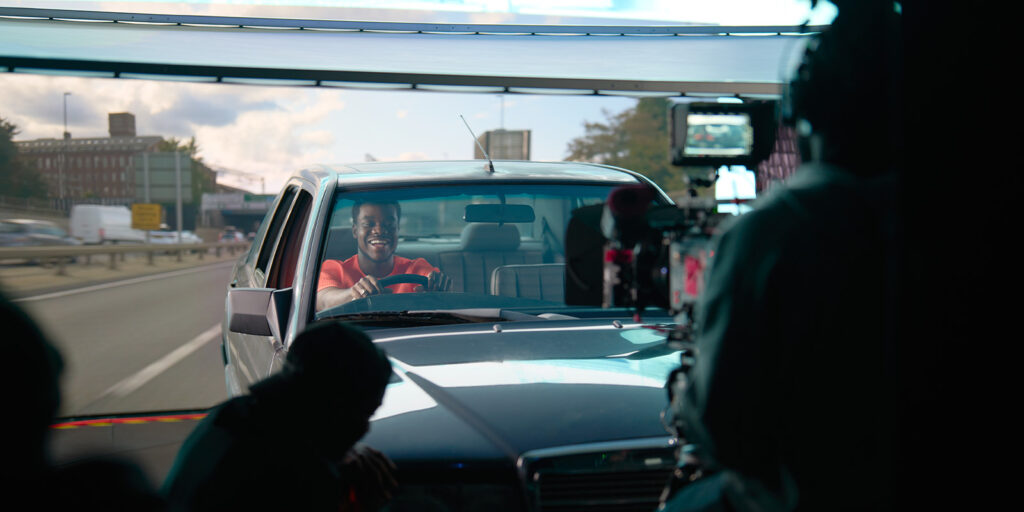
Production on the volume lasted three days but was preceded by several visits to understand the space and the technology, plus lots of communication—long email chains and calls—to make sure everyone was fully prepared.
“The biggest lesson I’ll take forward is that you can’t over prepare. I was calmer on day one stepping onto set than I’ve ever been on a project like this. That preparation allowed us to focus on performances and create a collaborative, supportive working environment.
“In the end, all the obsessive preparation was worth it. It gave us confidence, clarity, and freedom on set—and that made all the difference.”
Hindsight will be released onto the festival circuit this spring.
Get in touch to arrange a studio visit: [email protected]
T: +44 (0)203 9297990