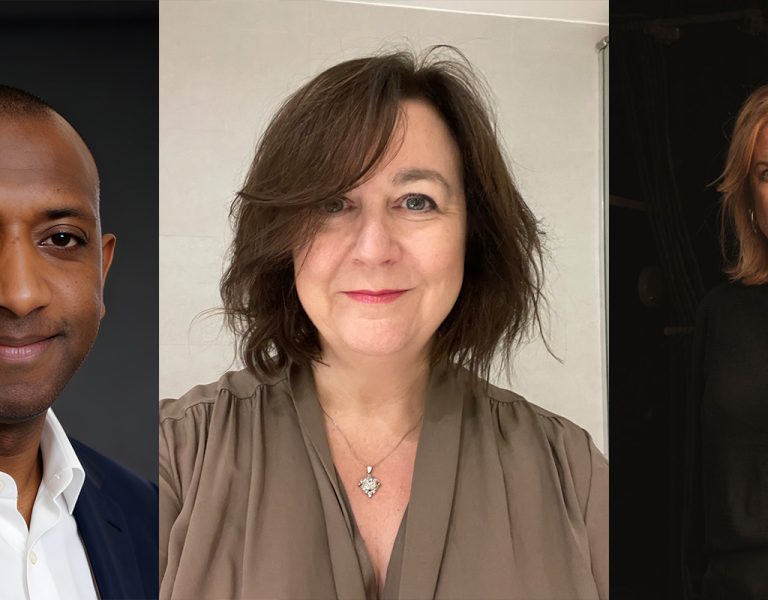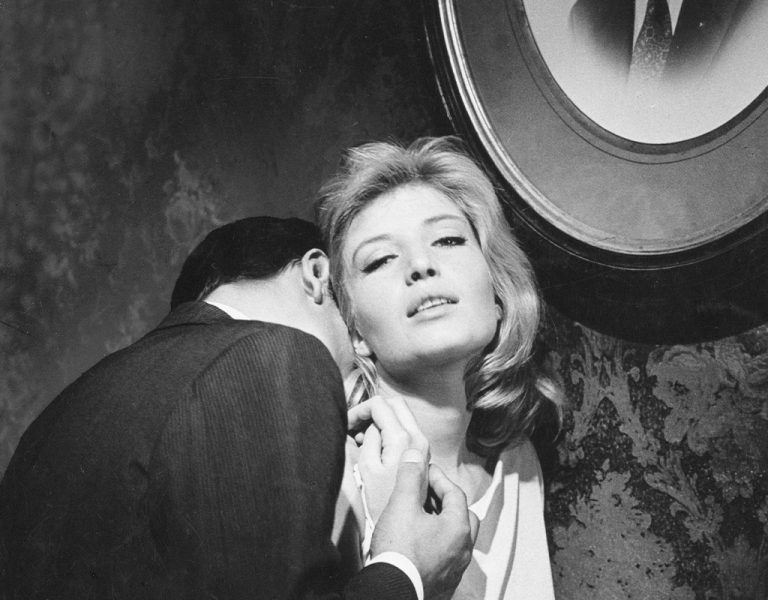


 Based on true life, Truckload was the winner of the inaugural Primetime Empower Fund and stars Evie Jones (EJ) Jodie Whittaker, Joe Dempsie, Cathy Tyson, Lara McDonnell and Adam Ali. Written by and starring Jones, who is a longtime close family friend of director Aella Jordan-Edge (AJE), the film is produced by Arpita Ashok (AA) and Victoria Emslie (VE) with the cinematography by Essi Hyrkki (EH).
BC: As the winner of the Empower Fund, HAWK London gifted the winning team £15k worth of camera and lens equipment. Essi, the film looks stunning – which camera and lenses did you shoot on?
EH: Thank you! It was such a pleasure to collaborate closely with Hawk London and to be supported with their incredible kit. After thorough conversations with my director Aella about the visual language we wanted to achieve, we decided to go with spherical lenses. We were aiming for a clean, natural image; something without noticeable lens distortion or other stylistic elements that might have pulled the film in the wrong direction.
We tested a variety of lenses at Hawk with our focus puller Oscar Rutishauser-Mills, 2nd AC Josh Wooster, camera trainee Zara Wilson, Aella, Evie, and our makeup artist Phoebe Llewellyn. It was really valuable to see how different lenses reacted to colour and skin tone and to have Evie in front of the camera during those tests helped us assess how the lenses complemented her specifically.
After careful testing, we chose to shoot on the Alexa 35 with Vantage One4 lenses. The film blends static and handheld shots and the One4’s were an ideal match: compact and lightweight enough for long handheld takes in the small space we had for Lizzie’s apartment. The short close focus distance also kept us efficient, eliminating the need for diopters. Overall, the lenses worked beautifully within the vibrant, colourful world we set out to create.
Arpita: One of the most exciting parts of the initial creative process was thinking about the kind of visual language and mood we wanted for the film. There were three worlds going on in the film: reality, a dream-like world Lizzie could escape into, and finally a nightmarish world based on reality, when Lizzie would be forced back to the scene of the accident by her flashbacks. We knew we had to imbue the real with a sense of the absurd, so audiences could go with Lizzie between these worlds, and it was really inspiring to discuss references like Russian Doll early on, which lace reality with surreality so masterfully.
Evie, how important was it to tell this story as part of your own journey to reframing your life as being newly disabled?
EJ: I wrote the short during the later period of my rehab, in pretty much the same head space as Lizzie is in the film. I was experiencing the same barriers and changing relationships that she does. I felt that if I was experiencing this, surely I can’t be the only one. However, I wasn’t seeing anything even remotely like it on screen. Often we only see disabled people as ‘pity porn’ or a chance to feel better about our own lives. With Truckload I wanted to portray the highs and the lows of becoming disabled. The way a life changing event affects not only the person it has happened to but also their family, friends and the way the world sees them. I didn’t want to be told I was ‘an inspiration’ I wanted people to just see me as a person and I hope that Truckload gives more of an insight into the everyday battles and belly laughs that come when you’re faced with having to accept a situation you never even dreamed of being in.
BC: This production is unique in many ways, as your high profile talent was attached to the fund but not to a specific project. How was working with Jodie Whittaker and going on that journey of discovery with her?
VE: With an activist sensibility and running a global community to support women and non-binary folk, we hear much of the same feedback time and time again: underrepresented voices are not funded, they face more barriers to getting their projects made or getting them seen, casting top talent and using them as vehicles for moving into longform and high end TV and film. This inaugural fund aimed to change this. Uniting star power, in-kind support from HAWK London and Grand Central, and finance from Primetime and Funding Futures, this package takes into consideration multiple barriers and provides real tangible solutions.
But how do you convince someone with Jodie’s talent and notoriety to come on a journey with you and to cast themselves in a project which at that moment in time, she had no idea one: what story or character she would be playing and two: who the team involved would be. The answer is: work with someone like Jodie Whittaker. Her endless generosity and willingness to throw herself into every aspect of the process has been a gift that is still giving to this day. From reading scripts from our 100 submissions we had globally, to interviewing the shortlisted projects, to donating her fee to the project so we could use that to elevate other aspects of production, to the most generous act of all, which was coming on the ride regardless of the size of her role in the project. She was there to serve the story and elevate both the film and the filmmakers involved.
When we decided that Truckload was our winning project, Jodie made it clear that this process and story was about centring Evie and Lizzie’s character. During rehearsals and on set, it was clear that Evie and Jodie’s chemistry was filled with ease, fun and a shared Northern spirit. I took many BTS shots on set, and every single time Evie and Jodie were together, they were splitting each others’ sides with laughter. We couldn’t have asked for a better outcome – and ally – when it comes to supporting marginalised voices on screen and behind the camera.
How was it working with such talented and established actors such as Jodie Whittaker and Joe Dempsie?
EH: Working with Jodie and Joe was an absolute pleasure. This was my first time as a cinematographer collaborating with actors of such experience and calibre and I couldn’t have asked for a better introduction. Both of them were incredibly aware of the camera, lighting and framing, and it was clear they brought a deep understanding of how to work with the cinematography to enhance each scene. They were thoughtful, self-driven and generous collaborators, always mindful of how their movements interacted with the shot. It made the process feel seamless and creatively rewarding.
BC: Aella, what were some of the most important moments for you in the film, to tell Evie’s story with the authenticity which makes the film so relatable to audiences, even those who have not had this lived experience?
AJE: The combination of the incredibly personal and specific but also universal was already there in Evie’s writing already but my goal as a director is always to bring emotional truth to scenes. What I mean by that is, I never villanise the protagonist, never judge them and I encourage the actors to do the same. Eg. someone saying a micro-aggression might genuinely think in their head that they are saying something nice or helpful. It is often ignorance, thoughtlessness or defensiveness that causes these kinds of comments or behaviours so we leant into that to make the moments feel believable and real, therefore I think, even more painful.
When it came to directing Evie it felt surprisingly easy because we grew up together so communication and honesty was already a core foundation of our relationship. Creative collaboration as adults felt like a natural next step after performing plays for our parents every family holiday as kids! Having said that, the worry that the process would somehow trigger Evie into a PTSD moment was real and I was aware that she was often having to be quite physical for certain shots. But this was about safeguarding and making sure channels of communication between us were open at all times. If she did have a PTSD moment or needed to rest, we were prepared. All I can say on that note is I’m in awe of her. Evie truly holds her own on screen against heavy weights such as Jodie Whittaker, Cathy Tyson and Joe Dempsie who’ve been doing it a long time… and this was her first short! She’s a natural.
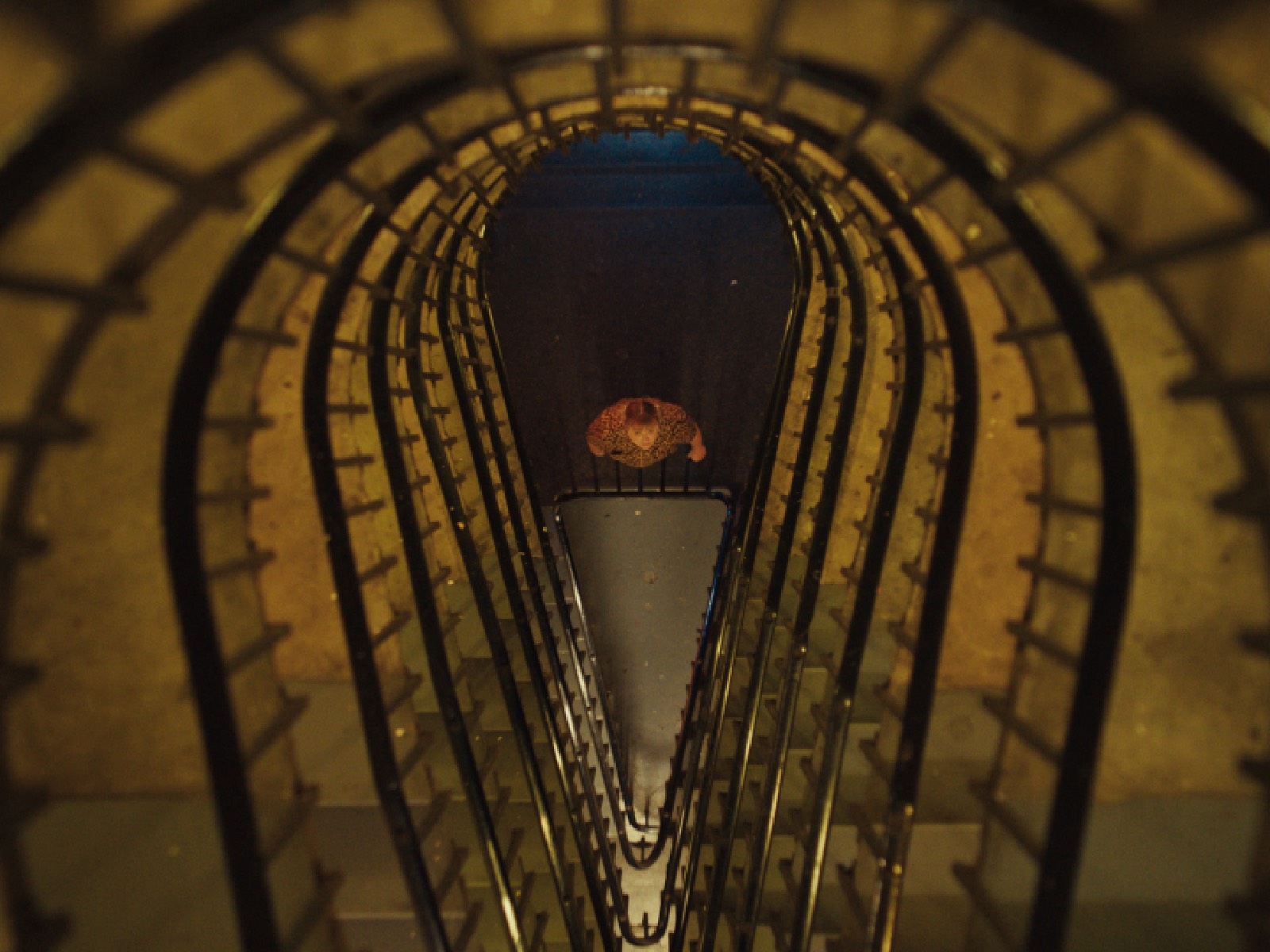
BC: Let’s talk about two moments in the opening scene when Lizzie is waiting for the elevator, it does not come, and then she is faced with the long hike up flights of stairs with her walking stick. Essi there’s a brilliant zoom shot which shows Lizzie looking up and seeing how far she has to go, and the reverse shot from above, seeing how tiny she is. What inspired these shots and how technically complex were they to execute?
EH: Those zoom shots were actually the very first images that came to mind when I read the script. Normally, I try to read a script a few times without visualising too much, just to get a clear sense of the story’s heart. But every now and then, certain visual ideas appear immediately and they tend to stick. Thankfully, Aella loved the concept when I brought it up in one of our early planning meetings.
Technically speaking, we used an Angénieux Optimo 24–290mm zoom to achieve that long, dramatic zoom effect. The shot looking up was fairly straightforward and we simply tilted up on a fluid head. But the reverse shot, looking down, was more complex. The camera and lens were heavy, so it was essential to have a skilled grip team on board. We were lucky to work with Level 2 grip Alfie Sankey-Green and his assistant Edward Harper-Jones, who safely rigged the setup: the camera was mounted on a slider with a fluid head and tilted straight down to get that top-down perspective.
BC: When we first get a glimpse of Lizzie’s leg in motion as she begins her ascent and Hollie’s music kicks in, the audience understands the mountain she must now overcome to get back home. Team, why was it important to show Lizzie’s leg in this moment?
AJE: If the audience don’t understand what Lizzie’s dealing with they won’t connect with the film. It was important there was a certain amount of leg visibility early on so the audience could get on board quickly and really connect with Lizzie in a short space of time. This leg shot served that purpose at the right moment in the edit.
BC: The next big reveal we have is when Lizzie is sitting on the loo in the bathroom – Evie, how was shooting this scene for you and why did you feel it was important to show Lizzie’s leg in this way? Were there protocols in place which helped make you feel safe as an actor to do this?
EJ: This is the first time where Lizzie is alone, and I wanted to show her in her full body. We don’t see disabled plus size bodies on screen but the truth of the fact is – we exist! Lizzie lives in that body and a challenge in this new life is acceptance of this body – although that isn’t explicitly talked about in the short it gives the audience an insight into the truth of her life and in a sense pre-empts the conversation in the doctors surgery where she is obviously coming to talk about her leg not her weight. In terms of shooting the scene – I wrote it in the first place so was ready and willing to show it on screen. We had an onset intimacy co-ordinator (Lucy) who was brilliant making sure at every moment I was comfortable, My relationship with Aella and Essi was also pivotal to feeling comfortable in that moment as we discussed what the shot would be both prior to and during the shoot.
Next, we change environments to the Doctor’s office, where a very earnest Joe Dempsie ignores and dismisses everything Lizzie is trying to tell him, which leads to the dissociation scene. These scenes are always so hard to recreate in a believable way – how did the team work together to create such an honest representation of disassociation?
AJE: This was about Evie and I having honest conversations prior to the shoot and then building a safe space on the set which was quiet, minimal crew and protected from time stress in order to get it right. In preparation I also had a conversation with Evie’s Mum about what it felt or looked like from her perspective and Evie spoke to her friends as well.
Also we made the decision very early on that the “flashbacks” would be represented through sound design, rather than cutting to visuals of the traffic accident. This reflected the refraction of reality Lizzie experiences in these moments. And it means the drama comes from the audience connecting with Lizzie’s emotional state, rather than the accident itself… flashbacks of her lying bleeding on the road could so easily tip into feeling like the “trauma porn” we were deliberately trying to avoid. The film is about how the accident has affected Lizzie and so we wanted her emotional state to be the rollercoaster the audience connects with.
BC: The style contrasts deeply with the flashback scene – Essi talk us through how you switched seamlessly from reality to flashback with the use of frame speed, lighting and camera angles.
EH: This was a moment we all wanted to visualise as authentically and emotionally correctly as possible. Aella and I had a lot of conversations about how to make the flashback feel distinct from the rest of the film, while still staying grounded in Lizzie’s experience. We felt that a slight slow motion effect with shooting at 50fps added to the hazy, disorienting quality of a memory and it felt like a motivated choice for Lizzie’s emotional state.
I’m a big believer in achieving as much as possible in-camera, so I wanted to bake in the emergency vehicle lights rather than rely on them in post. I spoke with our brilliant gaffer Mark Lane and we came up with a setup using an optical flat and two Aputure MCs mounted on noga arms on either side of the lens. That way, we could “milk” the filter with coloured light and create a more immersive, textured effect in-camera.
For the camera angles, our goal was to stay very close to Lizzie to really tap into her POV. But at the same time, we didn’t want to break the fourth wall, so even though we’re close, Mum never looks directly into the lens. That small distance helps keep us in Lizzie’s headspace without losing the boundary between her and the audience.
BC: During what is a really traumatic scene, there are peak moments of comedy – how important was this to underscore what was happening onscreen? How do you weave comedy into a scene like this and how does the camerawork help elevate the script to bring these moments to life.
AJE: I cast Joe because I knew, despite the humour in the scene, that he could also play it straight. He brought an earnestness to the doctor’s arrogance that meant Joe wasn’t hamming it up just for laughs. That could have tipped the scene into something more slapstick which in my opinion would have done the emotional truthfulness of the scene a disservice. This way, the laughs and the dissociation hit us more unexpectedly. The duality of tragedy and comedy was at the core of what was so brilliant about the script when I first read it and I wanted to maintain that feeling of tight rope walking between laughter and tears, all the way through the film. I copy and pasted this quote from Phoebe Waller-Bridge into my directors bible and it served us well “When an audience is laughing with a character, they make themselves so vulnerable, and they open up. They expose their heart the moments they’re laughing, because they’re relaxed and they’re disarmed.”
AA: Watching Lizzie’s world come to life through Essi’s eye, Helena Hembrow’s delicious production design and Mara Ciorba’s wonderful grading was a joy. But what I find most profound is that Essi shows us not only the loud joy of Lizzie’s world or the amazing humour in her imagined sequences but also the real terror of her flashbacks. In one particular scene, we see Lizzie experiencing a bad flashback but through Evie’s brilliant writing, instead of showing the accident itself, we stay in the room. It’s clear that though physically Lizzie’s here, emotionally, she’s there, on the side of the road.
In their execution of the scene, Aella and Essi take us to that place in Lizzie’s mind through bold cinematic choices, showing the trauma overwhelming the calm present reality we experienced just moments before: neon lights, shuddering movements… the transportation made complete by brilliant sound design by Frankie Bierne, Michele Covio and James Cobbold. It feels strange to say that is my favourite scene as it is really harrowing to watch but that’s the power of it: for a moment, we come as close as possible to living Lizzie’s experience with her. That empathy is ultimately what cinema is all about!
BC: What other equipment did you use throughout the shoot to bring Lizzie’s story to life?
EH: We knew from the start that we wanted Lizzie’s journey up the stairs to feel steady and controlled. A shaky handheld approach would’ve undercut the physical and emotional effort she’s putting into that climb, so we brought in the wonderful Steadicam operator Tom Colli for the day. Since we couldn’t realistically ask Evie to walk up multiple floors repeatedly, we shot all the coverage on a single floor, using camera movement and framing to create the illusion of progression. Working with Tom is always a joy, he’s incredibly efficient and nailed every take.
One of the trickiest shots, both technically and timing-wise, was when Lizzie exits the staircase and enters the apartment with her flatmates. The camera operates to the lift, which is revealed to be working after all, and captures the moment when the doors open. We tested that timing a few times and it seemed nearly impossible to sync but somehow, we landed it perfectly on the first take. Tom was completely in sync and pulled it off flawlessly. We also had another Steadicam day with the brilliant Chai Rolfe, for what was originally Lizzie’s fourth imagination scene. It was a great sequence, but in the end, it didn’t make the final cut.
BC: Fun fact, Aella, we know you shot the entire film on 16:9 but then when it came to the edit, you decided to change it to 4:3, why did this artistic decision arrive in this moment and what do you think it added to the overall film and the way framing can inform storytelling?
AJE: Actually when Essi and I first began speaking about the visual world for this film we both discussed a squarer aspect ratio such as in the gritty aesthetic of ‘Fish Tank’ by Andrea Arnold or ‘Mommy’ by Xavier Dolan. I think when we shot it, it was helpful to see everything, especially because the production design by Helena Hembrow and the locations were so delicious. But in the edit I realised immediately I wanted to stick with my gut instinct. Our brilliant editor Saam Hodivala (at Shift Post) worked with the new 4:3 ratio for the rest of the edit and our super talented colourist Mara Ciorba (at Harbor) finalised the look along with the colour grade. It makes sense for Lizzie’s view of the world to be more centralised as she’s so laser focused on herself and what she’s going through. This way Lizzie also looks more restricted by the frame, she’s craving to break out from the boxes she’s been put in. There’s something I like about the film not looking too polished, by cutting into the shapes and objects- it makes it feel more real for me. Like there’s more world on either side than just what the audience are getting to see.
BC: At the end of the day, the film frames disability in a way we haven’t seen before, but it works because at the heart of the story it is about friendship and family. Talk to us about creating this universal and relatable story, whilst also showing a slice of life we haven’t seen before.
EJ: It’s exactly that, whilst this is a very specific story and situation, we can all relate to a time in our life where something has happened to us that changed the way we saw ourselves. It’s about overcoming obstacles – in every sense and yes displaying disability with a comedy lens to humanise these experiences that we all will go through at some point in our lives.
VE: When myself and our Industry Jury read Truckload, it was clear we had a project here which hadn’t been seen before. It was raw, nuanced, funny and deeply human with a huge heart. The disabled community is also one which anyone can (and most do) become part of during our lifetimes, which makes this a universal story. As an Industry we tend to fund projects which are very risk adverse, but it is also our duty as storytellers to hold a mirror up to flaws in our society and show us how and where we can improve. Our society has a naive and challenging relationship with death, and disability is often seen as an adjacent experience to this; and so we bury our heads in the sand and do not confront or integrate what can be a very natural process for many as we age and need more support. Therefore stories like Truckload have even more purpose: as a vehicle for change, not only for those with a similar lived experience, but for the wider society at large, who every time we as filmmakers humanise a particular community, the fear around them falls away. Without fear, we’re left with acceptance and love, and what is more powerful than that? Primetime’s incorporated name is Veritas Sine Metu, which translates as Truth Without Fear; and this is exactly the spirit of the project and team we have with Truckload: fearless.
In partnership with Primetime.