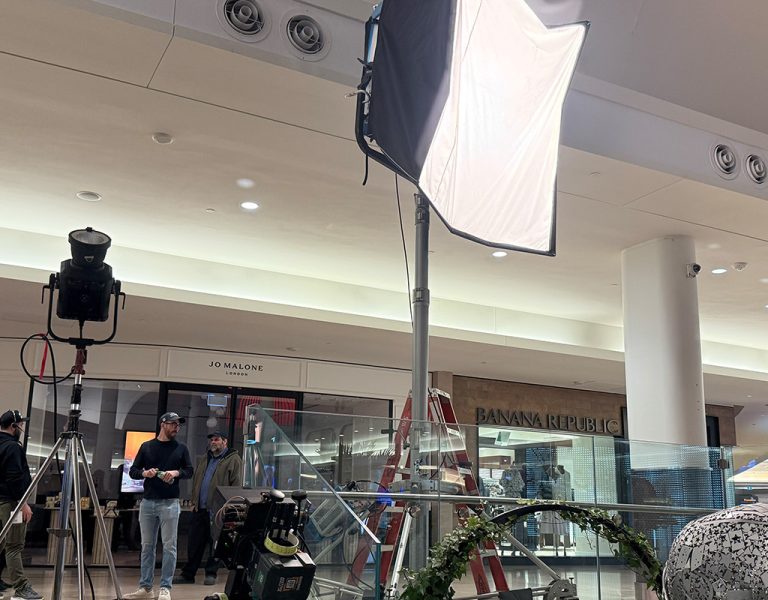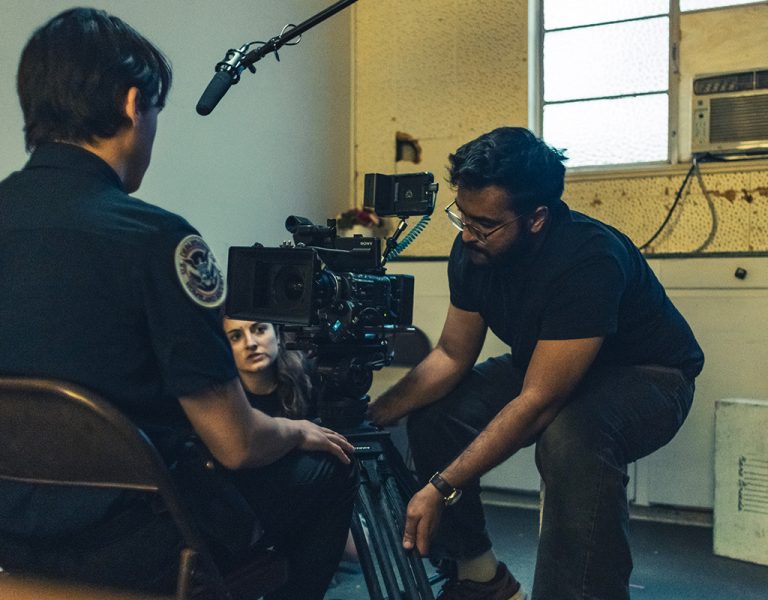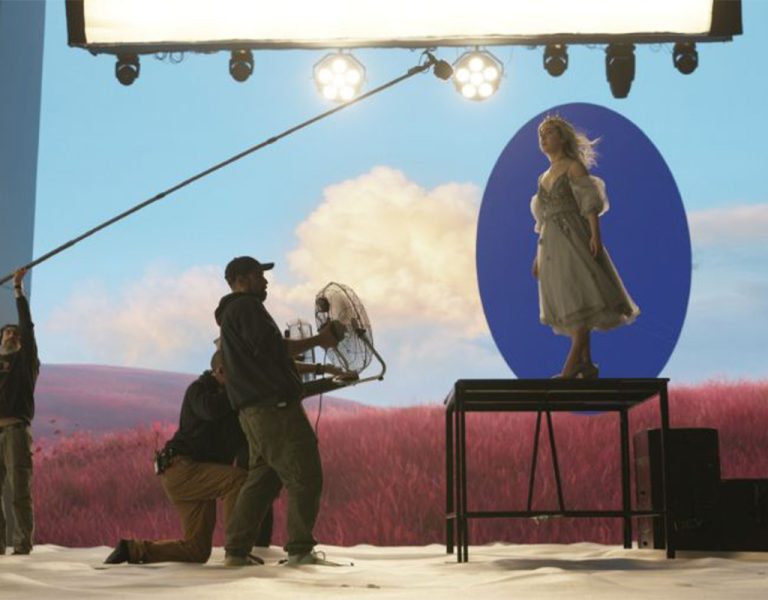


Taken from her moving eulogy for Joe Dunton MBE BSC, Joe’s daughter Erica Dunton toasts the legacy of a legend in the film industry.
Dad was 15 when he met Mum. She was an older woman by two years. He started working in a television repair shop and Mum was engaged to the owner. Dad was painfully shy and didn’t say a word to her for many months. Not even if he preferred tea or coffee, so she just alternated what she made him every day, but soon they fell in love and Mum broke off her engagement.
Dad’s parents Big Julie and John were kind people, but on their own wavelength, shall we say. He had been the breadwinner for the family since he was 11, with three paper rounds in the morning and three in the afternoon and a job in the deli at the crown flats in Regent’s Park, where he grew up.
When Mum met Dad, he had never celebrated his birthday, never had a family Christmas and, because of his dyslexia, struggled to read and write, so Nanny, my Mum’s Mum, as you can imagine thought he was a ‘real catch’!! Especially considering the last guy owned a shop. When they started dating and Dad would drive Mum home after a night out, Nanny would routinely stand at her bedroom window and throw flowerpots onto the roof of his van to deter any kissing, convinced that this shy and willowy man could lead her daughter nowhere good. Little did she know all the places Dad would take not only Mum, but also Nanny. She was with us every day and Nanny came on every holiday as we went around the globe. He looked after her so thoughtfully, so tenderly and in a way most mothers in law can only dream of, and he stood right there, holding my hand as we said goodbye to Nanny, just as his grandchildren, Alice, Grace and Rosie hold hands and say goodbye to their ‘Jo Jo’.
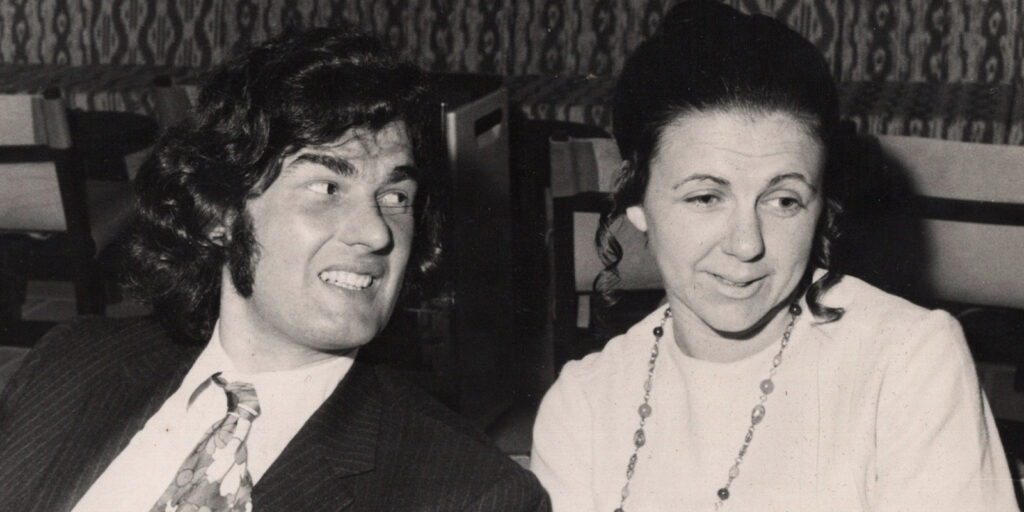
In 1968, while Dad was installing CCTV cameras in the Blackwall Tunnel, he met a man called Sydney Samuelson, who was forming a video department at Samuelson Film Services. Sydney recognised something in Dad, a technical eye, a special brain that few are blessed with, and he asked Dad if he would ever consider coming to work for him. One of Dad’s mottos in life, which he taught us, was: always say yes – you can figure out the rest later. So Dad said yes, and a few months went by before Sydney called, and off Dad went to work at Samuelson’s. There, he was soon tasked with coming up with a revolutionary way for beloved cinematographer Ossie Morris to watch playback on Carol Reed’s musical movie Oliver. Dad worked day and night to invent what we now call the video assist, sleeping under his desk and not coming home for days at a time. Mum and Dad had only recently married and so Sydney felt it his duty to call Mum and say, “He’s not having an affair, dear. He really is working.”
That video assist went on to completely transform the way films are made and led Dad to the BAFTA stage in 2010. He received his BAFTA for his overall contribution to British cinema, because Dad continued inventing and adapting the tools we use to shoot movies, but he never treated it as tech for tech’s sake. It was always in service of story, of helping directors and DPs express something true through an image. He was a scientist, a technician, an engineer, a businessman, an inventor and an artist.
It was quite a regular occurrence in our house to hear Dad pick up the phone in the middle of the night and hear Chris Menges say, “How do you do snow, Joe?” or Michael Seresin asking to meet up or Stanley Kubrick waking him to ask him to make a rig that would capture a mouse’s point of view. His talent touched so many, many more than I can possibly mention here. Just as the films he worked on are in their hundreds, with Chariots of Fire, Return of the Jedi, the Harry Potters, Shawshank Redemption, The Killing Fields, Local Hero, Four Weddings and a Funeral, Brazil andBlue Velvet, to name a few.
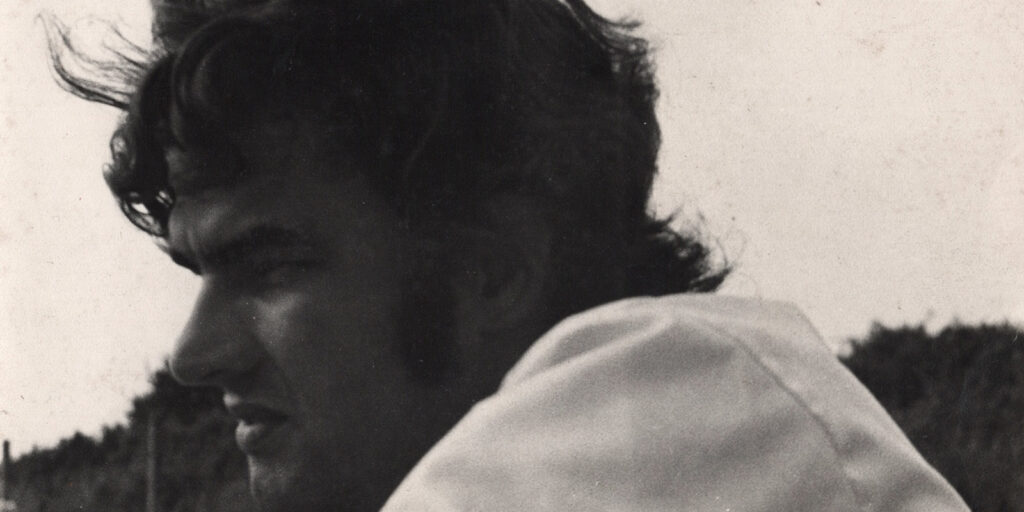
Sir Sidney Samuelson saw way beyond an undiagnosed learning disorder. Sidney saw potential and reached out with faith and an open hand. And that was a philosophy that Dad embodied until the day he left us. The hundreds of messages we have received over these last weeks only confirm that Dad personified trust, connection, generosity, support and kindness. He shaped not only the careers and imagination of his three children, but also of countless others.
He cared deeply about the next generation, serving for many years on the Board of the London Film School. He helped so many students over the years, and I know there are those of you sitting here today, who first visited Dad hoping to borrow a 16mm camera, but left with a 35mm anamorphic package and a bunch of short ends that came from the trunk of Roger Sapsford’s car. Those of you who Dad spotted as wily youngsters and hired to drive his silver boxes around all over the world. Those of you whose fathers he had worked with, but when he looked at you, he saw you as your own person. Those of you in minorities who he encouraged when others did not. Those of you who he reassured that it was OK to be bold and take risks and those of you who had important stories to tell and he made it possible for you to tell them.
As Sidney had believed in him, so Dad believed in people. In 1998, Sydney and David Samuelson were the ones who nominated Dad for the tremendous honor of becoming a Member of the British Empire, and Sidney was the first to call and congratulate him when he got it. We lost Dad on 7 December, which was also Sidney’s birthday.
As many of us know, the film industry is not a family-friendly one. Long hours in faraway locations are not conducive to a steady home life. Dad travelled the world for work, always arriving back home in his Bristol and bringing home a traditional doll from the airport for me and most of the duty-free catalogue for everyone else. But Mum and Dad made it work and were married for 58 years. They created a life for us here in Totteridge, Mum building a successful catering business and a fiercely loyal community of friends, many of whom are supporting her today. They sent us to good schools and colleges where we too made beautiful friends, many of whom are also here supporting us today.
I would be remiss not to mention one friend who we lost recently. Lucien Nunes and Lester met at Haberdashers when they were 11. Both kindred souls in their technical genius brains. Dad loved Lucien like a son and he worked with Dad in all his companies. Lucien and Lester were most recently working with Christopher Nolan on his films. Lester, Dad and Lucien understood each other in a way few ever will.
There is a weight to grief that I now feel on my shoulders. A weight that I know, with time and the strong shoulders Mum and Dad made sure I developed, will get easier to hold, and it is also now part of the fabric of who I am. I am thankful we had Dad for 80 years. I know there are others, like Lucien, who have been taken from us too early, too suddenly, too painfully. And just as Dad was always ahead of his time, it is hard not to think that he also was taken ahead of his time. But I want to tell you, in the last few weeks, he looked like himself, sounded like himself, was not in pain, his brain as sharp as ever, still answering his phone day or night like he had done his whole career. Throughout the various illnesses over the years, he was an absolute noble warrior, he never, ever complained and always put those around him at ease, finding ways to make the doctors, nurses and those who cared for him laugh. I think possibly it was that his heart had beat so fiercely for those 80 years, it was simply time for it to rest.
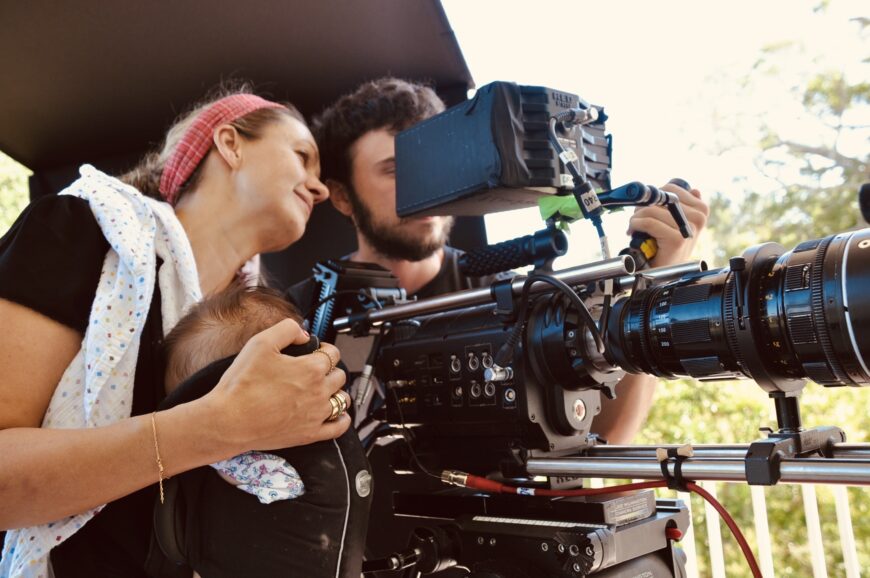
When Dad was taken to the hospital this last time, Buffy and I were working on a football show called Ted Lasso. We were about to start the day at 4pm and were shooting a big old scene at Chelsea Football Club, when Mum called saying that Dad had been blue lighted to the resuscitation unit. The producing director stepped in, the focus puller stepped up and Transpo took us the one hour and 30 minutes across London to the hospital. Not knowing what we would find, because my mother refuses to have a cell phone, we discovered Dad in the Resuss Unit with a cup of tea and Mum by his side. They did not have to resuscitate him, instead using a medicine that calmed his heart rate of 220 to what it should be. Within seconds Dad was asking us what lenses were we on, what cameras… he asked if we were shooting on stage… When we told him that we had rented out the whole of Stamford Bridge, he immediately told us to return. So, we were there for a total of 15 minutes and then we drove all the way back across London to finish the scenes with a lovely cast and crew, who kindly gave us half an hour of overtime to make our day.
Dad believed in the auteur. He understood that sometimes a singular vision can be the most successful. He was able to achieve practically what only great minds could imagine and, because of this, directors like Terry Gilliam, Alan Parker, Tony and Ridley Scott, Mike Nichols, Mike Lee, Jim Henson, David Lynch became his friend. He cared for their films as if they were his own. He would be up at the labs at 4am watching their rushes, before accompanying them to be viewed on location or at a studio, always respectfully attired in suit and tie.
When Dad met Stanley Kubrick, they instantly connected and they worked together on many films, including: A Clockwork Orange, The Shining,Full Metal Jacket, Barry Lyndon and Stanley’s last film – Eyes Wide Shut. I think what I realised more than anything from their friendship is that it can be very lonely being a genius. Not only is it hard to find others that understand you, but also those that can challenge you, because instead you are always teaching. But Dad and Stanley learnt from each other. Stanley could call Dad excited and say, “I’ve heard Nikon has a new lens and I think it could be adapted. Let’s get one and put an Arriflex adaptor on it and let’s see what it can do.” It was that kind of relationship. It was Dad who built Stanley’s viewing theatre in his own home… and it had the best, the best of everything. After Stanley died, Dad set up The Hat Factory in Soho, a post-production house, and he installed that same 35mm projection system for all filmmakers to enjoy.
Dad treated everyone equally, whether he was helping you build a lens as he did with Stanley, or helping you clear up Kemp Hall after a Scout’s function or the Harvest Supper. That was his gift: Everyone he met was interesting. They all had a story and he always had ideas for them. His brain never, ever stopped working. Dad cherished an imperfect image as much a perfect one. He knew an out-of-focus picture could be just as powerful as a perfectly focused one. And that was the lens through which he looked at the world and connected with those who came his way.
So, when he met those like Dino De Laurentiis, who many found intimidating, Dad would find a friend. And it was his friendship with Dino that led our whole family to discover a new life, a new business and a new community in Wilmington, North Carolina. Dad had founded JDC, Joe Dunton Cameras, and Dino used his cameras for many of his films, including Flash Gordon and Dune. So, when Dino had a project (Firestarter) to be shot in Wilmington, Dad travelled there and fell in love with not only the place, but also the people. Again, he saw the potential. He set up a camera rental house in Dino’s studio and their presence inspired a filmmaking community that still stands strong today, because not only did he provide cameras, he also provided a vision. A vision that would go on to totally transform the landscape of Wilmington and the lives of those who live there. There, he was a champion of local filmmakers and he was instrumental in the success of their films and television shows, as well as playing a fundamental role in the Cucalorus Film Festival, The NC Black Film Festival and the North Carolina School of The Arts film programme.
One of Dad’s superpowers was he was never frightened of change and instinctively he always seemed to know what was coming next and how to adapt. He understood what it meant to shoot on film. He called it emotion with emulsion, but he also foresaw the digital era. Straight out of the National Film School and right at the cusp of the digital age, Natasha Braier and I shot our first feature on an ARRI SR 16mm camera, but with his invention – an interchangeable digital magazine – because he still strived to seek and recreate the beautiful, organic, randomness of celluloid. He invented so much. He was the first to create a 20:1 zoom for 35mm; the ladderpod; the Moy Vitesse head; JDC Variable Contrast Glass and, of course, his beloved anamorphic lenses.
In 1980, while preparing to shoot Dance Craze, a feature film about Britain’s Ska/Two Tone bands which included Madness, Bad Manners, The Selecter and The Specials, Dad resurrected Super 35, which enabled a better quality ‘blow-up’ to 70mm. He and Garrett Brown danced with their Steadicams on the stage and created a brand-new style of filming live bands. Dance Craze is one of Dad’s most treasured achievements. He was deeply involved in the edit and made it his own. He loved that film with his whole heart and was so proud of it. He would love seeing you all here today wearing his badges.
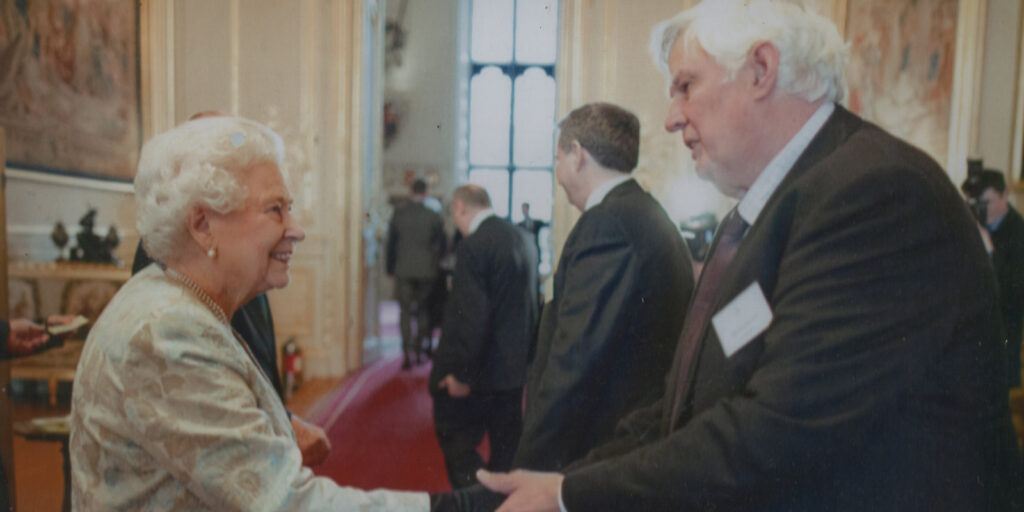
There is much more to mention that Dad achieved. He believed in the guilds and the power of the people as a collective group. He had great ties with the American Society of Cinematographers and became a member of the British Society of Cinematographers in 1978. He served on its board of Governors from 1990 to 2017, acting as vice president from 1992-2012, and I grew up reading Alex Thomson’s wonderful and hilarious newsletters. He founded the BSC Technical Committee and had the idea for the first BSC Equipment Show, which is now a hugely successful tentpole event in the BSC calendar. It features the latest innovations from camera and lighting companies, and yes, my Mum was again by his side at the very first show in 1993, where she set up a refreshment table and sold smoked salmon bagels for one pound each. He also received the BSC ARRI John Alcott Memorial Award and the 2008 Society of Camera Operators (SOC) Lifetime Achievement Award and was always a proud card-carrying member of the GBCT, the Guild of British Camera Technicians.
Dad also had huge respect for the past. Understanding that where we have come from will lead us to where we are going. A great mission of his was to preserve the Mitchell Camera Corporation and all its glorious history, which he did with passion and dedication. He also owned and ran the British film engineering and manufacturing company Ernest F. Moy Ltd, which was founded in 1895.
Ushering a life out of this world is one of the hardest things we do. We lost Dad’s Cousin Lynda earlier this year. A fiery warrior of a woman. Both only children, she was more a sibling than a cousin. They were born 6 months apart and left the earth about the same time. Both reaching eighty and as if joined by an invisible thread, Dec 7th, the day Dad passed, was also Lynda’s birthday.
I know Dad knew he was loved. I know that he and Mum made an incredible team and he was worried about leaving her. For me, that has always been the sign of real success beyond awards and material things. Finding someone who will sit by your side, who has your back, no matter what. That was who Mum was for Dad and Dad was for Mum. Theirs was a true love story. Family was deeply important to Dad and he was beyond proud of the three of us. He gave us so much and he has left this world knowing that he set us up for success and knowing that we found wonderful partners in Matthew, Jemma and Lisa. He loved Lynda’s boys Alex and Oli as his own and he adored his three grandchildren, Alice, Grace and Rosie, to all of whom he has passed on his ‘Jo Jo Brain’, knowing that they are each destined for great things. But maybe his favourite of all was a member of the family dear Monica brought us – Alfie, his faithful and, some would say, FAT four-legged best friend.
I can’t say how it feels to leave all those you love behind, but I hope that there are those waiting for him and conversations with Jack Cardiff, Freddie Francis, Freddy Cooper, Gill Taylor, Ossie, Otto, John and Benny, Frank Capra, Stanley, David and Sydney, and Lucien are all ahead of him.
And I’m sure Cousin Lynda will be sitting right there with them, not knowing who any of them are, yet still having very a strong opinion about all of them.
We will bury Dad with a piece of metal in his suit pocket, the heart of his beloved Mitchell camera, the film transport mechanism that assured perpetual motion. We only wish that his heart could have gone on forever.
Hamlet said of losing his father, ‘He was a man, take him for all in all, I shall not look upon his like again.’ I feel the same.
And I say now back to my Dad his last words to me, the last time I held his hand.
He smiled and told me ‘Night Night.’
So, ‘Night Night Jo Jo’ from all those who loved you dearly.