

TURNING POINT
IMAGO President Mustapha Barat ABC reports from IMAGO’s First Annual General Assembly in Brazil and the Americas: a successful event in a stunning setting, made even more special due to a relaxed atmosphere encouraging creative conversations.
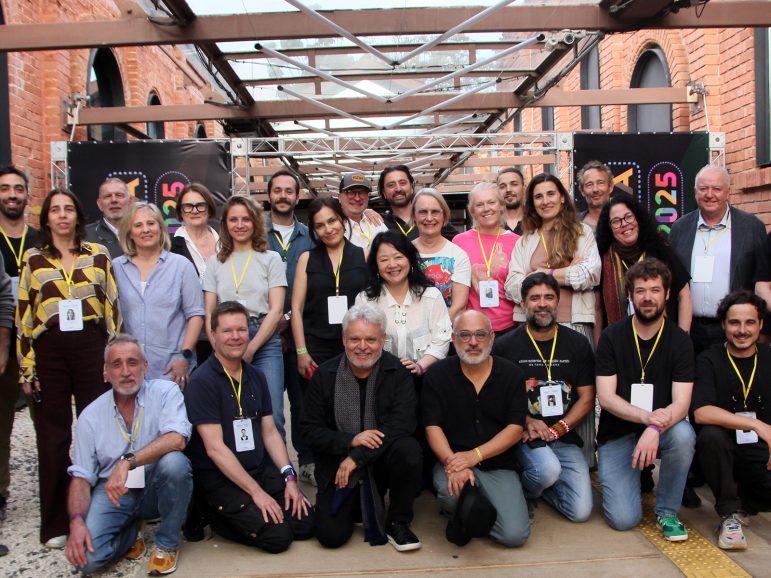
Writing this a few weeks after returning from São Paulo, I am still processing the extraordinary week we had at the Cinemateca Brasileira. The 2025 IAGA felt like a turning point. What struck me most was how naturally everything fell into place. The conversations, the setting and the people aligned in a way that felt meaningful.
There were several reasons why this IAGA stood out. It was our first assembly in the Americas, showcasing IMAGO’s growing reach and relevance. But more than the location, it was the relaxed, open, and welcoming atmosphere, along with the people, that made this gathering truly special.
This moment for IMAGO could not have come at a better time. Cinematographers everywhere are adjusting to shifting work patterns, economic pressures, and rapid technological changes. In that context, the IAGA was about more than just votes and motions; it was about recalibrating together.
The partial board elections were a major focus, and I am grateful for the trust shown by societies in reelecting me as president by such a large margin. This vote of confidence reflects the work we have done collectively: improving communication, strengthening relationships with sponsors, and building a more peaceful and stable organisational structure.
As part of that renewal, we welcomed two accomplished cinematographers to the board: Thomas Favel AFC and Teresa Medina AEC. Favel brings a rich experience in international cooperation and a deep commitment to community building. Medina, the first woman elected president of the AEC, has long been an advocate for gender equality in our field. Her presence is a meaningful step toward greater parity on the board.
Insight and inspiration
In the same spirit of collaboration and exchange, the IAGA panels and master classes demonstrated what happens when talented people come together. Adrian Tejido’s master class, sponsored by Godox, discussed his work on I’m Still Here, offering the kind of artistic and technical insights that can only be gained from someone who has experienced a complex production firsthand. Paulo Perez ADFC’s ARRI-sponsored presentation about his work on the Netflix series A Hundred Years of Solitude offered insight into the visual interpretation of Gabriel García Márquez’s literary world.
Additionally, Chase Hagen presented ARRI’s new REVEAL color science, introduced with the ALEXA 35. The equipment novelties showcase and panels by ARRI, Godox, and Nanlux were also an important and welcome addition to the program.
The committee presentations offered valuable insights into IMAGO’s ongoing work. The Education Committee announced two upcoming sessions at Euro Cine Expo. The Working Conditions Committee presented findings from its latest survey. The Technical Committee gave an extensive overview of the committee’s work. Meanwhile, the Film Preservation & Restoration Committee provided an update on its ongoing survey to catalog cinematheques, archives, and laboratories and other restoration facilities worldwide.
The panel organised by the Women in Cinematography collective and IMAGO’s Diversity & Inclusion Committee sparked honest discussion about the persistent challenges faced by women in our profession. Erika Addis ACS; Evgenia Alexandrova AFC; Adriana Bernal ADFC; Kika Cunha ABC; Zoe Dirce CSC, and Astrid Heubrandtner AAC; shared vital perspectives. These conversations must remain central to IMAGO’s work.
The final session, an AFC Blind Comparative Test presented by Denis Lenoir ASC AFC, reminded us of how personal and subjective our responses to lens characteristics can be.
Forming friendships
What I did not expect was how much the informal moments would matter. The spontaneous IMAGO Fun Committee that emerged over lunches and dinners sharing stories was a reflection of where some of the most meaningful connections happened. You can plan panels and presentations, but you cannot create the kind of camaraderie and friendship that developed naturally throughout the week.
Just as importantly, ABC president Fernanda Tanaka and our Brazilian society colleagues created something special by hosting and integrating our assembly with ABC Week. Rather than flying in for the assembly and leaving the next day, many IAGA members immersed themselves in Brazilian filmmaking culture. The screenings, award ceremonies, and diverse artistic and technical panels reinforced why we do this work. And the venue itself, the Cinemateca Brasileira, housed in historic red brick buildings surrounded by gardens, offered an inspiring backdrop.
None of this would have been possible without the hard work of the IMAGO team behind the scenes, especially Marcela Bourseau, who produced the IAGA, and Carolina Piquet. It was because of their dedication that both long-time and new members showed up with enthusiasm and a shared sense of purpose.
Looking ahead, this assembly has given us real momentum for future participation in festivals and global programming. The conversations in São Paulo clarified our priorities and gave us direction. We are no longer just talking about international presence; we are actively building it.
The energy of the attendees told its own story. When people describe the experience as transformative, when new members feel welcomed and engaged, when veterans talk about rediscovering why they love this community, you know something worked.
In retrospect, the São Paulo IAGA was more than the result of good planning. It revealed IMAGO’s potential when we create space for dialogue, learning, and real connection. The democratic process, educational content, and cultural exchange all underscore that we are stronger together than apart.
The trust expressed through the elections and the relationships built during those days will influence our work for the years to come. We will continue to strengthen communication with member societies and sponsors, extend our presence at cinematography-focused festivals, and build an event calendar that serves cinematographers at every stage of their careers. These goals are not abstract; they reflect what our community asked for.
This first assembly in the Americas taught us something essential about IMAGO’s future. When cinematographers gather with shared purpose and mutual respect, we create something larger than the sum of our individual societies. The São Paulo IAGA showed us what that looks like. Now it’s our job to build on it.