

THE GREAT OUTDOORS
Hélène Louvart AFC captures The Salt Path with striking naturalism, translating the couple’s devastating loss of home into imagery that feels both raw and timeless.
The Salt Path is a quietly powerful film, grounded in a reality faced by thousands: the shock of losing everything. Adapted from Raynor Winn’s bestselling memoir, it follows Raynor and her husband, Moth, as they respond to financial ruin and a terminal diagnosis not with despair, but by embarking on a 630-mile walk along the South West Coast Path. Their grown-up children, spared the worst of the upheaval, remain part of a story shaped by resilience, love, and quiet defiance—a deeply human response to hardship, brought to the screen with tender, clear-eyed precision.
Bringing emotional weight and authenticity to that journey are Gillian Anderson and Jason Isaacs, whose performances ground the film in truth and compassion.
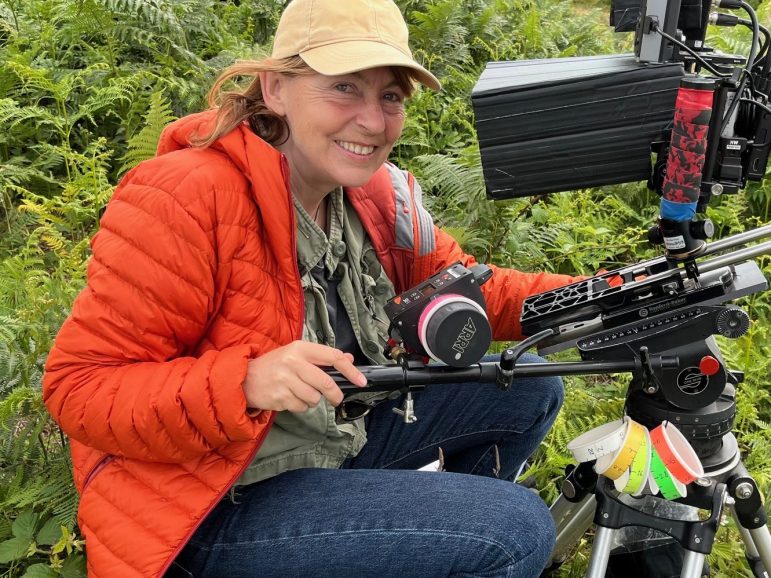
Bringing this intimate and elemental journey to the screen was the task of Hélène Louvart AFC (La Chimera), who embraced the project with characteristic sensitivity and a willingness to experiment—including working with a camera system she’d never used before.
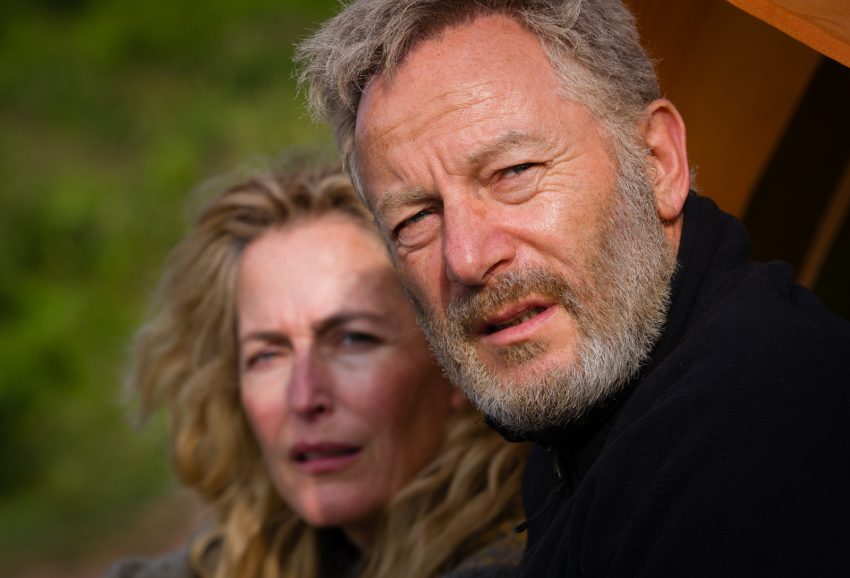
“It was actually my first time using the Alexa 35 and we paired it with Cooke S4 lenses,” says Louvart. “Before starting prep on the film, I spoke with a good friend of mine who works as a DIT. He told me, ‘Hélène, I’m prepping a new film with the Alexa 35. It’s great — you should try it.’ I thought I should follow his advice. I mentioned it to the director, Marianne Elliott, and together we decided to go with the Alexa 35 based on that recommendation.”
Louvart knew it was the right decision, as they’d be shooting along the coast, with the afternoon sun often backlighting the sea. “The Alexa 35 handles highlights beautifully, and that was essential for those conditions,” she says. “It really delivered when it came to managing strong sunlight on the water.”
Using the ARRI camera wasn’t her only new experience on this film; it was also the first time she worked with the Ronin 2 paired with the DJI Force Pro system.
“During our tests, the camera was placed on an apple box or table, and I was two or three metres away, controlling it remotely with the DJI Force,” Louvart recalls. “It allowed for really fluid movements without me needing to be right next to the camera and it worked wonderfully — especially for walking scenes along the paths. Often, the camera was mounted on a pipe held by grips and I’d frame from behind. We shot almost the entire film that way, even indoors. It gave the actors a new kind of freedom and for me, it was a completely new way of working. We did bring in the Steadicam for a few specific shots, mostly towards the end.”
WATER FIGHT
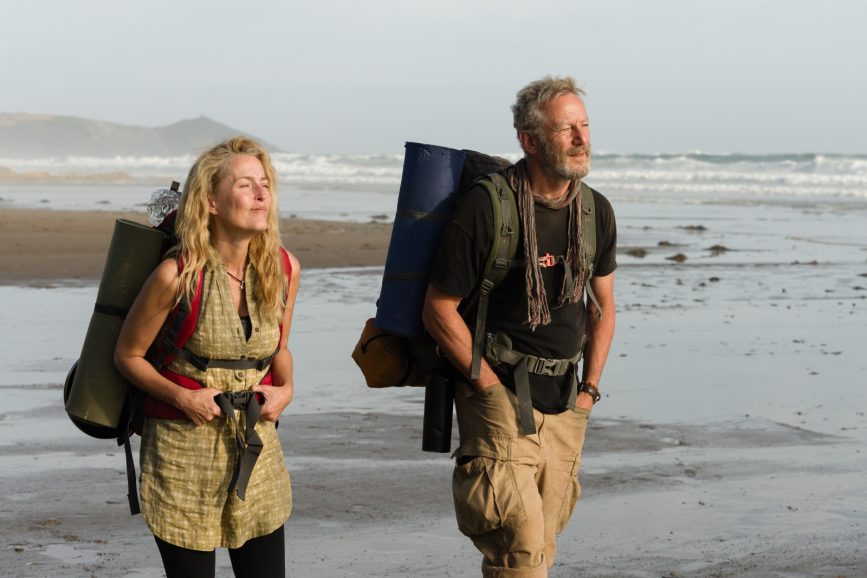
The film’s opening scene plunges into Raynor and Moth’s struggle to save their tent from the tide, blending raw coastal beauty with emotional vulnerability. Louvart’s naturalistic cinematography supervision highlights their fragile fight against nature’s vast, relentless power.
“We had to shoot it twice,” she recalls. “We chose a south-west-facing location, which meant it stayed in shade until around 9.30 or 10 a.m. We then darkened it in grading to give it a dawn-time feel.”
The team used two cameras and two operators for safety and flexibility, “as the scene was quite physically demanding” with the waves. “I didn’t frame it myself—it was too complex and I wanted to supervise from a bit of distance alongside the director, Marianne,” Louvart adds.
Except for a few brief moments, the film was almost entirely shot outdoors, forcing the cast and crew to endure the full unpredictability of the English summer.
“Honestly, it was fine,” Louvart says. “We integrated the weather into the story. If it was cloudy or sunny or rainy, we just went with it. I like adjusting the iris to play with brightness—so every weather change was embraced. It gave the film natural variation and energy. We filmed in June and early July, when the weather changed often, which helped tell the story.”
During the shoot, she explains, “The scenes inside the tent were particularly demanding.” To stay on schedule, the team recreated the tent setup indoors, adapting creatively to the constraints they faced.
“We had to mimic the natural lighting conditions based on what we’d previously shot outside,” Louvart continues. “I stayed outside the tent while the actors were inside with the camera, using the Ronin on an apple box, with the DJI force. It was a tight space, so we worked with that constraint to recreate the look and feel of the outdoors. Matching the light for continuity—whether it had been sunny or cloudy—was a challenge I enjoyed.”
Louvart relied on natural light when shooting exteriors, using only a frame or net for diffusion if the sunlight was too harsh on close-ups.
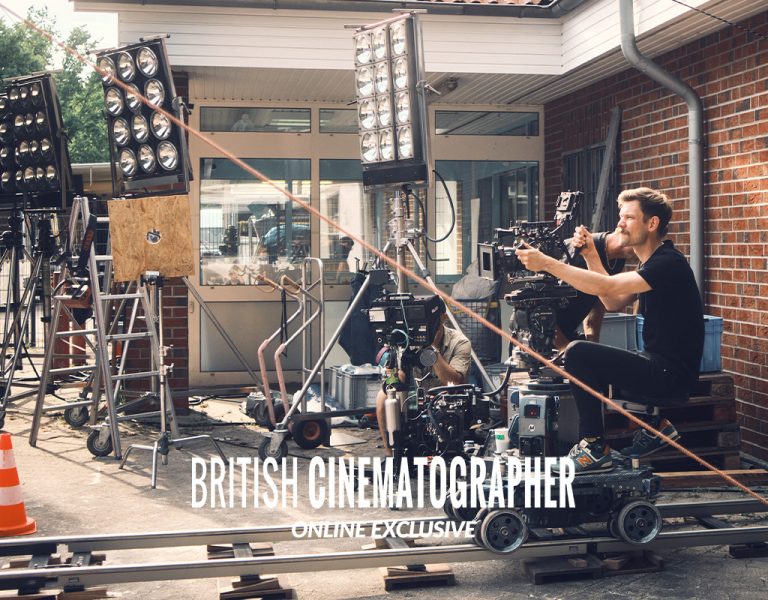
“Indoors, for the opening and closing scenes, we used ARRI M90s, M40s, and 1.8kW HMIs through the windows, along with LED units like the Orbiter and Asteras, which we bounced off the ceiling,” she adds.
What’s more, she says filming The Salt Path was as much a journey for the crew as it was for the characters. Embracing the spirit of the story, the production moved along the actual coastal route, mirroring the hardship and discovery captured onscreen.
“We all had to adapt,” Louvart concludes. “It was part of the script—the journey wasn’t just for the characters, it was for the whole crew. We travelled down from Bristol, shooting more or less in order. Everyone was part of that experience.”