

CONTINENTAL CELEBRATIONS
Ahead of the European Film Awards’ 38th ceremony in January 2026, Matthijs Wouter Knol, CEO of the European Film Academy, explains why the event is growing in size and stature, and how the Academy itself helps European filmmakers to feel united across the continent all year round.
For those who don’t know, what is the ethos and purpose of the European Film Awards?
The European Film Awards is the main event of the European Film Academy – the Academy works all year round, and once per year the ceremony puts an extra spotlight on our work. It’s similar to how BAFTA is an academy that is working year round, with the awards ceremony putting an extra highlight on nominated films and nominated talent.
The awards have a couple of aims and a couple of purposes. One of them is, of course, to get attention from the industry for our own community of members, but also attention from the press and the wider world. Secondly, it is to help make the world of European cinema more united. Very often we speak about French film, we speak about German cinema, we speak about the amazing new cinema from Spain or Norway and so on. The European Film Academy aims to bring filmmakers from across the continent together through the awards.
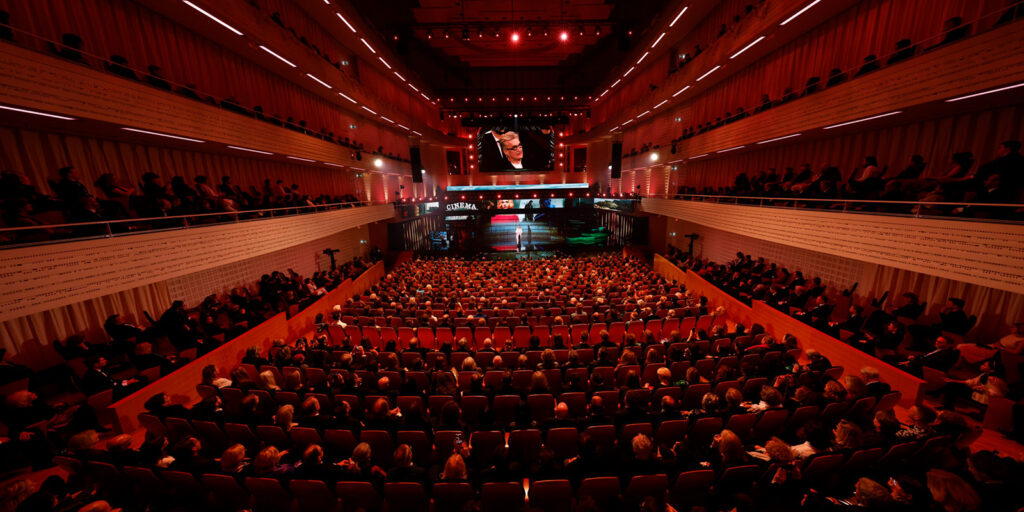
A lot of guests that attend the awards feel a strong connection to the idea of European cinema, they feel that sense of solidarity with other filmmakers from all over Europe, and I think that’s something that we really stand for. It’s about creating an awareness of European culture and emphasising that we all form part of that culture.
The awards take place in Berlin in January – why is this an important location for the ceremony?
In 1988, the first year of the awards, West Berlin was one of Europe’s cultural capitals. The government of West Berlin back then wanted to do an awards ceremony with European filmmakers, and it was important for them to not only bring filmmakers from Western Europe. These were the times of the Cold War, and with West Berlin acting as a border to Eastern Europe, they aimed to also bring people from the East to this ceremony. In the end, the ceremony brought together big names from both the East and the West.
The first event really felt like a uniting force for European filmmakers, from both the East and West. It was generally felt that this should be done again. Nobody knew that, a year later, the Berlin Wall would have fallen. The awards led to the establishment of the European Film Academy, as the institution orgainsing the ceremony every year.
For this reason, Berlin is a historical location for the European Film Awards that reminds us of the need to unite Europe. So, every second year the award ceremony is in this city, and in the other years the ceremony travels all over Europe. This decade, we were in Reykjavík, Iceland (2022), in Lucerne, Switzerland (2024), and in 2027 the ceremony will be in Athens, Greece.
How have the awards evolved over time?
The amount of attendees has grown, as has the membership of the European Film Academy. In the first year of the European Film Academy, there were only 99 members. In the meantime, we have grown to over 5,500 members from 52 countries all over Europe – in the last five years alone, that’s a growth of 30%.
There are 22 categories in total – why is this the right number and how do you go about deciding on those categories?
The categories are decided by the Academy Board. The Board consists of Academy members who are elected for a two-year mandate. This body sets the rules and make the annual regulations. The Board decides if a category is added or discontinued, both of which can happen.
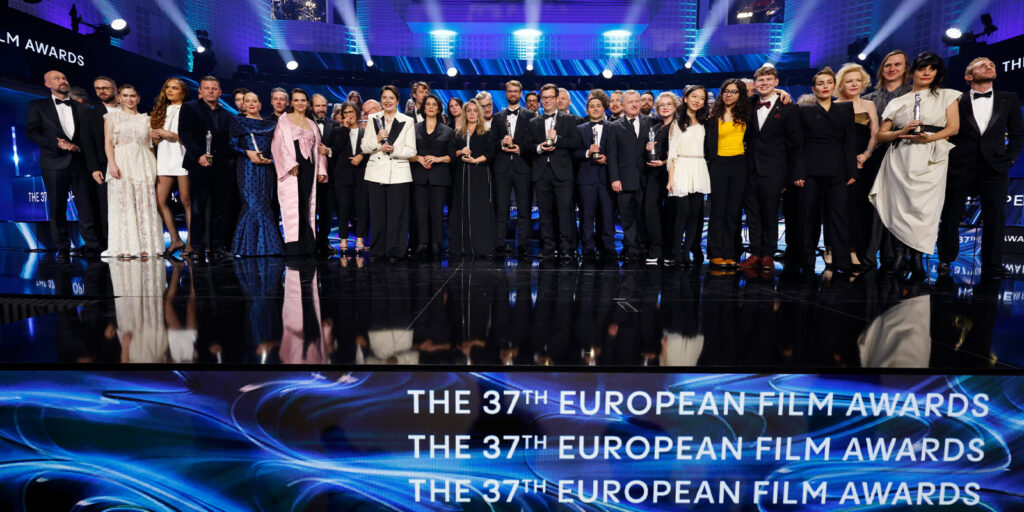
The new crafts categories, which added eight new awards categories to the existing list, were decided by the Board because they felt it enables the European Film Academy to highlight more specific talent involved in filmmaking. Until last year, there was just one predestined winner in these categories before, chosen by a jury. The change this year sees Chapter members decide on the nominees before all the members decide on the winner. I think it’s an improvement because it enables the European Film Academy to highlight more people working and doing exceptional work in European cinema.
One of those categories is European Cinematographer. What are the criteria for the European Film Academy members when they’re choosing who to vote for, and Chapter members when they’re choosing nominations, if any?
We leave it very open. We trust Chapter members, in this case the Cinematography Chapter, to be able to watch the films and decide nominations based on their personal knowledge and the way they look at films. Each and every one of our members maybe sees film in a different way because they pay attention to different elements. Likewise, when choosing the winner, we trust members to make decisions based on their experience and knowledge of filmmaking.
We’d like to help facilitate discussions within the Chapter in the future, asking whether it would be useful to have a couple of guidelines that can be looked at when deciding on nominees or winners. This might be particularly useful for those members who are still relatively new, who don’t have that much experience with awards voting. Our awards process is always improving from year to year. For now, this was deliberately left to the individual members to decide who the nominees would be.
There are only three nominees in the Cinematography category, which is fewer than other awards – how and why did you decide on this number?
With the introduction of voting on the eight craft categories, we wanted to start with a reasonable number and see how this works. It could potentially develop in the future. If you compare it to the screenwriter or director categories, or the acting ones, there are five nominees in those. On the other hand, for Discovery, the best newcomer in European cinema award, we have six nominees. Again, this is something that’s decided by the Board, and it varies on a case-by-case basis.
Last year’s winner, voted for by jury, was Ben Kracun BSC for The Substance – why do you think that won in 2024?
If you look at not only the cinematography but also the production design, costumes, the whole visual concept of the film, I think The Substance is an exceptional film that is in many ways strongly connected to ideas that originate in European cinema. This is no surprise, seeing as many of the behind-the-scenes talent on this film are European. It’s wonderful to see that.
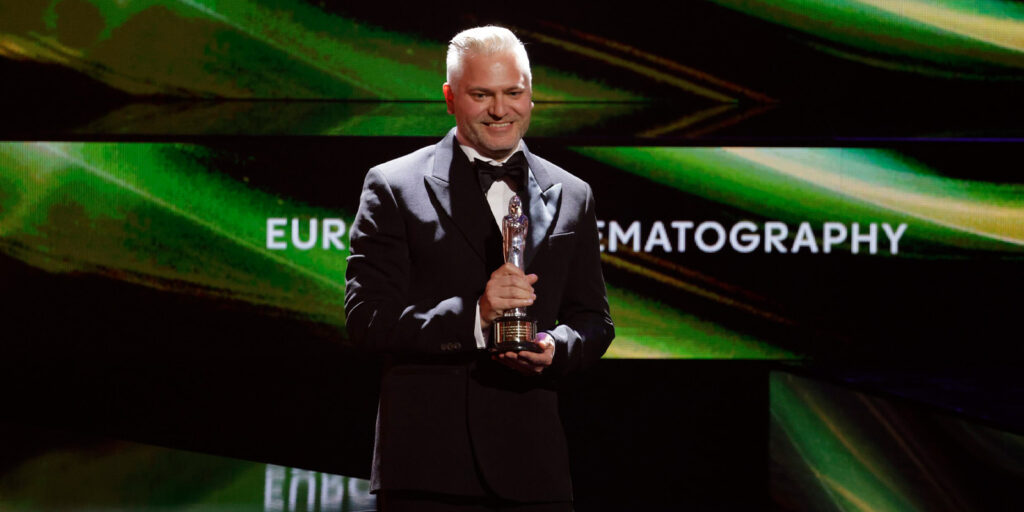
Why is it important to celebrate the art of cinematography at an awards ceremony like this?
Cinematography is so closely linked to the early days of filmmaking which took place in Europe. The creation of moving images, experimenting with lighting and editing, using visual effects: this is what marked the beginning of cinema. It has been an art form linked to technical innovations from the very start. Celebrating this art of filmmaking is fundamental to the work of the European Film Academy.
However, our work also differs from that of other academies. We have a cultural and, in a way, political agenda, which is building an awareness of the connection of European culture. It’s crucial to include the crafts of European filmmaking in that. Cinematography is a very recognisable craft, and one that I think even people that might not be too versed in cinema would be able to appreciate and analyse.
Why was it important to engage more members through the introduction of members’ Chapters?
As an academy, we feel not only the obligation but also the wish to make sure that our community feels really connected. As a growing community, we want to make sure that people don’t get lost.
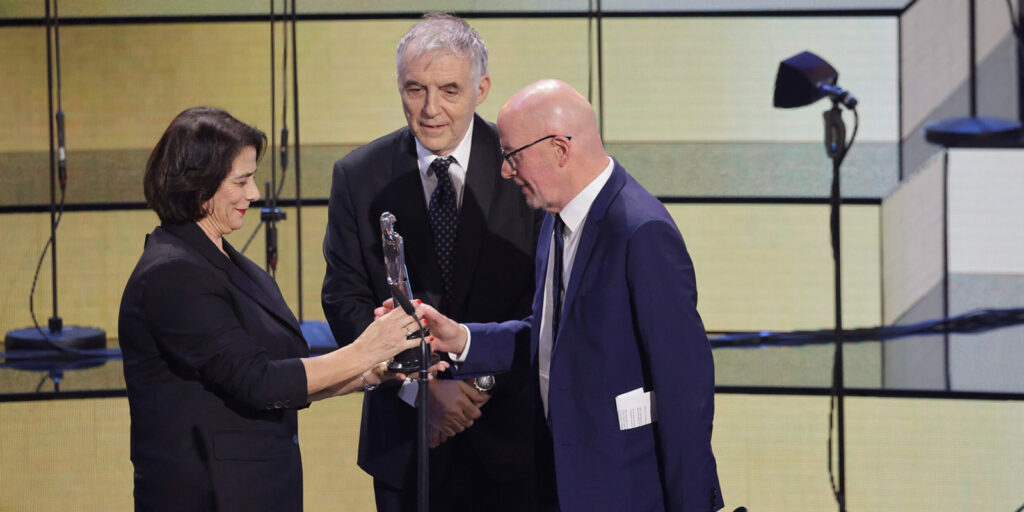
To make sure the community is relevant to our members, we want to create subcommunities within the larger membership, and to make sure that members who are cinematographers, for example, have a chance to connect more easily with their direct peers, discuss topics that are specifically relevant for them. Obviously, that does not mean that we want to put members in boxes and keep them in their specific Chapters, that’s not the case. But the Cinematography Chapter does offer, I think, extra value to members, and that’s the same for the other craft Chapters. In the future, we’ll also set up other Chapters that are not related to the crafts but, for example, to documentary film.
How can people join the European Film Academy as a member?
It’s a pretty open process. If people feel fascinated and intrigued by what the European Film Academy does, they’re welcome to reach out to us. However, we ourselves identify every year who might be potential and interesting members for the European Film Academy. Also, if talents are nominated and they are not members yet, which happens sometimes, obviously they will be invited.
For the readers of British Cinematographer specifically, it’s important to mention that the UK counts as one of the countries in which the European Film Academy is active. We receive funding from the EU, but we are not linked to it whatsoever. Brexit hasn’t changed the fact that we accept and search out members from the UK. At the moment, over 250 British filmmakers are members of the European Film Academy. If you are interested to join, please do get in touch.