
Mark London Williams recaps an eventful weekend at the Creative Arts Emmys – which saw Jessica Lee Gagné make history and British DP Matthew Lewis scoop a major prize – as the annual event celebrating artistic and technical achievement in television rolled back into town.
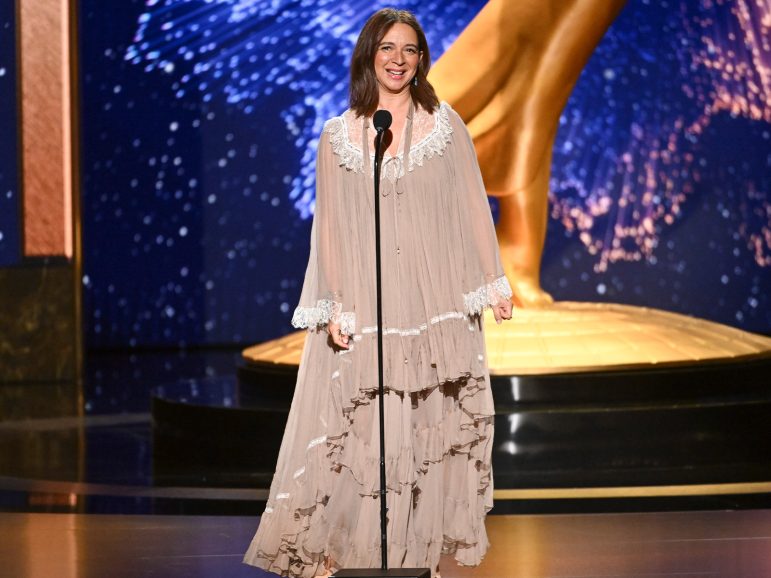
“This is the real Emmys – this is the Emmys they couldn’t have the other Emmys without, ’cause nothing would get made. And then there’d be no other Emmys to go to,” proclaimed Maya Rudolph, one of the many co-hosts for the two-night affair that is the Creative Arts Emmys, which comes the Saturday and Sunday before the above-the-line focused Primetime one.
Rudolph’s sentiments were echoed – and perhaps amplified – the very next evening by Sarah Silverman, who kicked off night two (which mostly focused on unscripted and live programming). “You are the backbone of this industry and they want to keep you in the back?” she said, referring to the fact that the awards given to “the actual people who make television run” are never seen live (though edited highlights are shown on FXX and later and available on Hulu in October).
We, however, are here to fill you in right now about what you missed, and about a show grown from a single, split-away night from those other Emmys, into its own weekend, where this year, The Studio, Severance, The Penguin, Andor, and Saturday Night Live were among the biggest winners.
It would also seem probable that The Studio, with its numerous craft awards, will emerge with more comedy accolades on the “main” night, as will those three “genre” shows on the drama side – if that’s a word that even fits anymore, given the wide range of storytelling honoured. You, dear reader, have the advantage there, living in the near future (how is it there, by the way? Still fearsome?), reading this after the propitious final envelopes have been opened, whereas production deadlines have us writing things up beforehand. Does Jessica Lee Gagné make more history and also win an award for directing an episode of Severance, after already winning for shooting one?
Ahead of her on Creative Arts night, the show’s production designer Jeremy Hindle and his team had won in the one-hour category for the “Chikhai Bardo” episode – the same one Gagné directed. “Our opinions match each other,” Hindle said of the DP and director. “[We’re] like brother and sister,” and creating such an emotionally layered show is “something Jess can do with a camera, and I can do with design”.
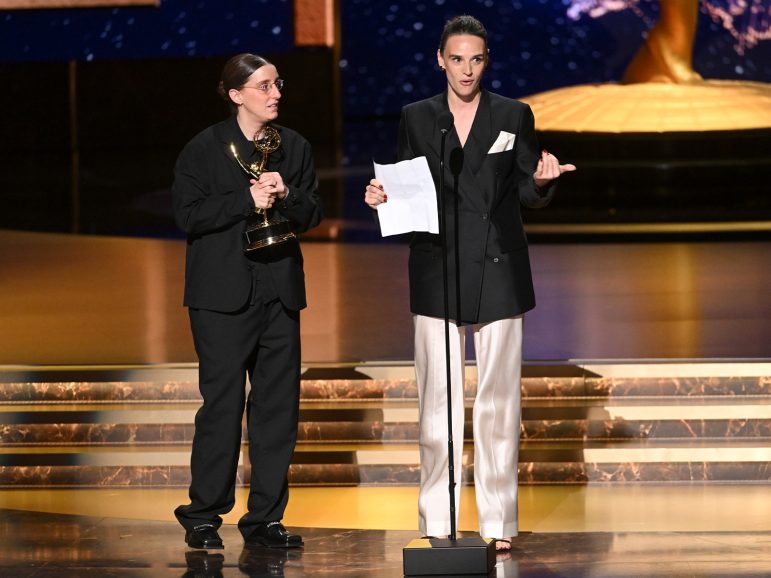
When Gagné herself showed up in the media room, statue in hand for shooting the season-opening “Hello, Ms. Cobel”, we asked about that same collaboration, and she mentioned “the collaborations on Severance are everything”, saying that originally, she didn’t want to do it at all, “because it was an office show”, but then, after sitting in with Hindle’s group and discovering “we’re all crazy about details on that show”, was won over. She also mentioned the collaborating she continues to do in the cinematography department with operators Mark Schmidt and Scott Maguire. “Overall, it’s an honour to get to work in that kind of system.”
A system clearly more nurturing to its participants than one she’d worked in earlier, saying she “did work for a man once, who said there are two things a woman can’t do – be a Formula One driver and a cinematographer”. The Emmy “means a lot”, she emphasised, perhaps even more, given experiences like that.
Oner and done
Seemingly seamless camera work remained the order of day – or evening – as winners for Outstanding Cinematographer for a Half-Hour Series, and for a Limited Series, were, respectively, Adam Newport-Berra for “The Oner” episode of The Studio and Matthew Lewis for “Episode 2” of Adolescence.
Newport-Berra said his own inclination was to shoot every scene as a one-take when possible (there are some wonderful tracking shots throughout the series), which meant that “everyone had to be paying attention at all times – no one could slack off”.
All of which brought a certain meta aspect to “The Oner” itself – wherein series co-creator Seth Rogen , as newly minted, well meaning, and somewhat inept studio head Matt Remick, makes a surprise set visit to watch director Sarah Polley do a culminating oner for the film she’s directing for him. Which he inevitably mucks up.
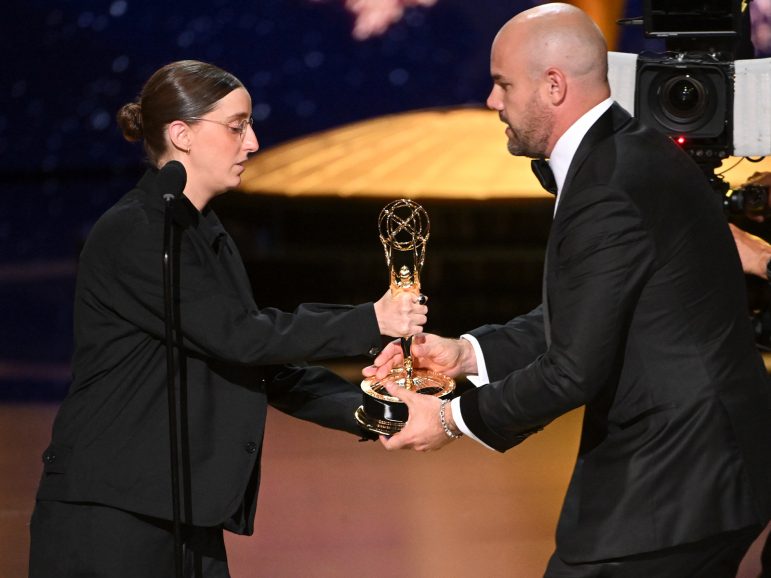
In terms of shooting the actual episode, Newport-Berra said they “only had about an hour and a half day” at the actual location, where “we could be rolling”. Given the tightness, “everyone knew if they blew the take, they could blow the episode”, in turn blowing the location. Just like the show!
Happily, none of that happened. In “other episodes we had a lot more fun”, he said. “The actors got to play [while] Kathryn Hahn (as studio publicist Maya Mason) would ruin every single take with how hilarious she was.”
And as with their colleagues charting worklife over at Lumon Industries, collaboration was critical too – not only with Studio’s production designer Julie Berghoff and her team, who won for “The Note” (which contains one of those aforementioned “oner” scenes) and who Newport-Berra mentioned backstage, but also with editor Eric Kissack ACE, who won for “The Promotion” episode.
Kissack himself noted during the Q&A that “editors don’t usually get to make friends with crew people”, but he and everyone else “got lucky” – like their Severance counterparts – with their own collaborations. Kissack would usually find himself “on set the entire time, helping them craft these oners […] most of my editing was done in the moment”, though if he needed it, his actual office was five minutes from the set.
It was clearly an all-hands-on-deck effort. Newport-Berra also mentioned that “The Oner” was shot on an ARRI ALEXA 35, as in “camera, singular. We used one camera. We had no back-up plan.”
It takes a village
Matthew Lewis’ back-up plans, however – or at least his current ones – include “trying not do too many more oners”, he said backstage, with a laugh. He allowed that while the form, which he’s clearly been perfecting since working with director Philip Barantini and actor/producer Stephen Graham on the earlier, chef-themed feature Boiling Point, keeps you “limited to physics”, it was also “quite a bit of fun – especially for introducing character”. Though harkening to an unbroken take’s theatrical sense of continuous, real time was also a reminder “of the importance of blocking to change framing”.
But Lewis also said the format “could have become a niche, and feel like a bit of a gimmick if we didn’t prioritise the story”.
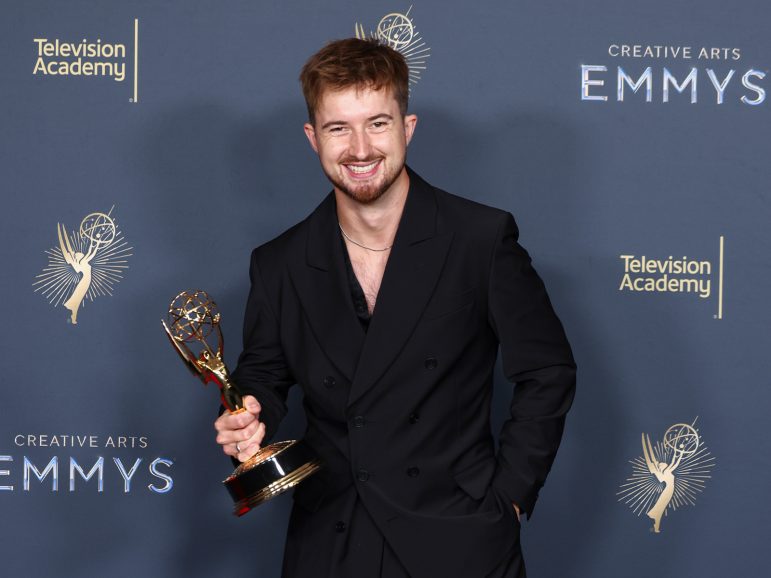
There were also the practicalities of prioritising his physical health. In response to a colleague’s question backstage about what he learned from the experience, Lewis laughed that it was “probably [that] I’m not invincible”. He recounted that for the first episode, he did most of the operating for the repeated takes (meaning each whole episode – again like play performances – repeated in their entirety, once the blocking and camera moves are finalised, to capture the best performances). By the award-winning second episode, “I couldn’t walk – I was hobbling into work. I had to give some of the hardest actions to my operator,” and Lewis then proceeded to generously thank the entire crew, acknowledging that it takes a media village, so to speak, to be able to pull off such emotionally and visually compelling high-wire acts.
Saturday Night fever
Saturday Night Live dominated many of the live-action awards the following evening, pulling off its own high-wire act of having both a “regular” 50th season and two different specials to denote the milestone.
Indeed, if The Studio and The Penguin (which did quite well in makeup, sound, and VFX categories) were the biggest winners on night one, with nine and eight awards each, when you add both the three that the “regular” Saturday Night Live season got to the seven won by SNL50: The Anniversary Special, then the venerable sketch-based cultural institute can lay claim to the first weekend’s tote board.
Rick Fox, one of the camera operators for the SNL team who won Outstanding Technical Direction and Camerawork for a Special, and who has been there for 41 of those 50 years, replied to a question we asked about what he’d seen change, particularly on the, well, technical side of things, over that time.
He said that while he’s “seen the show evolve”, one of comedy’s most critical elements hadn’t changed: “The timing is still the same. You learn what two minutes and 12 seconds are – you have to know the order of things, when you get from one set to the next,” citing all the work the boom operators, cable and lighting people do, where he “literally had moments where it was pitch black” after moving to a new set, and proceeding with the opening zoom he’d been instructed to do, would find lights coming up just as the shot was going live.
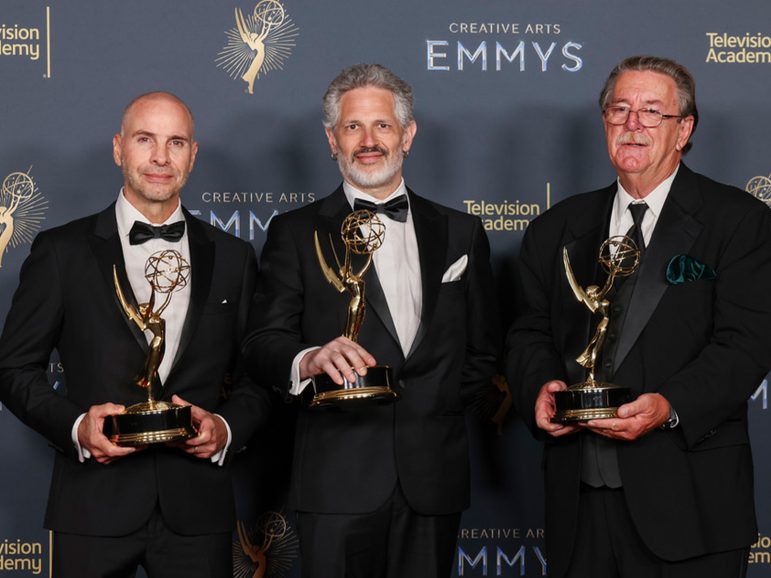
“The special was an unbelievable undertaking,” he added, “a technical masterpiece in my eyes,” citing its three-plus hour running time for a show “of this importance and this magnitude”.
He also talked about his run on the programme, from early SNL director Dave Wilson to that evening’s winning one, Liz Patrick, “and of course Lorne […] To see everyone move with a common goal in mind to get to the next set, [and] when you looked around the room (of the special), and saw people like Mick Jagger, Jack Nicholson, and all the old cast members… it was such an incredible experience to be part of it.”
Riding the wave
The cinematography winner in the nonfiction programme category was another multi-season entry – albeit not quite 50 of them yet – HBO’s 100 Foot Wave, the saga of surfers – led by big-wave surfer Garrett McNamara – confronting both the ocean’s turbulence and their own. Though this particular season ends on a note of tranquility that has proven elusive in the world at large.
Cinematographer Laurent Pujol oversees a much larger team than he did on the outset, when he was backstage accepting an award for season one with storied aquatic DP Mike Prickett.
We asked him too what had changed in the brief years since, and whether any of the on-the-water action had become easier to capture as camera tech becomes higher res with more portability. He did note that they get to work with “quite a lot more frame rate now”, and though capturing details has become easier, it’s still a question of allowing “editing to tell the story… [though] for my part on the water” he’s come to find “the in-between wave shots” are perhaps even “more important than the actual surfing”, which, even if didn’t represent a change in technology, could certainly be one in philosophy, perhaps comporting with the themes of this most recent season.
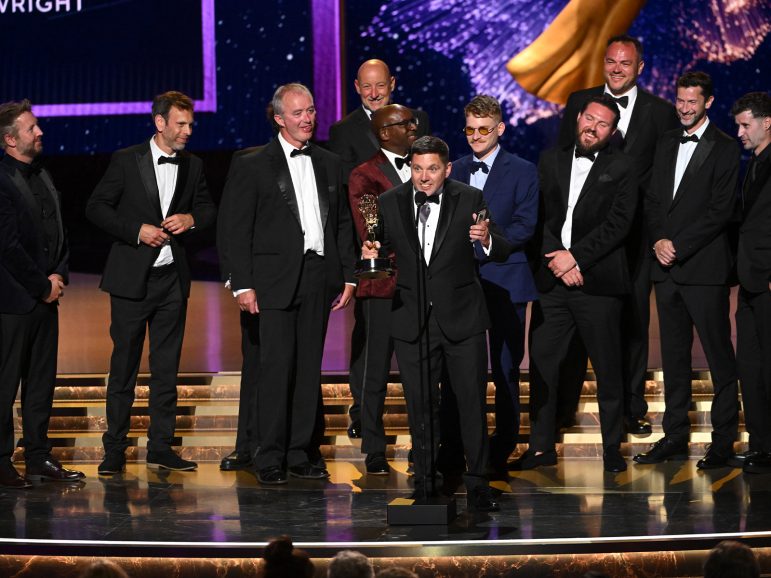
Seeking the opposite of “tranquility” in tone would be the cinematography winner in the “reality” category – note the sliding scale distinction between that and “nonfiction” – which this year went to Peacock’s The Traitors.
The winning group of DPs – about a dozen and a half big – all came into the press room, saying they were “not used to being on this side of the lighting”.
As for the kinds of lighting they are used to, when working on the show, they mentioned going after director Ben Archard’s – another of the evening’s winners – “vision of a gothic, rich kind of environment”. That involved “a special LUT based on the look of films like Knives Out” and other films where characters are all warily, perhaps eagerly, willing to betray each other, along with working with a high ISO, to keep lighting minimal, and participants fully immersed in those betrayals, and the gameplay.
Siggi Rosen-Rawlings, one of two series DPs, along with Matt Wright, talked of how the camera crew follows the “storylines” of the players, while wearing black to further blend in with the castle shadows, and often shooting from distances, so as “not to burst the immersive bubble”.
Indeed, the bubble has stayed so un-burst that Rosen-Rawlings once found himself “at an event with another contestant” and yet wasn’t allowed to introduce himself. Nor did the contestant recognise him or know who he was.
Other aspects of the evening weren’t just immersive, but recursive, as broadcasts of other award shows themselves won Emmys – such as the Oscars, for production design, and the Grammys, for choreography and lighting design.
And yet – despite the Grammy museum being only a half-block away – the Emmys are still the only award show where you can hear a line like “the Grammys couldn’t be here tonight” as the TV Academy accepted on behalf of their fellow entertainers.
Though coming in late winter, perhaps the Grammy folk were busy with preliminary work on the Emmy-worthiness of their next show, along with the Oscars, which follow a few short weeks later. We’ll learn how both of them fare with Emmy when we report back on what next year’s sprawling “real” weekend brings.